
Surer, Not Faster
“60% of the time, it works a hundred percent of the time.” The line came from the movie Anchor Man, and it has developed a heck of a following. A note for those who aren’t aware – I am a left-hander and acknowledge that may well have something to do with these thoughts. Reloads Many competent, capable shooters and instructors advocate always sending the slide forward when loading or reloading by depressing the slide release. [...]
Trends in Police Training – Part 3
Here are parts One and Two covering the Law Enforcement Education Program presentation at this year's SHOT Show. Good Enough? How good do you have to be? No one will argue that you should not be as good as you can be. However, it is equally unrealistic to expect every [...]
Familiarity Breeds Contempt — We Must Do Better
I stopped at my local gun store recently to check what they had in inventory. There was a newly released pistol underneath the glass; the guy behind the counter asked if I wanted to handle it. I said yes, so he bent down and retrieved it. He locked the slide [...]

Inattention Or Just Confusion?
Over the past few (several?) years, the firearms training community has seen an influx of new and non-traditional students. These students are often new gun owners with minimal prior exposure to firearms. One frequent issue that I and others have repeatedly seen is unintentional lapses in awareness when handling firearms. [...]

Focusing on Manual Safeties
As a trainer, I work with cops from a wide variety of agencies, and it’s always interesting to me when students from diverse backgrounds make the same mistakes in training. One example that I see a lot these days is failures to use non-passive, manually operated safeties (“manual safeties,” hereafter). [...]

Shifting From One Side To The Other
Lateral Transitions - No, not Literal. Lateral - moving side to side, sideways. Why? Two-fold. 1st, BadGuys move. Few people will stand there and not move once gunshots begin to be fired. You see it with both people in public settings and with animals in the wild. Second, multiple BadGuys [...]
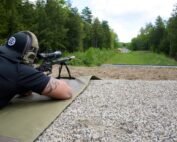
On Target: Reading Wind and Trajectory
Understanding the impact of wind on a projectile's trajectory is crucial for precision shooting. Trajectory refers to the path that a projectile or object follows through space because of external forces acting upon it. For bullets or other projectiles, this path is typically a curved line due to the influence [...]
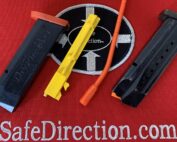
Dry Practicing Safely
It's good to see that there is a solid consensus on the importance of dry practice. Trainers of all backgrounds are recommending it to their students. There is a lot of discussion about what to practice sans gunfire and how to practice. What does not get touched on is the [...]
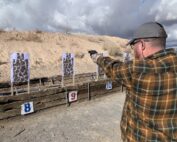
A BUG From My Pocket
While revolvers are filling a retro niche these days, they are often overlooked and unappreciated by a fair amount of law enforcement. And there are many generational and equipment reliability reasons behind that. Reasons When I started, there were three definite reasons that backup guns (henceforth BUG) were as [...]
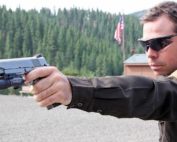
50 ROUNDS | A Minimalist Approach To Practice
It’s a constant mantra for American police, “Do more with less.” Today, with officers taking pay and benefit cuts it can be trying for LEOs to stay motivated and focused on training. Addressing personal fitness some-times does not garner the attention it deserves for individual officer safety. Firearms and tactics [...]
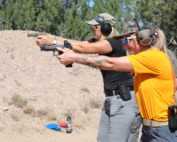
Why? Why did they choose their gun? Why do they continue training?
Why anyone makes the decisions they make is an interesting topic. What are the Whys behind the firearm someone chooses, taking their first class, venturing across the country to train once, and then doing it again? One of the advantages of teaching at Gunsite is having access to a student [...]