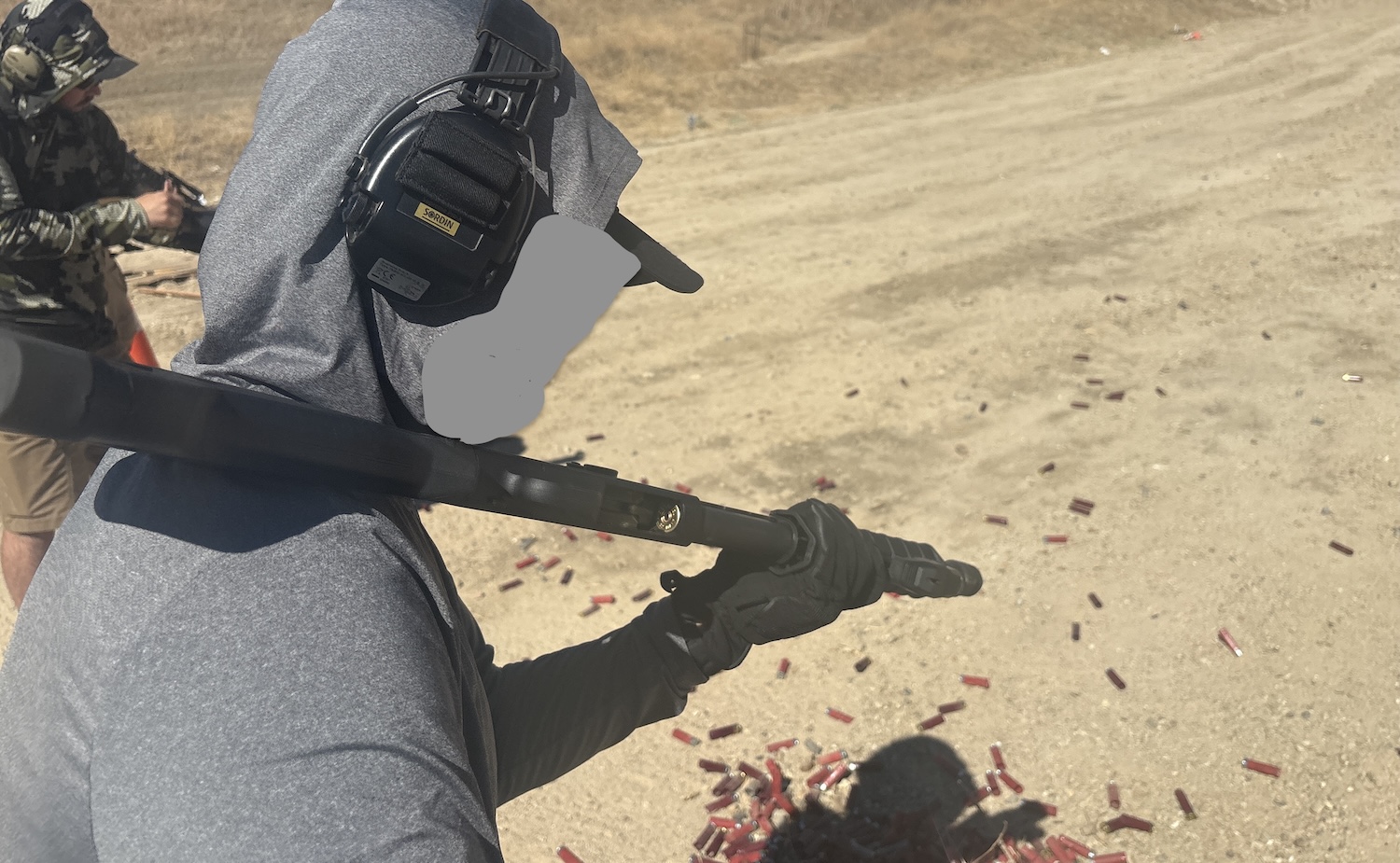

 (+5 rating, 5 votes)
 Loading...
feature2025-09-08 at 10.41.09 AM 1
That's an actual screen shot, not photo shopped.
So, I am two plus months into my time with Staccato’s HD P4.5. You can see my initial thoughts and first range trip with it HERE.
Since then, I have taught with the P4.5 and also shot a match with it.
Bottom Line Up Front – My early thought that this is how Browning’s design should have evolved remains unchanged. I would be hard-pressed to argue against its use in a uniformed duty role.
While teaching with the P4.5 at conferences, I allowed other officers who were students to shoot it. Universally, the feedback was positive, anywhere from “nice” to “this is going to cost me money.”
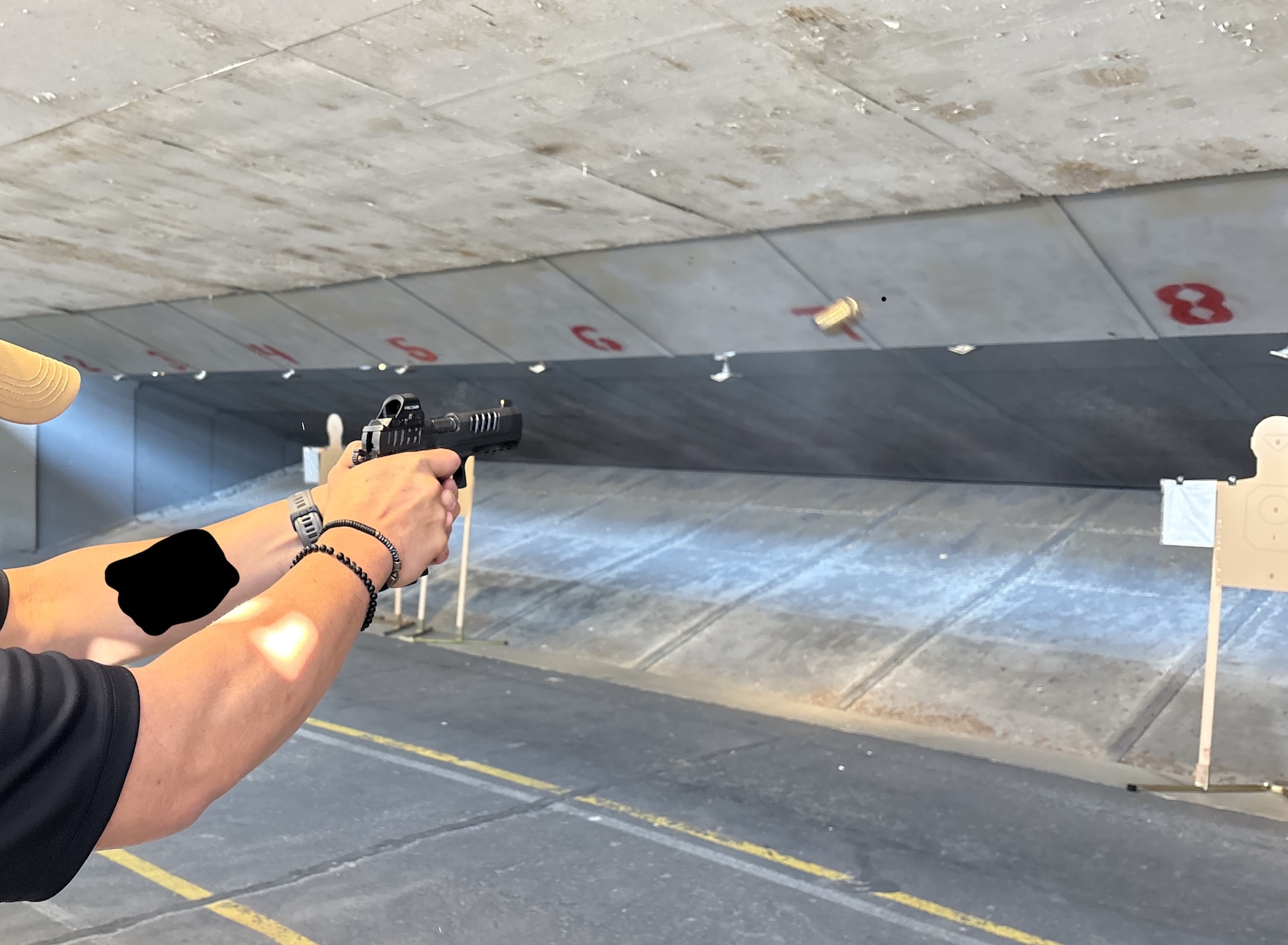
Another cop shooting his P4.5 is a recent class. He’s quite happy with it.
In the recent Applied Defensive Handgun Skills class ( HERE), one of the other students (an investigator with a state law enforcement agency) was shooting one. In addition to significant tactical experience with a local agency, he recently retired from a federal agency that involved significant overseas deployments. He didn’t mention any issues with it, nor did I see any. He was consistent in his praise for the design, execution, and performance of the HD P4.5.
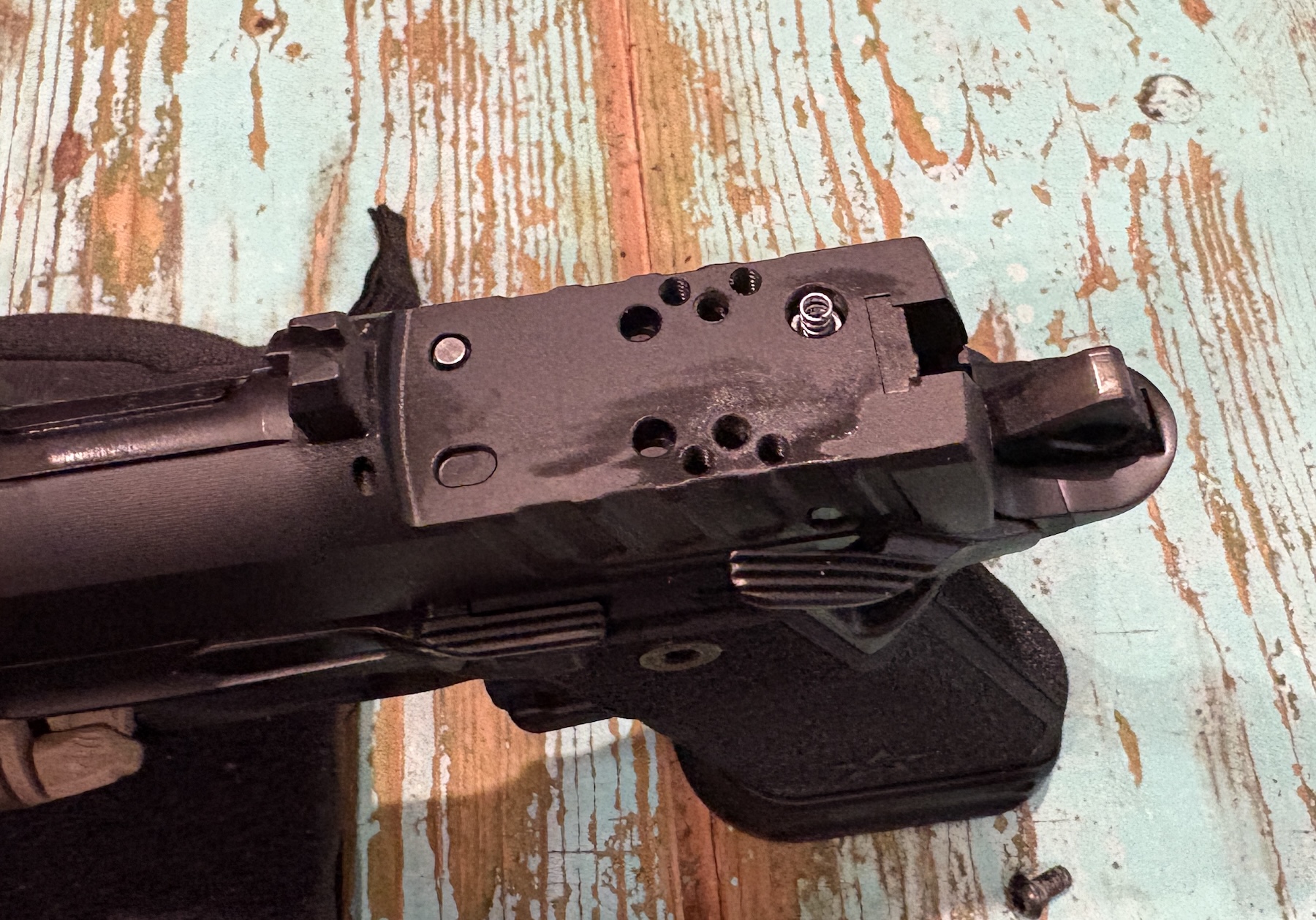
There was a piece somewhere on the carpet at this point. I found it. Just be careful of small parts when mounting optics and the like.
Frame Size
As mentioned previously, the absence of a grip safety makes the frame just a little smaller. That is a winner for two reasons – first, it allows more shooters to adopt it; second, it prevents end users from having to perform “temporary” modifications to use it.
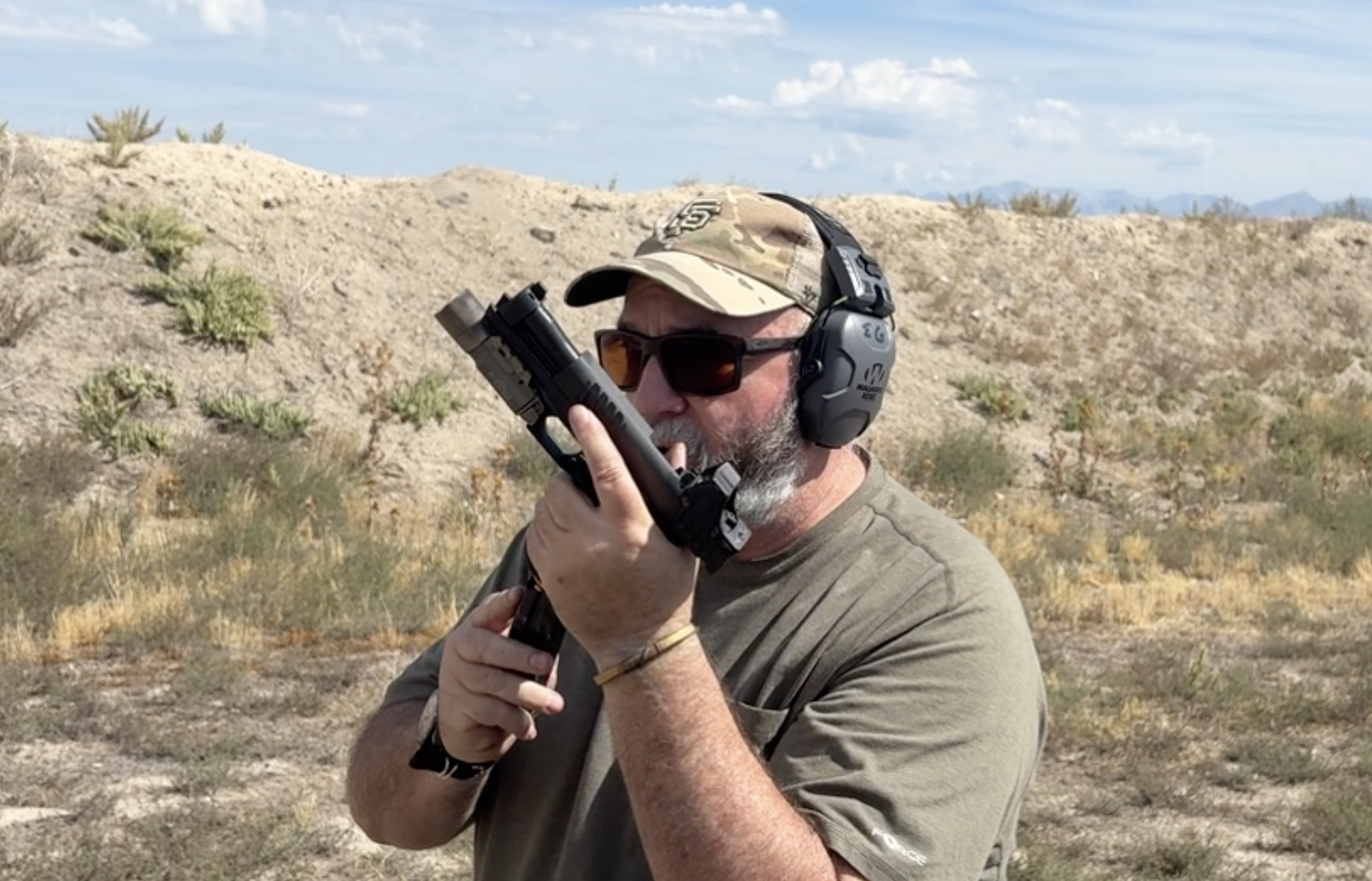
Reloading the HD P4.5, the factory magazine well gives you an easy-to-find opening.
Trigger Press
The most important part of the trigger, for me, is that it is clean. Neither gritty nor hanging up. Using a spring-loaded RCBS trigger pull scale, it came in consistently between 4.0 and 4.25 pounds.
The accessory rail allowed for easy and secure mounting of the one accessory I use – a pistol-mounted light. It took both Modlite and Surefire weapon-mounted lights.
Optic Mounting
The HD series uses a metal spacer between the optic and the slide, rather than a traditional mounting plate. Attempting to use an RCR on the RMR spacer was glitchy for me. Once I shifted to an RMR HD, I had no issues with mounting it. Throughout the review, the optic and spacer combination was quite solid.
Additionally, the forward-mounted rear sight minimizes the amount of crud and debris that often ends up on lenses.
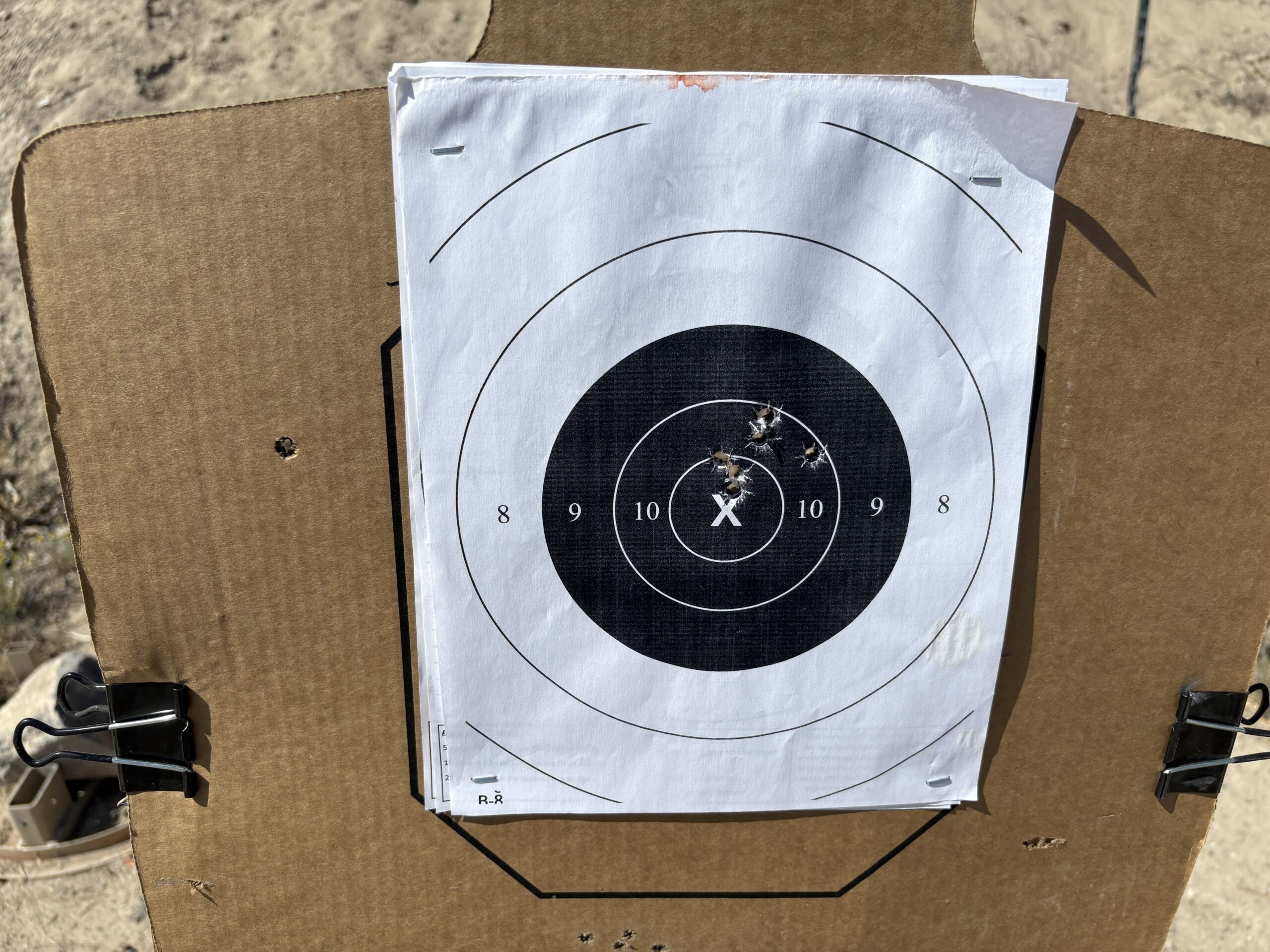
Dimming the RMR-HDs reticle brought the second three shots from then 10 ring into the X – at 15 yards.
Grouping
Looking at the above photo, you can see two groups. These were both fired at 15 yards, off a sandbagged tripod. The only difference was the brightness of the circle-dot reticle in Trijicon’s RMR-HD optic, which I lowered two clicks. Those two groups were shot with 124-grain Blazer brass cased ball ammunition.
Mechanically, it is as accurate as any other single-action pistol I own. And, quite frankly, shoots far tighter than most of them.
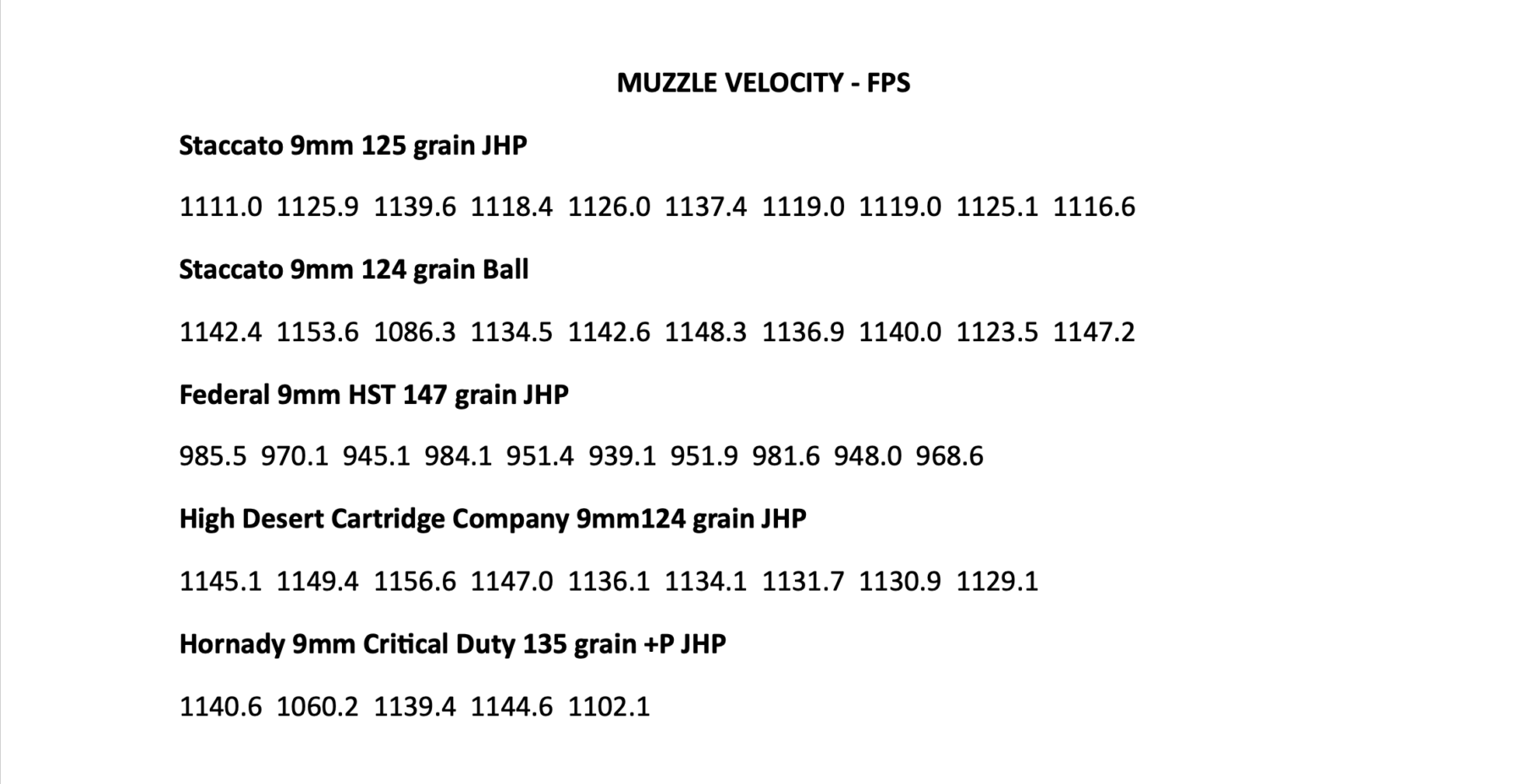
Shot a variety of factory ammunition through the HD P4.5. Here are the muzzle velocities for several of them.
Staccato’s Ammunition
They are loading and selling two types of handgun ammunition. First is a 124-grain ball round marked as Staccato Range. The second is a 125-grain jacketed hollow point, described as an HAP, Match load. Their packaging lists the muzzle velocities as 1130 fps and 1050 fps, respectively.
The pistol performed consistently regardless of the ammunition I used. In addition to Blazer and Staccato, I shot rounds from Federal, High Desert Cartridge Company, and Hornady through it.
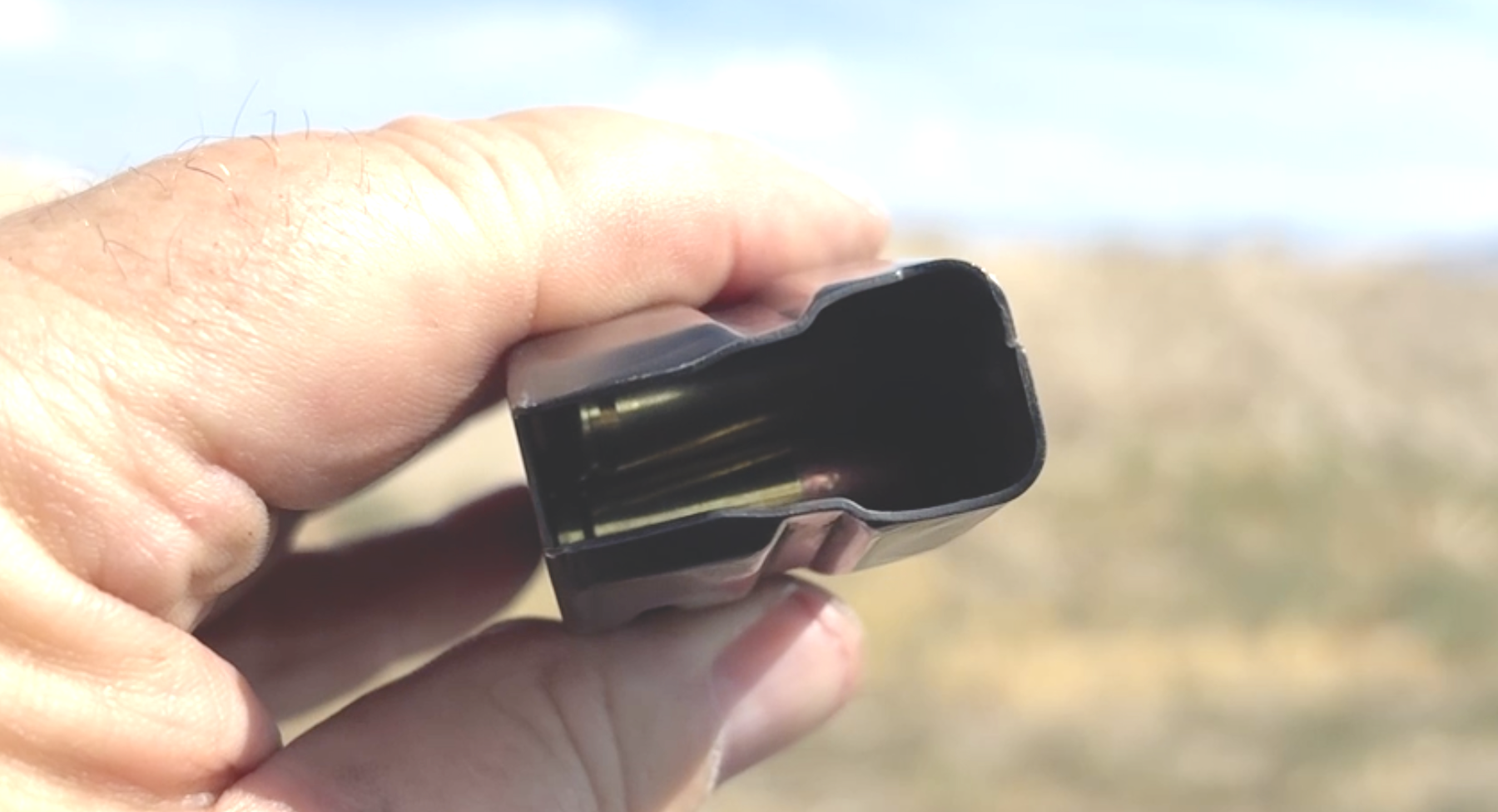
Rounds stuck inside the magazine tube. Happened once with two of the magazines, but not again.
Magazines
As mentioned, during the first session, I had a failure to lock back with a Glock magazine. That was the only issue with Glock magazines to date. For the last session before publishing this, I picked up a new 17-round, Gen 5 Glock 17 magazine. Shooting drills with the magazine loaded in a variety of ways, the slide
However, out of the three MecGar magazines that came with it, two have had issues with the follower binding or a 124-grain ball round hanging up inside the magazine. In both cases, that was a hard stop of the cycle of function. Prying and pushing on the rounds in the tube were required to clear the blockage. It was a one-time occurrence with each magazine. I spoke with a professional peer at the company about it. I was told that, although it was not unheard of, it was extremely rare. The suggestion was to return the magazine(s) if the issue reoccurred.
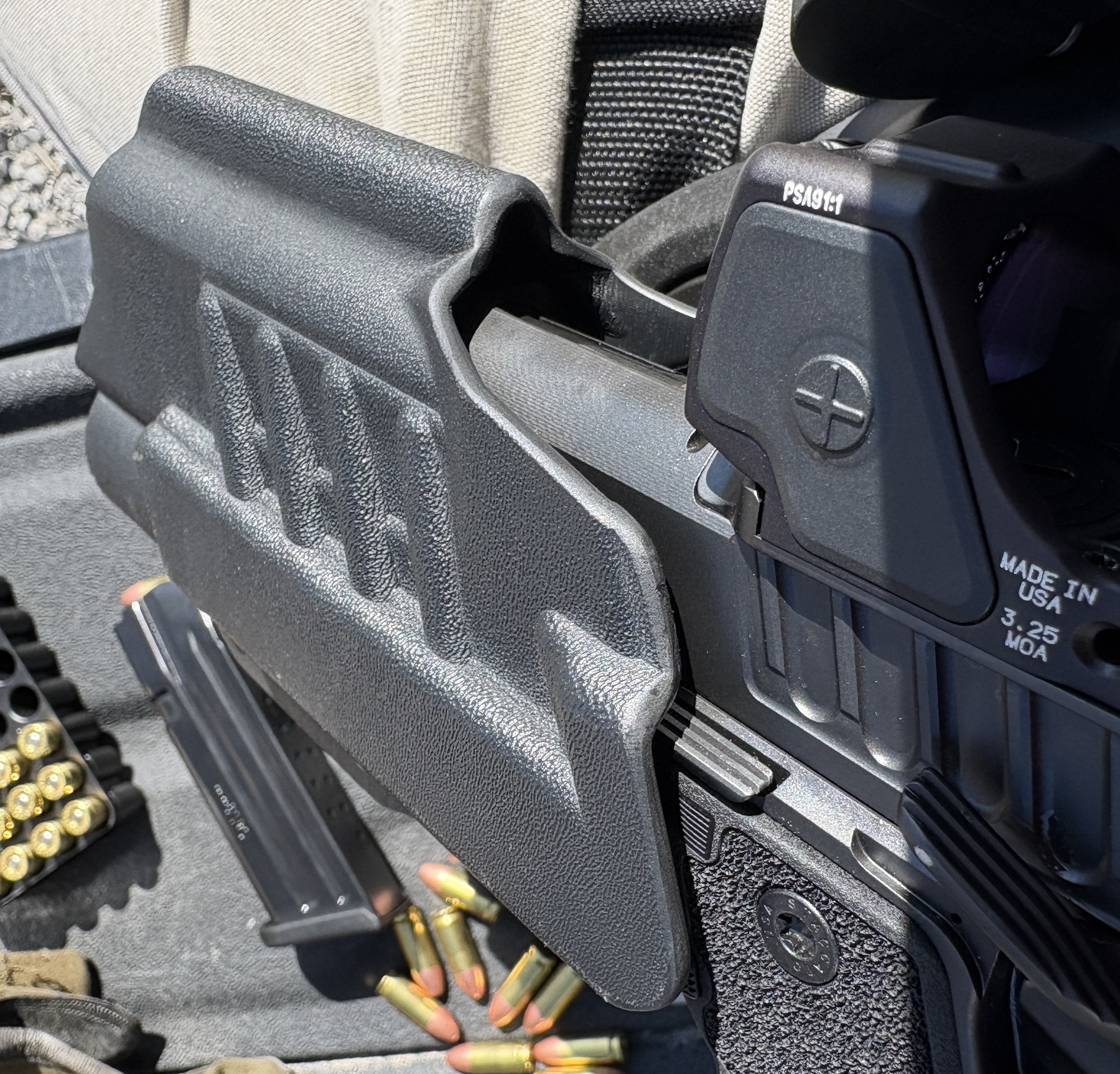
The open-top range holster Staccato is offering for the HD P models using lights.
Holster Fit
My preferred duty holster has not released a model for the HD P series. I bought and have used the TXC OVRT OWB for the X300U that Staccato sells on their website ($104.99). This is a range-only design with friction retention. I attached it via Blade-Tech’s Tek Mount system. It worked well during my time with it.
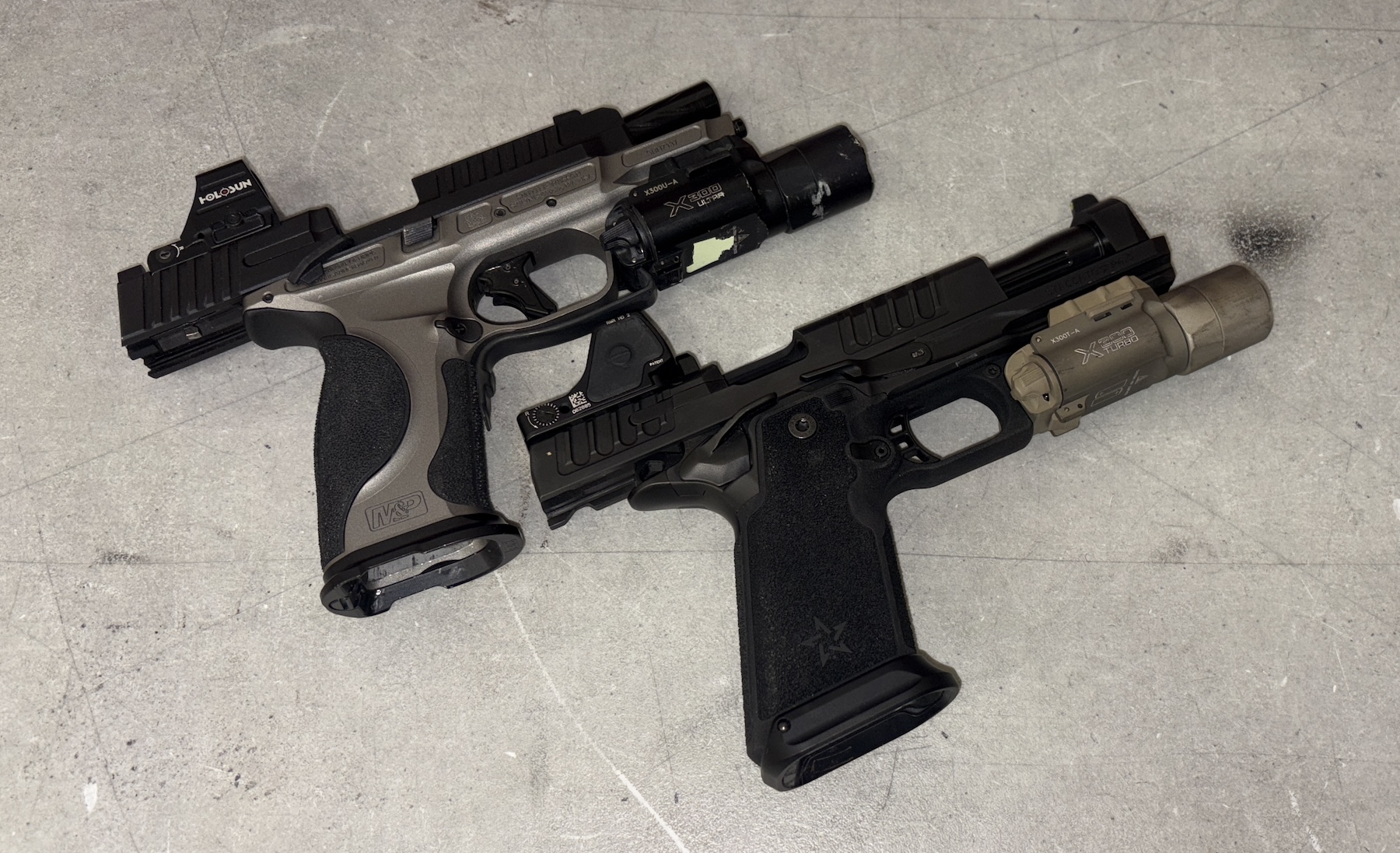
Performance gain? Shot the P4.5 versus this Ed Brown Fueled M&P. Similar optics and lights.
Performance Gain
A friend asked if there was a performance gain with the HD P4.5 pistol. I’ll answer it this way – you can take a race car driver, give them a commuter car, and see amazing things happen on a track. However, I can’t take a below-average driver, put them in a Formula One car on track, and expect above-average performance.
If the end-user is an above-average shooter, they will benefit from the design and execution of this pistol.
It has the best laid-out and functioning ambidextrous controls of any handgun that I have shot.
At the end of the last range session, I shot both a Super Test and a Bill Drill with it against my Ed Brown Fueled M&P. Both are factory-custom, duty-size pistols with full-size optics and weapon-mounted lights. I shot both on B-8 repair centers. For The Super Test, at 15 yards, I had 94 points in 7.43 seconds; 98 points in 7.29 seconds at 10 yards; and 99 points in 4.63 seconds at 5 yards. Faster and tighter than the Ed Brown.
The 7-yard Bill Drill was from legit low-ready; everything was in the black for both.
Without a warm-up run, it was 2.82 seconds with the HD P4.5 and 3.19 with the Ed Brown.
Final Thought
If you have above-average skill and an interest in Browning’s best-known design, this gun is for you!