Townsend Whelen is often quoted as saying, “Only accurate rifles are interesting.” With all due respect, I’d offer that only interesting guns are interesting.
Predecessors/Ancestors
When I hired on in 1990, I was issued a stainless-steel Model 66 .357 Magnum along with a Blocker duty holster. After I qualified with my personally owned 1911, I turned that gun back in. Six years later, I was issued another -66 for the Federal Bureau of Investigation’s instructor class. After I started teaching at my office in 1993, I cannot recall any current deputies coming through the range with a Model 19
Fast Forward
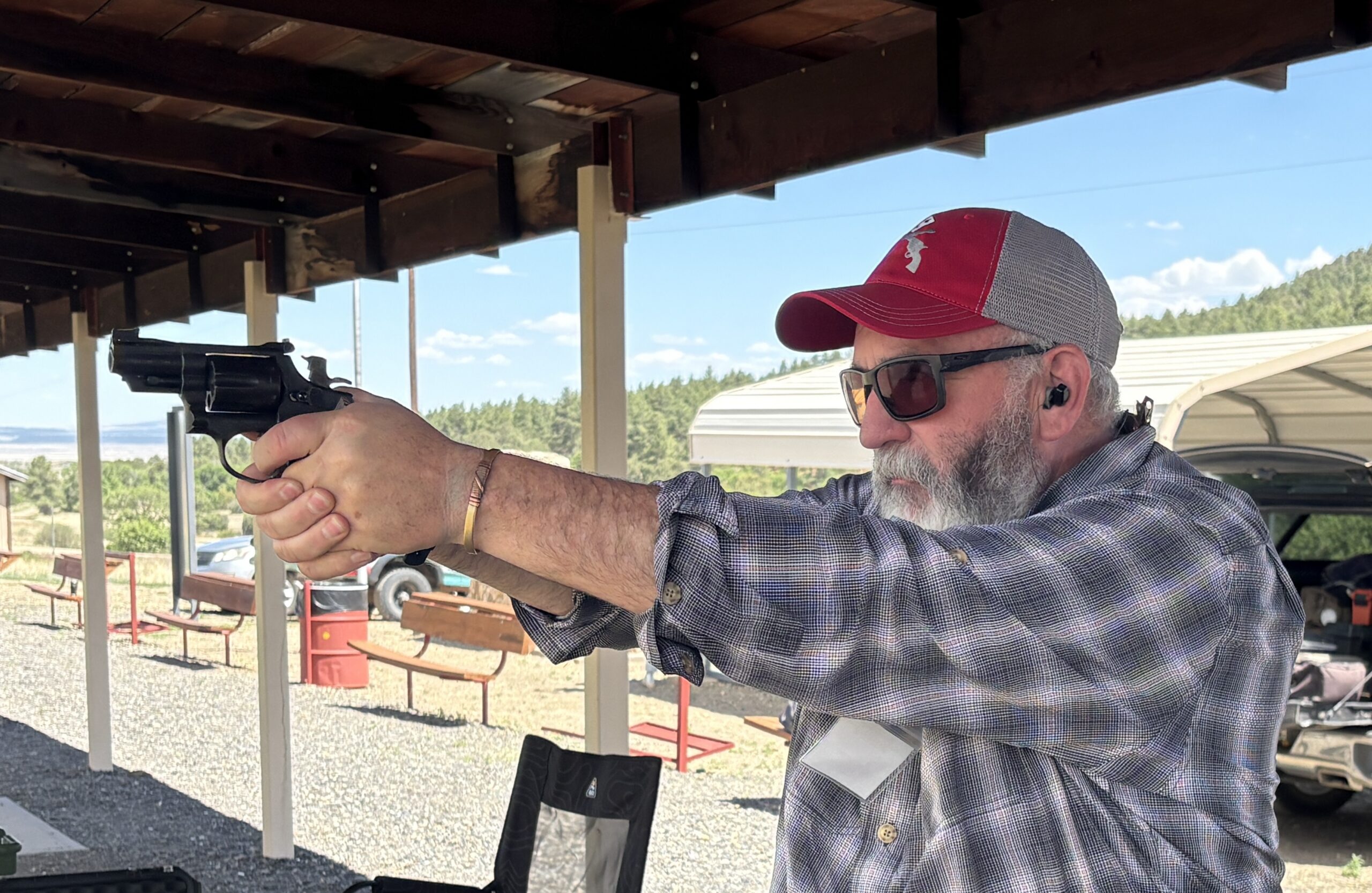
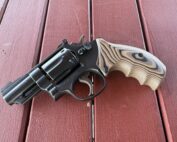
I really enjoy this gun. The counter stamp makes it very interesting to me, with a great tie-back to my history.
Advance the calendar to 2009. While recovering from shoulder surgery, I was given the task of selling off several old guns and inventorying all the others. Several days in, a supervisor walked into my office space holding a NCIC printout in one hand and a revolver in the other. Handing both to me, he said, “Fix this.” The NCIC printout indicated we had reported the revolver stolen years back.

The counter-stamping on the frame.
After removing it from NCIC, I bought it as part of the sale. The biggest selling point? It was counter-stamped with the office’s name, followed by X and a number. Our gang unit’s radio callsigns were all X numbers.
Righteous Smiting
The anniversary of Frank Hamer, Manny Gault, and others doing exceptionally good work was a couple of weeks ago. That crew did exceptional investigative and tactical work to end the crime spree by the couple known as Bonnie & Clyde.
With it came a brief resurgence of interest in older cop guns.
This week, I am attending a revolver-centric event in the great American Southwest.
History
This week, I had the chance to speak with both a good friend, Wayne, and another friend’s dad, Gary, about the Model 19s they had carried on duty.

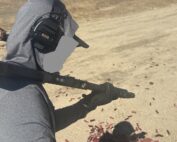
Wayne from Aimpoint is shooting the 19-3 under the watchful eye of a mutual friend, Lew.
Wayne
He is currently the Western US L/E sales manager for Aimpoint, had been a police officer in Richardson, TX, for 25 years. Wayne recalls that the Model 19 was introduced around 1969. By the time he bought his 19-3, there had been refinements made to the designs. Additionally, those early 1970s guns were made in such a way that one could get a phenomenal action job on the revolver.
He bought a custom set of zebra-wood grips from a gentleman named Fuzzy Farant. He wrote a $25 check for them. And to this day, he kicks himself for the gun with those grips on it.
His gun had a yellow insert in the front sight with a white outline on the rear.
The gun shot amazingly well. He consistently shot perfect scores on a qualification that started at the 50 (five-zero) yard line.

Gordon Davis open top holster with a reinforced mouth holds the 19-3 quite nicely.
Back then, the ammunition “sucked.” It was not unreliable; rather, it had issues with performance and terminal ballistics. Wayne’s choice was a 140-grain pentagonal point jacketed hollow point from Speer’s Lawman line. He mentioned shooting the gun to death with both factory and reloaded magnum rounds.
His daily uniform carry included a Safariland thumb break holster; two steel-lined rubber speed strips in dump pouches (no speed loaders allowed); a baton; a key ring; and a radio. Nothing else.

Another piece from Davis, I have several. This one holds a K-frame speedloader from HKS.
Gary
He retired as a detective sergeant from the Oklahoma City Police Department’s homicide unit.
While he had been issued a Model 65, he bought a new Model 19 from the TG&Y store he worked at back when they had a federal firearms license. Yes, kids’ toys and guns in the same store.
Even though he wasn’t very knowledgeable about firearms then, he “always loved it” – the 19-3. Gary told me nothing felt as good as a tuned K-frame revolver (which the Model 19 was). Also, at the time, all the OKCPD range staff were factory-trained S&W armorers, making them more like gunsmiths.
He used that 19-3 in his only shooting, which was at three feet. After considering all his ammunition choices, he went with a 140-grain JHP from Speer’s Lawman line.
Gunsmith
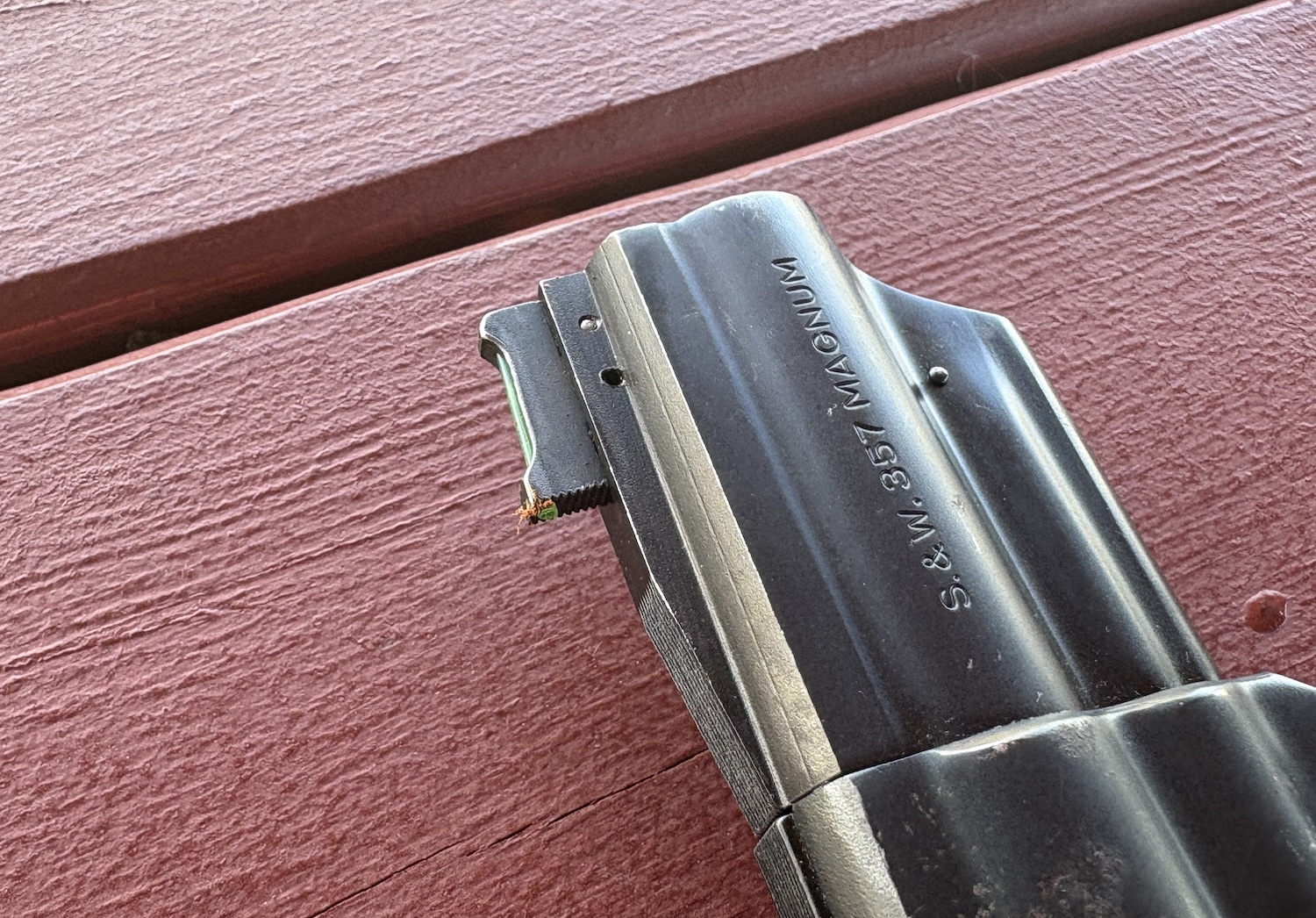
The old front sight was removed before this fiber optic one was made and installed.
I do own a couple of box stock guns. To me, that means I haven’t changed a thing on them, not even sights. So, with this one, it was not going to stay box stock.
A training opportunity took me close to Dave Laubert of Defensive Creations in Ohio.
Dave did the following:
– Re-made the frame into a round butt vs its original square butt. That modification makes it easier for me to grip and conceal – and ultimately, that is all that matters.
– Fixed the timing, meaning the chambers were lining up exactly with the forcing cone. No grips equals no shaved lead or jacket material.
– An action job was performed. While I have never been a fan of light triggers, I very much prefer a clean trigger press.
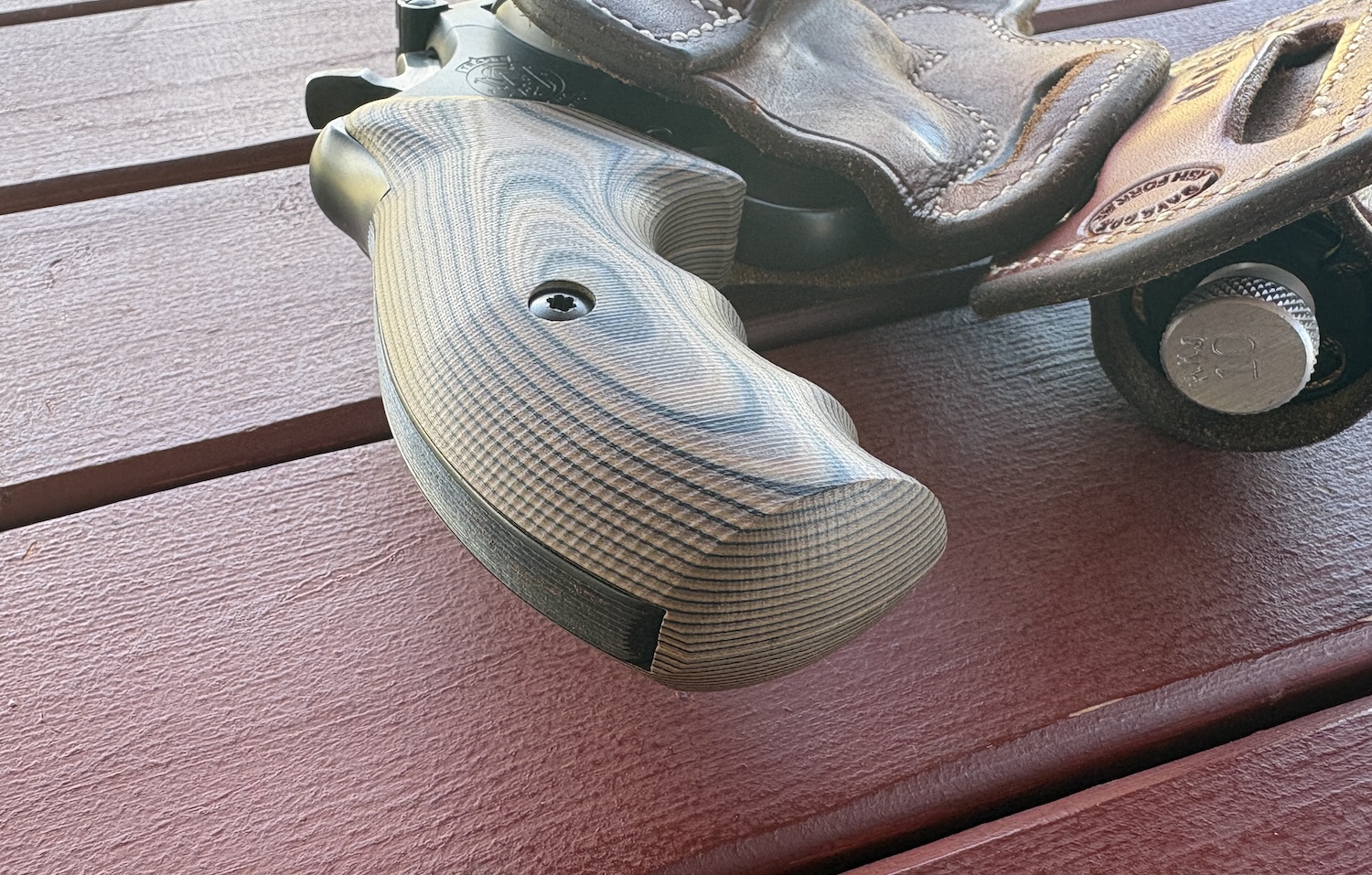
This was a square butt before Dave turned it into a round butt. Great attention to detail, the striations on the backstrap were cut into the ‘new’ version.
The original front sight was removed. Dave then milled an opening for the fiber optic front sight he machined from scratch.
Finally, he refinished the gun in a dark, matte blue. And, at my request, left the finish alone at that point.
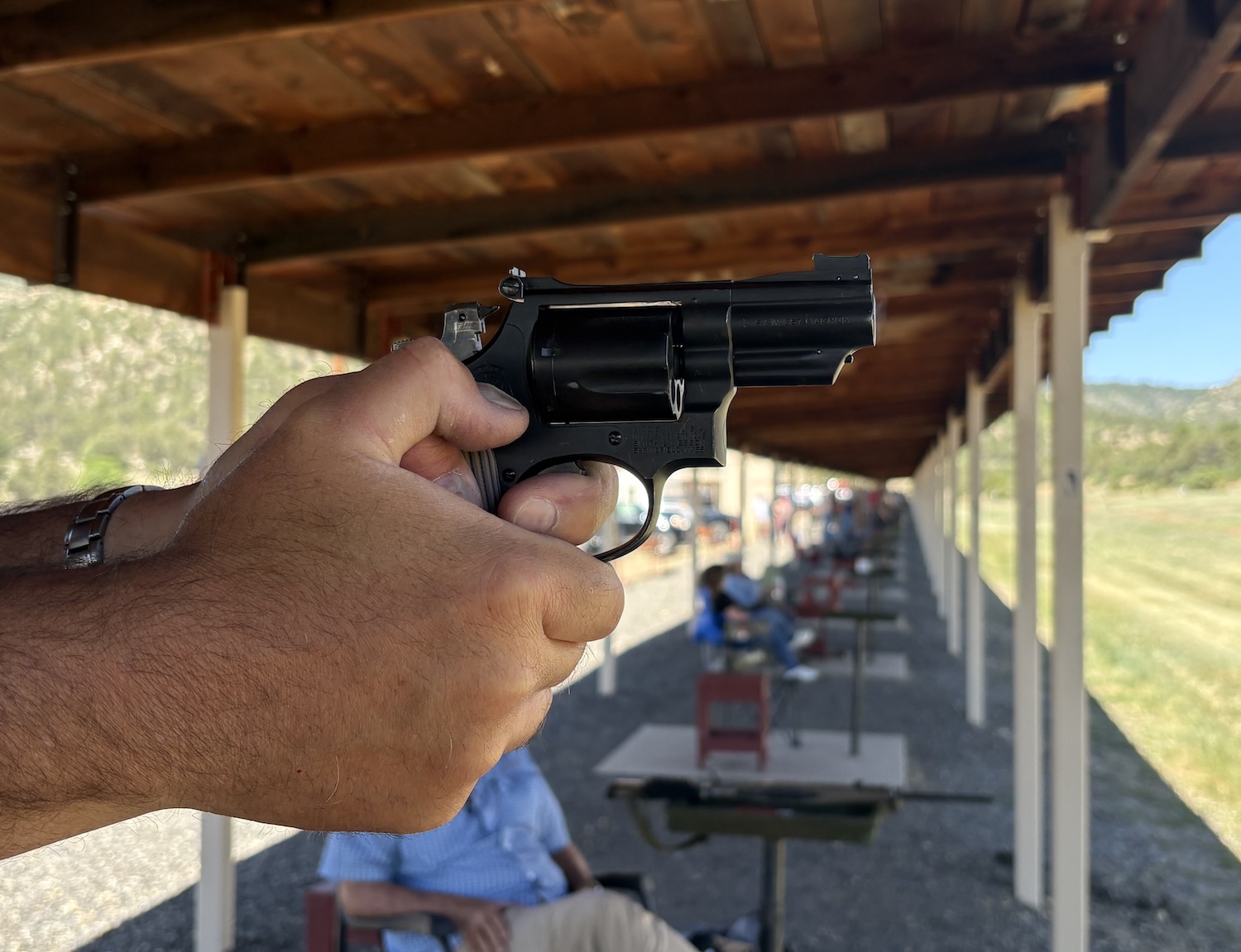
Wayne’s grip on the gun. Notice the shooting thumb crosses over the support thumb. And the first crease in the trigger finger is on the far side of the trigger.
Final Thoughts
It’s an interesting gun because it’s from an organization I spent over three decades with in different roles. This one might not matter as much to someone else. Along with the history, it excels in a role I need it to these days: as a take-to-the-woods gun.
RESOURCES


 (+12 rating, 14 votes)
 Loading...