
 (+9 rating, 9 votes)
 Loading...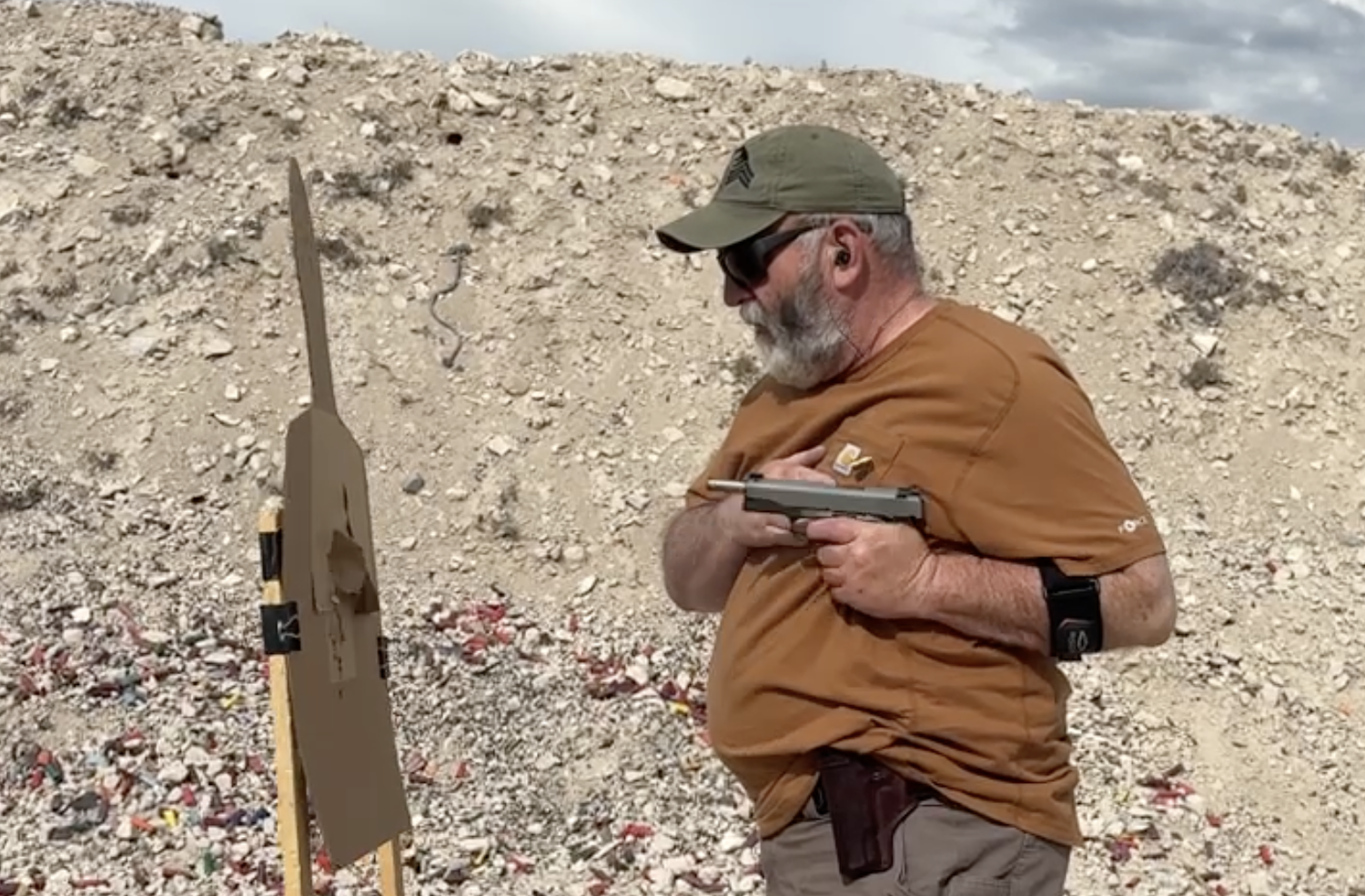
featureBrass2026-05-25 at 7.25.41 PM 1
Retention Position Work
Why
Despite what some on the errornet opine, we do get into confrontations at very close distances, under 3-5 yards, and even arm’s length. Many of those end up going to the ground as well. Again, in spite of what some commentators have to say.
A disproportionate number of L/E deaths occur in close because we must close with BadGuys to pat search, Terry frisk them, and handcuff them.
It happens to decent, normal humans as well.
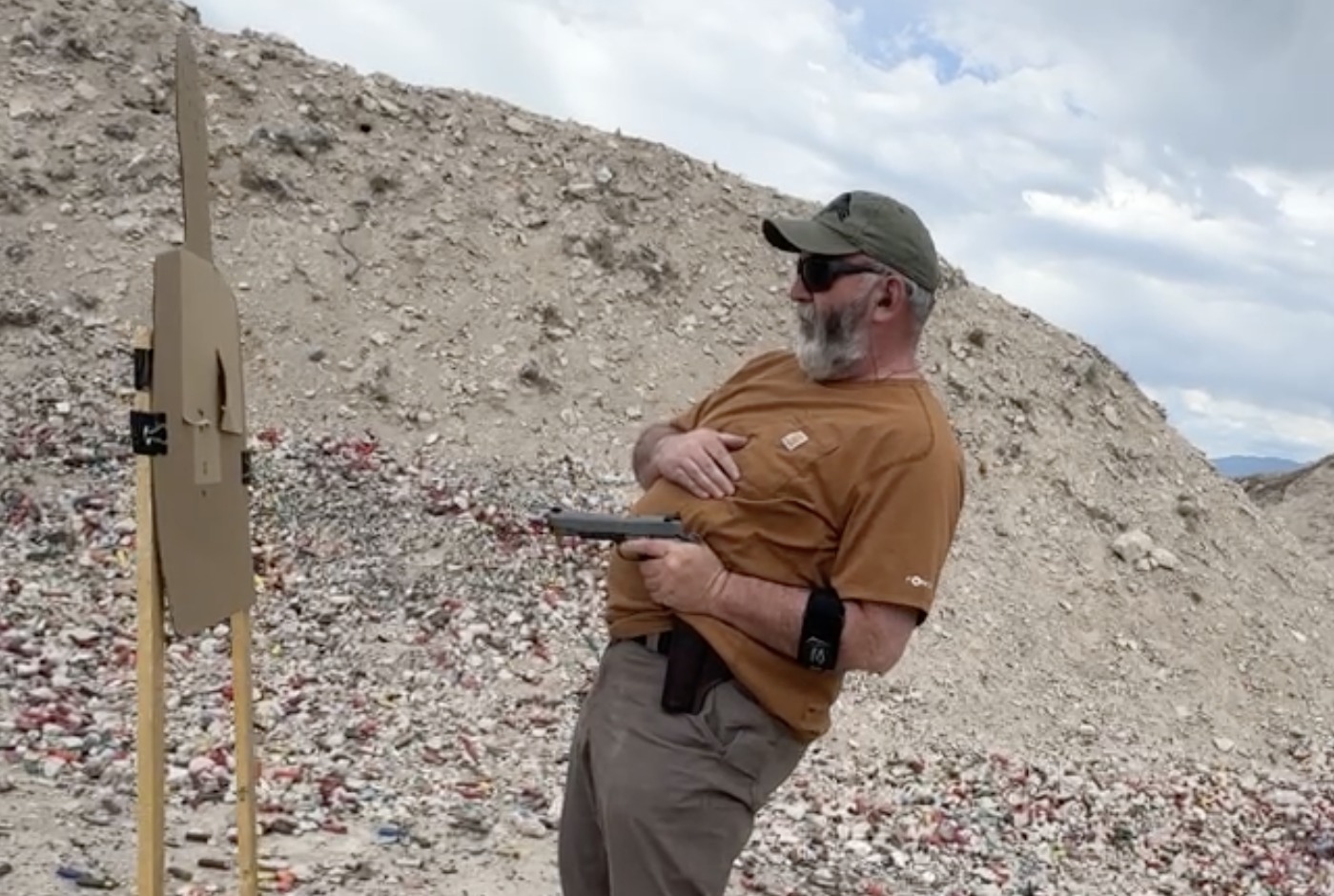
From the late 80s, the Speedrock. Shoulders thrown back and the handgun extended. You were going to have difficulty fighting from that.
Evolution
When I went to the academy, we were taught the Speed Rock. As you drew, you threw your shoulders way back. As you did that, your elbow touched your side, and the handgun was extended out in front of you, the distance of your forearm. It was a technique, but one that left you radically off-balance while essentially handing your pistol to the BadGuy.
In short, a much less than desirable technique. But one that was taught, nonetheless.
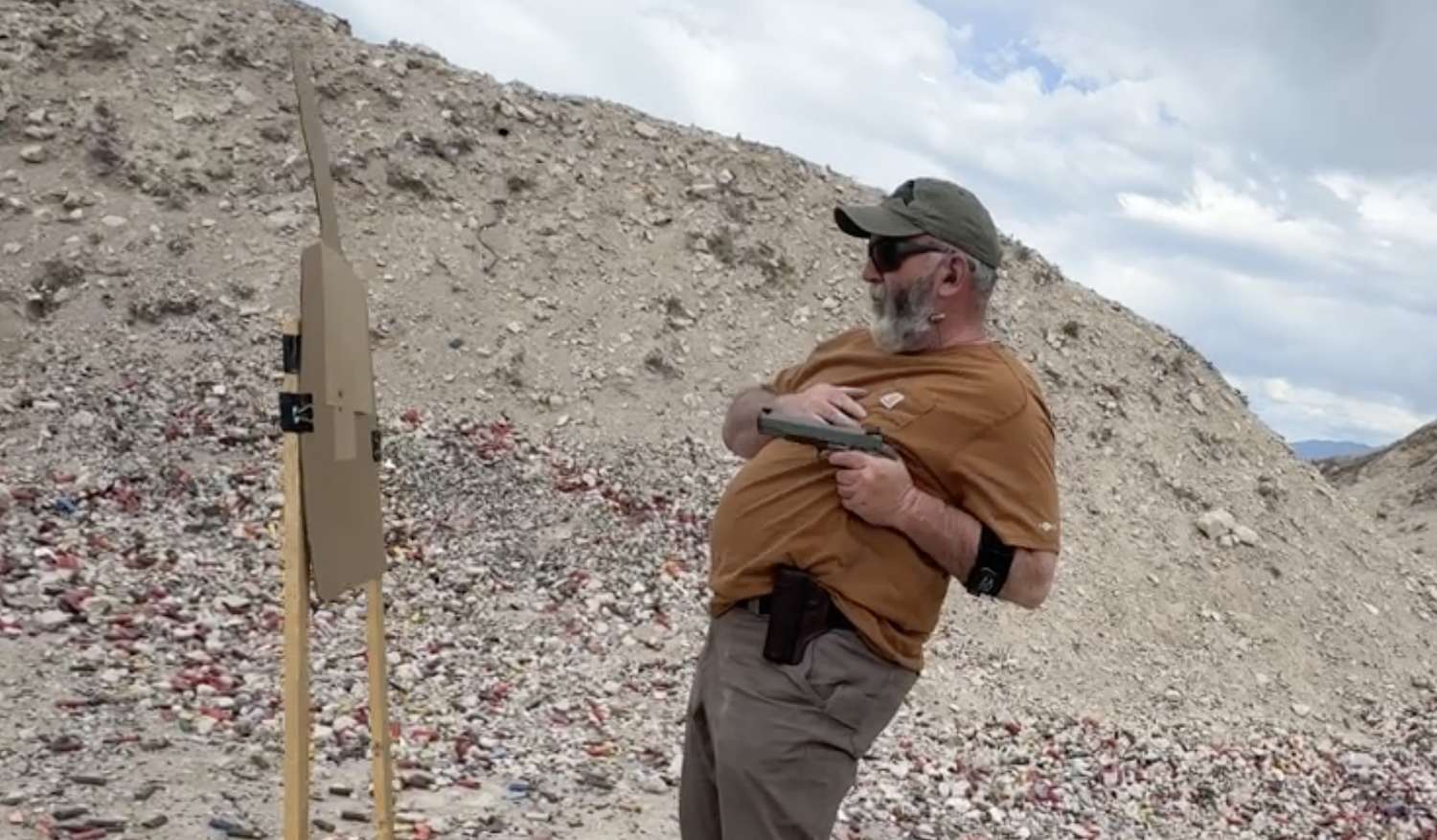
A somewhat retracted version of the Speedrock.
Next up was a variation that did not involve throwing yourself out of balance. You remained upright. However, you still locked your elbow against your torso. And you were extending the handgun out in front of you. I probably first encountered this one in the mid-to-late 90s.
The third variation kept you upright, with some forward lean (or a more assertive, athletic posture). Unfortunately, the goal here was to fire rounds that would strike the high-score area of your target. And since some of them are set too high, well above average heights, we induced another problem.
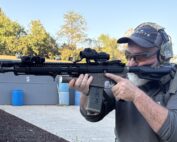
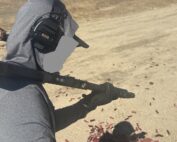
The final and most recent variation comes from the ShivWorks collective (more on them shortly). It also has an assertive, athletic posture. After the pistol clears the holster, the shooter’s strong hand locks in against the rib cage at about 3 or 9 o’clock. The muzzle is oriented forward but angled downward.
The goal of this handgun orientation is to prevent the shooter from floating the gun in space and not delivering effective shots to the intended target.
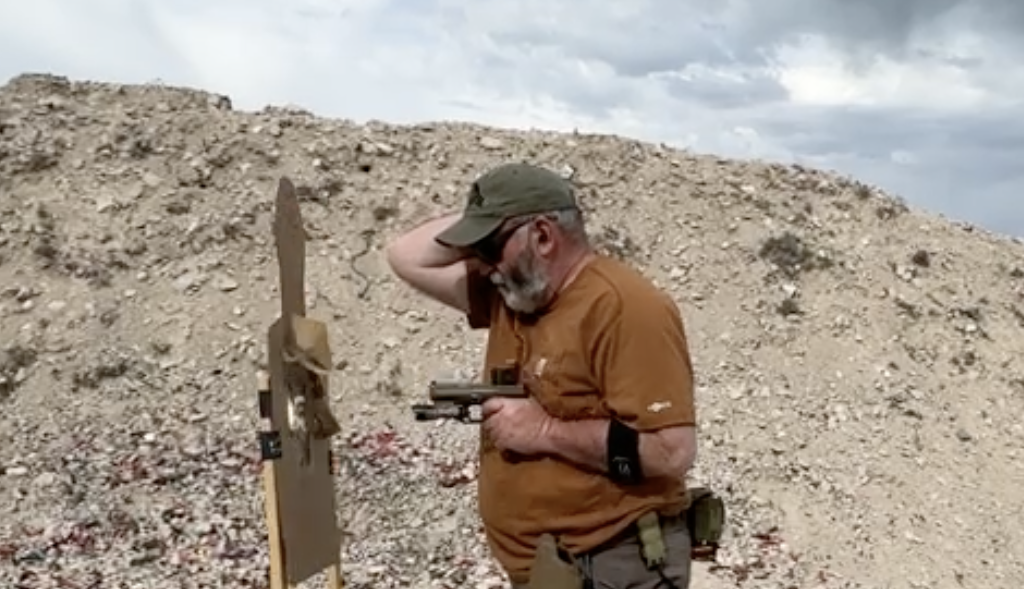
Keep the pistol retracted against the pectoral muzzle to prevent clothing and other parts from interfering with the slide.
Who
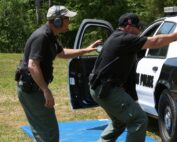
While I was somewhat aware of this evolution in technique, I was not formally introduced to it until early 2019. That was when I took the law enforcement version of Extreme Close Quarters Concepts from Craig Douglas of Shivworks. Craig, who is also known as SouthNarc, along with several other practitioners, developed the 3-5 yards and in curriculum.
In addition to Douglas, two other trainers who teach in this space are Cecil Burch from the Phoenix area and Greg Elifritz, a retired Ohio cop. All these gentlemen travel to teach.
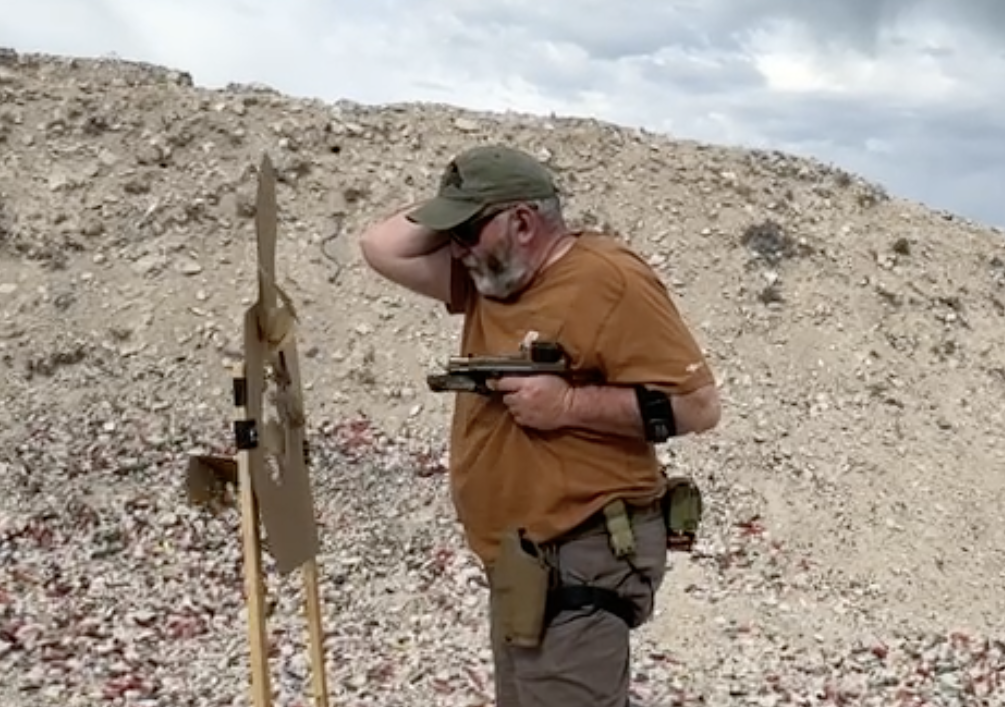
Getting high thoracic cavity (A Zone) hits will take more time and effort than shooting once the muzzle is on the torso.
Caveat
While I can explain the technique in an elevator speech manner, you need to seek competent training on this. This is essential because there is much more to it than just shooting.
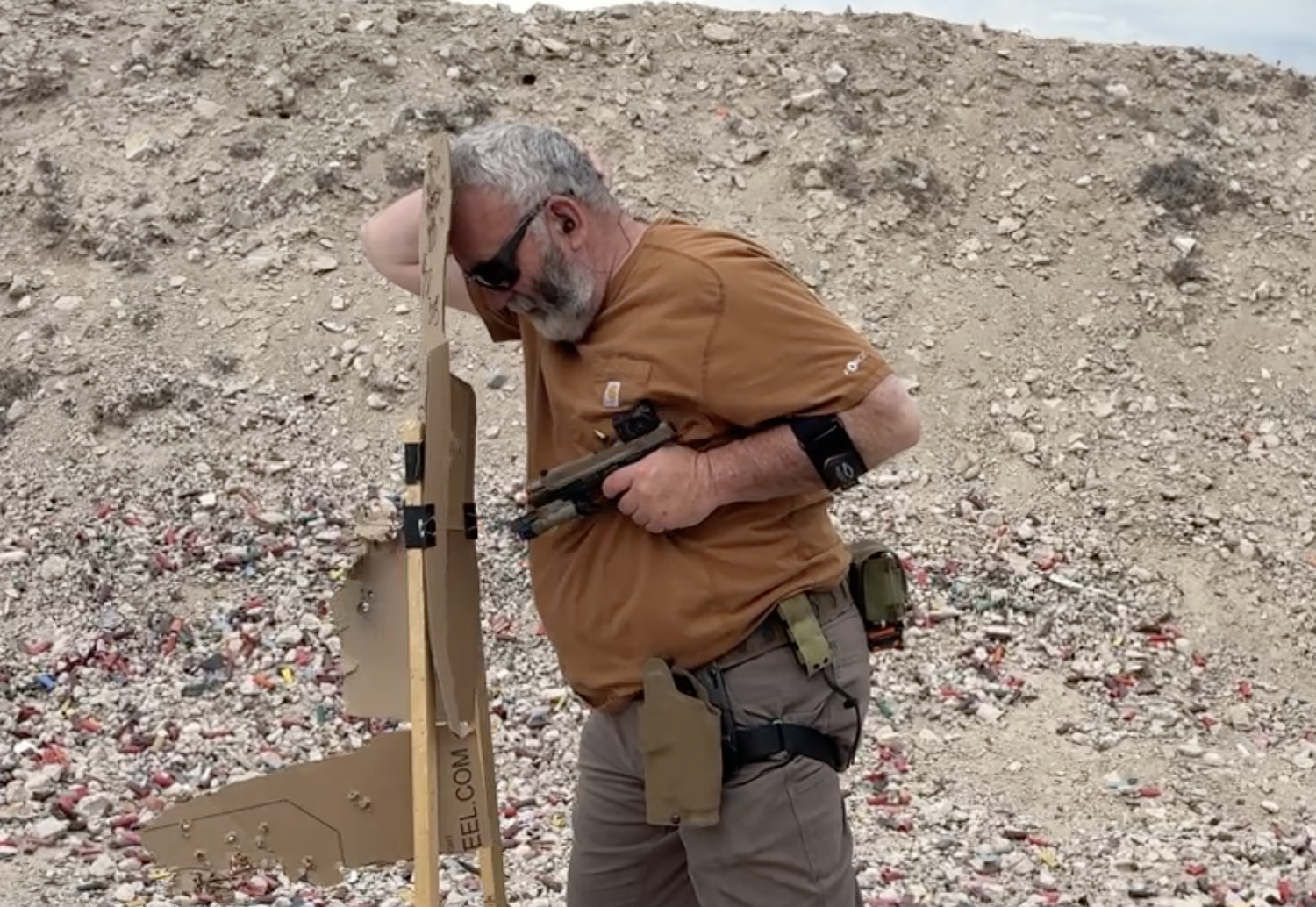
As a left-hander, I index is with the basepad and my thumb.
How-Practical
Everyone I have gotten this material from uses the phrase “Thumb-Pectoral Index” to describe how you ensure the handgun is in the right place. The thumb of your shooting hand is high, up onto the slide (semi-auto) or frame (revolver). Then place it against the outside of your ribs, close to 3 o’clock. It is much higher up, along, and outside of your pectoral muscle.
However, since I am a left-hander (having not submitted to the nuns), using the thumb alone as the reference has not worked for me. I end up anchoring the base pad (or grip) against my ribs with the thumb flagged high as a separator.
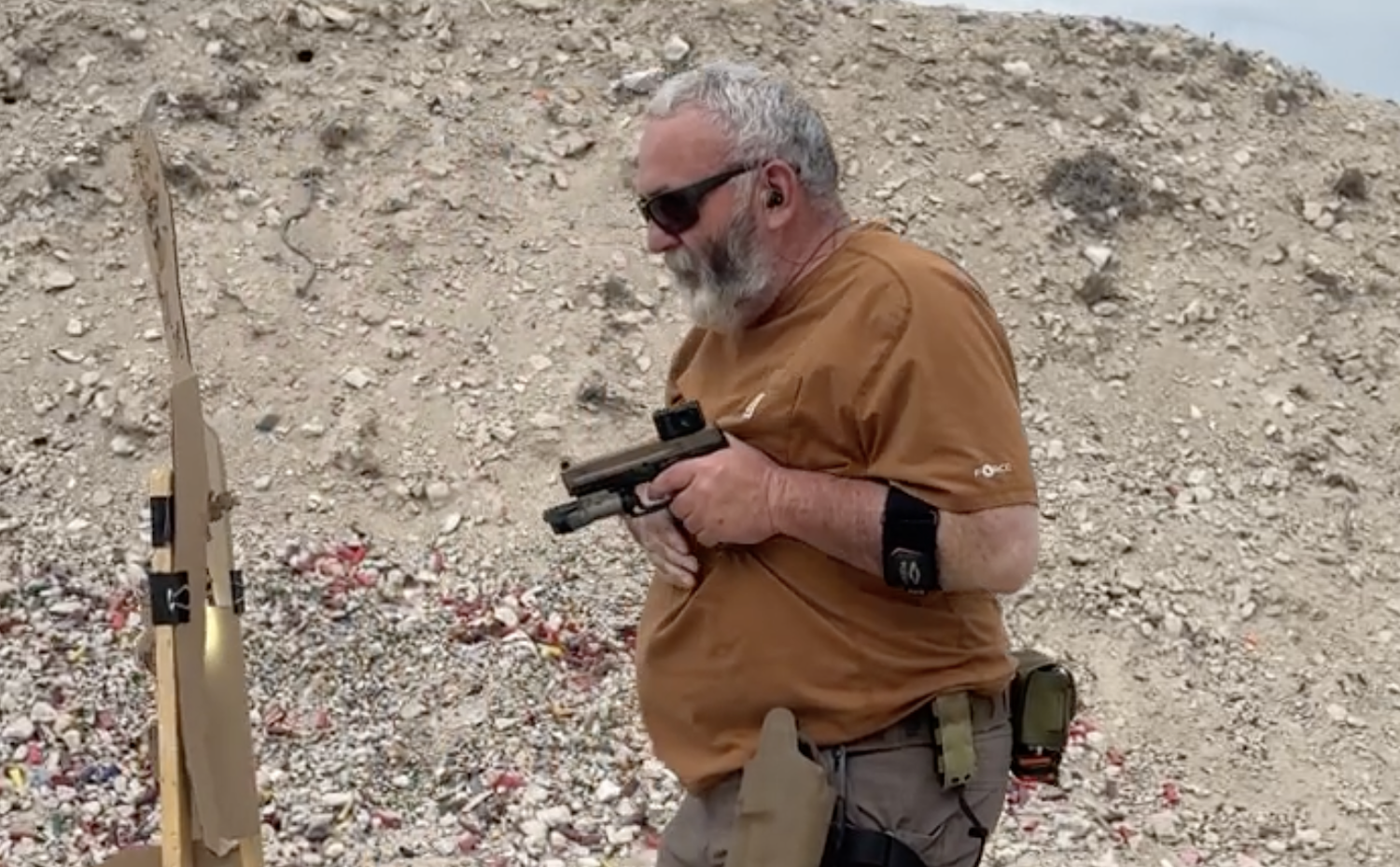
Bring the support hand under the pistol rather than in front of the muzzle when going to a two-hand grip.
How-Timing
Timing plays a significant role in doing this successfully, which is why you need competent training. When I took ECQC, I ended the first day with a classmate (and good friend) sitting on my head while shooting me with my own Sim gun because I drew too early.
You have two hands, your opponent has two hands, and you want to get a handgun (or knife) into play. That is more things to control than you have hands.
To do that, you’ll need to take one of their hands out of the equation while freeing one of yours up for the draw.
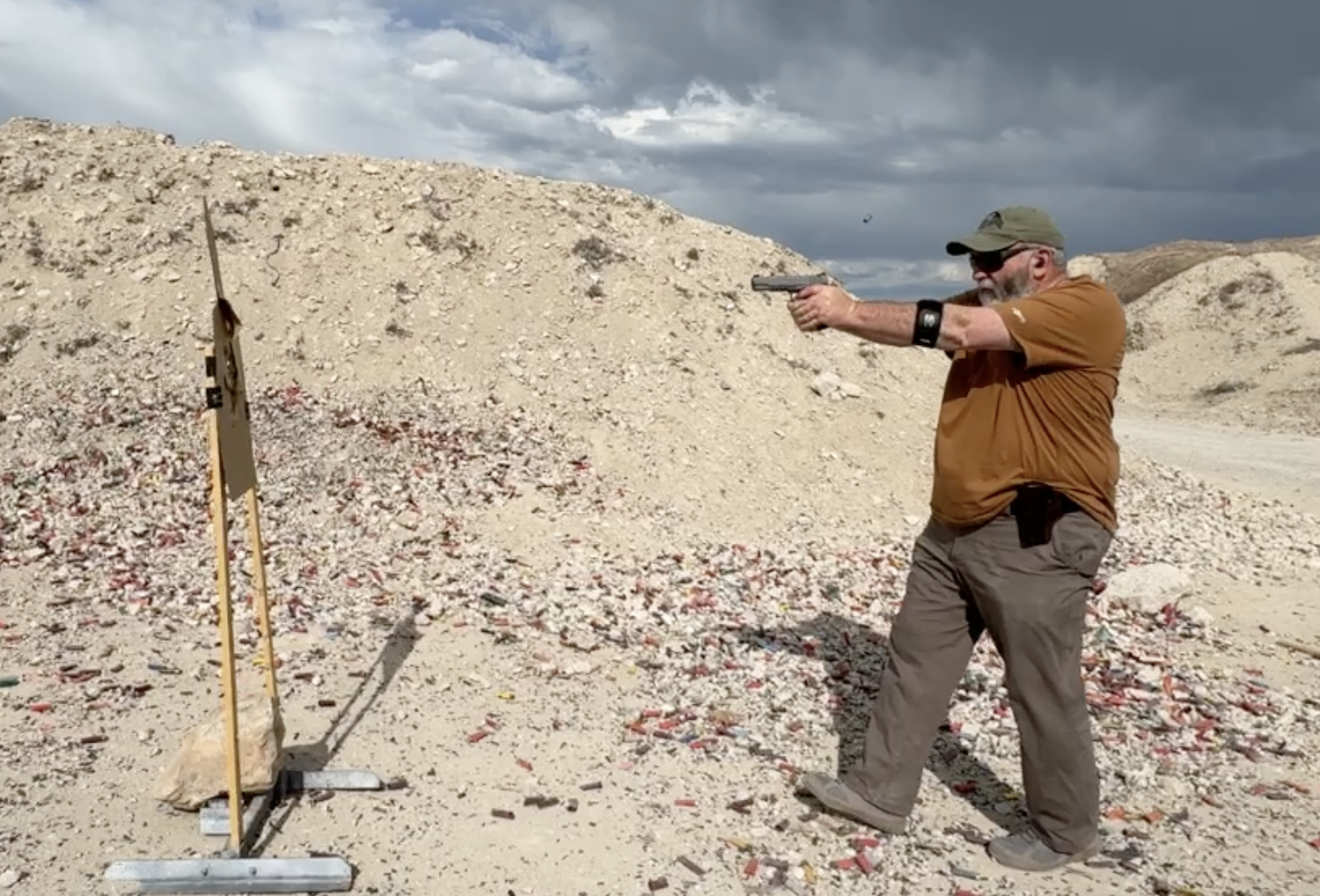
As you gain distance, transition to upper-chest hits.
BUG
Coming from an era where a second gun was pretty much required equipment when in uniform, I see a huge benefit here. As long as I can get to it and draw with my support hand. If I can, I have much greater freedom to solve the problem.
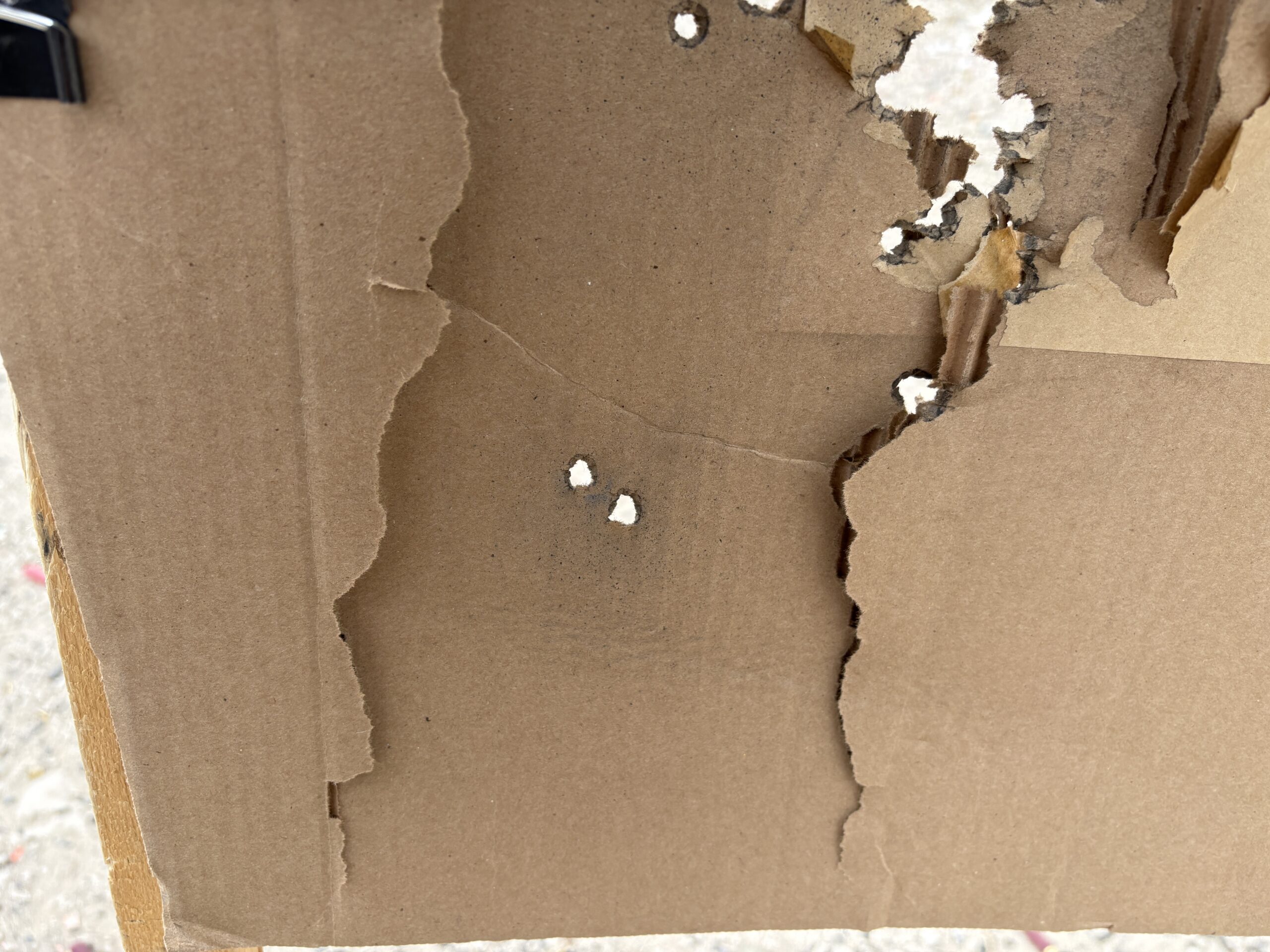
The shots are not aimed per se, but the index is solid and repeatable.
Attitude & Behavior
Remember the downward angle of the muzzle? Well, that means it is quite likely your rounds will be angled downward. They’ll likely strike the BadGuy in his/her lower abdomen. That’s ok. You are looking to impact and change their attitude and behavior. High velocity projectiles and muzzle gases are ways to do just that.
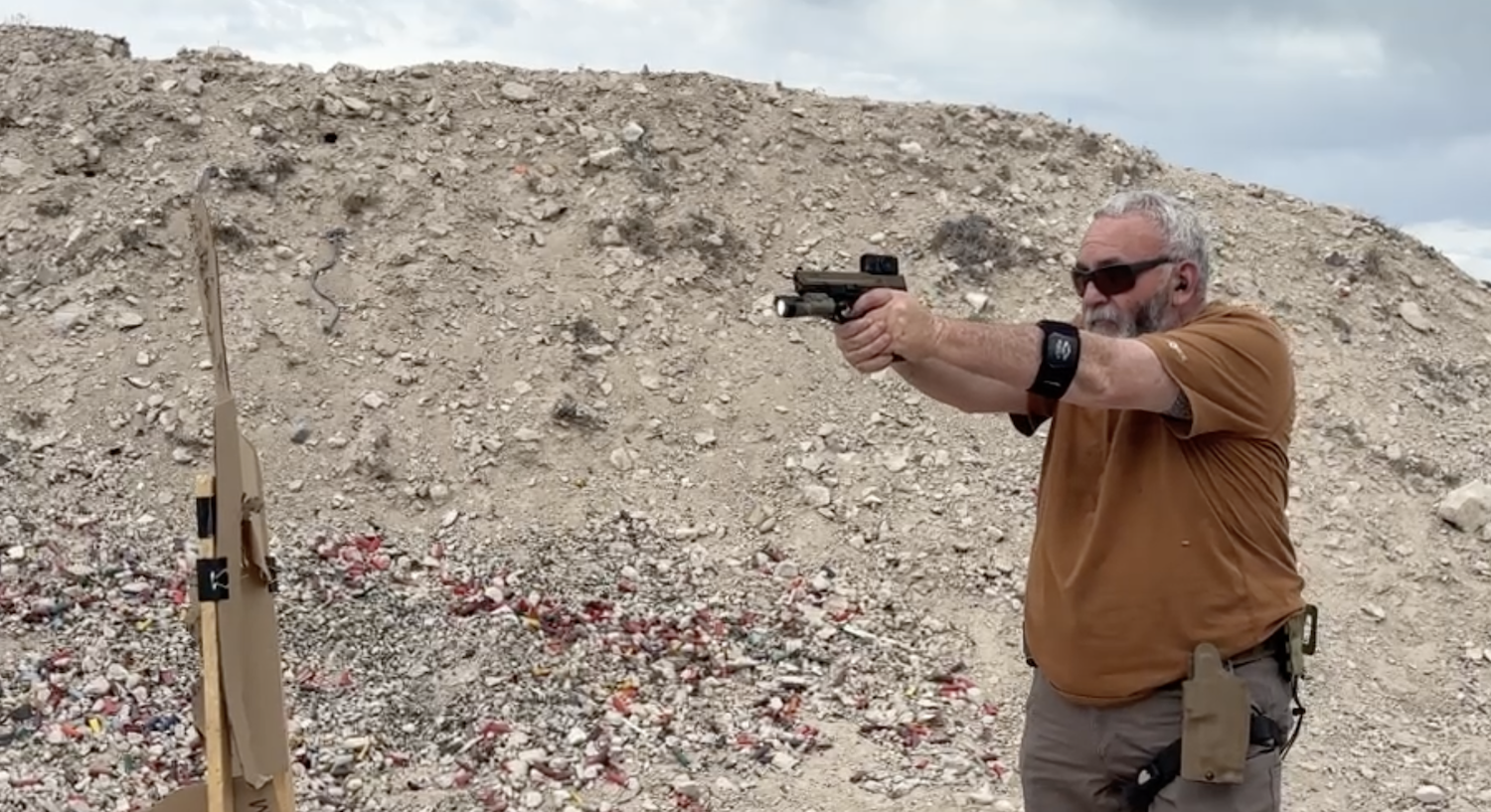
After engaging the chest and continuing to create distance, you can complete a failure drill if necessary.
Gain Distance, Separation
The post-shooting change in attitude and behavior allows you to alter the nature of the fight. If you can escape their grasp and disentangle yourself, then you can create distance. With that, you are better able to deliver aimed shots to center mass or the cranial vault.
What’s next? It really depends on your role. As an officer, you have an obligation to effect a custodial arrest and, when reasonable, begin life-saving measures – which is a separate discussion. As a decent, normal human, your primary concern should be escaping. Once you have done that, you can call the police and emergency medical services for help (again, a separate discussion).
Final Thought
Too often, we get stuck shooting with a full-on square-range mentality. Your fight will not be what you think or imagine it will be; your fight will be whatever the Bad Guy(s) decide they want to start. Everyone gets a vote.
Seek competently presented training from experienced, knowledgeable instructors. Cecil, Craig, and Greg are three I recommend. Then include those lessons in your practice.