
 (+6 rating, 6 votes)
 Loading...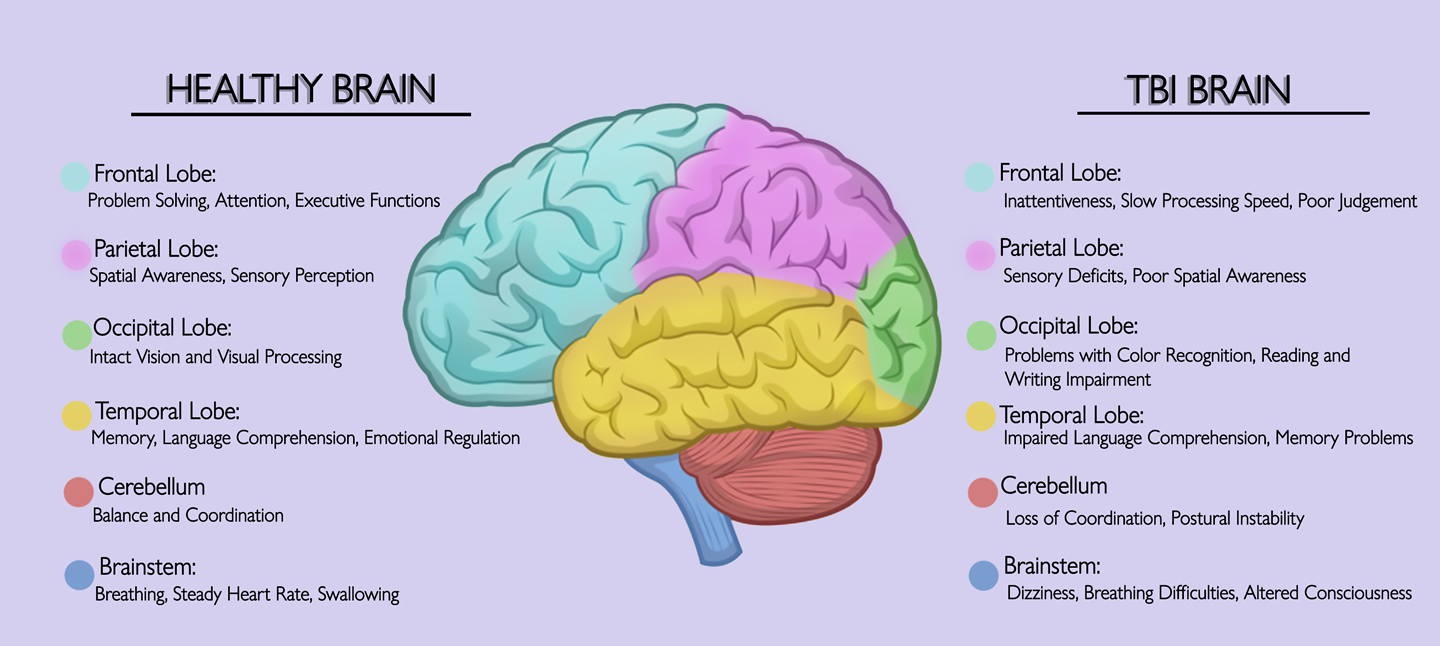
featurebraintbiimage
A brain before and after TBI.
Over the last twenty-five years of the Global War on Terror, many of us have become much more aware of how blast injuries impact our brains – traumatic brain injuries (TBI). The military is as aware of it as the National Football League. The focus has been on IED hits, explosive breaching, firing artillery, and mortars. Essentially, big boom and blasts.
The worst headache I have experienced started on the Multi-Purpose Range Complex at California’s Fort Hunter-Liggett during the summer of ’05. We conducted a five-day drill to prepare for our upcoming deployment to Iraq. Three days were spent firing the Browning M-2 .50 caliber heavy machine gun, or in very close proximity while others were shooting. Even with good electronic hearing protection and an MSA-Gallet MICH helmet, my head took a pounding.
For the record, I am not a neuroscientist. This is not a definitive article. It should serve as a pointer to resources on the subject.
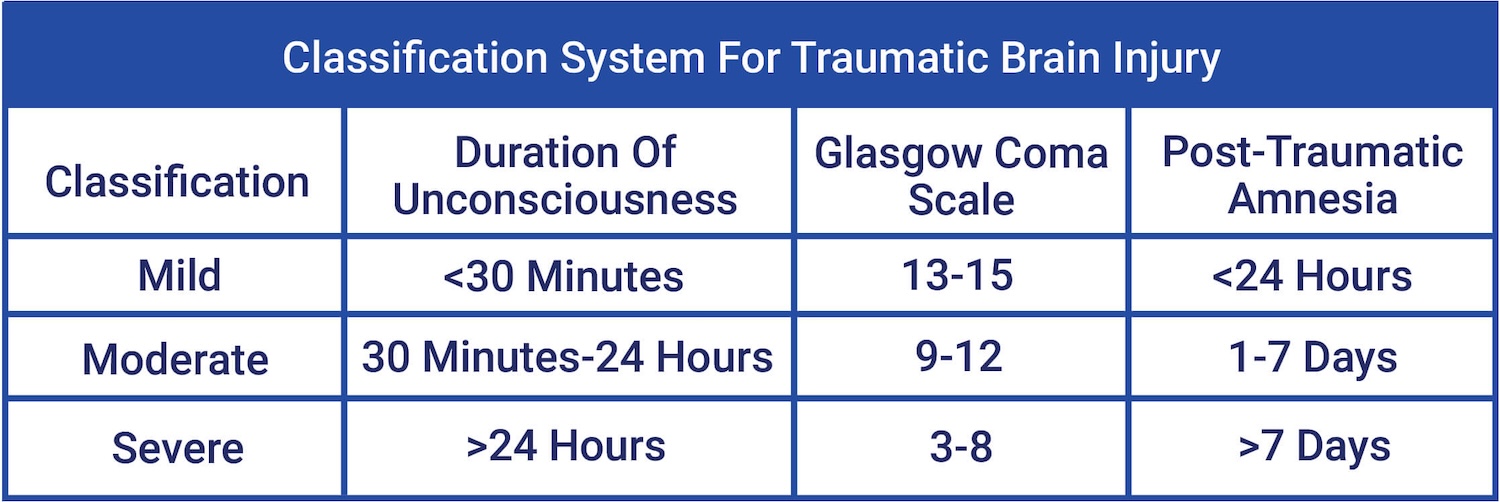
Classification of TBI seriousness on a single event.
Cops?
But what about law enforcement? Are “we” seeing it? What about small(er) arms? On indoor ranges or in shoot houses?
Look at the construction of many shoot houses. While many have openings between the wall and the roof, the walls are often higher than in a regular structure, whether commercial or residential. And not all of them have those openings.
The roofs are almost universally metal; are they reflecting any pressure waves? The higher-end shoot houses can be two stories. Those walls and any movable dividers can create echo chambers, doubling the peak blast pressure.
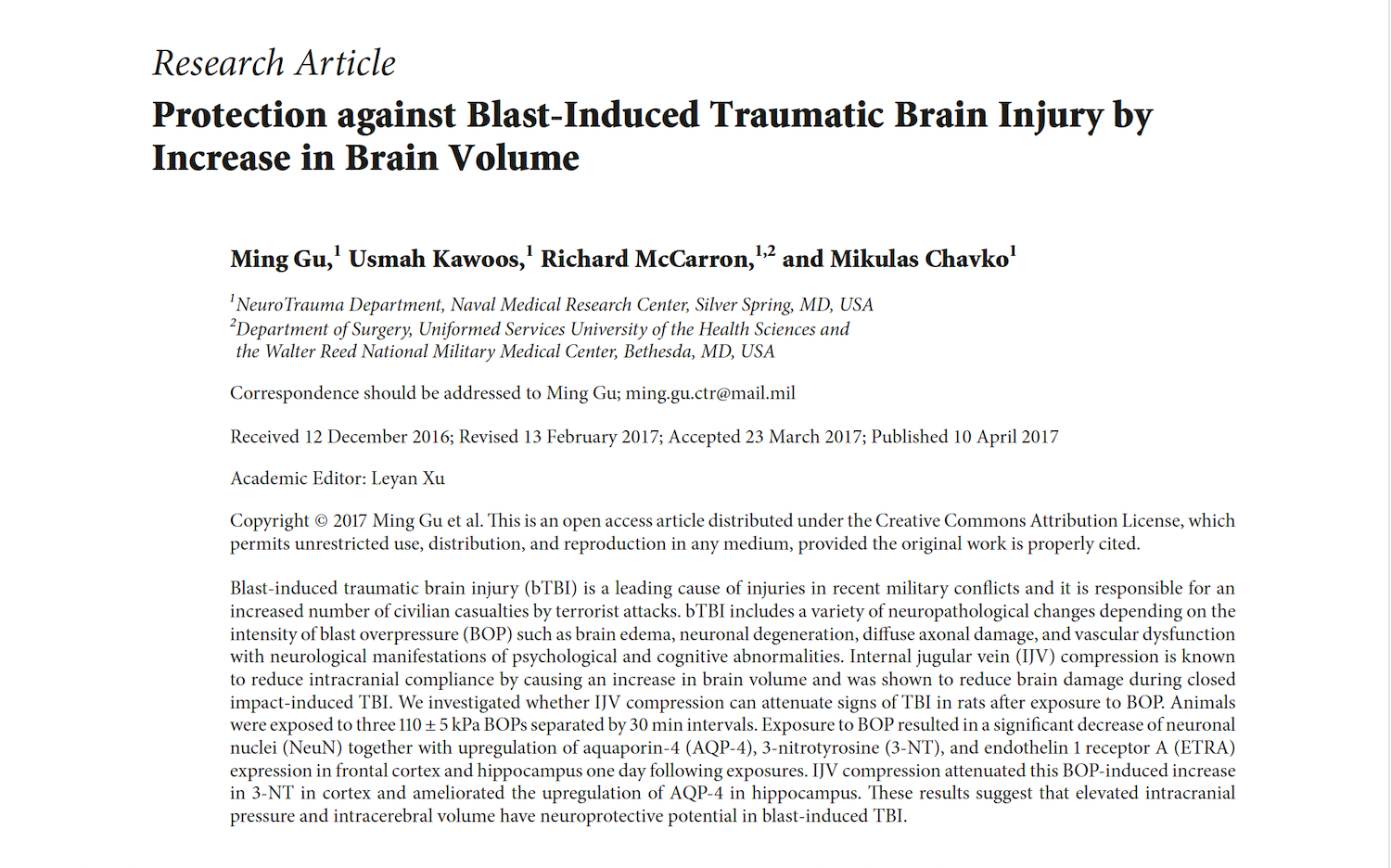
More research is underway, and the findings are emerging. We just need to find that work and factor it in.
Per the Department of Defense (DoD), 4 pounds per square inch (psi) is the peak safety threshold, but blast waves can have multiple peaks, up to dozens. Additionally, the 4 psi value is based on hearing-protection studies.
There is a recent New York Times article on this subject. While informative, it may be slanted against firearms ownership and training.
Repetitive Low-Level Exposures
Mild and moderate blast exposures may be enough to cause injuries, including psychiatric issues, impaired function, and neuropathology. The military has identified the peak psi number for a single event. However, the community has become aware of cumulative effects. One study showed students were exposed to 184 cumulative psi over the course of a one-week class.
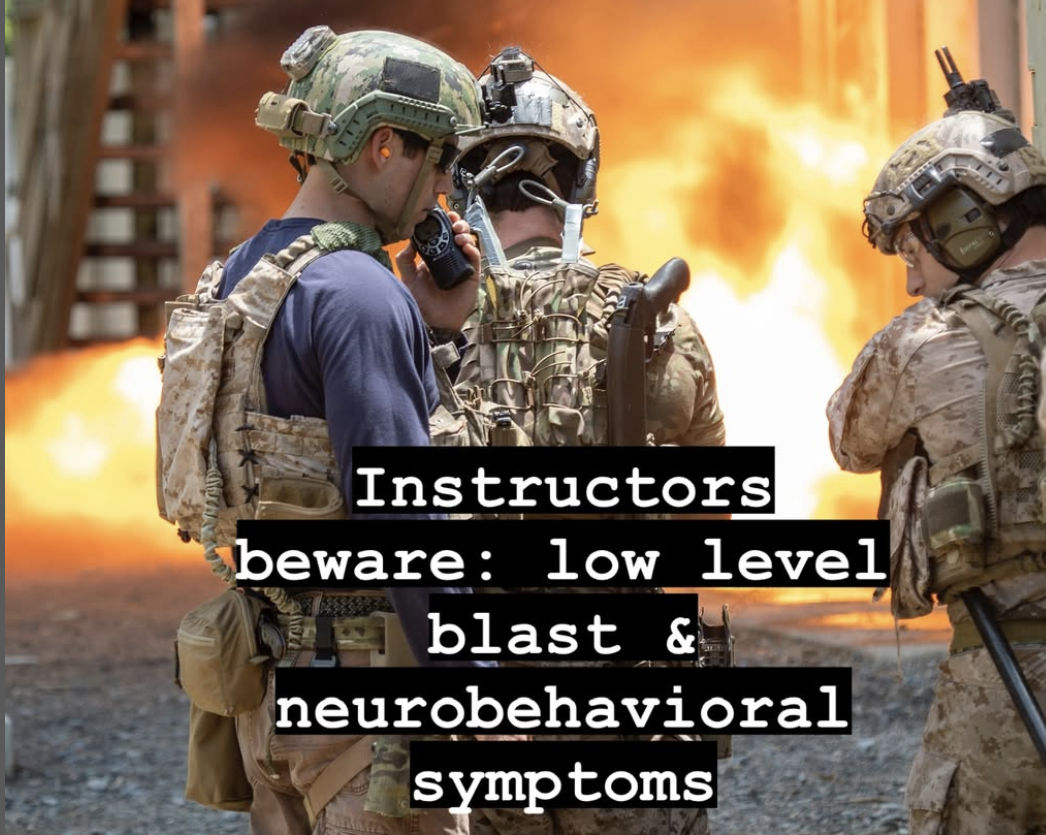
Per Military studies, cumulative exposure – especially to instructors – is an issue (PC – ROE.Labs).
31.7 psi-milliseconds is the recommended total daily exposure limit. Consider that with these per-shot pressure waves: .50cal 6.7, M4 1.6, 9mm pistol 1.3, Bullpup 5.56mm 1.1, 12 gauge & .45 ACP 1.0 each.
Twenty (20) rounds from an M4 exceed the daily recommended maximum exposure.
Now, seeing that each .50cal shot is 6.7 psi, I can’t even imagine what my exposure at Hunter-Liggett was over three days.
“While ballistic (shotgun) door breaching and small arms firing only expose the operator to low peak exposure levels, the sheer number of rounds fired during training may result in an excessive cumulative exposure.” Kamimori 2017
A study by the US Army’s Special Operations Command (USASOC) found that cumulative blast impulse, rather than single peak exposures, was the strongest predictor of long-term damage.
They also identified that instructors were far more at risk than students because of long-term repetitive exposure.
From an explosive breaching class cycle :
The students averaged 116 exposures with an average peak overpressure of 1.17. Their cumulative exposures were 93.6 psi-ms for the class.
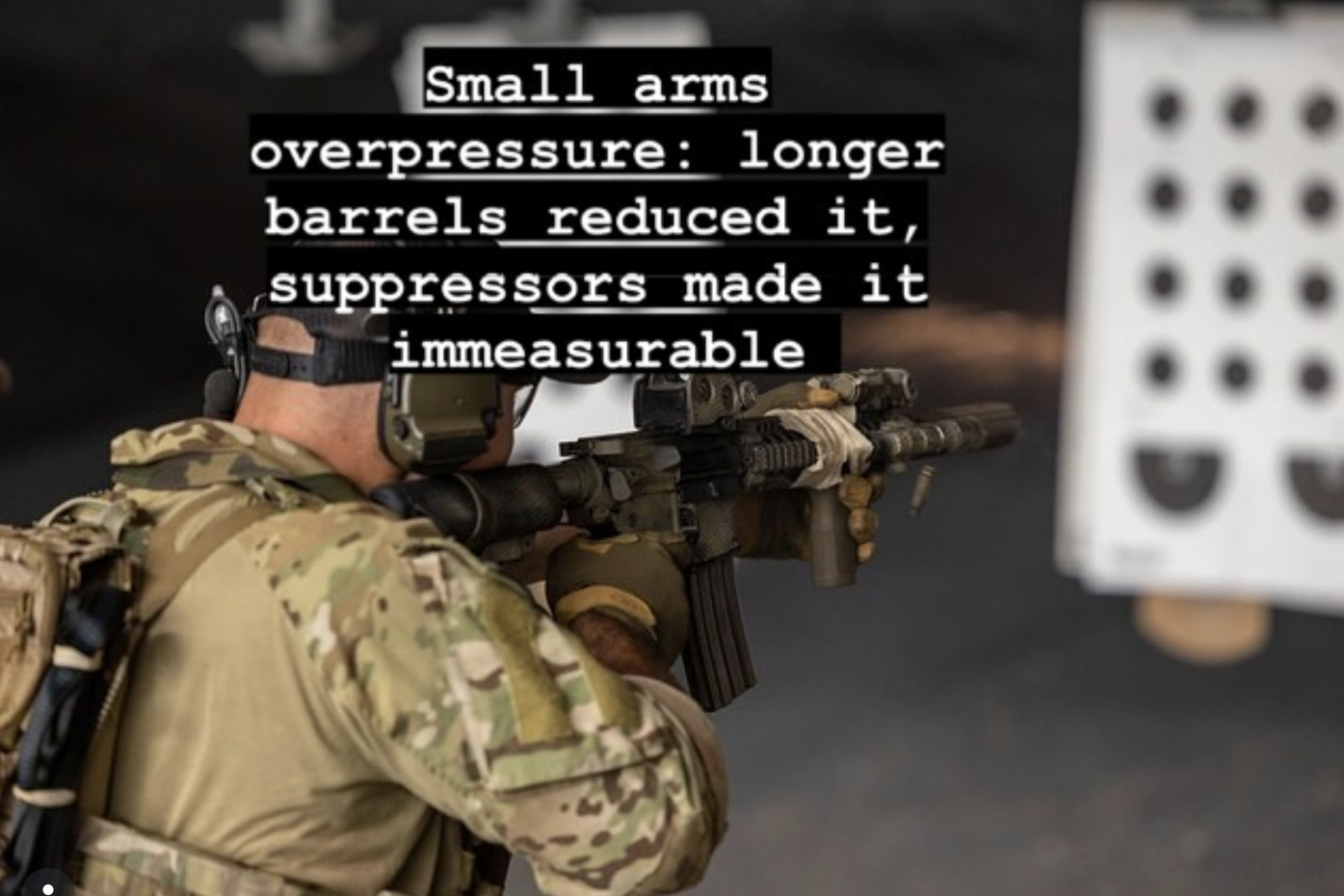
Suppressors offer significant benefits in many ways. (PC- ROE.Labes)
Symptomology
In the short term, headache, dizziness, confusion, and fatigue tend to start immediately after an injury but resolve over time. Emotional symptoms such as frustration and irritability tend to develop during recovery.
Over time, they can include skull fractures, chronic traumatic encephalopathy (CTE), and post-traumatic dementia.
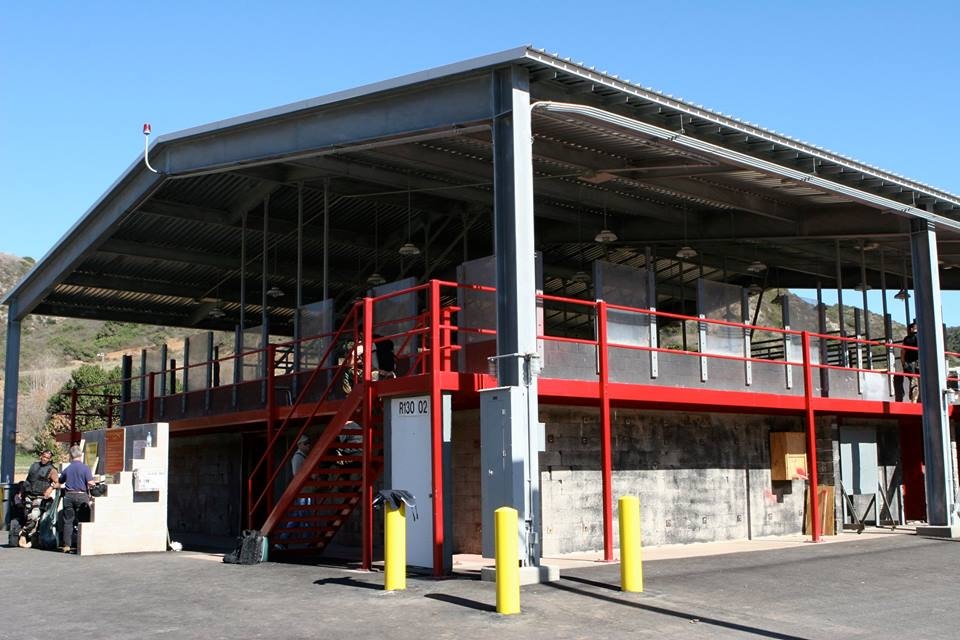
At least the catwalk is largely open, but the breaching and shooting are happening on the first floor.
Mitigation
The anatomical design of the human face can direct blast waves right into one’s eyes. ROE Labs found this can increase peak blast pressure by at least 5%. Large enough shooting glasses can reduce those pressure waves by 25-60%, depending on the blast size. Properly fitting goggles can further reduce the blast wave.
Shooting outdoors cuts those waves in half. While the use of a suppressor cuts it by 70%.
If shooting indoors, use a suppressor!
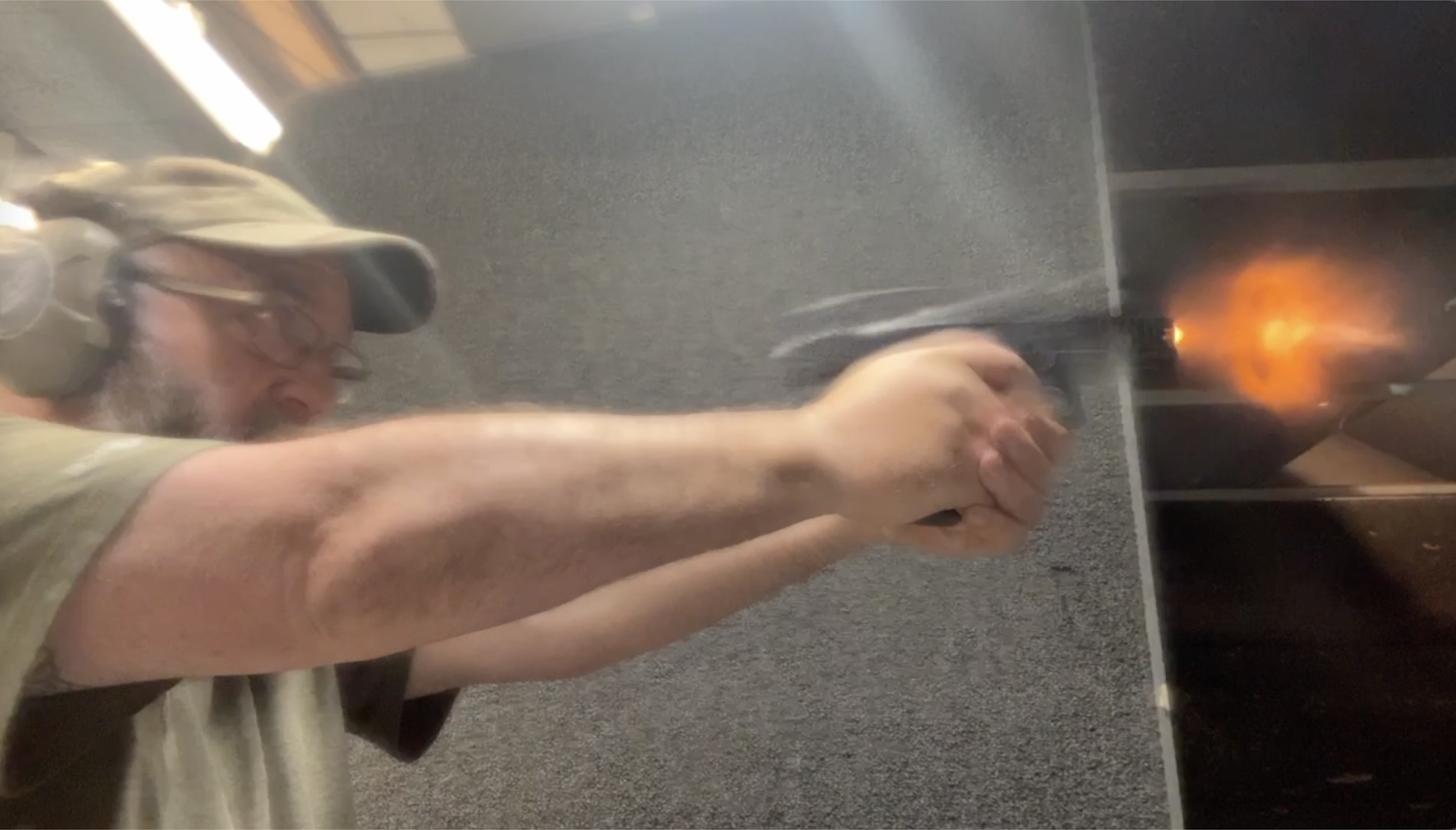
Just shooting between the dividers on a range can significantly increase your exposures.
ROE Labs found that simply hanging wool blankets inside a shoot house during explosive breaching was enough to mitigate blast effects.
Helmets
While they clearly protect from frag & impact, blast mitigation and mild TBI have not yet been addressed. Helmet fit, padding, and coverage can all affect impact protection and blast effects due to design trade-offs.
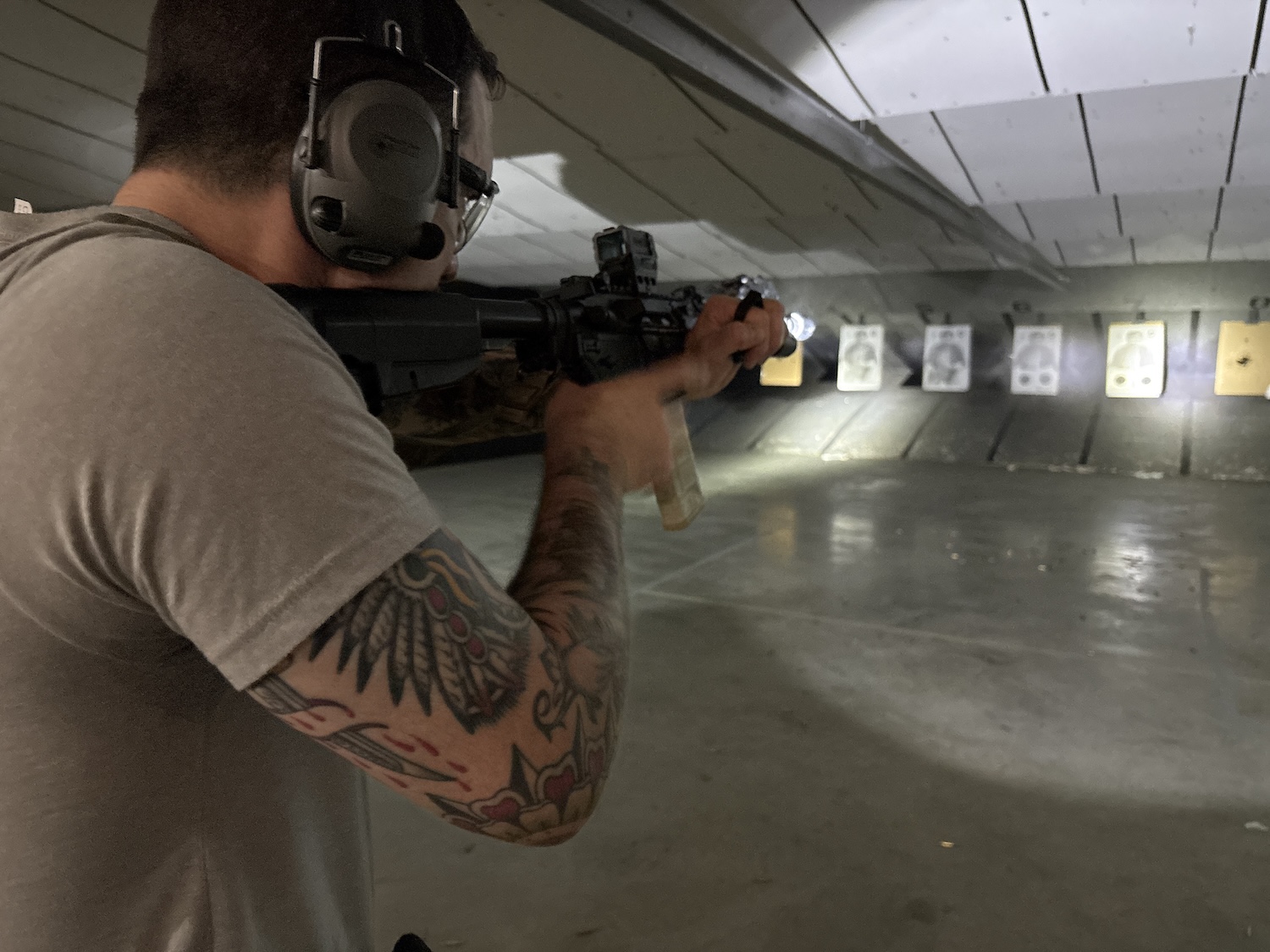
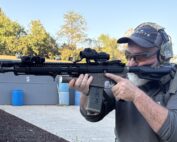
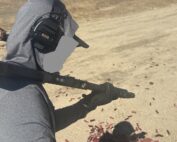
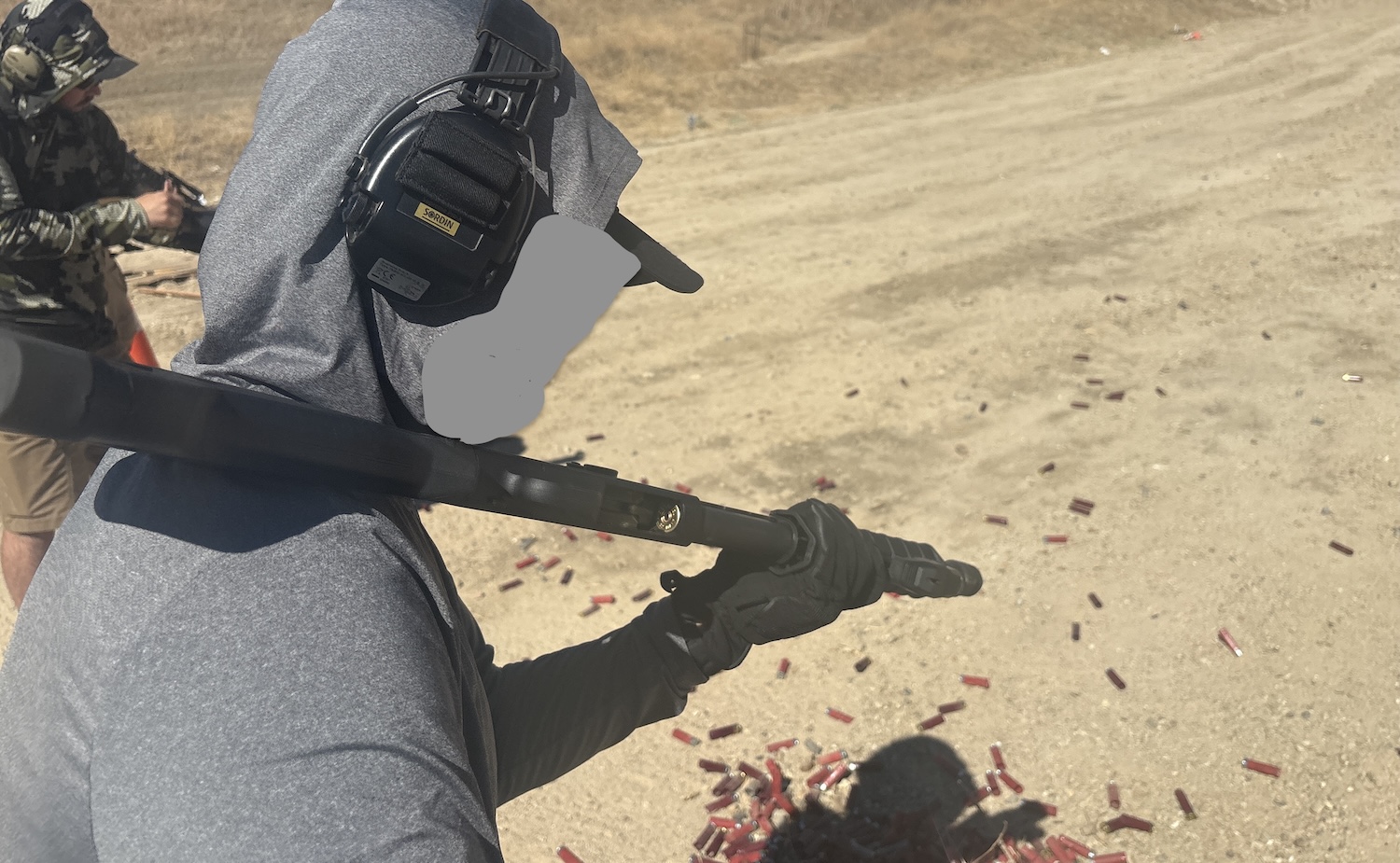
One of several students firing carbines simultaneously. Fortunately, most were suppressed!
Three Things
While I am not doing much work inside a shoot house or indoor simulator these days, for many years, I spent a significant amount of time in those spaces. Should I return to that environment, there are three things I’ll use as much as possible. They are a respirator, the Q-Collar, and suppressors.
You’ll always have some level of exposure to heavy metals in enclosed environments, especially in a shoot house. Hence the respirator.
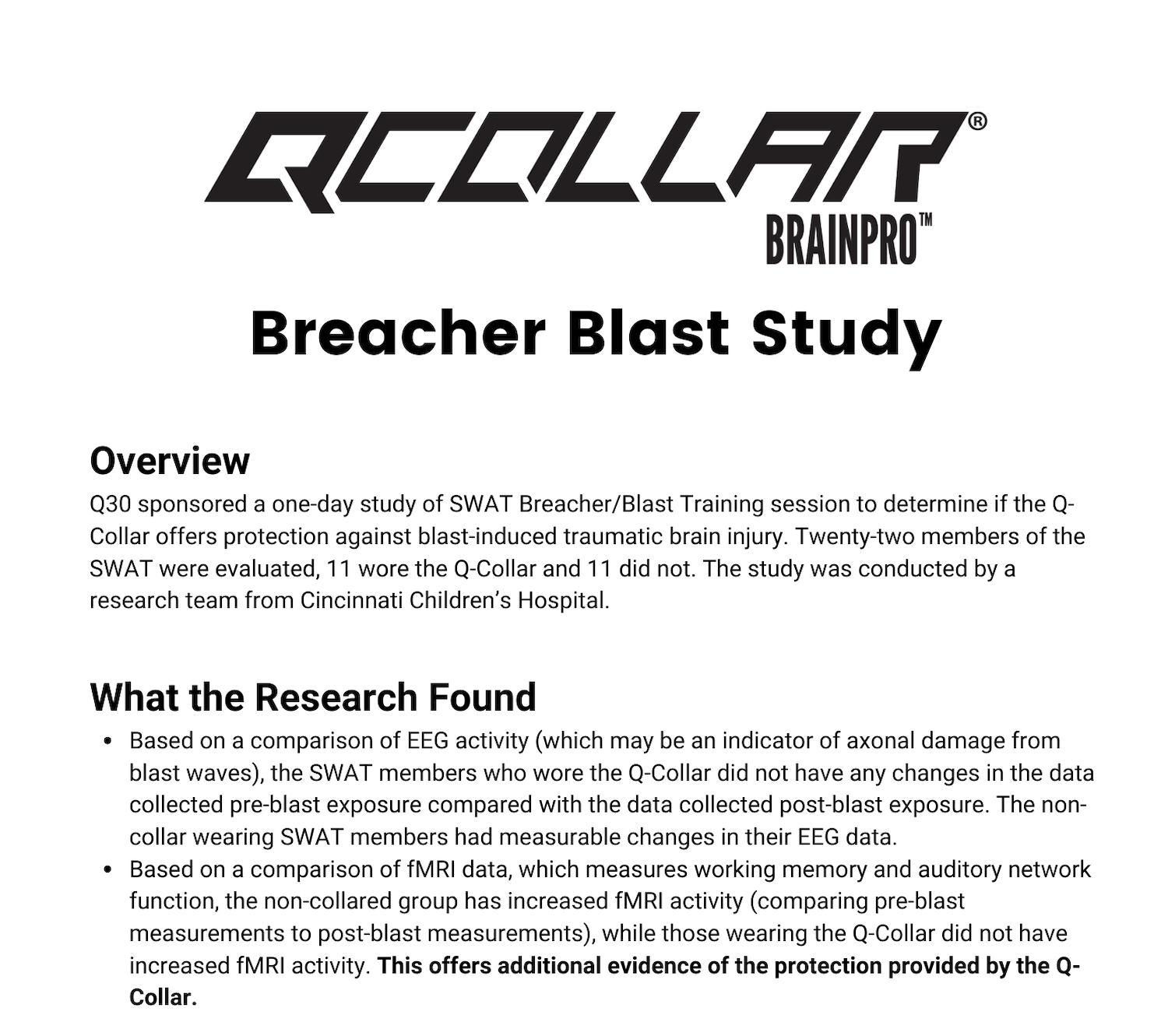
The Q-Collar is a passive way to mitigate some of the effects.
There is science behind the Q-Collar, previously reviewed HERE. How it works and its benefits have been validated at various levels, including Walter Reed National Military Medical Center and other regional facilities.
Final Thoughts
The M2 machine gun range pounded on me far worse than either of the direct IED hits my gun truck & crew took in Iraq. But it’s fascinating to consider just how much damage was done with traditional small arms on indoor ranges and several shoot houses.
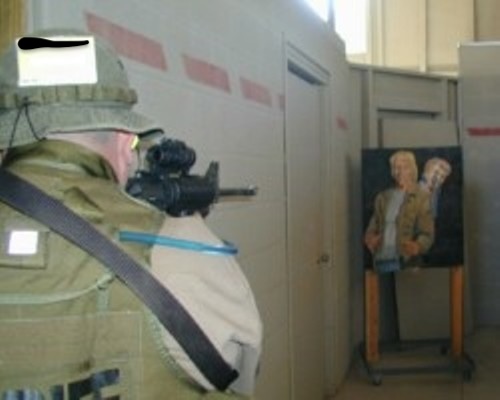
The author is doing a shoot house run in the early 00s. Cinderblock walls with openings above them to dissipate the waves.
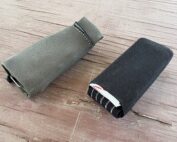
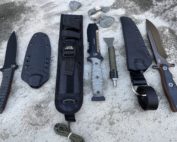
We all need to be aware of what is available to mitigate injury and long-term damage from these exposures. Since we must train and that training must be realistic, we need to include these steps. This may well mean more use of products like Unit Solutions (HERE) and other NLTA offerings (Example 1 and Example 2).
This is about awareness and paths to mitigation.
References and Resources
Innovation at the speed of relevance: Fielding blast overpressure solutions now. Kratchman, SG, CPT, MS; Wells, MA SFC BS; Ripperger, M MAJ MS; Oh, AS, LTC, MD; Infantry magazine, Spring 2026;
Neurotrauma Biomarkers Levels and Adverse Symptoms Among Military and Law Enforcement Personnel Exposed to Occupational Overpressure Without Diagnosed Traumatic Brain Injury. Boutte, AM PhD; Thangavelu, B PhD; Nemnes, J, MS; JAMA Network Open. 2021;4(4):e216445. doi:10.1001/jamanetworkopen.2021.6445
Protection against Blast-Induced Traumatic Brain Injury by Increase in Brain Volume. Ming Gu, Usmah Kawoos, Richard McCarron, and Mikulas Chavko. BioMed Research International April 2017
Reassessing Combat Helmet Protection Against Blunt and Blast Threats: A Structured Scoping Review. Thams, S; Skold, MK; Arborelius, UP; Gunther, M; Military Medicine journal 2026
Cumulative Blast Impulse Is Predictive of Changes in Chronic Neurobehavioral Symptoms Following Low Level Blast Exposure during Military Training. SFC Cory McEvoy MPH, SFC Adam Crabtree S, John Case MS, COL Gary Means MD, COL Peter Muench MD; Military Medicine journal 2024
Effectiveness of eye armor during blast loading: Biomechanics and modeling in mechanobiology 4/2015 volume 4; Bailoor, S; Bhardwaj, R; Nguyen, TD; https://link.springer.com/article/10.1007/s10237-015-0667-z
Roe.Labs , ROE.Labs on IG