
 (No Ratings Yet)
 Loading...

STINGRAY-real-bwspiral
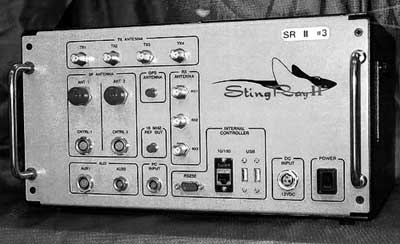
The papers have exploded with fear-based articles about how the American government, including the NSA, CIA and FBI, are spying on innocent Americans. Edward Snowden became a “whistleblower” for revealing that (gasp) the NSA tries to keep all phone toll records because the cell phone companies dump them after about 2 years. That doesn’t mean anyone is analyzing them, or listening to phone calls or recording text messages. Phone tolls are simply a record of what number called another number and the date and time. Analysis of even a small handful of phones takes days and weeks of mind-numbing work. Don’t believe me? Go talk to anyone who regularly writes Title III wiretaps. And now a new fear has surfaced: The government is (gasp) getting cell phone data without a warrant by using some magic box called a Stingray. Let me take a few moments of your time to explain exactly what a Stingray is, what it does and the legal safeguards to prevent its abuse.
Gathering Intel
First, have you read Mark Bowden’s Killing Pablo? You should. In 1993, the Colombians tracked down Pablo Escobar and whacked him using a little box called a Triggerfish. It picked up his cellular signal and pinpointed his location. Stingray is simply the name for the modern Triggerfish. It can pick up the signals from cellular telephones used in its proximity. It can also pinpoint the location of the cell phone.
Although there are several versions of these machines, which can intercept and listen to phone calls, the ones sold to American law enforcement cannot. They can grab the Electronic Serial Number (ESN) or the International Mobile Subscriber Identity (IMSI) of the phone. Law enforcement can then subpoena the phone company to find out the actual phone number and subscriber information. If it’s a prepaid phone and belongs to a bad guy, odds are the subscriber information will be completely bogus. What use is a Stingray? You’d think a box the size of a suitcase that costs a quarter of a million dollars could do a lot more than that.
One of their primary uses is finding out what cell phone is being used by a bad guy. Crooks tend to use their phones for a short time, then discard them and get a new phone. If you need to find out what phone a drug dealer is using, you follow him around all day. When he’s at home, you grab the signal of all the phones being used in the area. Let’s say you collect 30 numbers. When he goes to the mall you scan and get another 200 numbers. Then he goes to the gas station; you scan again and get 50 more numbers. There will be one cellular signal that’s the same at all three locations — and that’s your bad guy’s phone number.
From there, you can run his tolls and try to gather enough probable cause to write up a 20- to 40-page affidavit and get authorization to record his phone calls. By the way, before you went out with your Stingray and pinpointed his new phone, you had to get a court order for a pen register/trap-and-trace authorizing the use of the Stingray. If you didn’t get that order, the existence of the new number, the Title III intercept and any future seizures or arrests are all “fruit of the poisonous tree.” Poof! Gone. They’re 100 percent inadmissible in court.
Why The Stink?
Stingrays gather the data of innocent people. Remember the 280 numbers collected in the example I used? There was no court order authorizing their information being gathered. But the IMSIs and ESNs of those numbers are simply trash investigators would sort through to find the good number. Once the bad guy’s number is found, they’re erased. No one cares about them and no one wants them. To get upset at law enforcement sorting through them seems a little silly. Compare it to this scenario:
Cops are told there’s a fugitive at the local train station. They rush down, man the security cameras, sort through all of the innocent travelers, locate their bad guy and arrest him. If you told everyone at the train station police had looked at them through the surveillance cameras to find the bad guy, would they really mind? I doubt it. Most would be thrilled someone was looking out for their safety. The Stingray is simply looking through a crowded hub of cellular phones in a small area and searching for a bad guy in the exact same way. If people understood this or if the popular media explained it, no one would care … but it wouldn’t sell many newspapers or magazines.
Use of the Stingray in this manner seems fairly innocuous and well governed by rules, but what about when it’s used to pinpoint the location of a cell phone? Pablo Escobar would be the first person to stand up and say that he’s against it. Stingrays are used to find fugitives. Not surprisingly, the US Marshalls are fond of using them to that end. And now the legality gets a little murkier. A fugitive already has an active warrant. He has no legal protection from being found by any means necessary. Or does he?
The American Civil Liberties Union (ACLU) would beg to differ. A Stingray, without a court order, can be employed to find him. However, don’t forget about the fruit of the poisonous tree. If illegal (or at least judicially unauthorized) means are used to locate him, nothing found with him will be admissible later. But, if the cops are thorough, they can get a court order and then anything they find with him is fair game to be used against him in court. I can see why cops like to take shortcuts, but why risk kicking down his door, arresting him and realizing he was sitting in the middle of 10 kilos of coke — only to lose it because you didn’t have a warrant? Sure, you still get the seizure, but that’s all you get.
Case Law?
So finally we come to the current legal uproar about the Stingray. A guy by the name of Daniel Rigmaiden was wanted in Arizona for stealing the identities of nearly 2,000 people and filing fake tax returns. What sounds like a giant headache actually netted him more than $4 million. The FBI used a Stingray to locate the wireless internet card he was using on his computer and rushed in to put the “habeas grabus” on him. Rigmaiden, who wanted to prove he was fond of paperwork, represented himself in court and filed a bunch of motions to suppress evidence. The ACLU liked Rigmaiden and felt he was a big enough scumbag and came to his defense. They said despite the fact the US government had a warrant for real-time tracking of the air card, it did not allow them to sort through everyone else’s IMSI to find his.
US District Court Judge Eric Campbell sided with the cops. He said they had a warrant, and nowhere does it say a warrant needs to specify how it will be executed. The cops didn’t keep any of the information gathered from other cell phone data, so it was not an illegal search and seizure. Now for the bad news: Judge Campbell’s ruling isn’t binding for any other court around the country — the issue is still up for debate.
It used to only be the Feds that could afford such a shiny, new piece of equipment as a Stingray. Today, wealthy suburbs all over the nation have ponied up the cash and got one for themselves. If your department has one or has access to one, do us all a favor: If you’re going to use it, spend the extra few hours and get a warrant. If you decide to use it without a warrant, recognize it will be challenged in court and could easily create case law against its use because it grabs IMSI information from phones not mentioned in your affidavit. We already lost warrantless car trackers thanks to the FBI and the DC Metropolitan Police Department.
Don’t be the guy who loses cell phone trackers for the rest of us.
By Nick Adams

Order Your Printed Copy Of American COP December 2013 Issue Today!
Download A PDF Of The American COP December 2013 Issue Now!