
 (+1 rating, 5 votes)
 Loading...
Your paragraph text
Training opportunities abound if you know where to look. Sometimes, that’s as simple as catching a buddy sharing a social media post.
Specifically, that was a post talking about the Utah Police Tactical Association’s (UPTA) yearly training day. I reached out to them, letting them know I was retired and a writer, to see if I could attend. They invited me to join the association.
UPTA’s description of their mission: We maintain a strong tactical focus on critical incidents, SWAT operations, high-risk missions, and advanced tactical training — modeled directly after leading state tactical officers’ associations. UPTA is for all law enforcement professionals and support divisions — you do not need to be assigned to a SWAT team or tactical unit to become a member. We provide dedicated training and support that is equally as useful for patrol officers, dispatchers, crisis negotiators, drone pilots, and other specialized personnel who play vital roles in successful operations.
This August, Utah has been awash in quality training. The sessions I attended or observed would have been well worth my time if I were still working.
As I understand it, UPTA grew out of the older Utah Tactical Officers Association. They are involved in training and have also helped develop policy to support mutual aid and equipment sharing statewide.
The UPTA training day was followed by the Mountain States SWAT training & competition. The next week was Action Target’s LETC.
Location
All but one class during UPTA’s training day was taught on the grounds of the Utah County Sheriff’s Office (UCSO) in Springville, UT. The agency might be a bit familiar; they are currently housing and transporting the suspect in a high-profile, very public murder that happened back in 2025. They cover just over 2000 square miles, encompassing everything from urban to very rural areas.
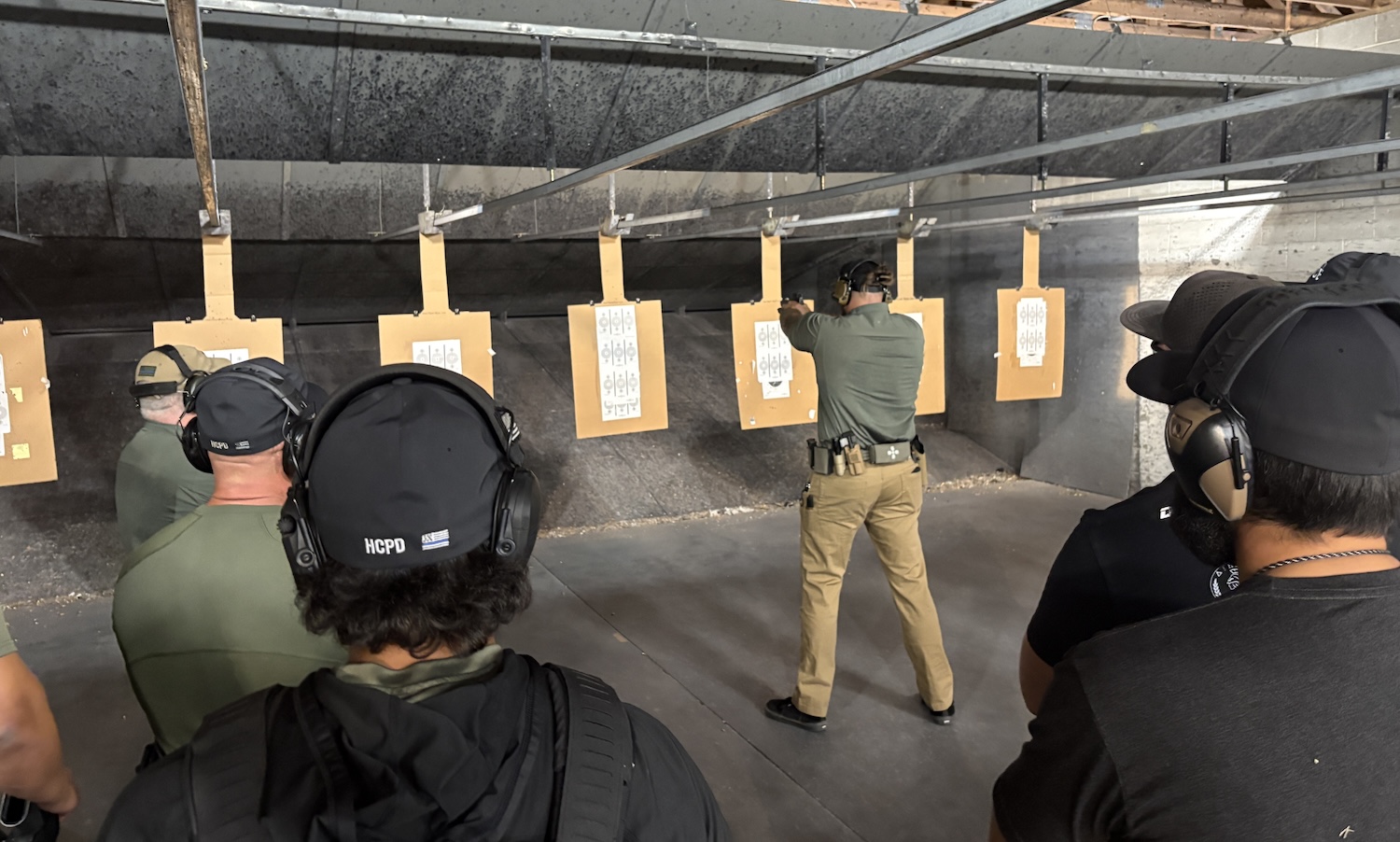
CJ demonstrating a diagnostic drill in the low-light class.
Offerings
This year they had five different classes scheduled.
Defense Technology taught their 8-hour 40mm Impact Munition Instructor class for patrol officers.
Surefire Institute ran two 4-hour introductory blocks covering low-light pistol work.
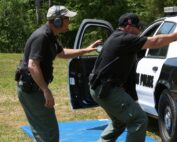
Detectives from UCSO’s narcotics unit covered high-risk vehicle takedowns for patrol officers.
Two four-hour sessions I couldn’t catch were Crime in the Feed – Policing Social Media and You Can’t Be An Asshole Every Day 101. While I can guess about the social media class, I can’t offer any thoughts on the Every Day 101 offering.
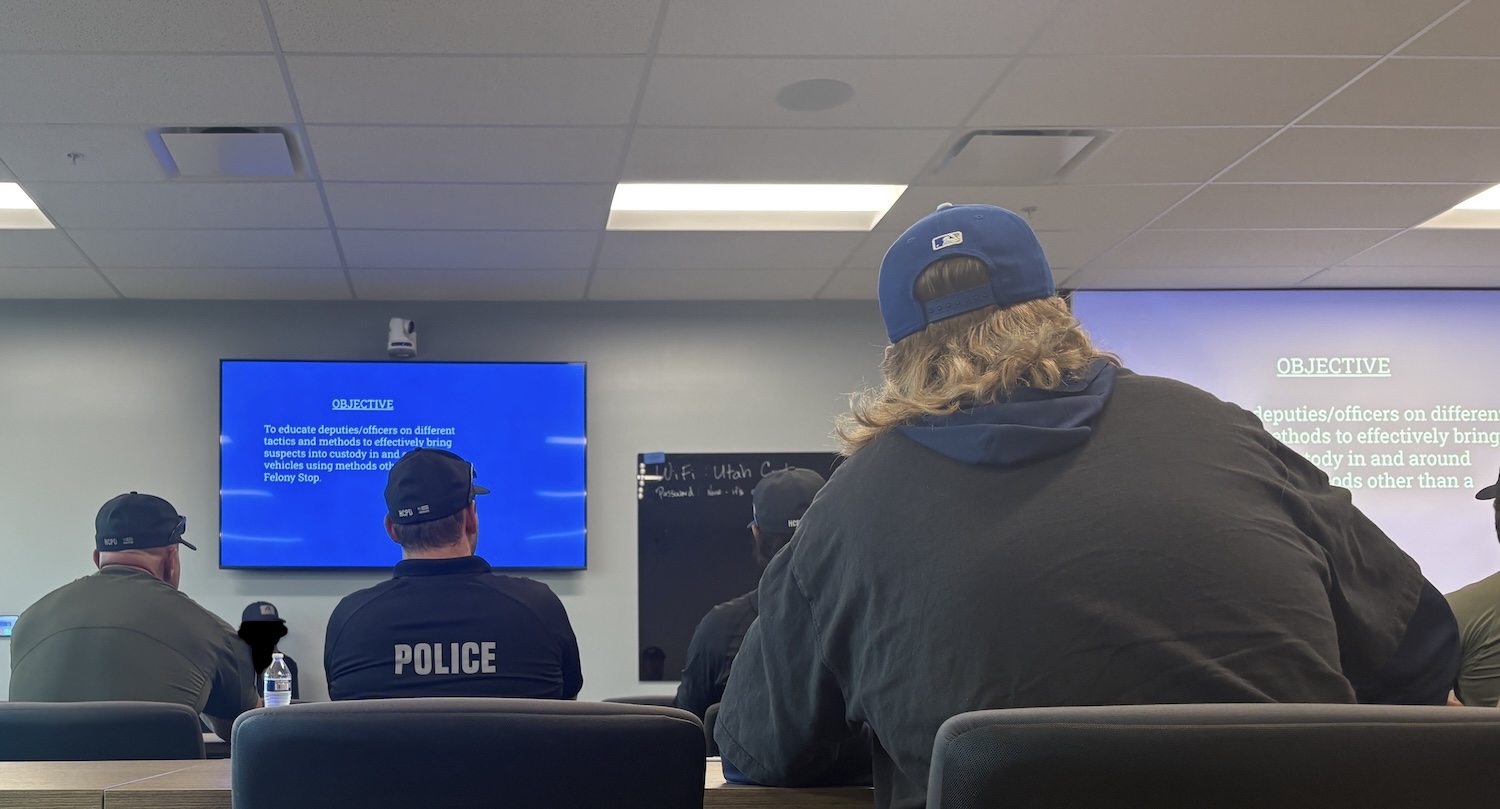
Here are the objectives for the High-Risk Vehicle Takedown block.
High-Risk Vehicle Takedowns
It has been fascinating to watch some very progressive development in that space. Tactics many would consider overly aggressive are proving far safer for the community. When done correctly and early, they greatly minimize the likelihood of a pursuit.
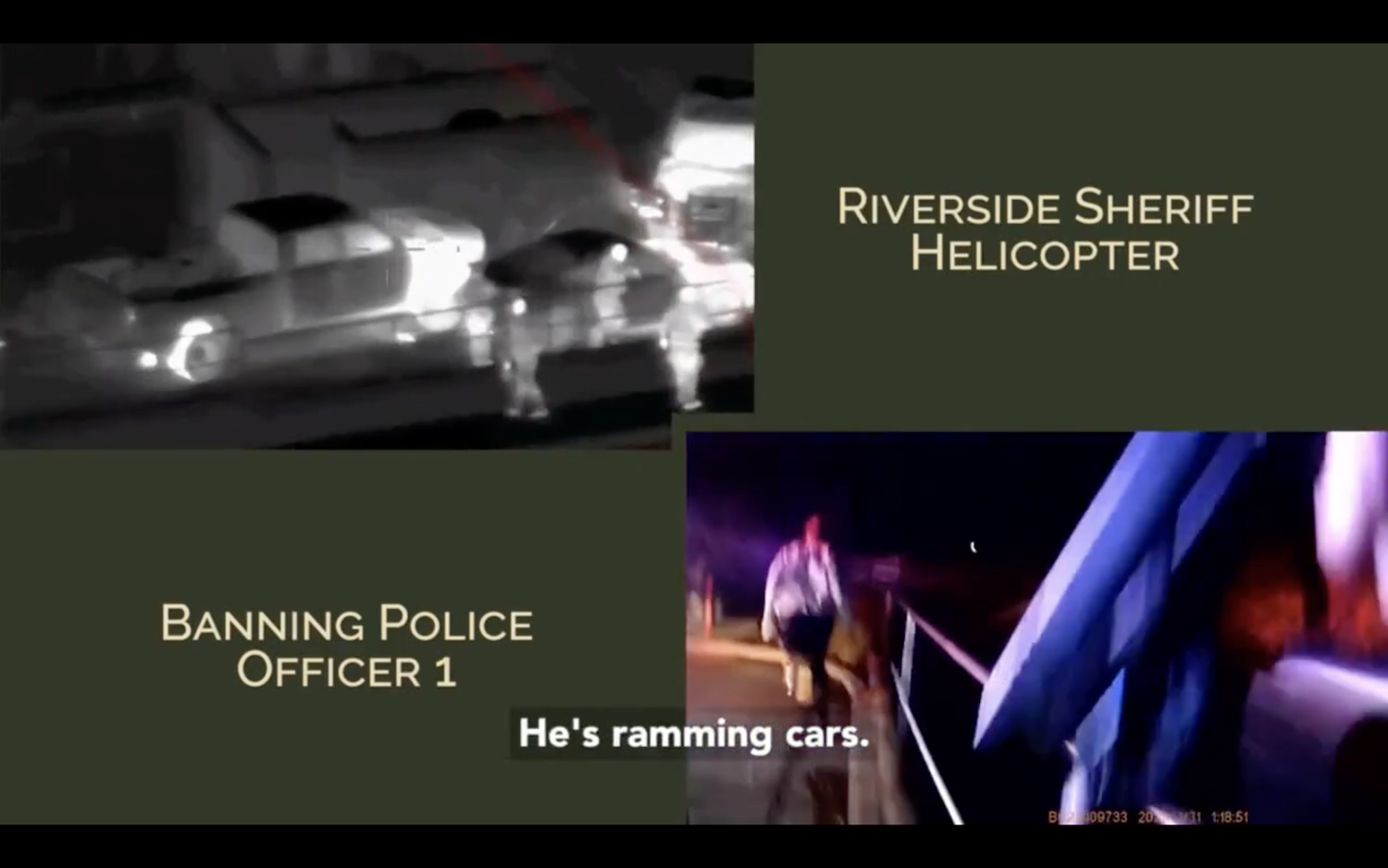
An impromptu take-down attempt in the drive-through definitely had lessons to be learned (Screen capture from agency’s video release).
We started in the classroom by reviewing an attempted vehicle takedown in a late-night fast-food drive-through – HERE. Specifically, it happened in Riverside County during 2021.
UCSO detectives had been using these tactics, techniques, procedures (TTPs) for a while. However, their patrol division had not, and they had experienced failures. The department decided to provide the training department-wide.
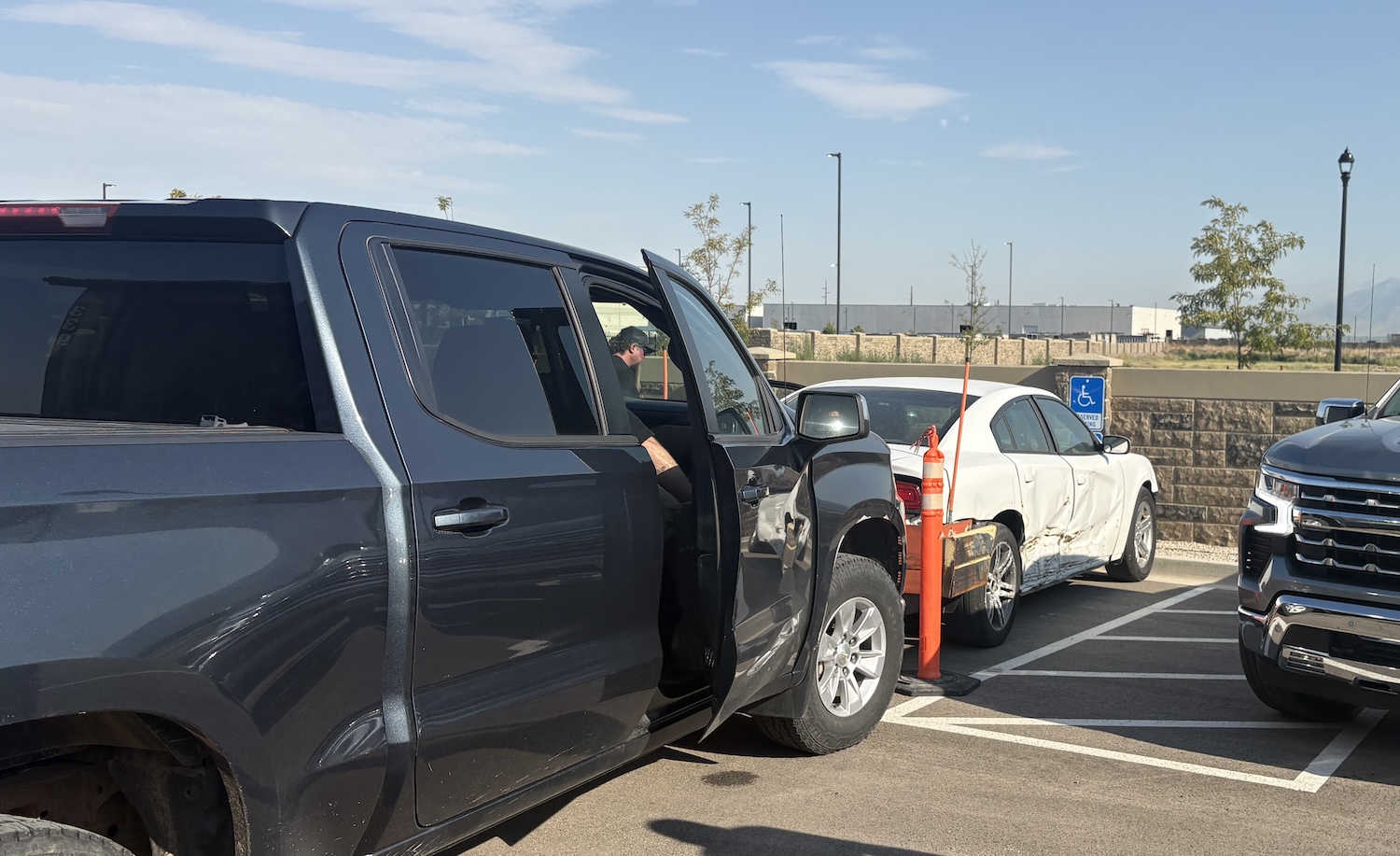
Using track cars and parking cones to help officers get into the right positions.
Key Points
Have a plan (that includes getting everyone trained first),
Know when to speed up, slow down,
Get your vehicles tight against the suspect’s,
Avoid pinch points (like between bumpers),
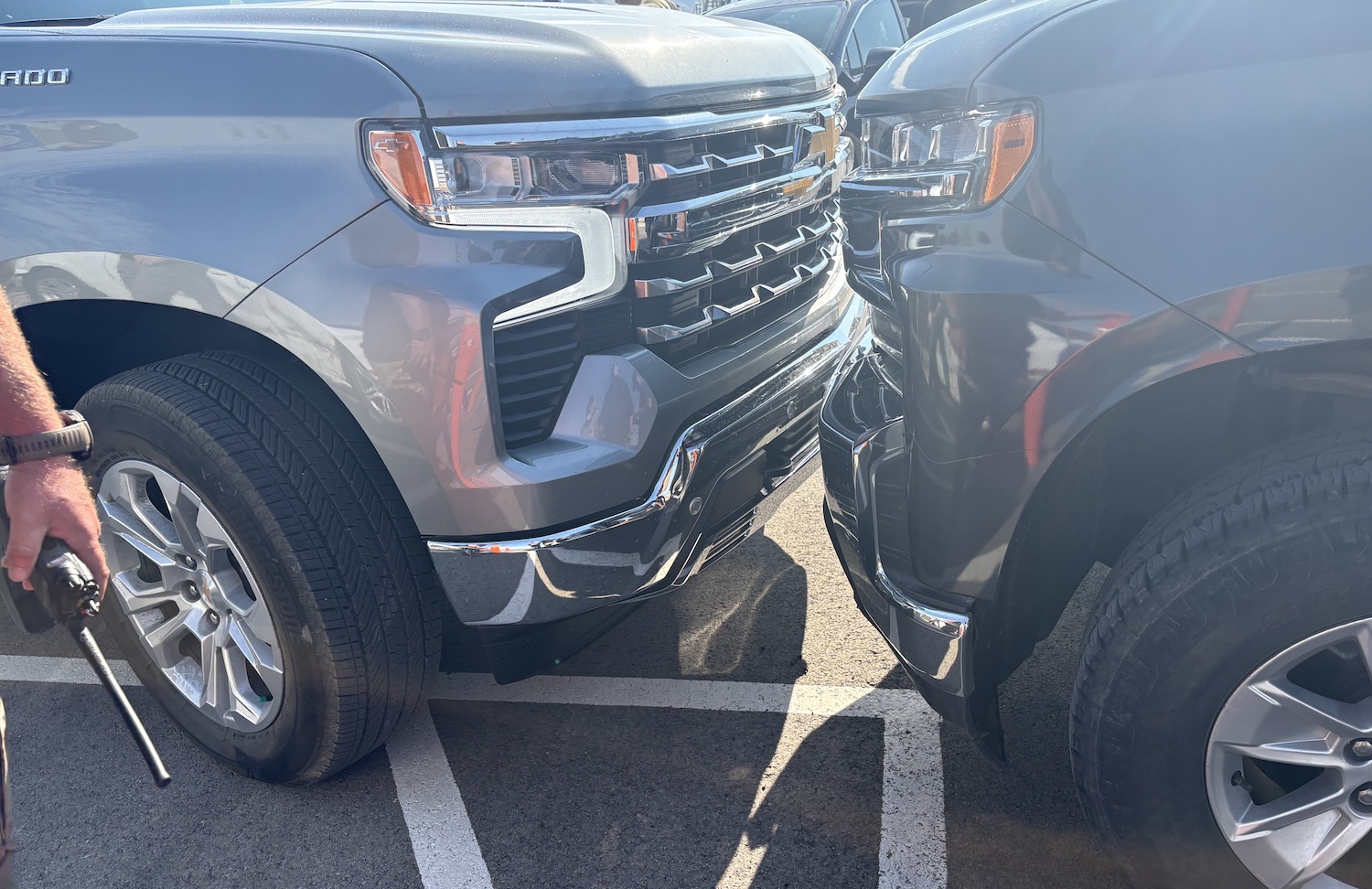
The bumpers need to touch, but you don’t want to be in-between them.
Manpower – have enough to keep the drivers in place,
Intelligence on the target and knowing your limitations,
Be ready for things to change,
Bring your tools – firearms, less lethal, K9, cuffs, air support,
We moved outside and began working the variations. Suspect nose in or backed in, at a gas pump, and mobile. Students rotated through all possible combinations of vehicles and positions within them.
We did every iteration with unloaded patrol carbines, and we were safety-checked for other live firearms, ammunition, and magazines.
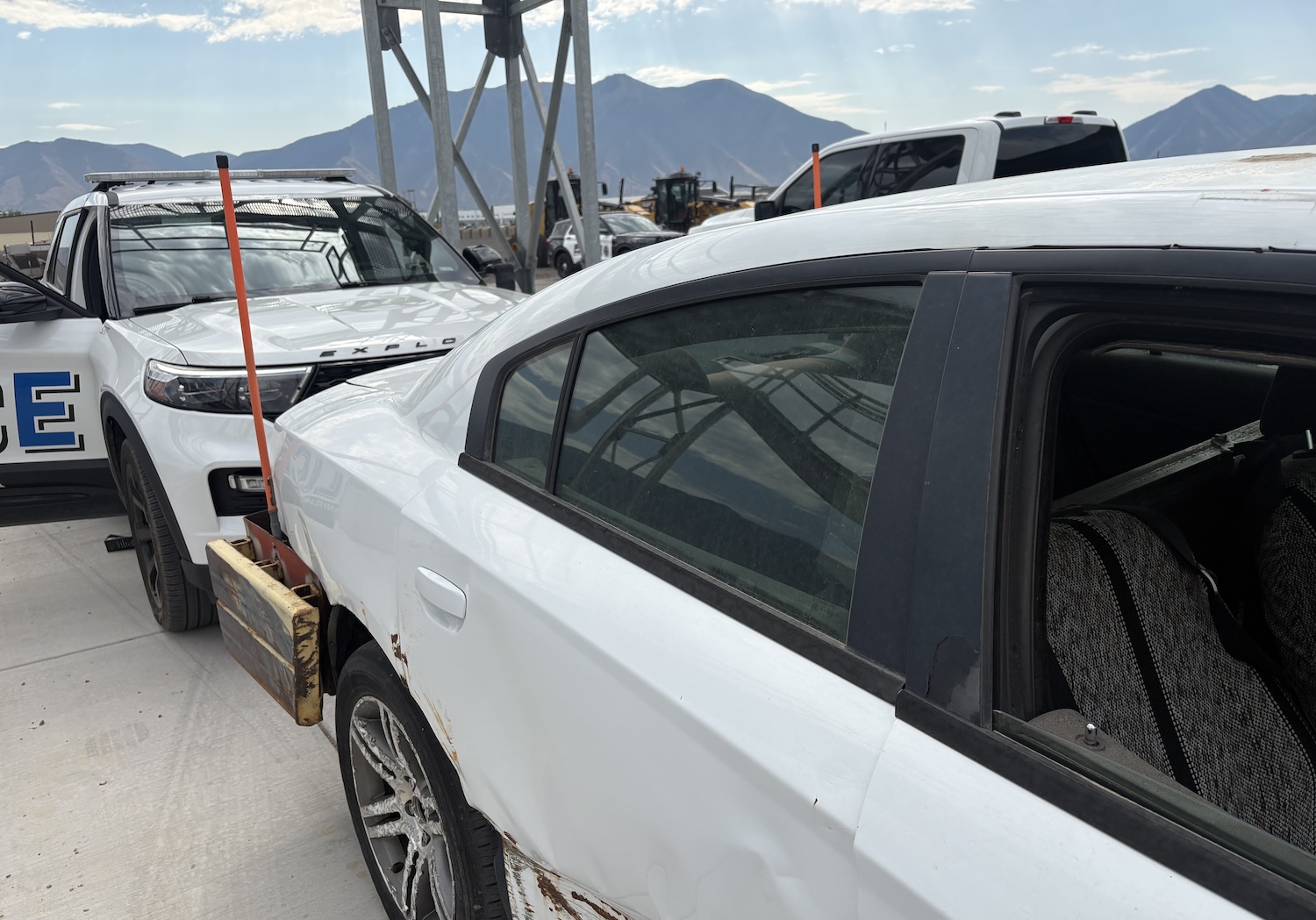
Neither ramming nor pitting, just rolling in and taking away the Bad Guy’s mobility.
Darkness
In the afternoon, I headed over to the local indoor range – Discount Guns – with the intent of catching a bit of the Surefire Institute’s presentation before heading back to the UCSO facility.
Surefire Institute’s CJ Cowan and Andy Stanford taught it. I know both gentlemen. Andy authored an early book on low-light work for law enforcement and citizens.
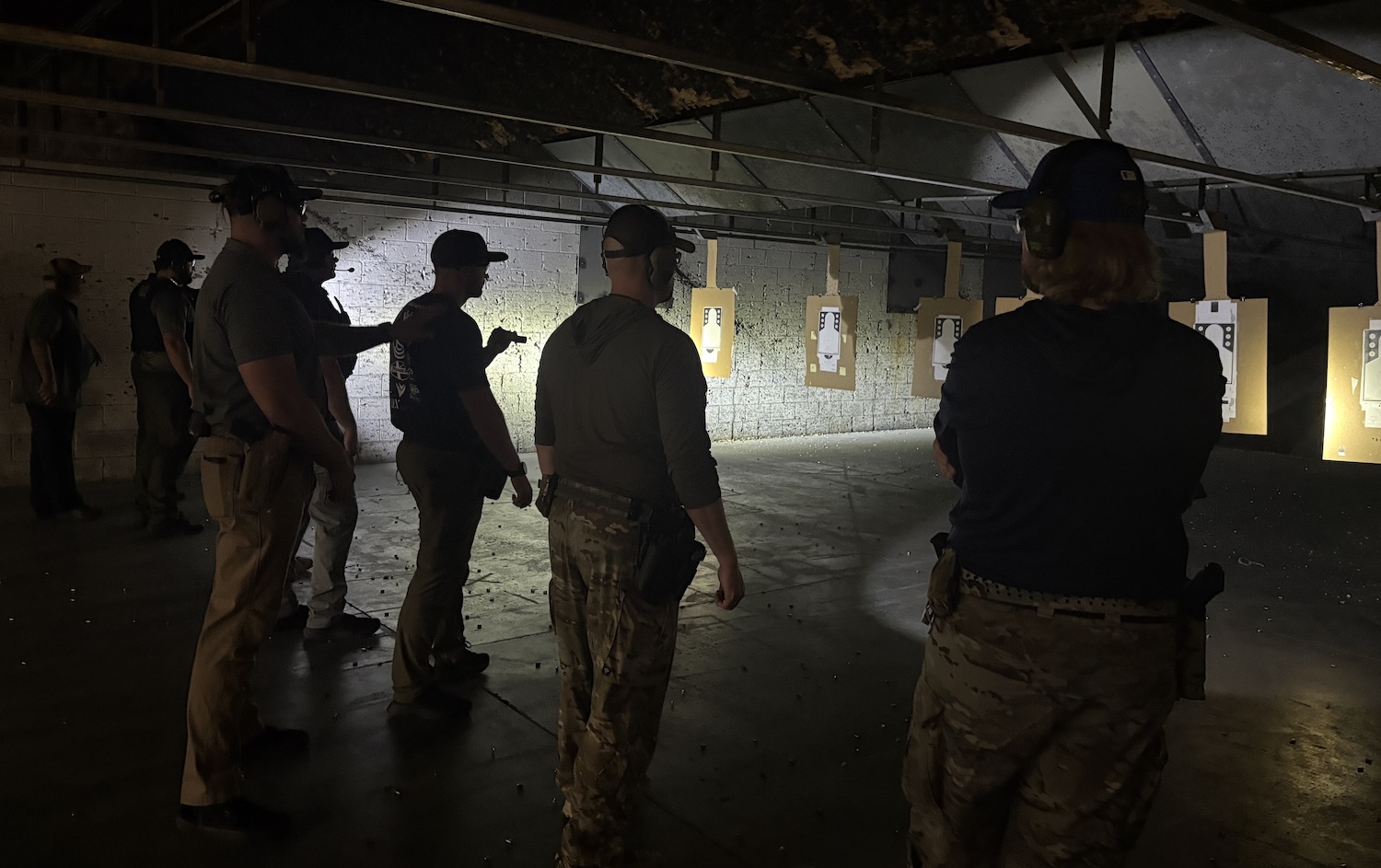
Cops in the low-light block using their handheld lights to search.
After addressing practical safety considerations, they covered an introduction to low-light concerns and considerations. Although they work for Surefire, they focused on how and why rather than what.
The live-fire work started with a diagnostic drill addressing trigger control and understanding offset in the sighting system. The session continued with checking zeros.
CJ and Andy showed a couple of handheld light techniques, both disconnected from and connected to the pistol. After imitating these, the shooting resumed, allowing the students to practice them.
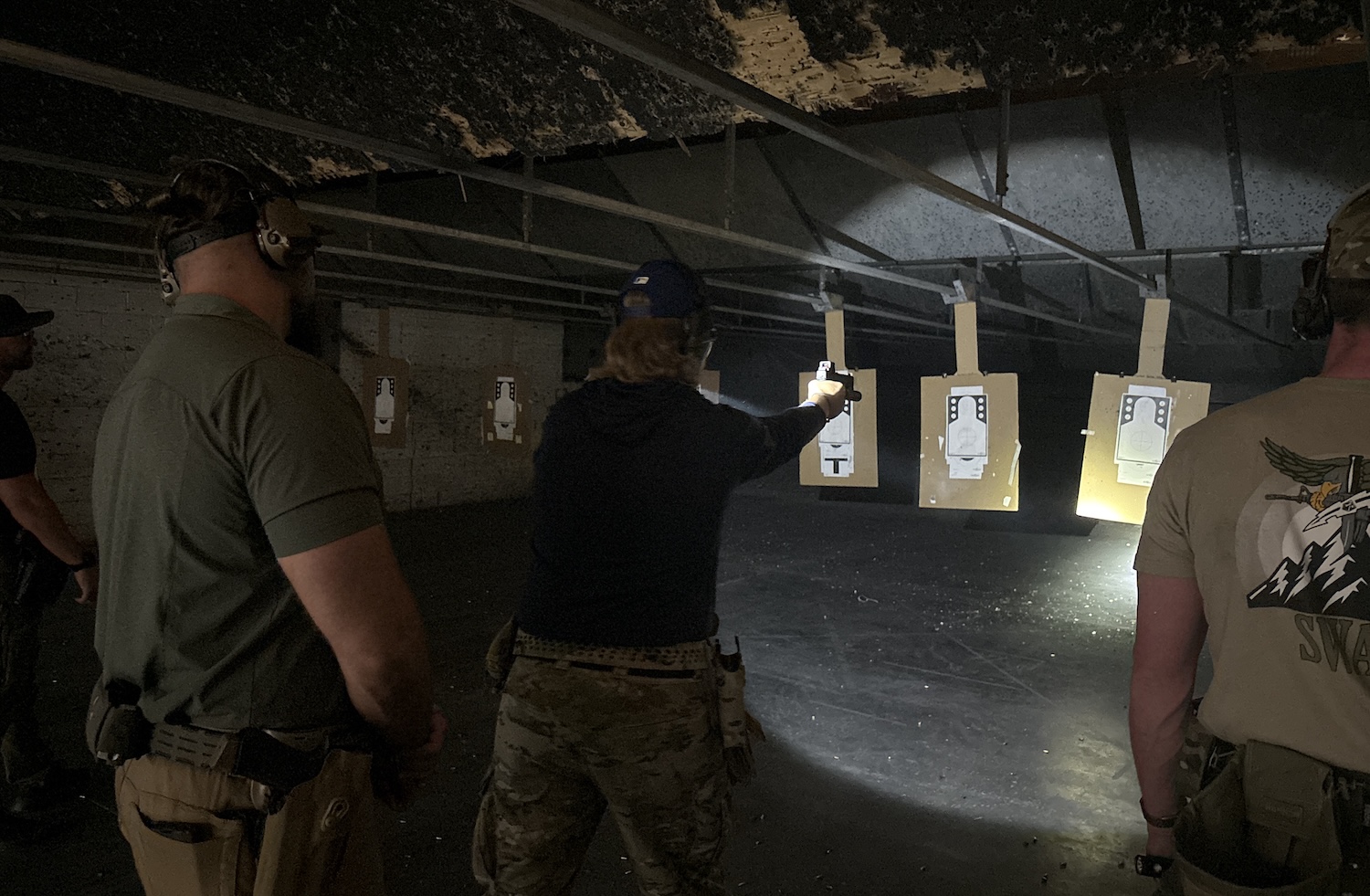
After identifying the threat, he shifted into a one-hand shooting technique while keeping his handheld light on the target.
Dinner
The training day concluded with a catered dinner at the Utah Valley Convention Center. Several vendors were present for that and supported the raffle.
After dinner, an officer debriefed a SWAT call-out involving officers from the West Valley City Police Department. The lessons learned were very applicable to both patrol and tactical officers. Starting as a domestic violence call, it continued with the suspect firing random shots (both in and outside of the residence), claims of improvised explosive devices, and – ultimately – a shooting. The suspect had left the house with a long gun and was heading to the victims’ location. The sniper was using night vision and a modified AR-15, rather than a traditional scoped precision rifle.
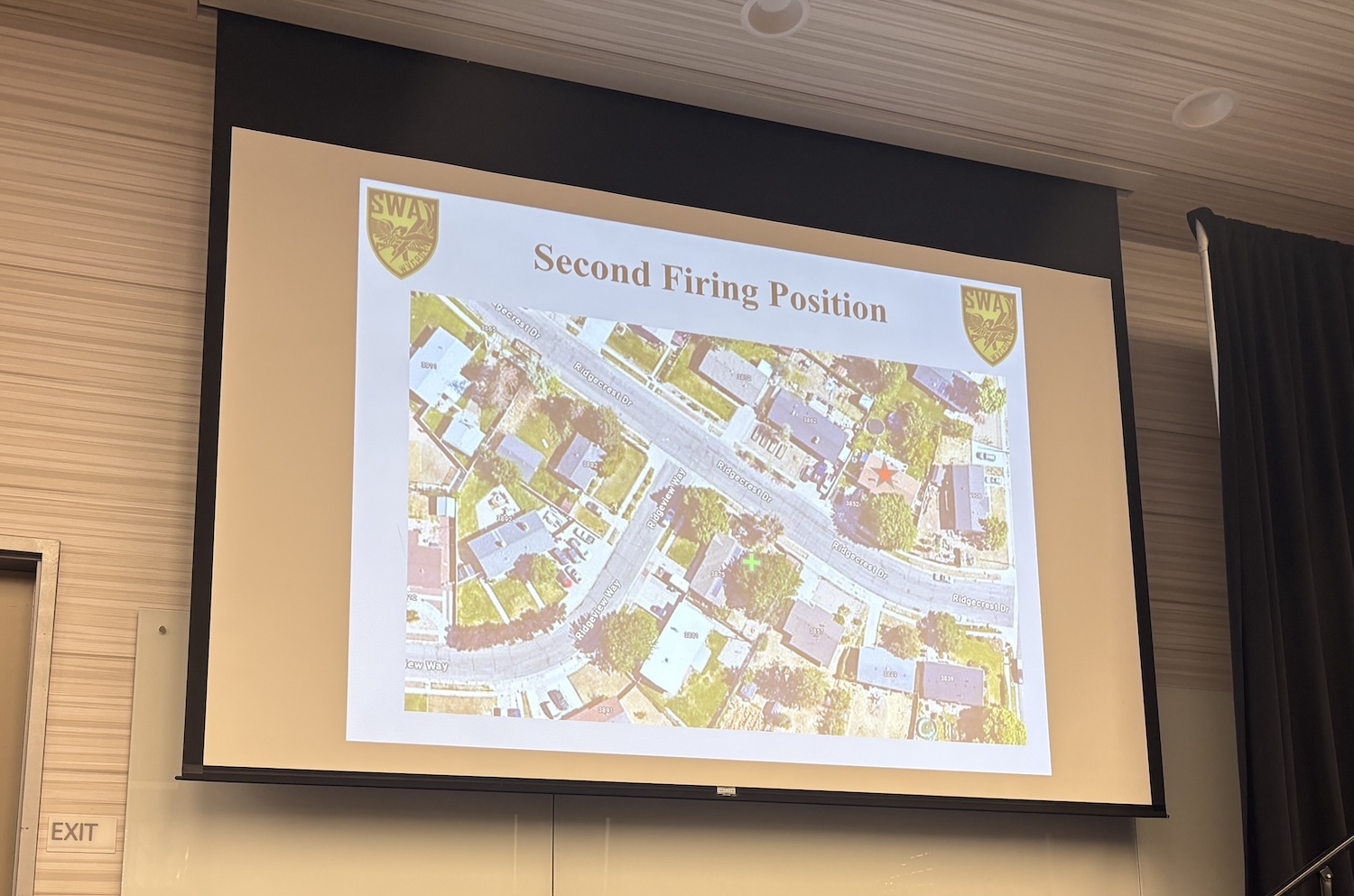
An overhead view of the area during the debriefing by a WVCPD detective.
Final Thoughts
There are voices always yelling for more training. “More” may not be the answer. Most of the profession argues for better training. Events like UPTA’s yearly training day are endeavoring to fill that need. If you are near Utah, keep an eye out for next year’s session.