
 (+2 rating, 2 votes)
 Loading...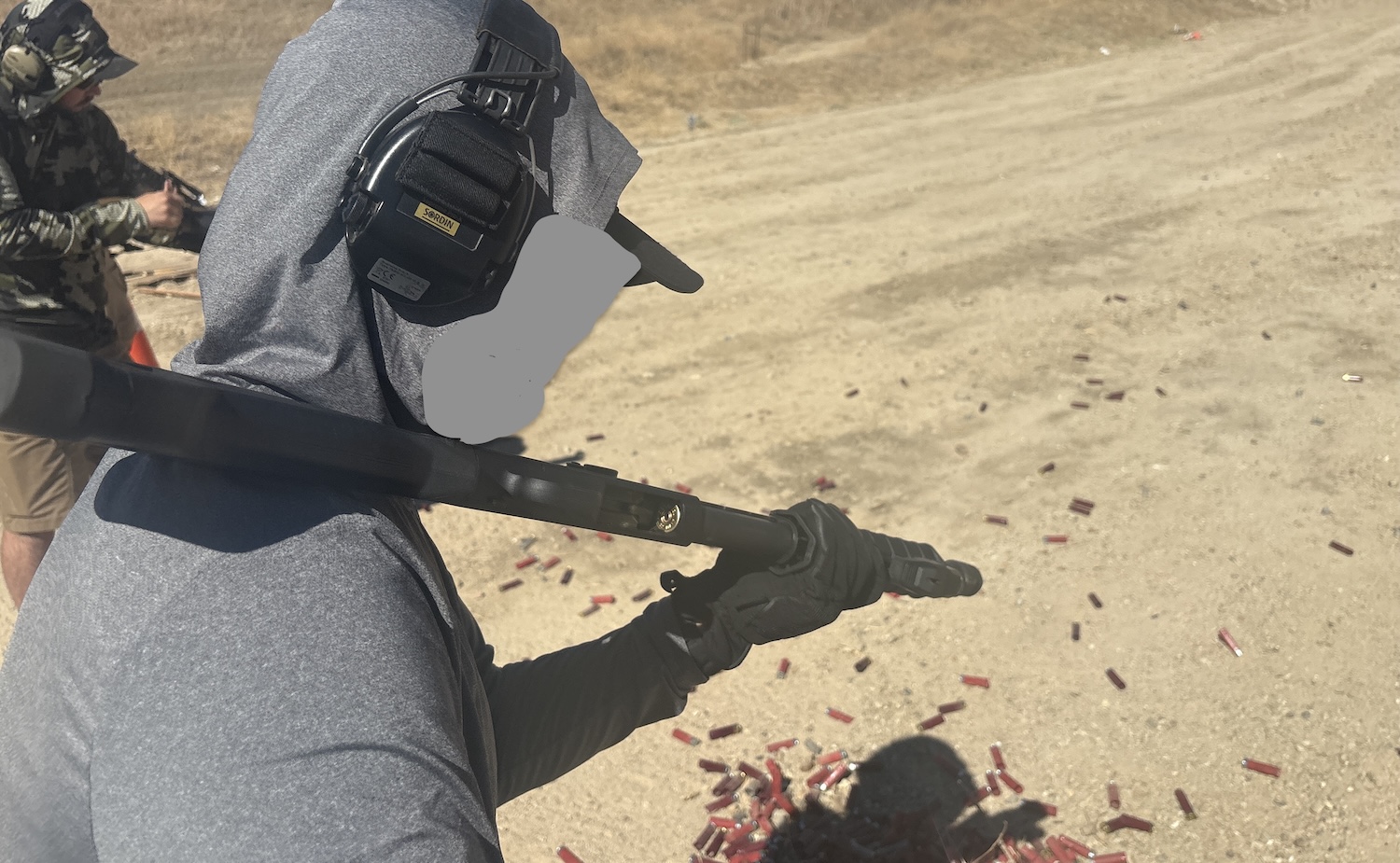
Feature_3938 copy
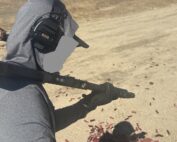
The shotgun positioned for a violin reload.
“A violinist who stops improving has already started declining,” said Jascha Heifetz (1901-1987), a very well-regarded concert violinist.
Historically
Shotgun reloads have been taught in one of three ways. They were based on the user’s role.
Bird hunters seemed to roll the gun upside down, with the loading port upward, and insert shells in that orientation.
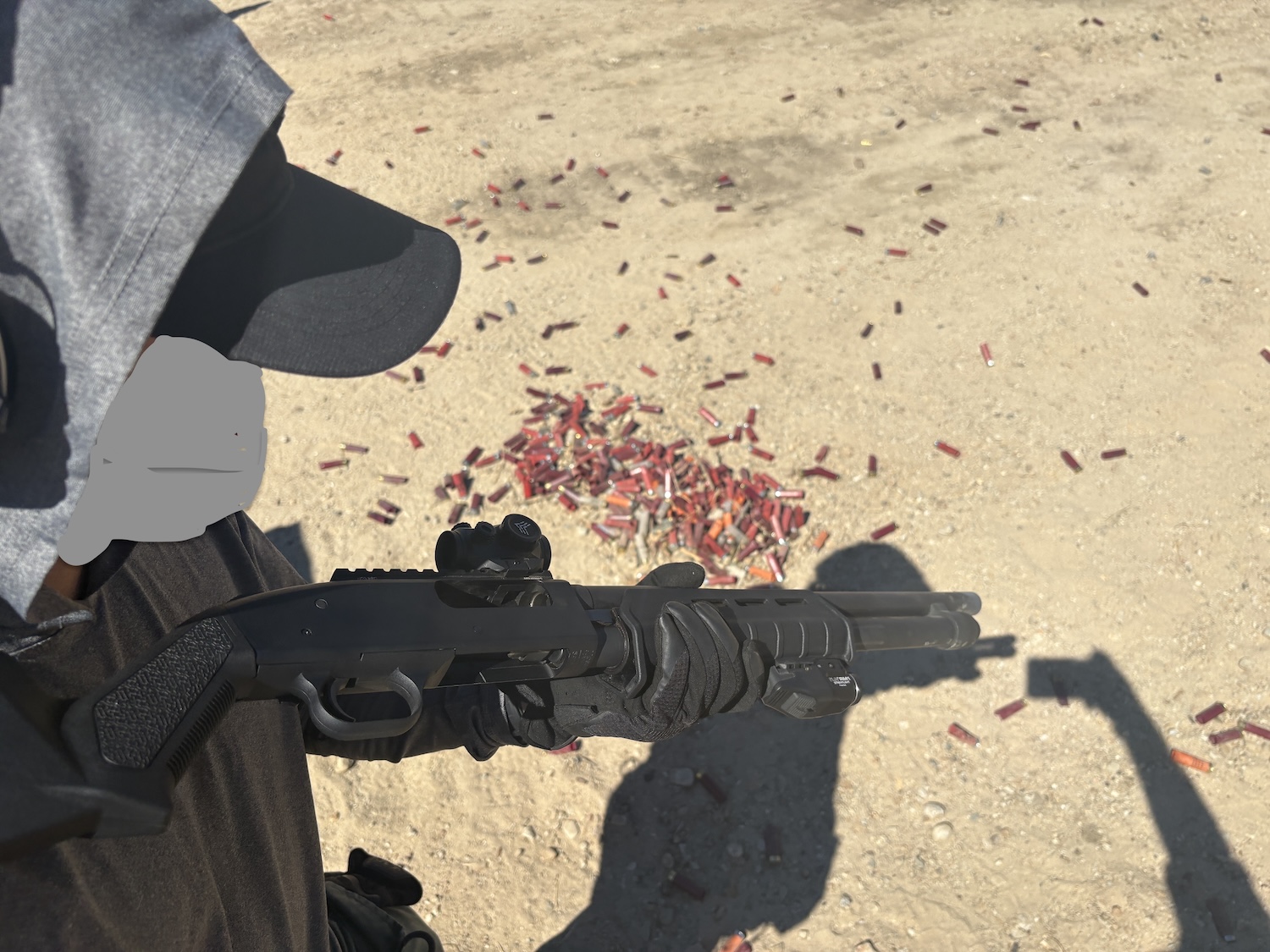
This right-handed shooter can move the gun into the violin position and load the chamber once there.
Defensive shooters, regardless of their job, were taught to keep the shotgun up in the shoulder with their shooting hand on it, while their support hand loaded shells into the magazine. Why? Because you must be ready to fight with it.
Finally, competition shooters rolled the sights inboard and controlled the gun with their support hand while loading two or four shells into the tube with their shooting hand.
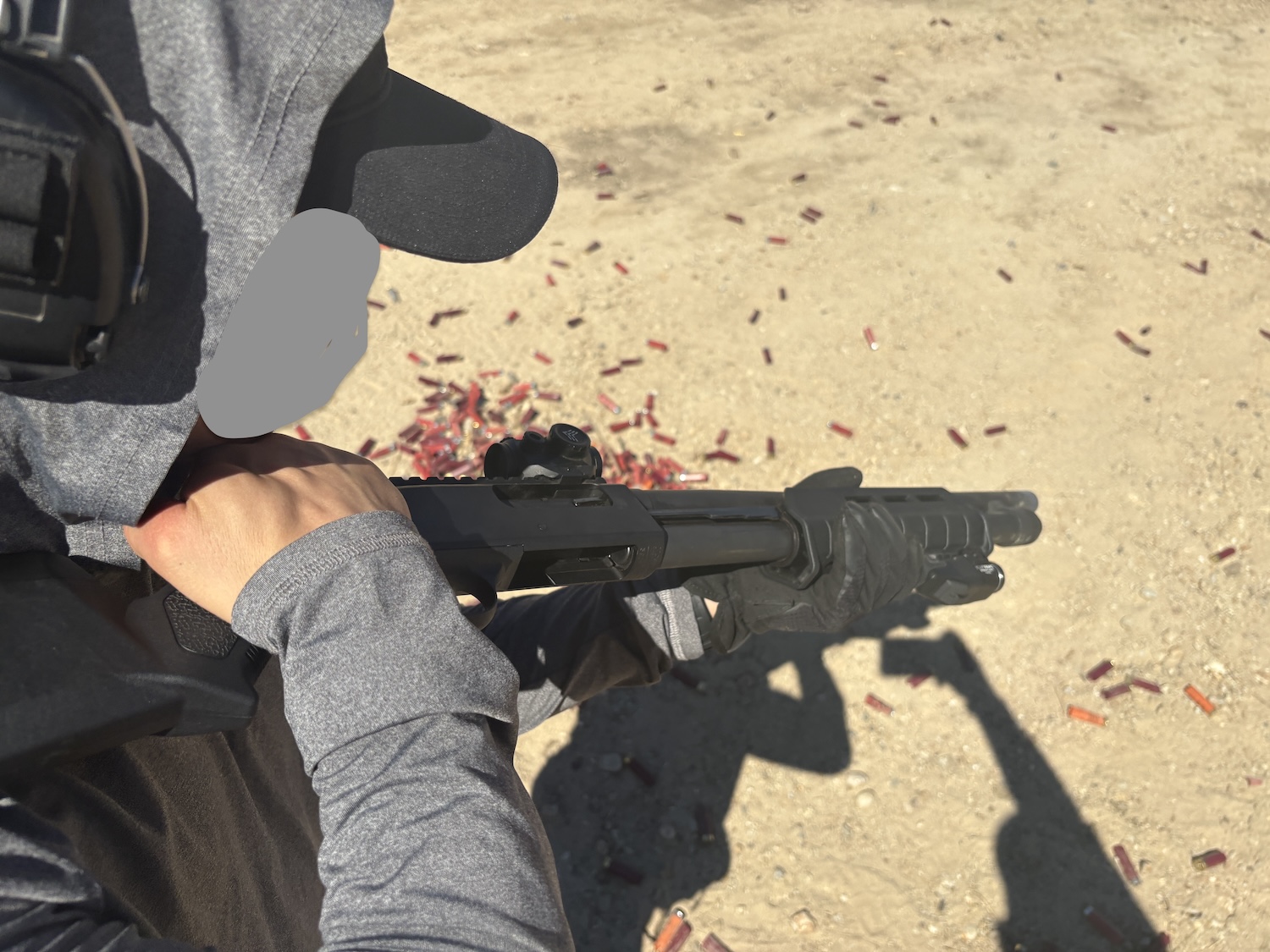
They’ll close the action after the shell is in.
What if a variation of one of those was more efficient? Gave you more control of the gun? And lets you manage more than just reloading the gun?
In addition to keeping the shotgun’s light trained on the threat more easily after a shooting, this also makes reloading on the move much easier.
Enter the Violin reload!
Honestly, I cannot tell you who started pushing it. It’s gained popularity over the past few years, and I’m now a proponent. Because of that, I’m still surprised when I run into shooters who are not familiar with it.
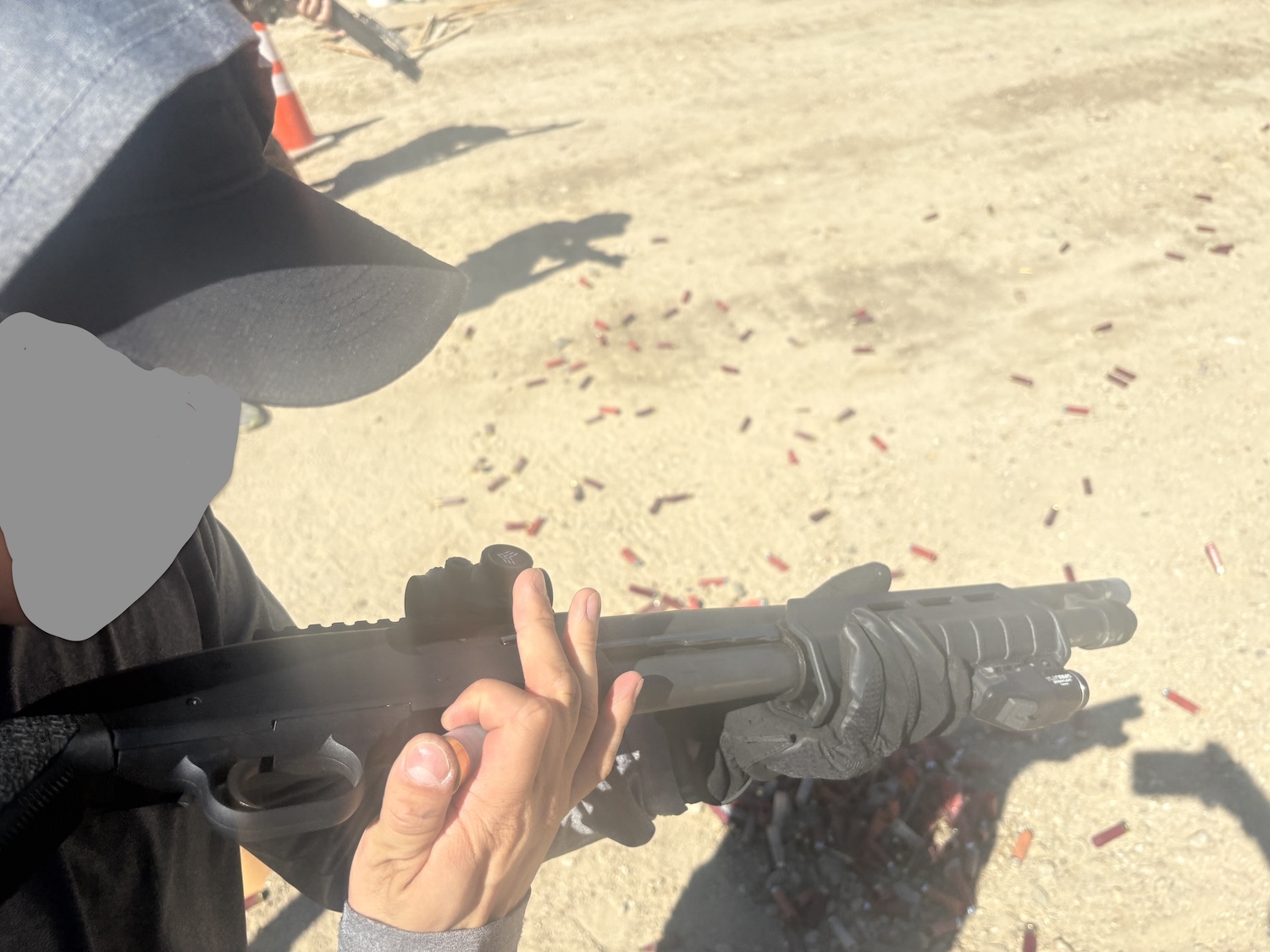
This shooter was carrying their spare rounds in a fanny pack. They grabbed each one with the brass near the thumb and the shell’s mouth by the pinky. His shell manipulation was close to a dual load.
Consistent Features
The sights are rolled inboard, parallel to the ground, and the loading port is facing outward. Not rolled so far that the sights are down and the loading port is up.
The inboard (flat) side of the stock now rests flat on your shoulder. The support hand is positioned to control the muzzle direction while being able to manipulate the light if needed. Since more defensive and officer-involved shootings happen in low light, you’ll likely need to do that.
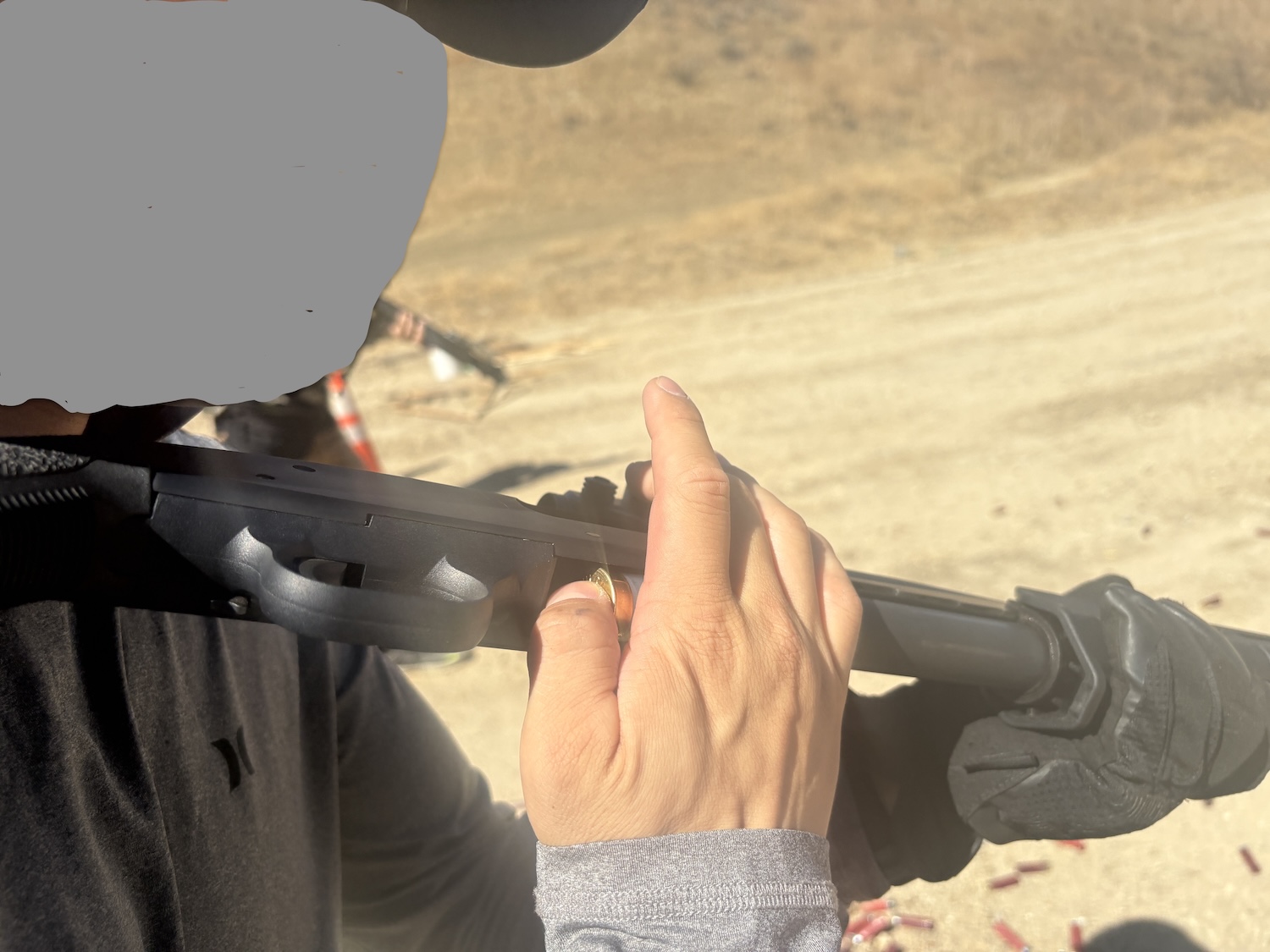
The shell has entered the loading port, and he’s seating it with his thumb.
After acquiring your next shell, you can load it. If you have shot the gun empty, the first shell goes into the chamber, and then you close the action. If it wasn’t empty or you’ve already fixed that problem, each shell goes into the loading port. Just ensure you push it past the shell stops to prevent losing a shell to the ground.
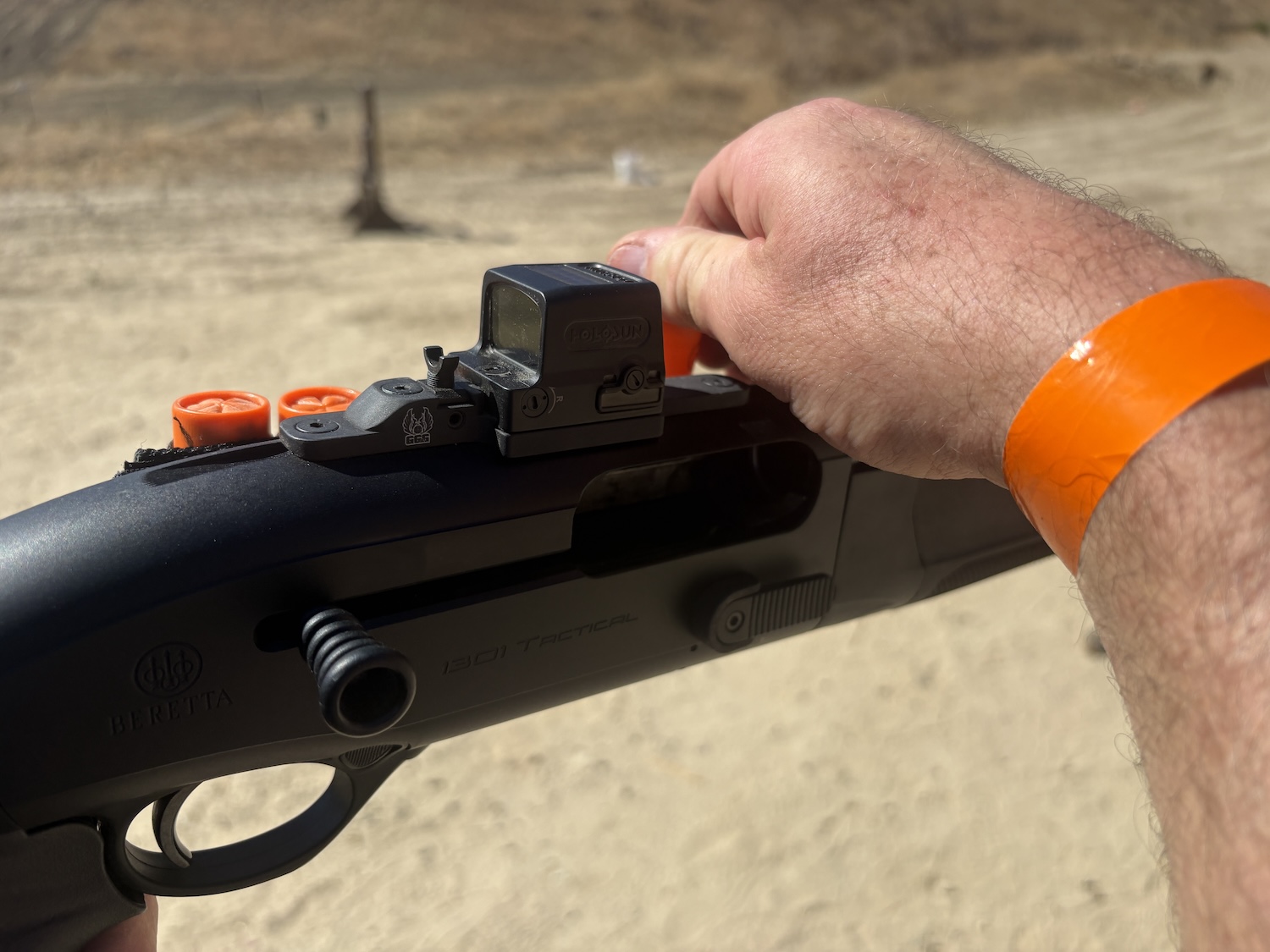
For a Left-Hander, if the shotgun has been shot empty, their first step is to acquire a shell from a shell carrier. Here, they’re going over the top of the receiver for it.
Left-Hand Variation
For us lefties, if we have run the gun dry, we have a different first step. Keep the shooting hand on the gun while acquiring a single shell, from wherever your spare ammunition is. Then, load it directly into the chamber and close the action. Next, roll the gun inboard and work it the same way.
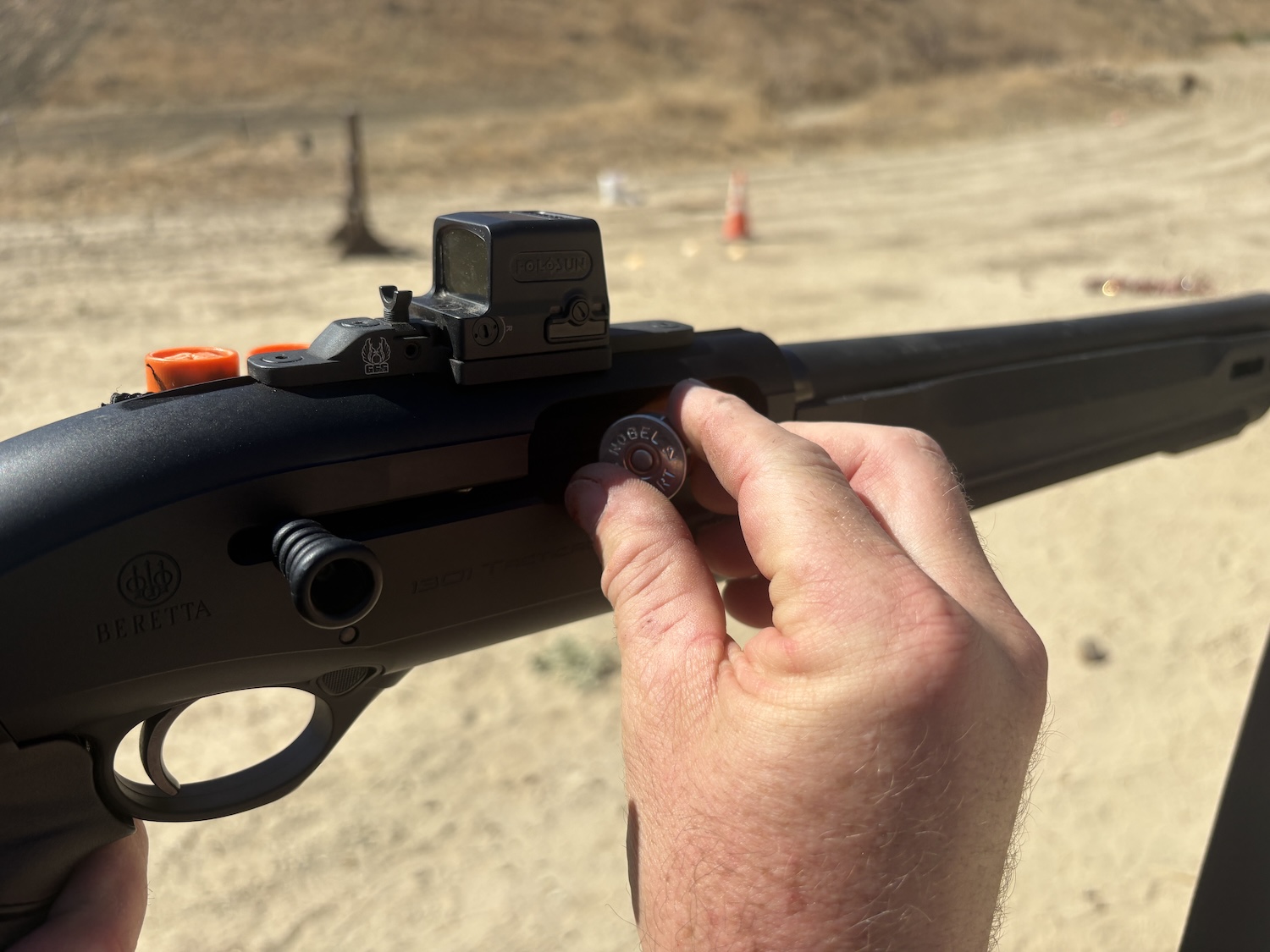
That shell has been inserted into the chamber before closing the action.
Dual Or Quad?
I’m not opposed to either technique. Especially since several competitive shotgunners I follow do them very efficiently. My reluctance to emphasize them defensively is that very few of us have our defensive or duty gear set up to support this type of reloading. And, as I’ve mentioned before, I want “surer.”
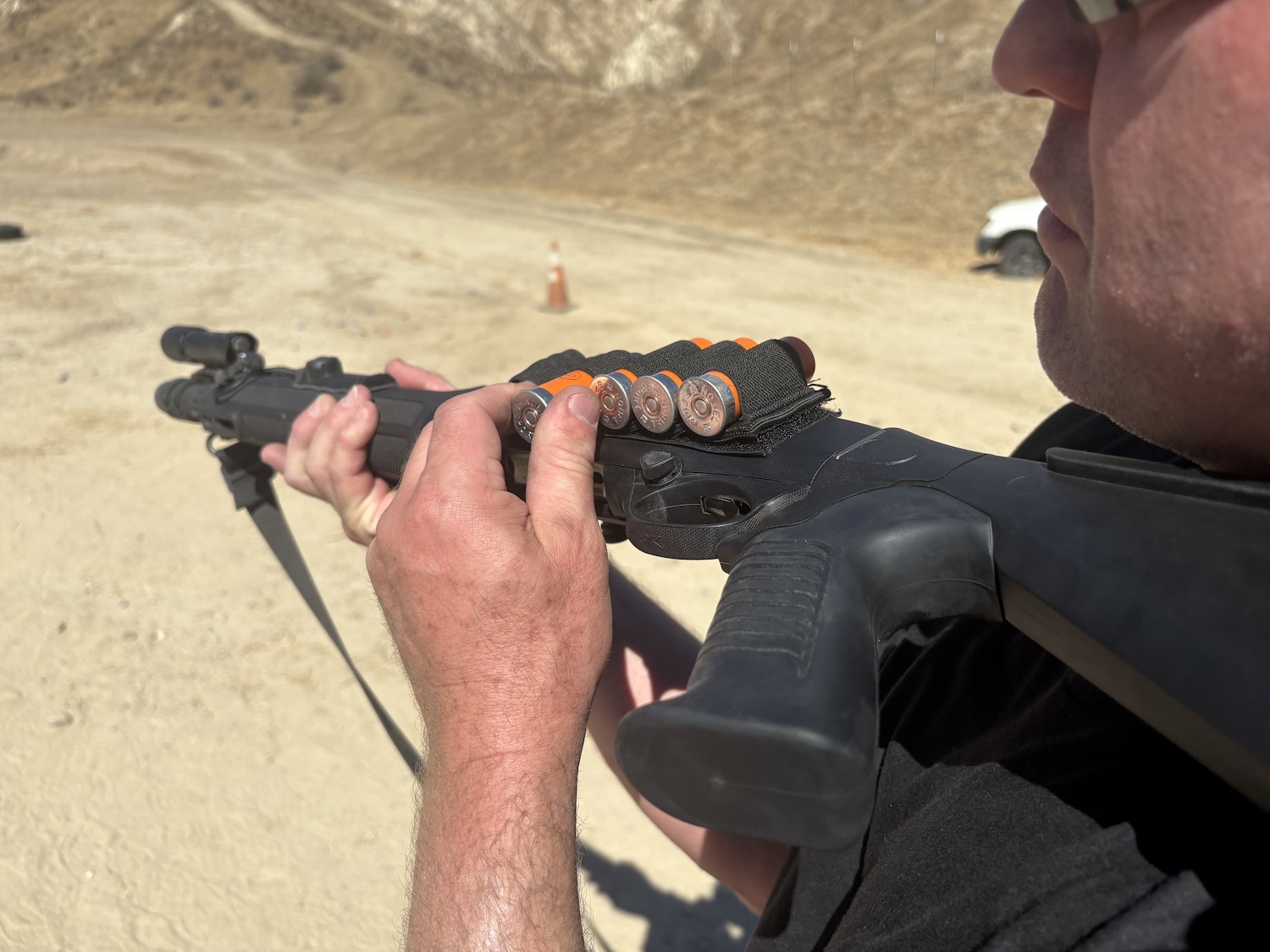
After loading the chamber, lefties roll the shotgun inboard and pull the next shell from the carrier.
Ammunition Staging
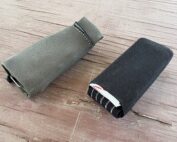
While the old Tacstar side-saddles served their purpose, other designs and models have replaced them. My favorites are the DSAC sewn by The Wilderness and sold by Vang Comp Systems and the four-shell Quick-Detach Carrier from Aridus Industries – which I prefer on my Beretta shotguns because of the safety’s location.
Regardless of which one you choose, stage shells in those with the brass down. Both are stout enough that shooting the gun’s capacity will not cause the shells to walk out of the carriers downward.
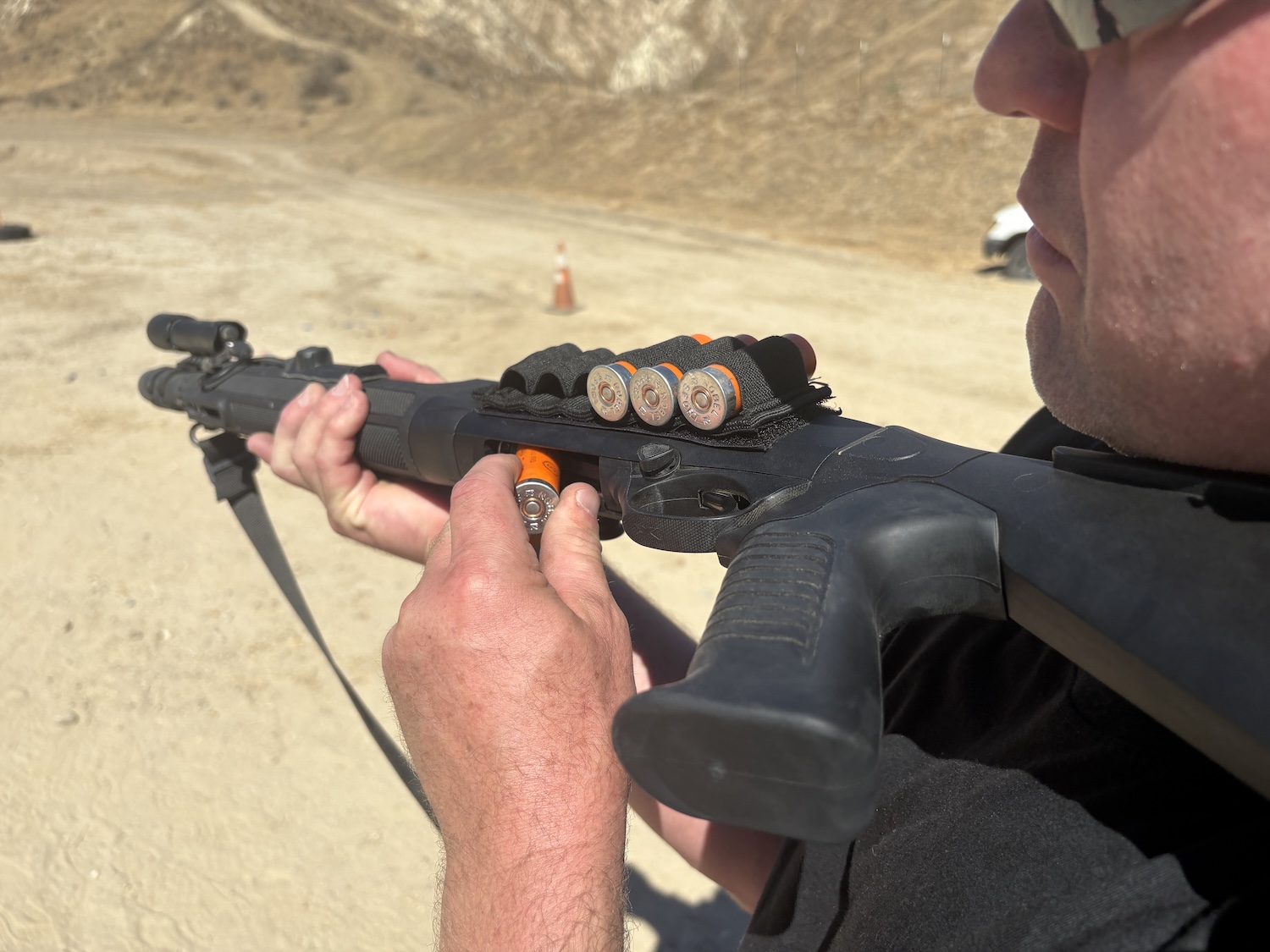
They insert the shell into the loading port.
With the brass down, rather than up, one can pull the shell out of the holder and push it right into the loading port.
Closing Thoughts
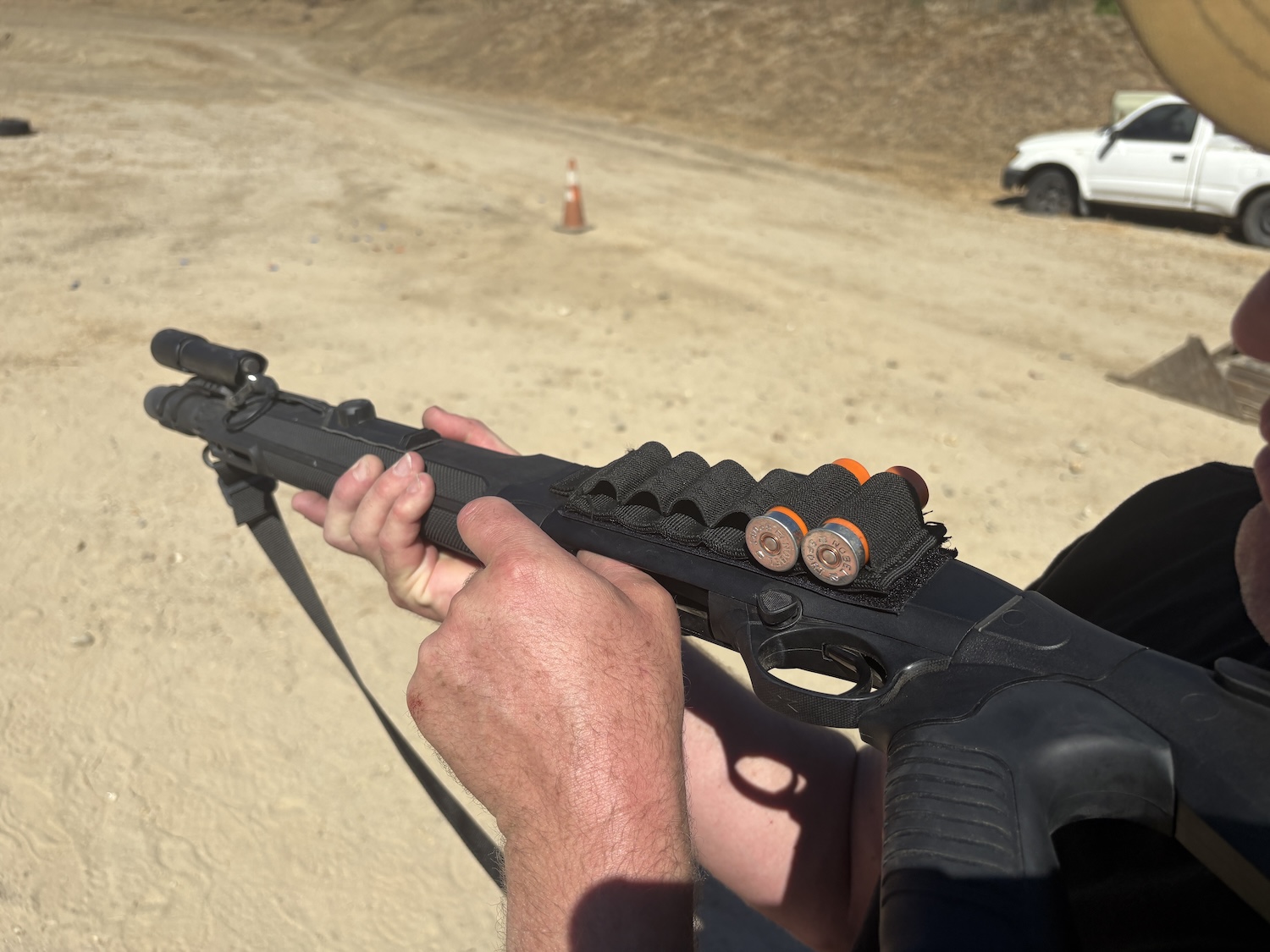
Then push it past the shell stops with your left thumb.
The class had currently serving deputies, officers, and special agents from multiple local, state, and federal agencies. The local and state cops said their organizations still deployed shotguns. They are all current firearms and tactics instructors who told me they took the class to continue expanding their knowledge of how to employ and teach these guns. All commented favorably on the violin method and its evolution and improvement over previously taught methods. Their participation in the class strongly indicates that law enforcement’s use of the shotgun isn’t over. The fact that active, experienced, and knowledgeable organizations still see a viable role for it is another indicator.
The Violin Reload is just one part of that equation.