
 (+7 rating, 7 votes)
 Loading...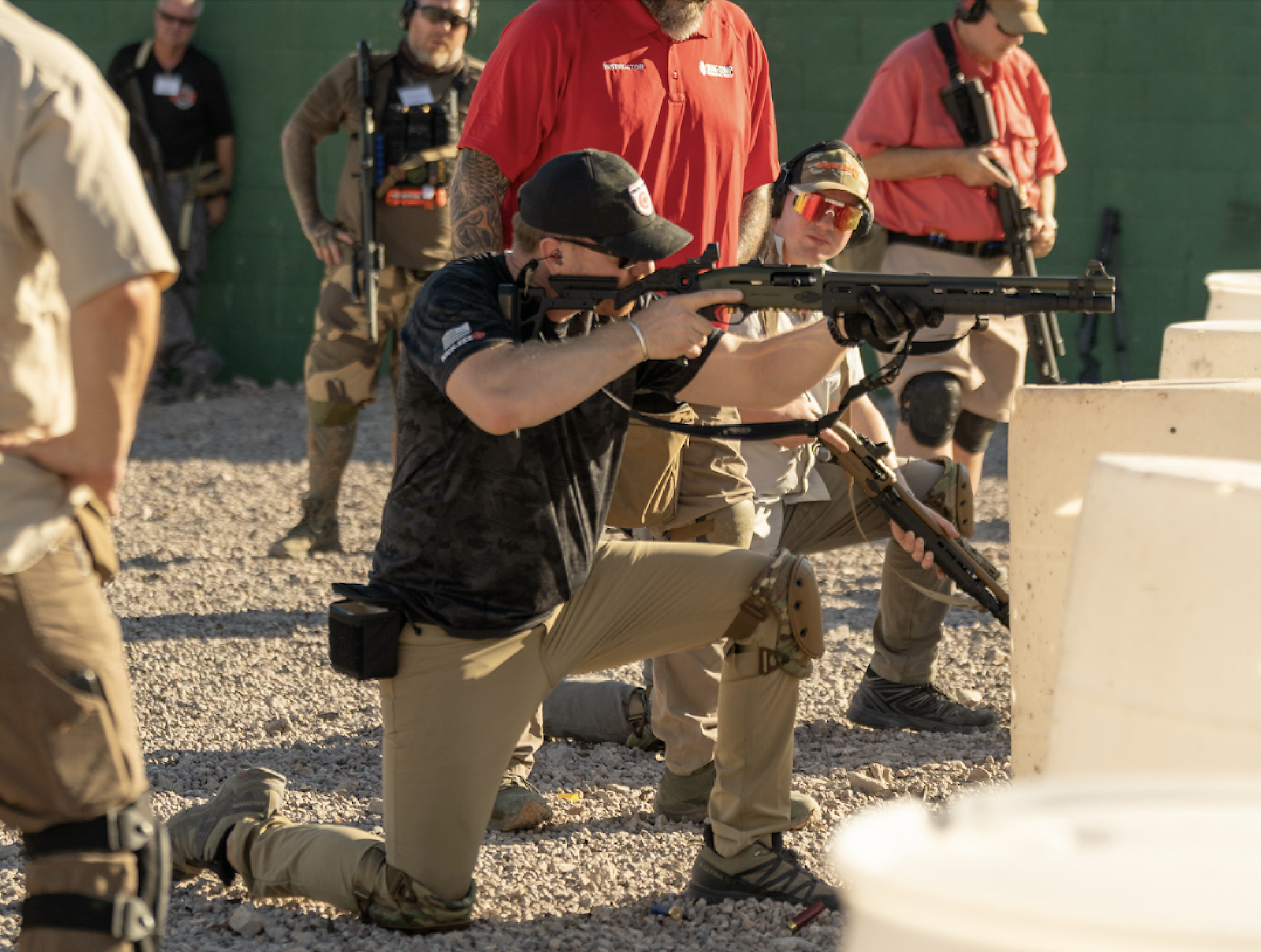
kneelfeature2025-12-09 at 10.02.20 AM
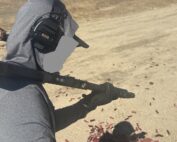
Single-Knee and Double-Knee work pretty much the same, regardless of the firearm.
Last month, we looked at the roll-over prone position. This month, we will take some time to discuss a couple of kneeling positions. Fundamentally, the single-knee and double-knee positions apply the spectrum of firearms.
Why
There are multiple reasons why one might kneel before or during a deadly force incident. Three of them are: changing a shot’s angle, lowering one’s profile, and better use of cover or concealment. I have utilized two different kneeling positions in events for the last two reasons.
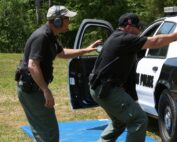
While deployed in Iraq during the Global War on Terror, my first shooting was from a single knee (speed), kneeling in the middle of a multi-lane highway. And I assumed a double-knee kneeling behind my open patrol car door during another event. Those were both in addition to the countless times I knelt without using any force.
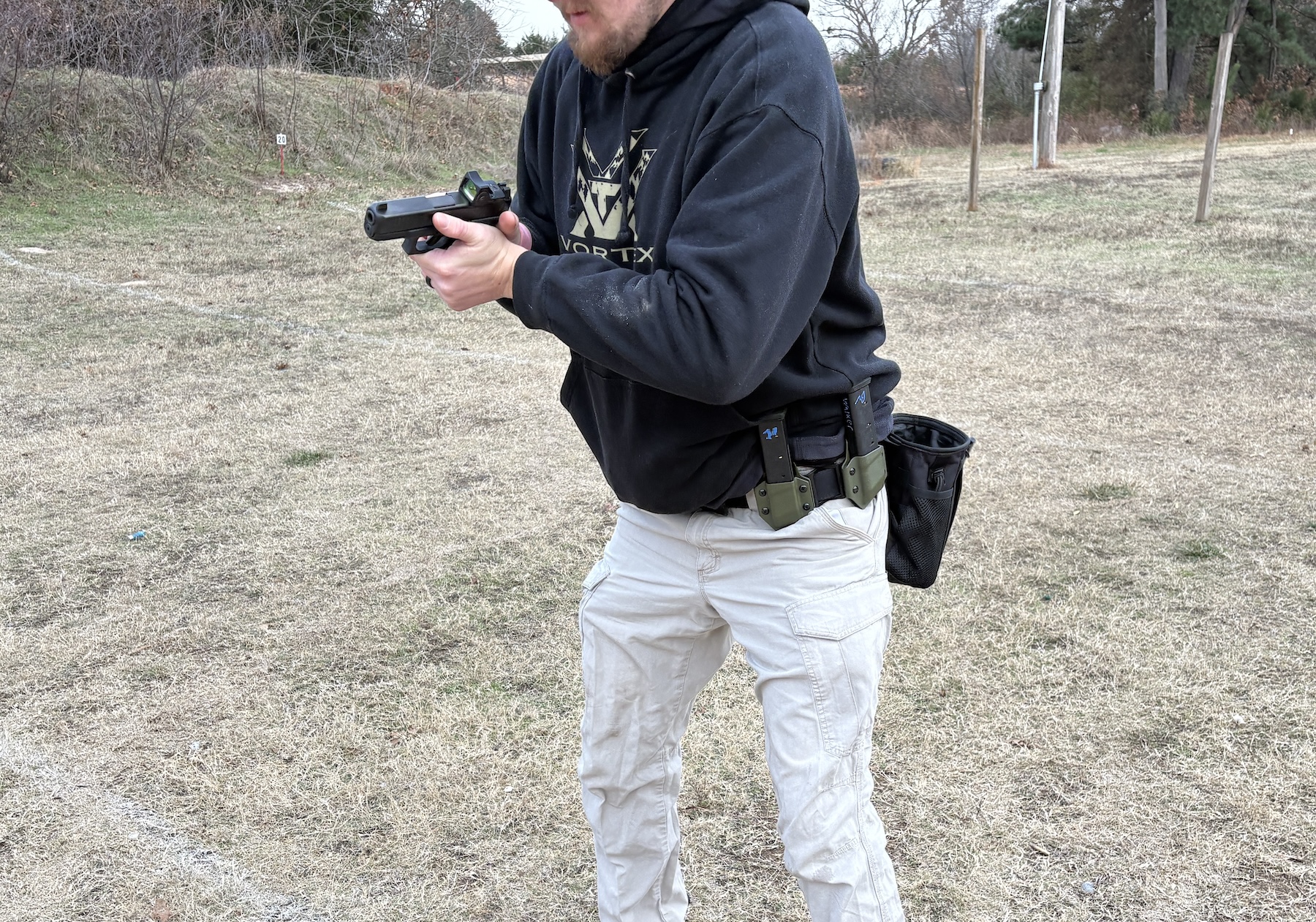
His draw is complete before he starts kneeling.
Draw
In both methods, I’d strongly encourage you to draw either just before or, at the very least, as you descend into the kneeling position of your choice. I’d suggest avoiding a complete presentation to a full-sight picture because it’s likely to be disturbed when that knee contacts Mother Earth.
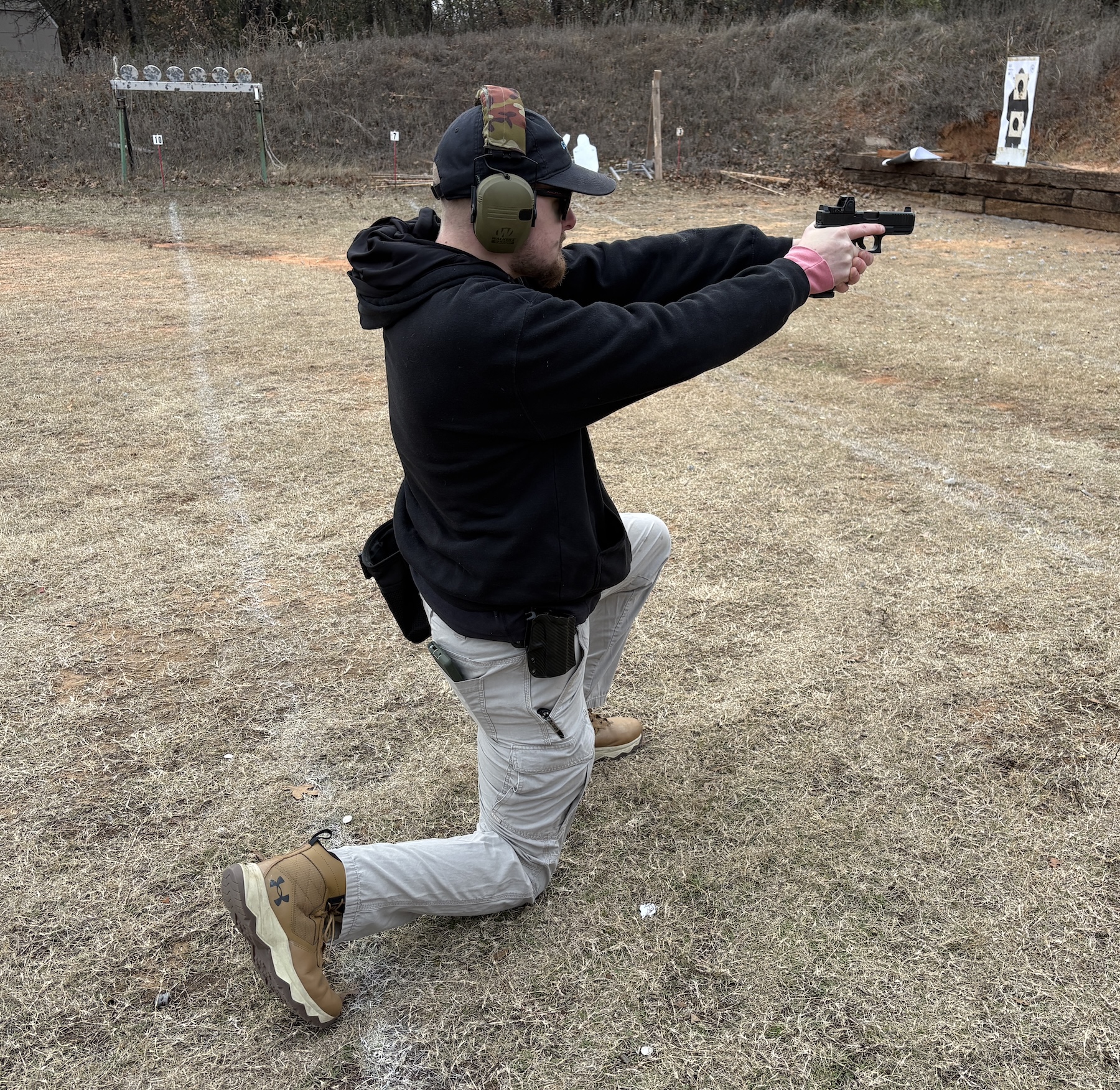
For stability, his base could be wider apart than it is here.
One
The most common is single-knee (speed) kneeling. This allows you to -quickly– lower your profile a bit while also changing your shooting angle if you have concerns about individuals downrange of the BadGuy.
As you step forward with your lead foot, you also step outward slightly. The idea is to give yourself a wider, more stable base by having the front foot farther over, rather than directly in front of the knee you put down. Once that front foot is where you want it, lower the knee on the rear leg to the ground.
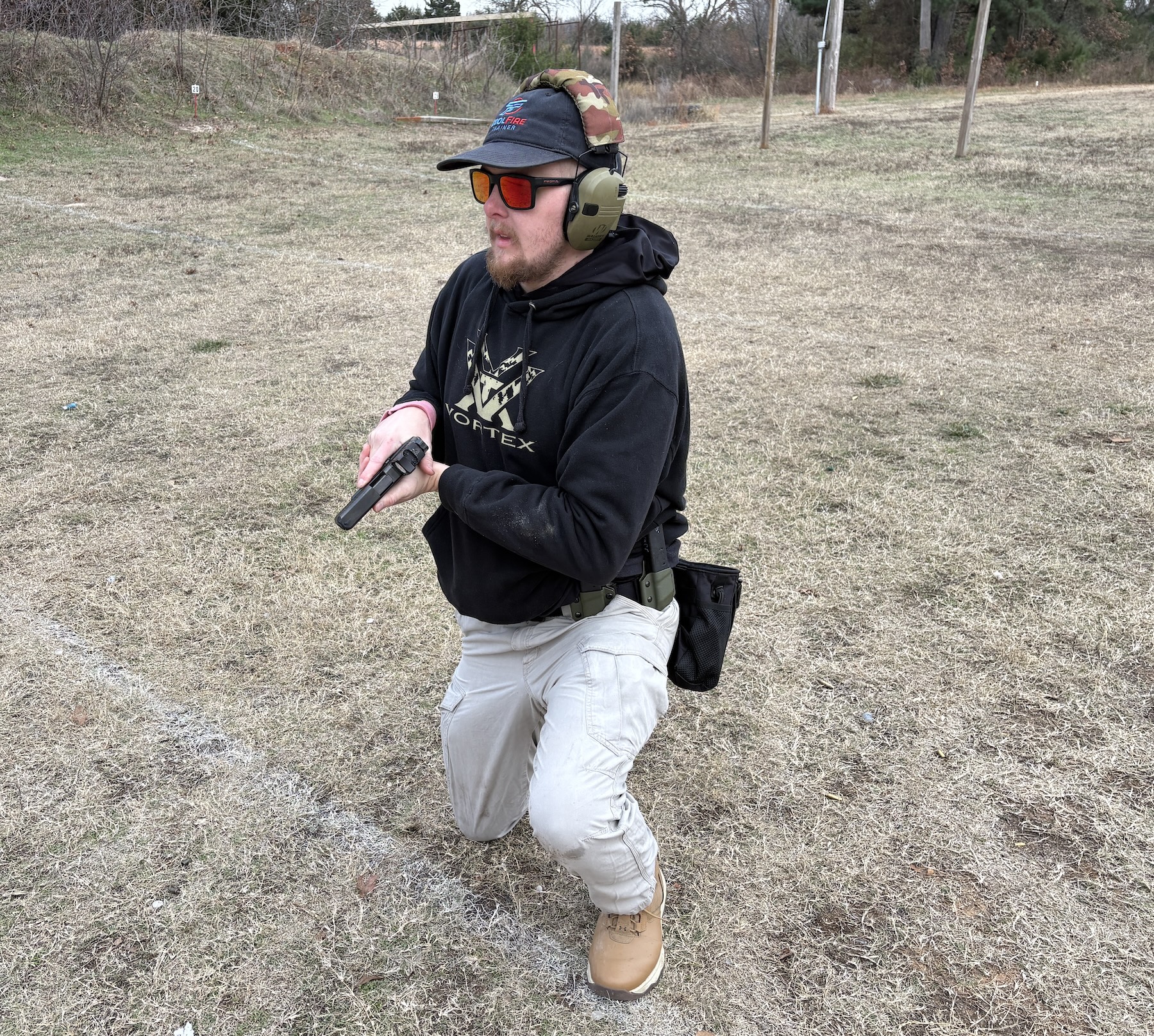
Here, Boone has stepped out and forward with his support foot.
When you are solidly in contact with the surface you are kneeling on, bring your firearm up to eye level and shoot – if that’s what is required (and justified).
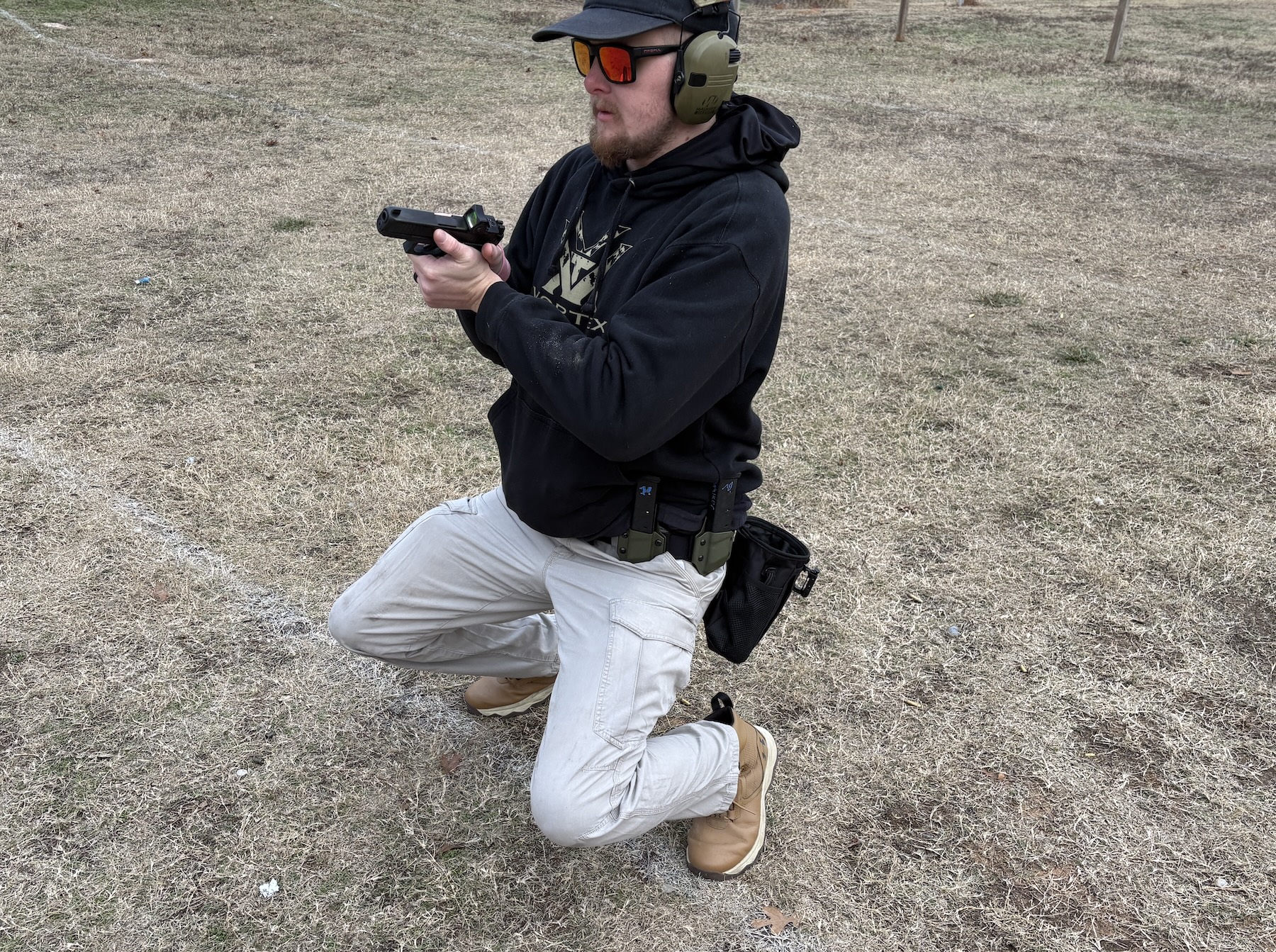
Boone is going into the Double Knee by dropping into a catcher’s squat before rolling his knees to the ground.
Two
The second option is a double-knee kneeling. It has been called several names over the years, but I’ll stick with double knee. For me, this has allowed me to adjust my position to make better or the best use of available cover over the years. I can raise or lower my upper body for horizontal cover, and roll out to the left and right for vertical cover.
Often, I have gotten into this by first dropping into a catcher’s squat and then rolling both knees down onto the ground. However, with a few knee surgeries behind me, I will now go with one knee at a time. That can be from the squat or using the speed kneel to get me into this position.
The side-to-side distance between my feet or knees mostly depends on the environment I am in.
Even if you are younger and as-yet uninjured, there’s a strong recommendation for going to a single knee first, and then standing up. This is in place of just popping up from having both knees on the ground.
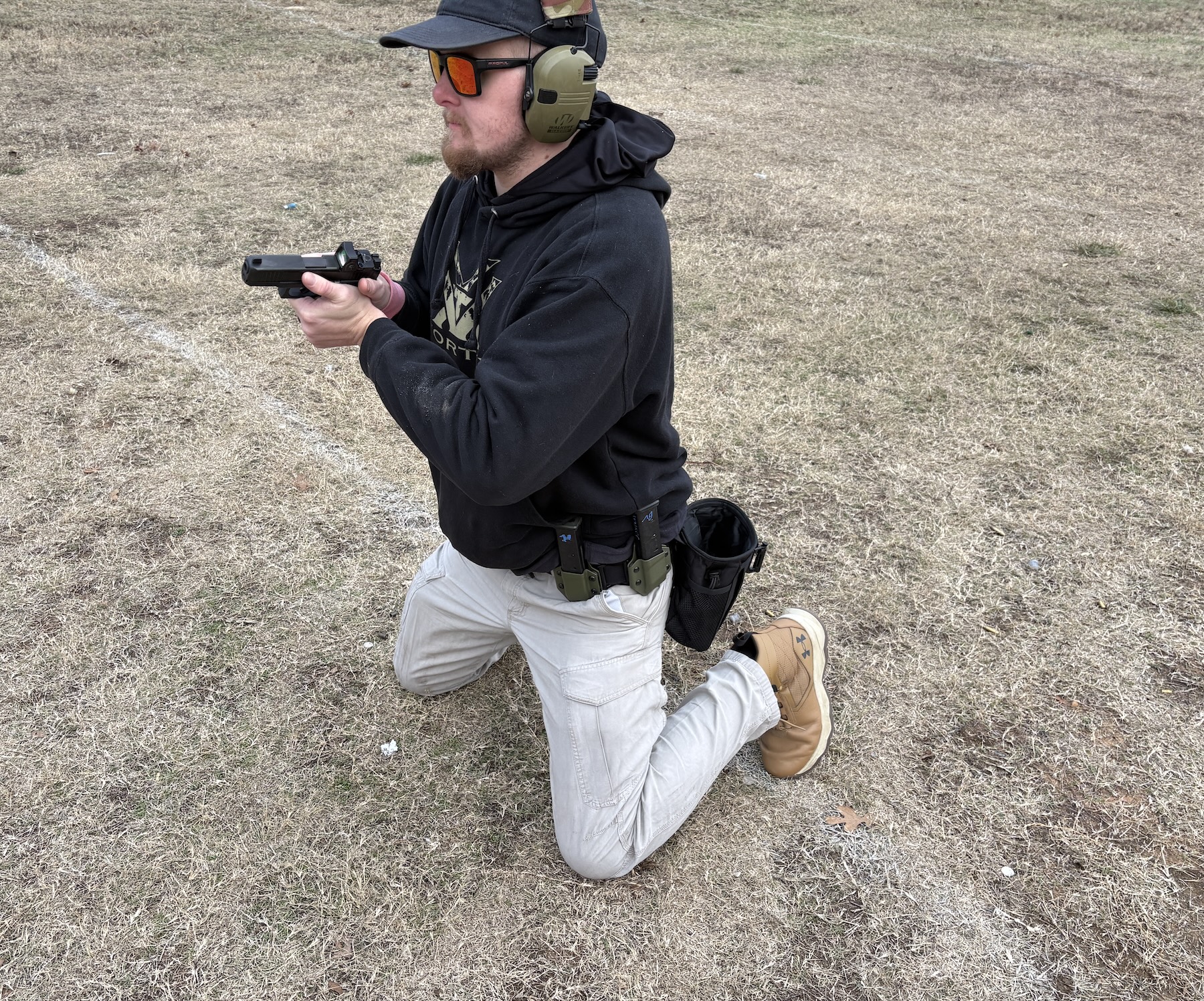
Boone has both knees on the ground and is now bringing his pistol up on target.
Regardless
Afterwards, it does not matter which version you used. There are some things you should strongly consider before standing back up. These come with the caveat of “unless your position has become untenable due to incoming gunfire or attack.”
First off, address any stoppages or ammunition-related issues. Clear them and get your firearm back into operation, or reload it before you think about standing up. Now is a good time to check the placement of your equipment to ensure you can access your magazines – instead of finding out you can’t or that it’s very difficult in the middle of an event.
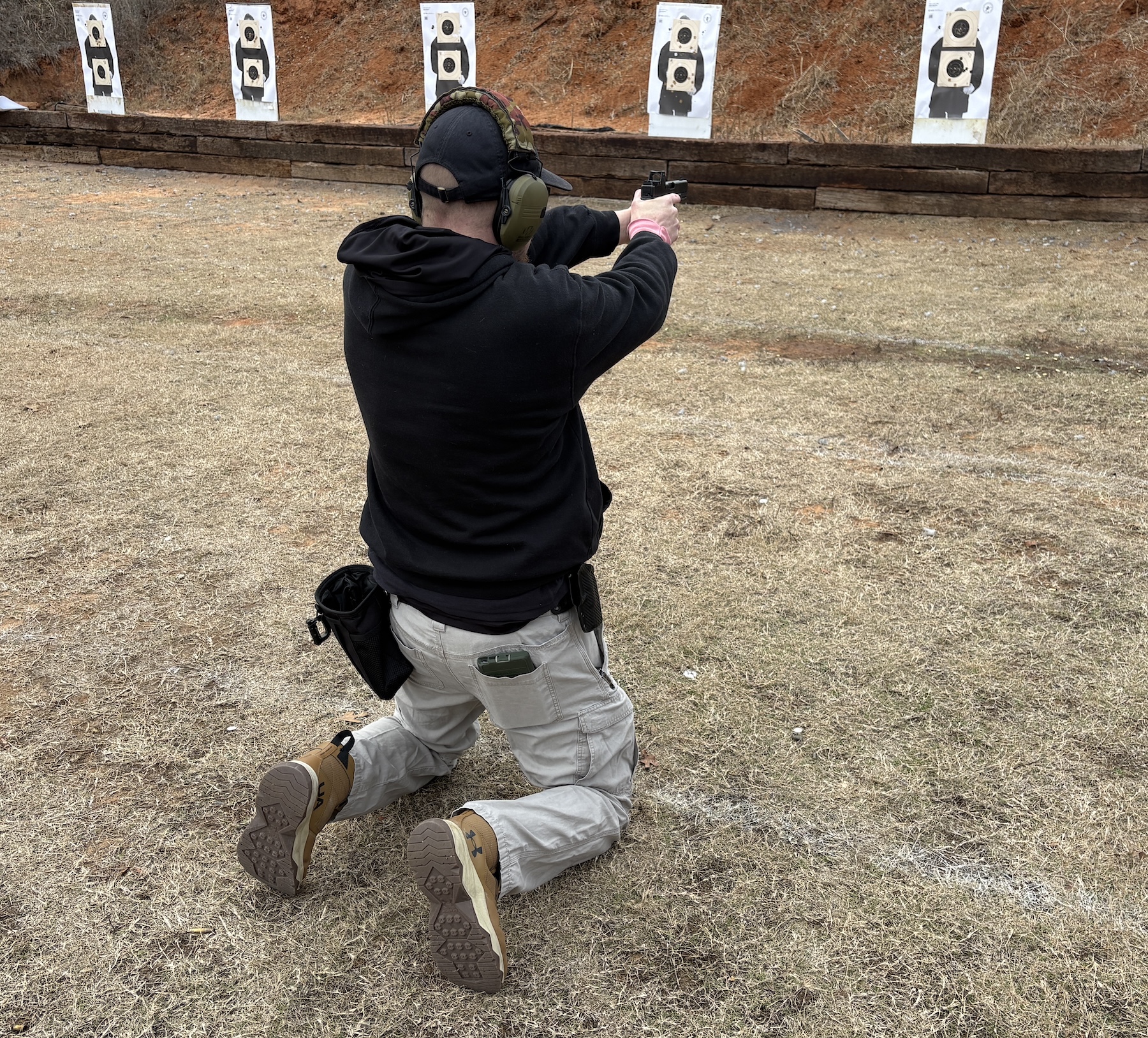
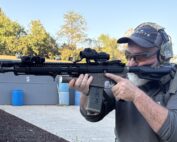
Ready to shoot in a double-knee kneeling. – on Meadhall’s range.
Second, look around not only for other threats but for your friends. Ensure you are not going to stick your head up into the path of a bullet fired by someone trying to help. Regrettably, law enforcement officers have been killed this way. Fratricide doesn’t make you any less dead. At the same time, identify where you are moving to next, along with your path there.
Finally, continue to look for newly emerging threats as you stand up. As your view of the world changes, so does your exposure. A BadGuy you thought was done or gone may have been waiting for you to reappear. Because of that, I would recommend waiting to re-holster until you are upright and the problem or drill is done.
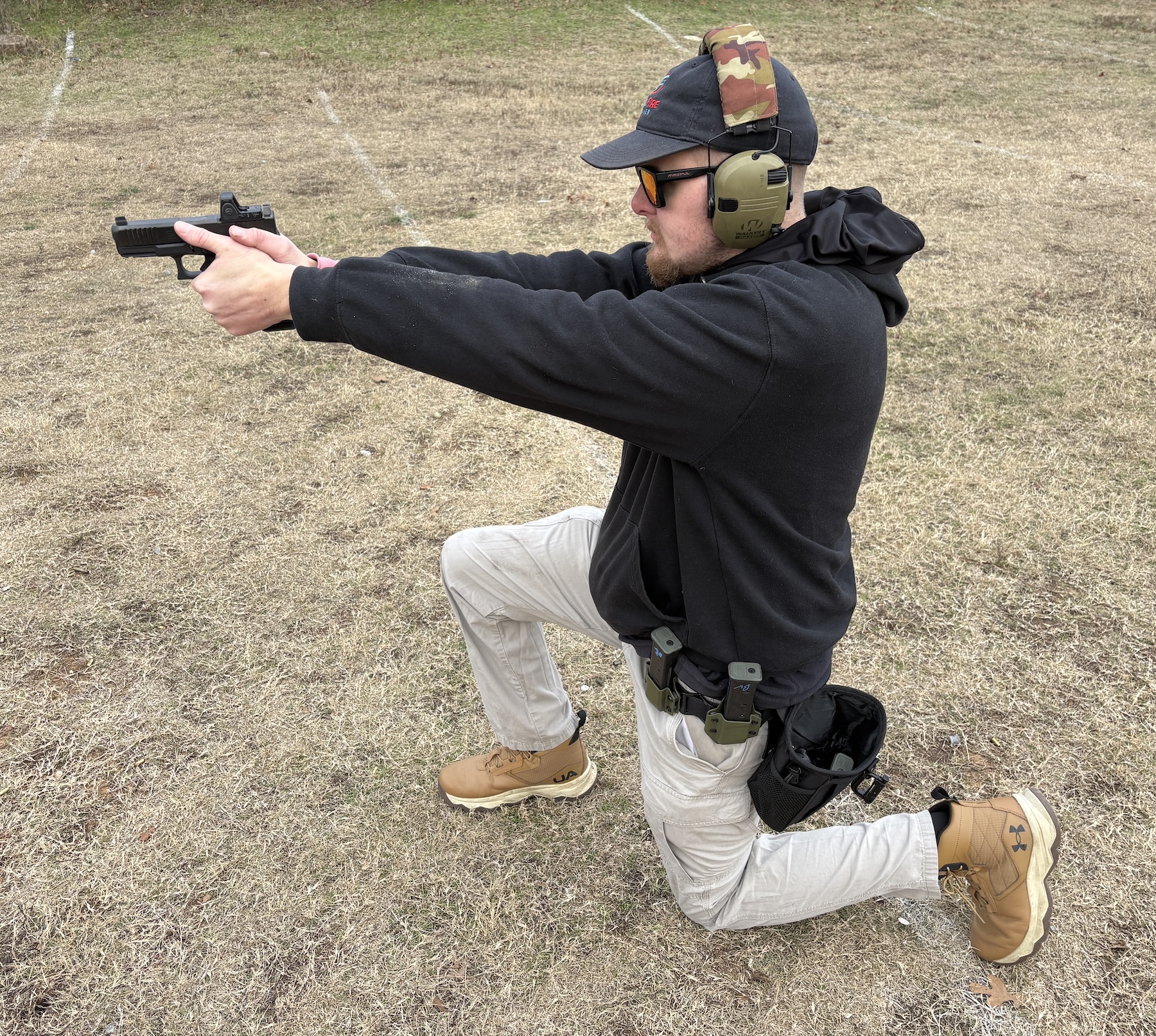
Reversing it. He has his strong side knee up. This works around a strong-side corner. His heel is under his knee, making it easier to move out of the position.
Drawback
Very little on this planet comes to you without at least one negative. Kneeling has that, too. The drawback is loss of mobility. It takes a bit of time to get out of that position and begin moving away from it.
Sources
There have been so many instructors and peers who provided the insights that drove this article; I cannot even begin to single out one or a few of them.
And my thanks to Boone from CoolFire Trainer for helping out with the photos.