
 (No Ratings Yet)
 Loading...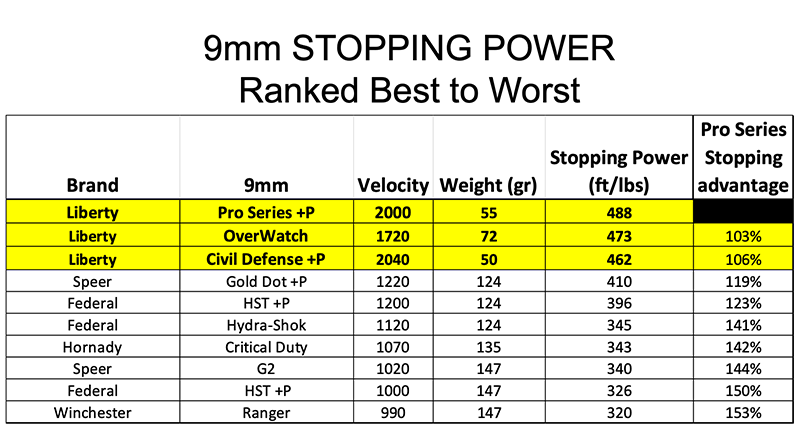
LbrtyAmmo chart
Look at the equipment an officer carried a few decades ago and compare it with today.
Body armor? Better.
Optics? Hugely better.
Communications? Not even close.
Duty pistols? Better materials, better sights, better ergonomics.
Patrol vehicles? Rolling computers.
Then we arrive at ammunition, where conventional thinking still tends to start with a very old assumption: A duty bullet ought to be made primarily of lead, and heavier is better.
Maybe that assumption deserves another look.
Rethinking What Makes a Duty Round Work
Bullet weight is easy to understand because we can put a projectile on a scale. Terminal performance isn’t nearly so simple.
Velocity, impact energy, barrier performance and what the projectile does after entering soft tissue all matter. Liberty Ammunition’s Pro Series 9mm approaches those variables differently, using a 55-grain, lead-free projectile traveling at a company-stated 2,000 fps and producing 488 ft.-lbs. of energy. Liberty says the projectile is designed to penetrate intermediate barriers and rupture in soft tissue.
That’s not simply changing bullet weight. It’s reconsidering the job of the projectile.

Barriers Are Part of the Real World
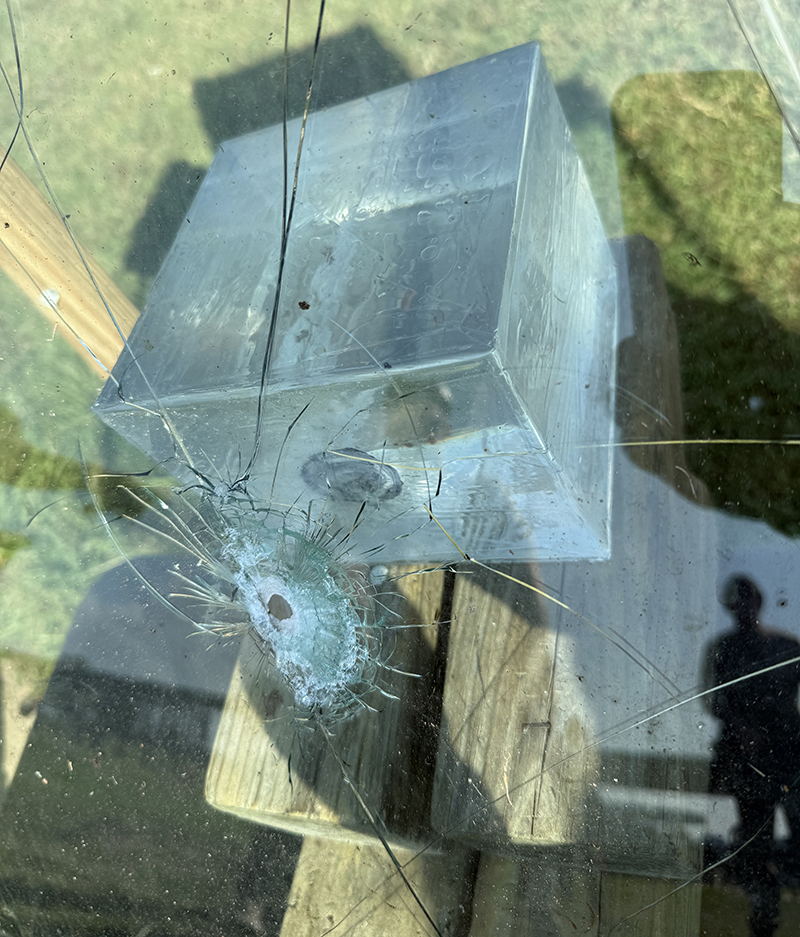
Law-enforcement encounters don’t conveniently arrange themselves on an unobstructed square range. Vehicles, glass and other intermediate materials can become part of the equation.
According to Liberty, Pro Series was engineered around barrier penetration followed by rupture in soft tissue, rapidly transferring energy rather than relying on conventional heavy-projectile construction.
The company also reports that Pro Series 9mm completed testing by members of the National Tactical Officers Association and received a Member Tested and Recommended designation.
The Other Side of the Equation: What’s Behind the Threat?
Here’s the uncomfortable reality of every duty round: You don’t get to stop being responsible for it after the trigger is pressed.
That’s why penetration isn’t the only question. What happens after a projectile enters its intended target matters, too.
Liberty’s design philosophy is to make the projectile rupture in soft tissue and transfer its energy there, reducing the risk associated with a projectile continuing beyond the intended target.
In plain English, the objective is straightforward: stop the threat, not what’s behind it.
And Then There’s Weight
A few ounces don’t sound impressive until they’re attached to an officer for 10 or 12 hours.
At 55 grains, Pro Series takes another approach to ammunition weight. Liberty specifically cites the lighter cartridge as reducing duty-belt weight, an everyday consideration that’s easy to overlook when evaluating ammunition strictly from a ballistic perspective.
Less carried weight plus high velocity is an interesting combination.

Maybe It’s Time Ammunition Got an Upgrade, Too
Nobody seriously argues that law enforcement should return to yesterday’s body armor, radios or optics simply because those technologies worked before.
So perhaps duty ammunition deserves the same scrutiny.
Liberty Ammunition Pro Series 9mm gives law-enforcement agencies another option to evaluate by challenging one of the oldest assumptions in handgun ammunition: that performance has to begin with a heavy lead bullet.
Technology moved on everywhere else.
Why should the ammunition be the exception?
For more information visit LibertyAmmo.com