
 (No Ratings Yet)
 Loading...
FeatureDemoPPR_6071 copy
An early shooting world triangle was Cooper’s Combat Triad – Mindset, Marksmanship, and Gunhandling. His goal was to cover the full range of essential skills. A retired Oklahoma City officer has said this triad can be used to debrief and evaluate shootings, especially unsuccessful ones.
Recently, I was re-introduced to another triad. This one narrowly focused on handgun shooting, albeit one that is usable for any other type of firearm. Vision-Grip-Trigger.
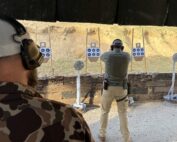
This reintroduction happened when I spent a weekend working on my handgun skills with a less well-known trainer.
How do the various sizes and shapes of common targets correlate to others?
Components & Concepts
Vision, Grip, Trigger – in that sequence.
I had heard and worked on this specific concept previously. This was a re-introduction, a review.
As for concepts, there are two sets of two.
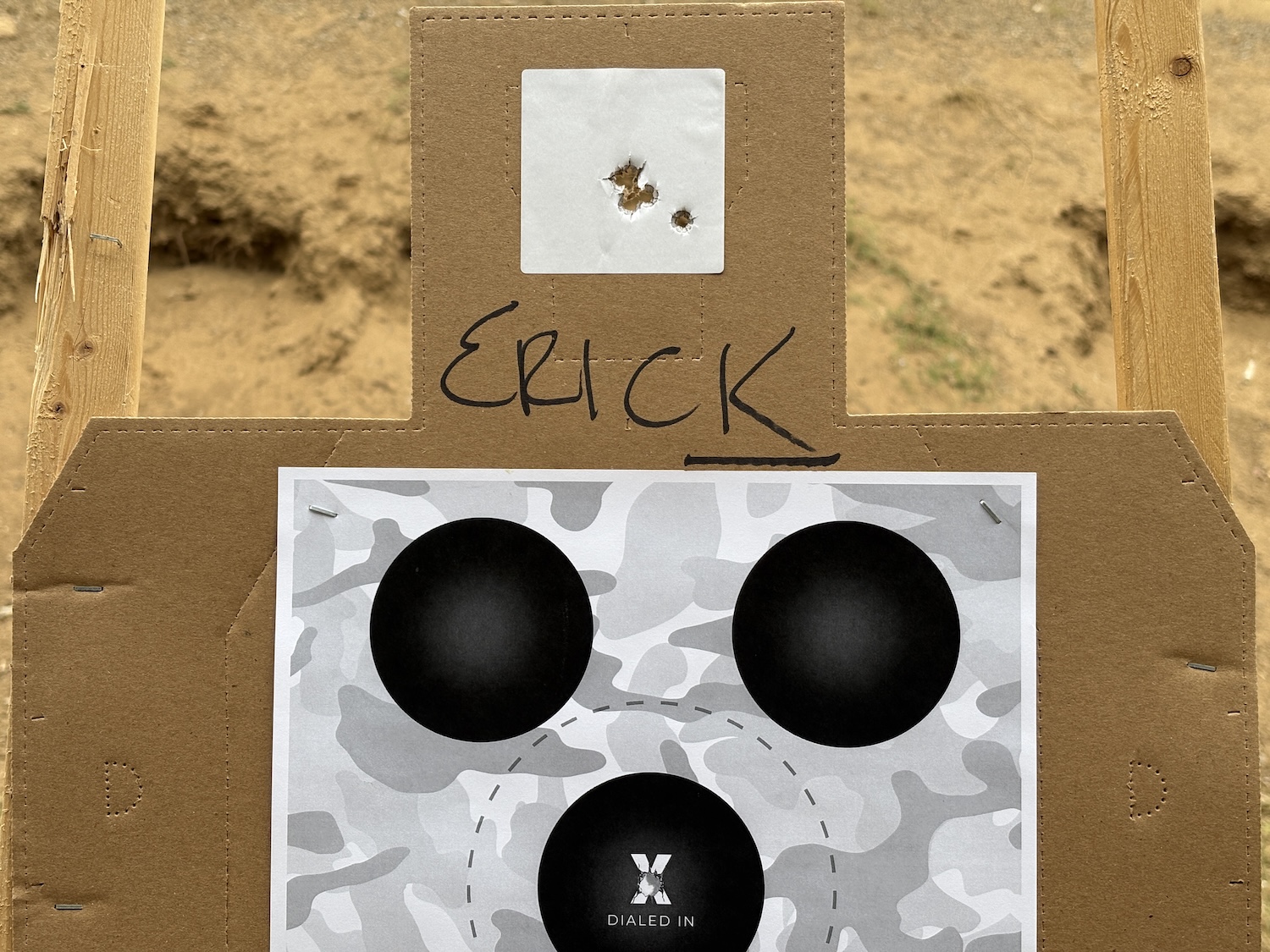
The author’s target – 3″ square – with the results of single shots to it from 10 yards.
The first is the idea of High Confirmation vs. Low. How difficult is the shot? How much mental and physical effort will you need to expend to deliver that projectile? With iron sights, this may involve a lot of eye sprints from the sights to the target and back. As many of us are far deeper into the dot world, those sights have almost eliminated the need for that racing. Regardless, we still need to confirm visually that we can deliver that shot.
The other concept is high vs. low accountability. Our training prepares us for the operational employment of the firearm. As a result, it must hold shooters accountable for hits or misses, since they will be off the range.
Meeting a set standard in training and practice is a must. Can you deliver the hit to X/10/9 rings of a B-8 Bulls Eye? Or, at greater distance, will you stay within the -1 or C zone of certain competition targets?
What will determine that standard? The nature of the shot and the risk to others if you fail.
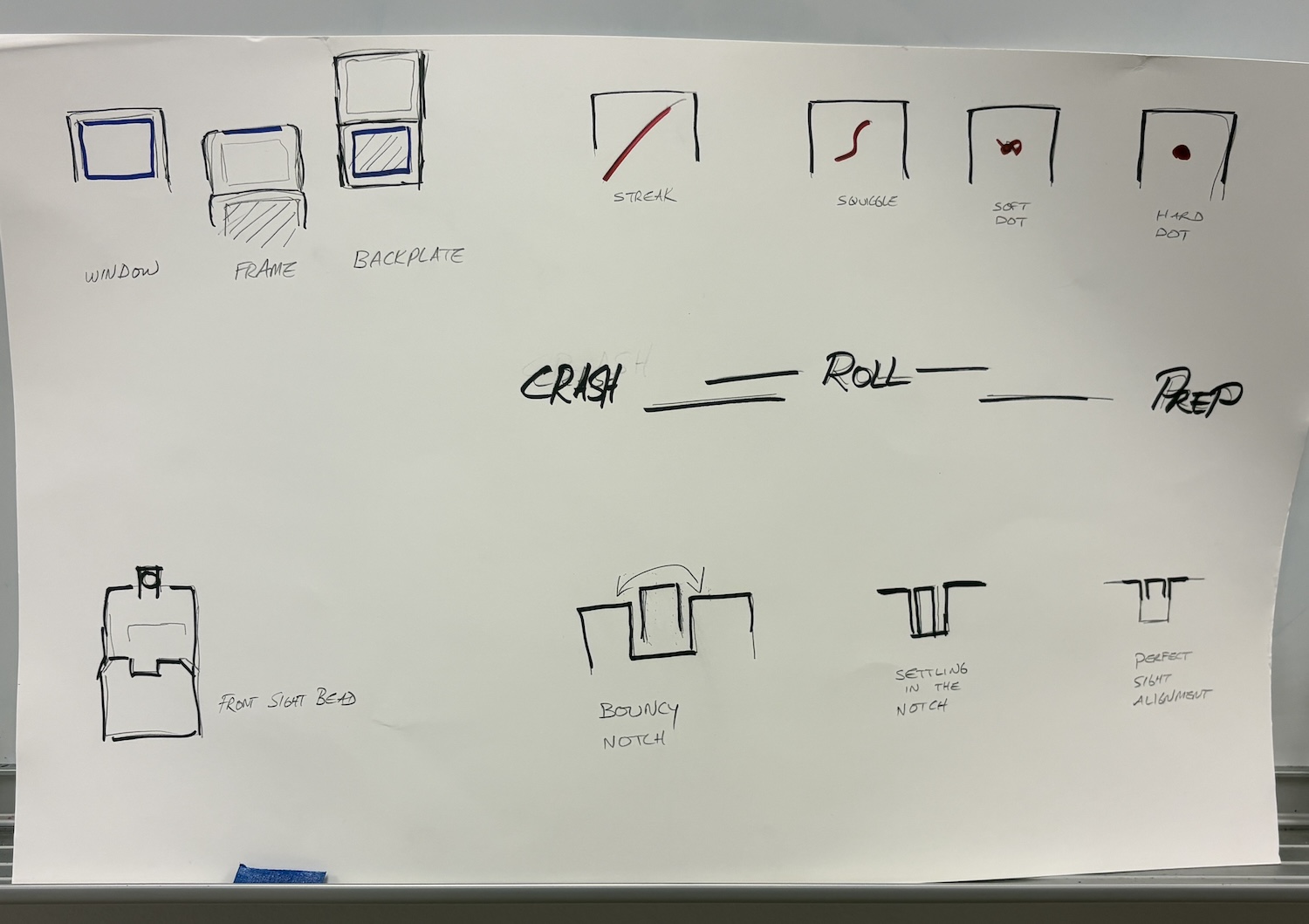
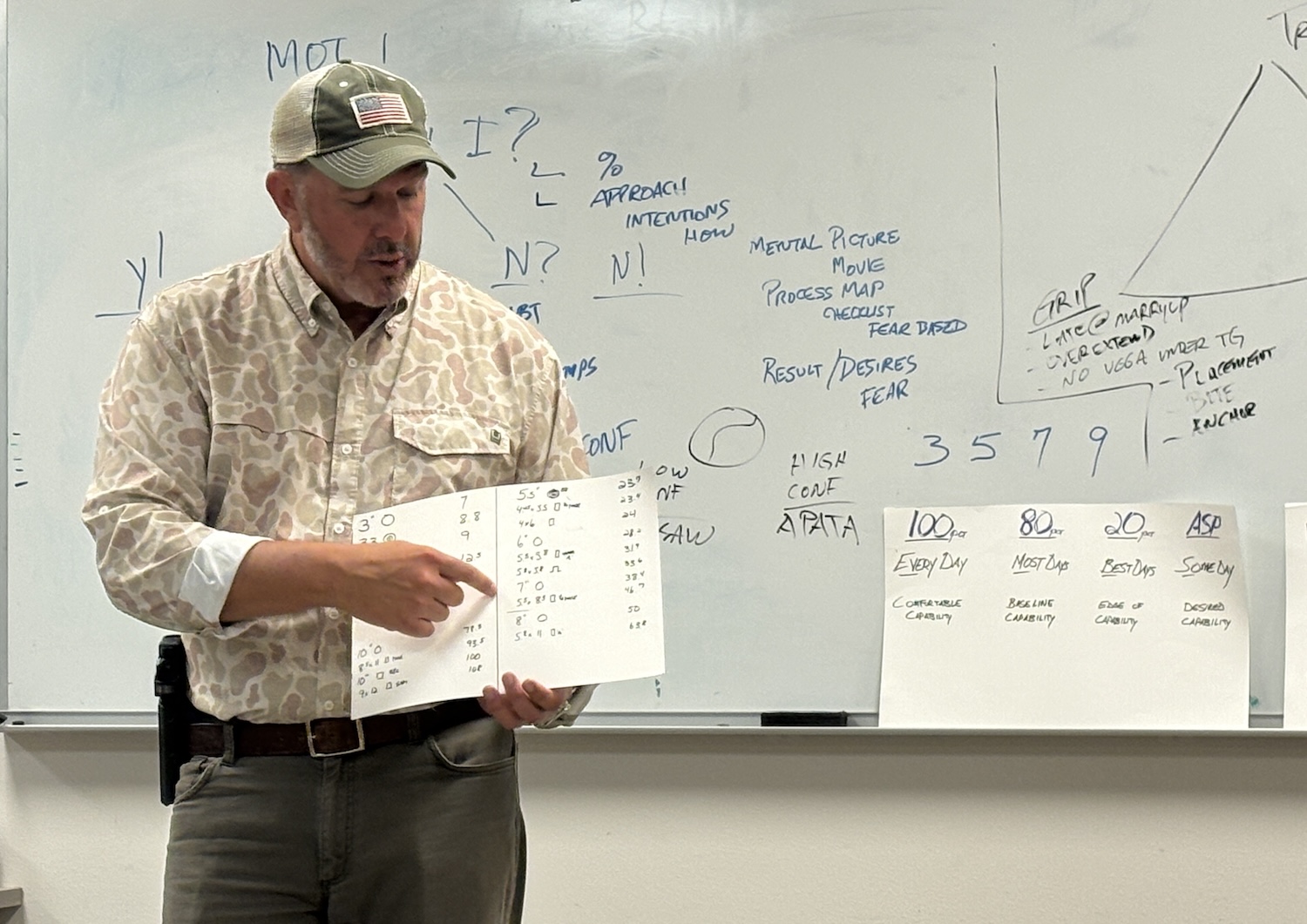
One of the hand-drawn charts correlating vision to the trigger.
Vision
Are you seeing what you need to see? Yes, we’ve heard that. Now, consider the difference between looking toward an object and focusing on it to the exclusion of others. Then there is the act of building a visual fence immediately around that target, that aiming point. The goal here is to build the visual fence so strongly that you can feel the pull of your optical muscles towards that. Having that level, beyond mere focus, will help you deliver your shots there as well.
Can you move your vision from merely looking, to focusing on, to creating that visual fence?
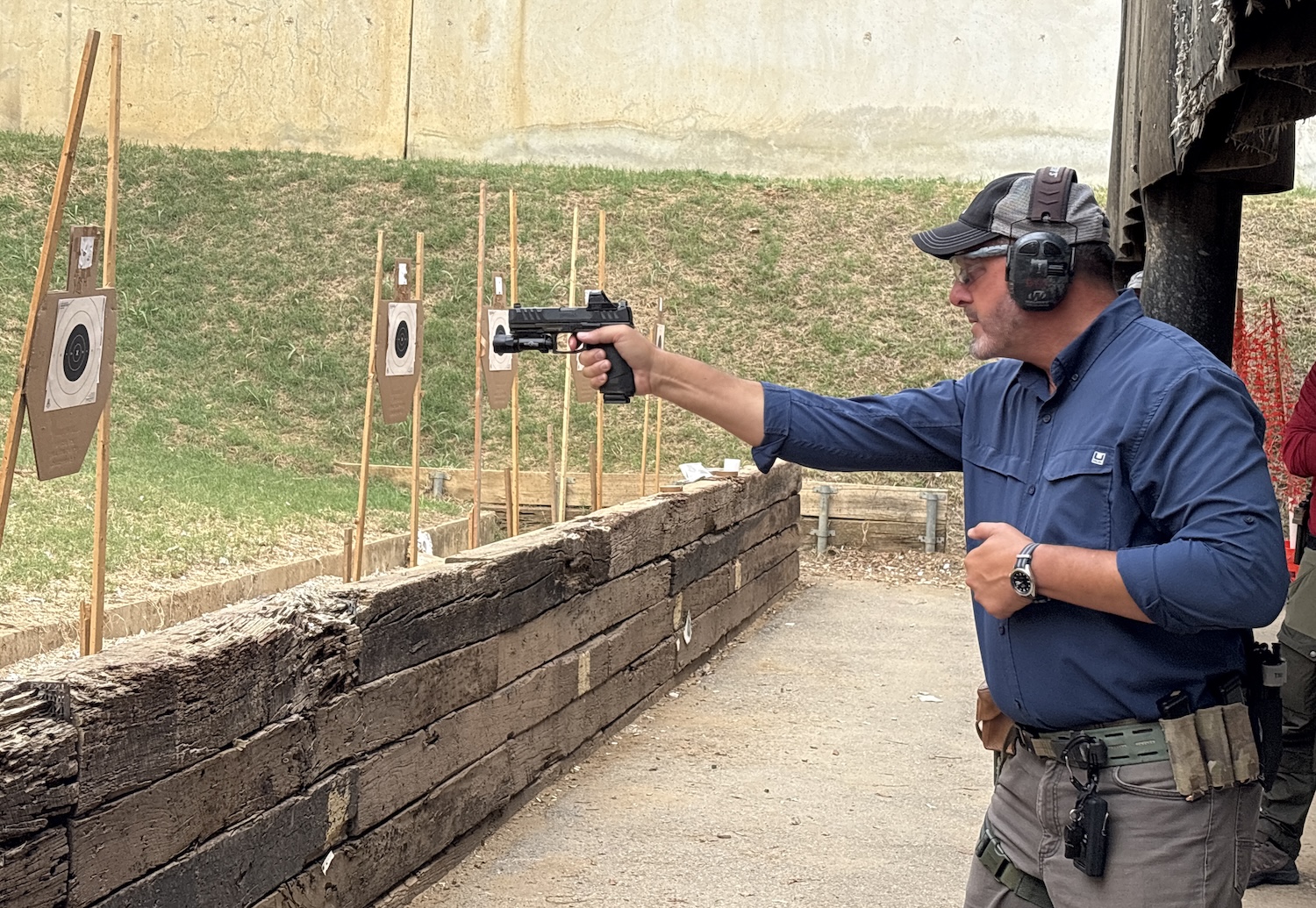
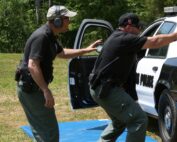
A short-range demonstration of the grip needed for Strong-Hand Only shooting.
Grip
I swear this is one of the more confusing topics for a lot of shooters. Especially new ones. Why? Because opinions are so diverse. Far too often, I hear “Well, what I do is …” for grip. Great, most of us are not you.
In discussing grip pressure, my starting point is a Wednesday morning business meeting versus Saturday evening in a bar with Type A personalities. From that Wednesday meeting grip, adjust your grip pressure based on feedback from the sights and target.
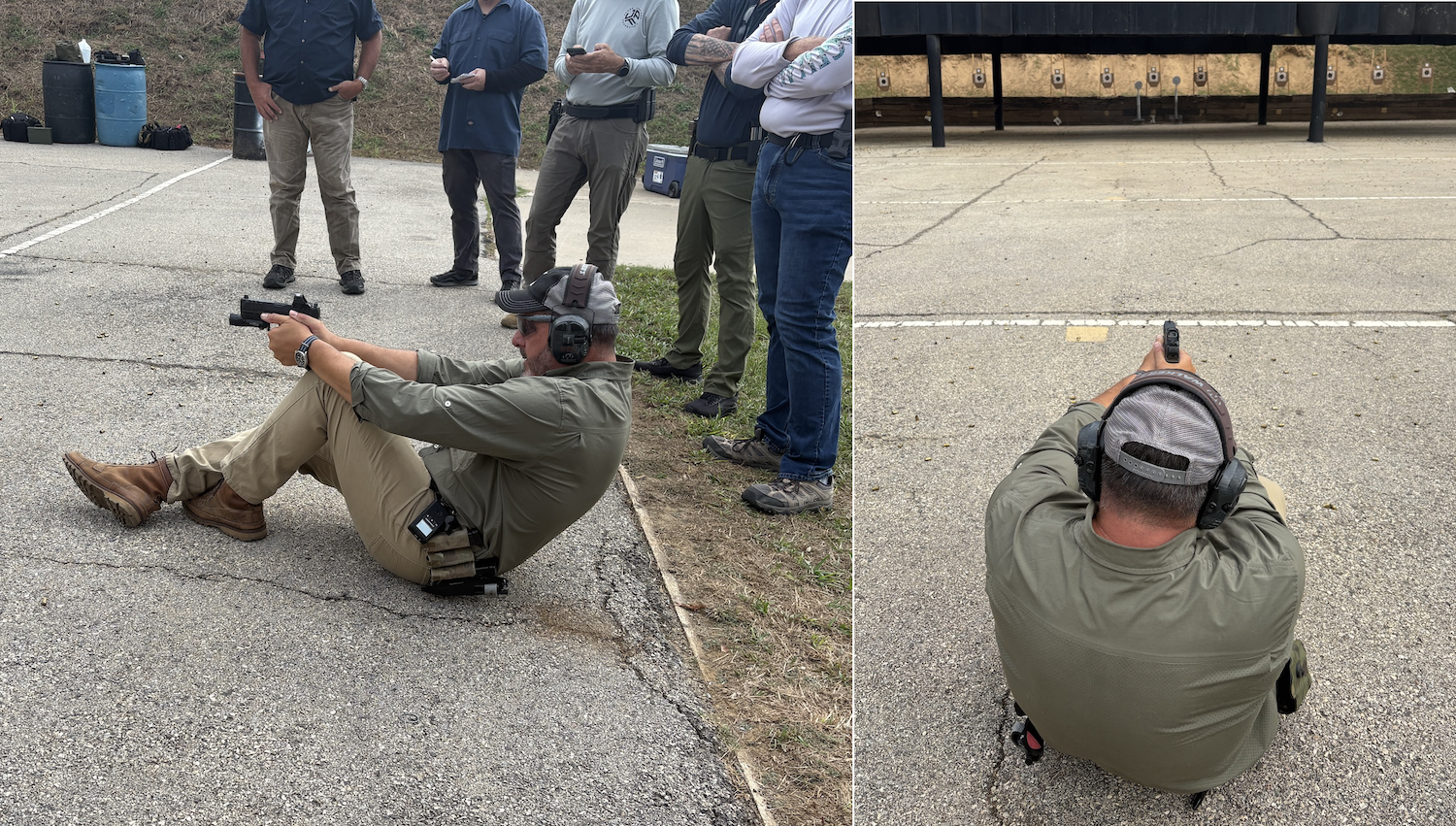
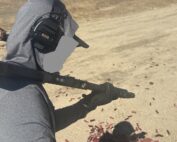
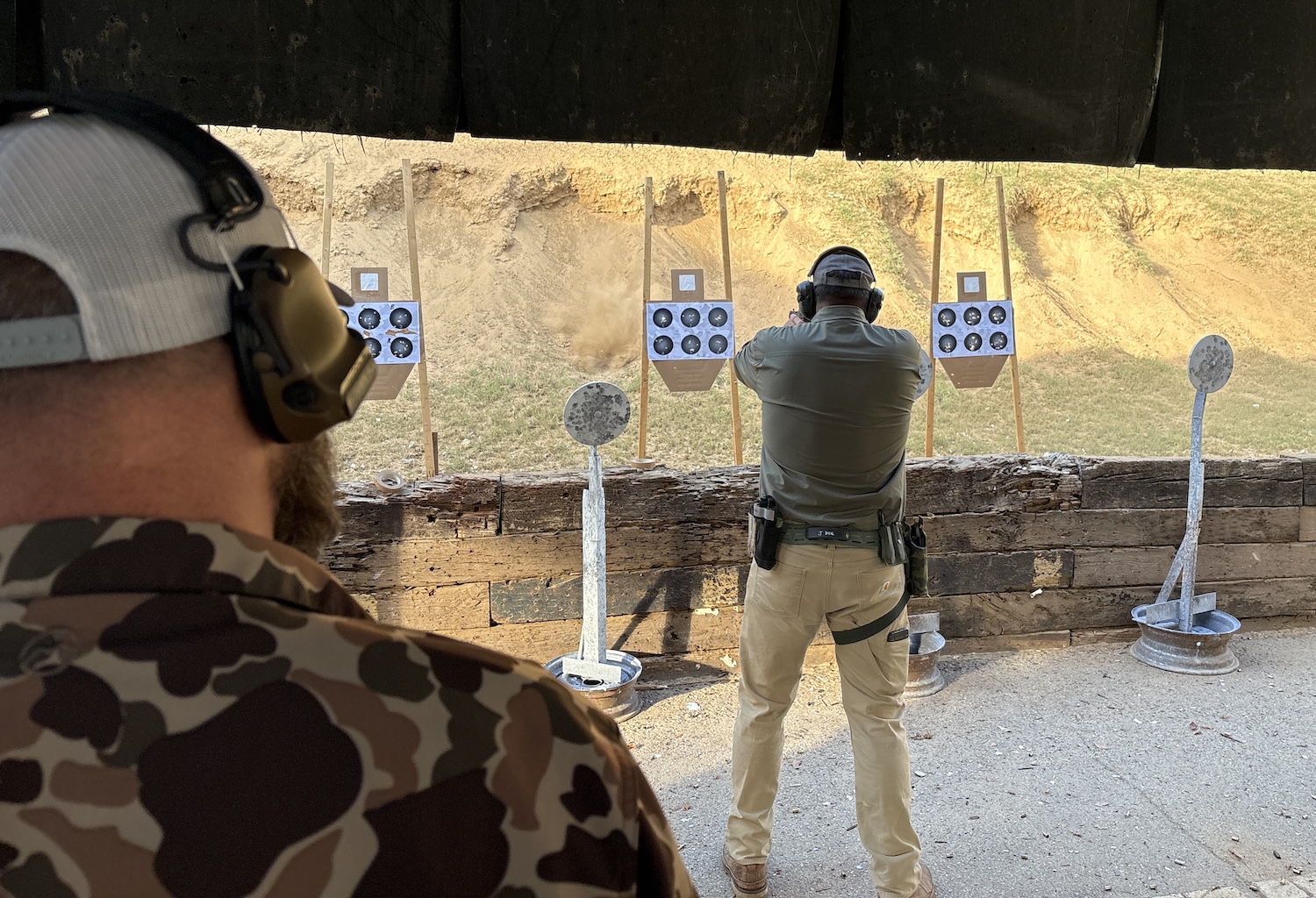
We were shown and used this seated alternative to the prone position. Vision, Grip, and Trigger were still required.
Justin discusses and lets you experiment with varying grip pressure in dry practice. He repeats that experiment in live fire.
We started with a solid two-hand grip on the pistol. Then we backed the pressure off to about half, or 5 out of 10. From there, we increased it in 10% increments. Yes, everyone’s ten percent will be different. However, it is the principle. Most of the class settled on 7/10 overall (between both hands) working best for them.

Get a traditional two-hand grip before working the trigger with your support-hand index finger. This gives solids feedback about grip and trigger.
Trigger
He breaks the trigger press down into three distinct types. First, a Crash – you contact the trigger face and rapidly move all the way through it with relatively significant force and speed.
Second is a Roll. Once you begin moving the trigger rearward, you keep it moving – no matter how slowly – until the shot breaks.
Finally, you have the Prep. You have taken all the slack out before pausing at the wall. Then, you deliberately press through the wall to break the shot. At the same time, you minimize any excess energy after releasing the striker or hammer.
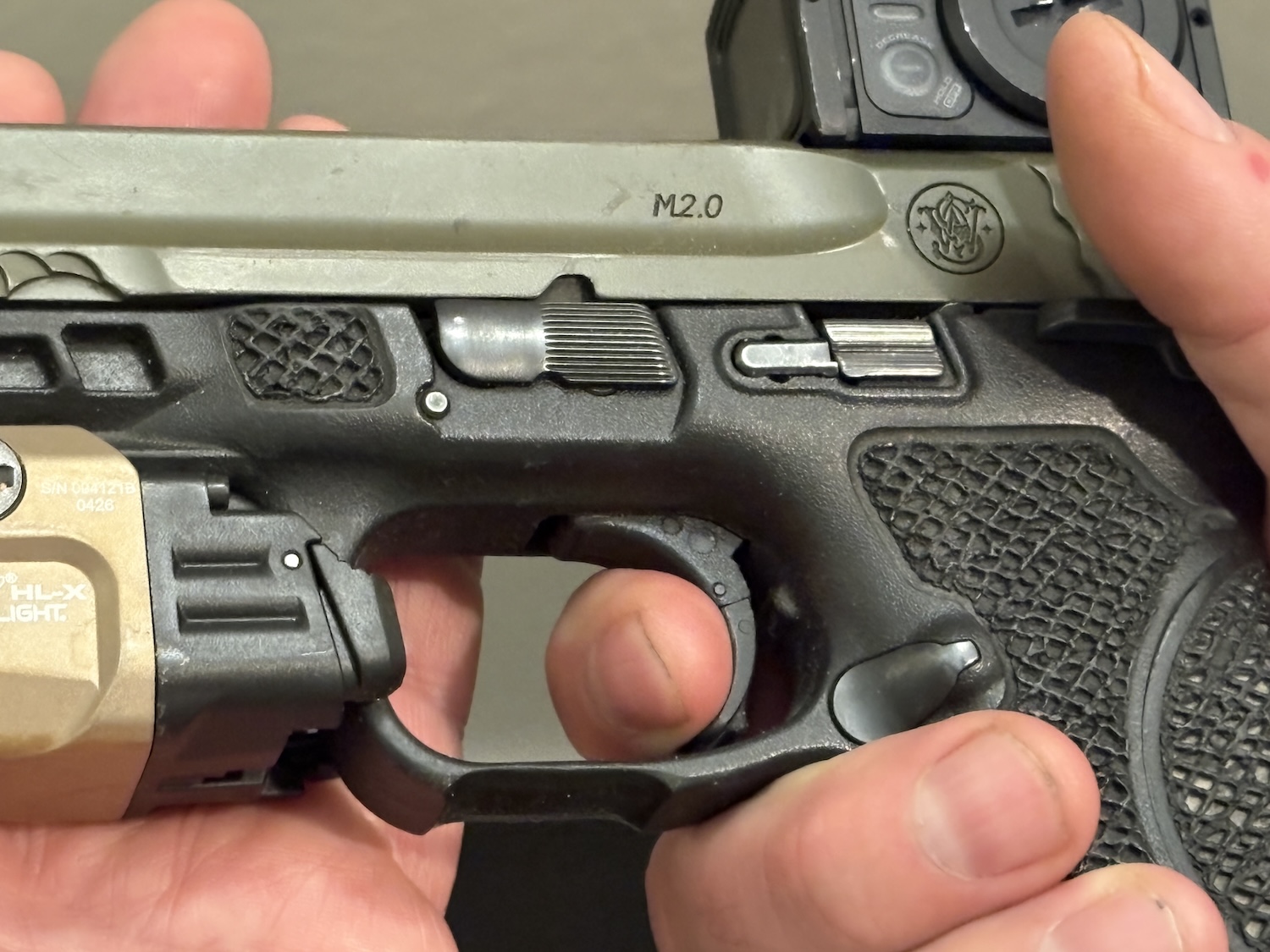
Mirroring a trigger-sensing drill I learned from Rangemaster, Justin had us look down at the trigger of our (Unloaded!) pistols while we made contact and pressed it to & through the wall.
Having started with custom 1911s on duty, before switching to the M&P, the concept of rolling the trigger is still mostly foreign to me. It remains a work in progress.
Correlating
One thing of note was Justin tying the visual of the sights, both dots and irons, to the type of trigger press you used.
The dot streaking across the window and most squiggly reticles correlate well with Crashing the trigger.
The remaining squiggles and those fuzzy, bouncing dots will be best served with a Rolling trigger press.
But the crisp, stationary dot? It gets a Prep’d trigger.
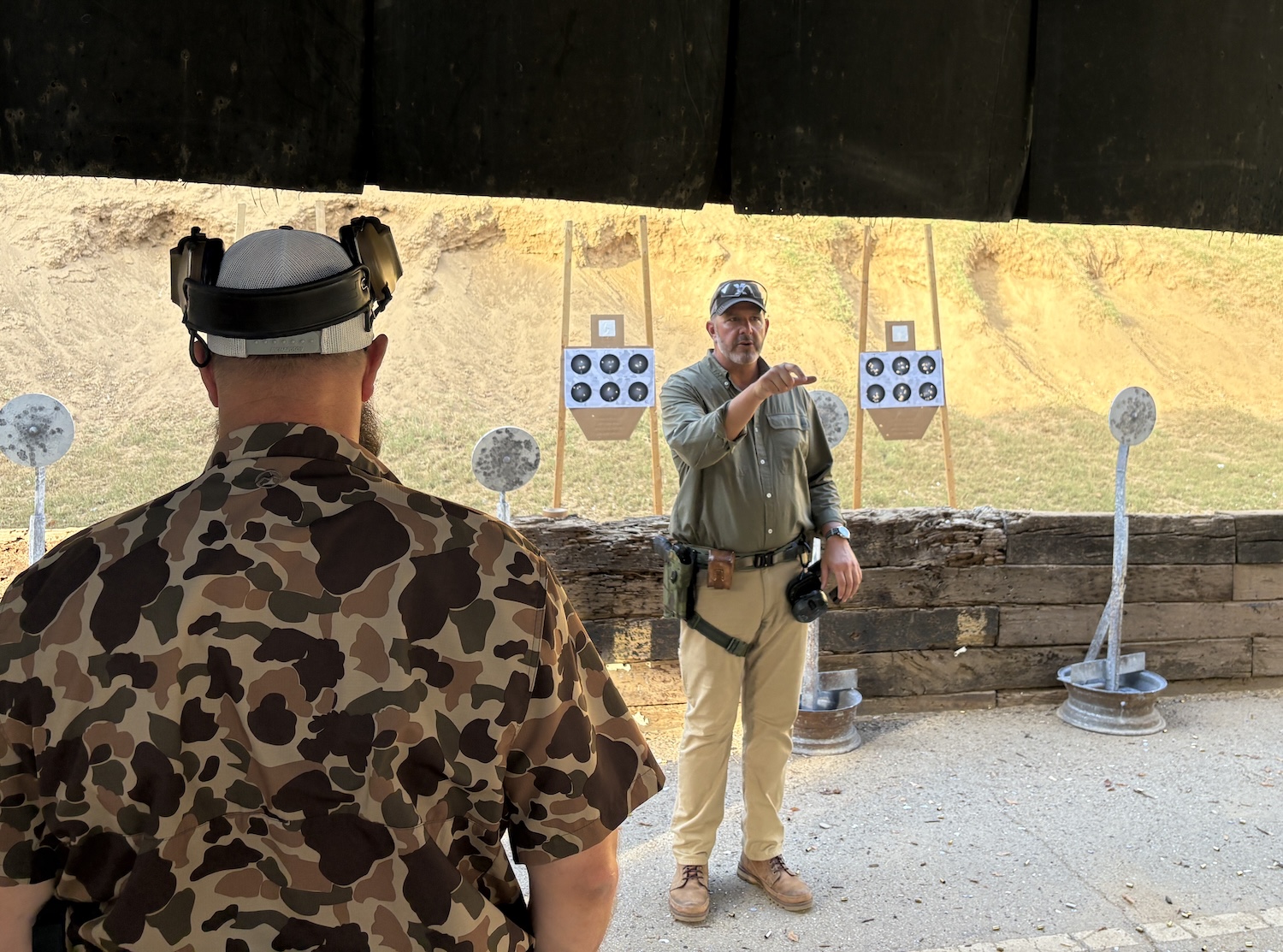
Justin’s about the epitome of the Explain, Demonstrate part of the EDIP teaching method. He explains and then demos any new material.
Flow
To use Justin’s verbiage, we toggled between high and low confirmation as well as high and low accountability throughout the session. Still, the low-accountability work we did was held to a higher standard.
And he definitely layered in some humor. It is somewhat rare to quote lines from The Princess Bride, or a John Wayne movie while shooting. Justin had us do it to unplug our conscious minds while shooting at close range.
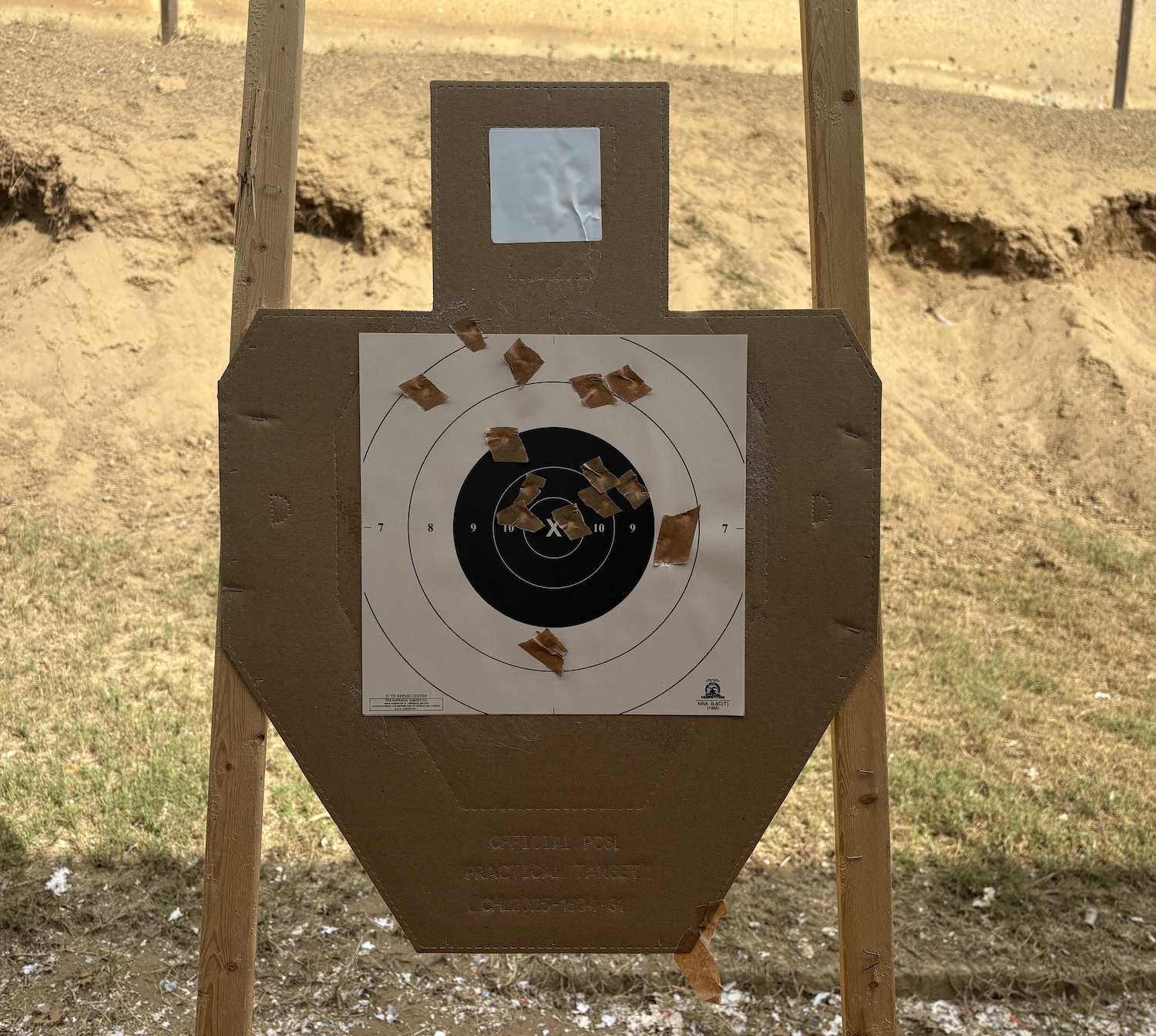
Author’s target after working back beyond 25 yards. With an M&P 2.0 and an Acro P2 optic.
Closing Thoughts
Our fired rounds miss far more than they over-penetrate and exit the threat. Because of that, we need to train more for the high-confirmation shots we might have to make. Additionally, our training needs to hold shooters accountable for their hits and their misses.
The weekend I spent working on this problem was very valuable to my shooting, regardless of the venues I’m likely to do it in.