
 (No Ratings Yet)
 Loading...

LETC-Logo-2026_Vertical-Black-scaled copy
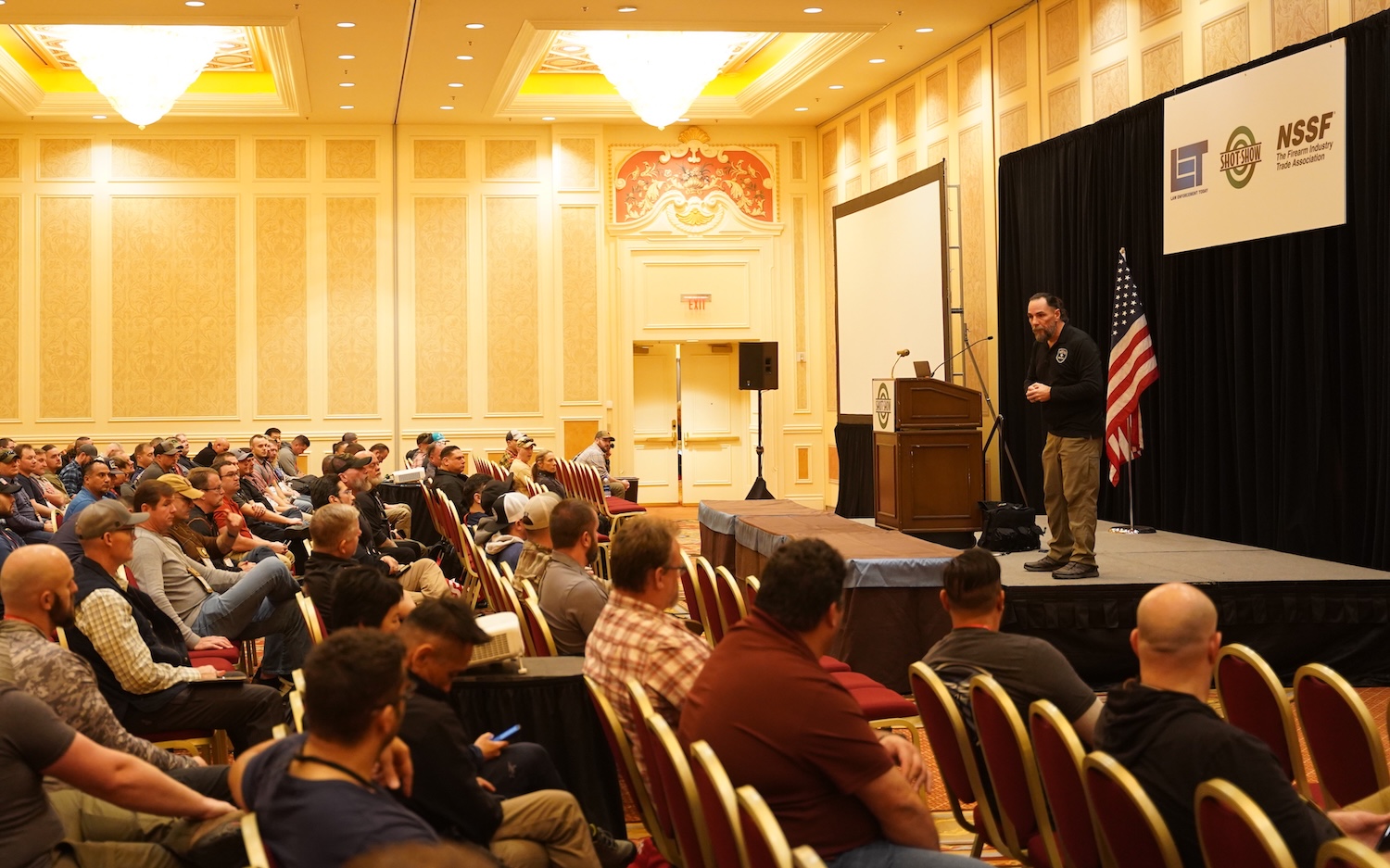
Action Target (A/T) has shown it’s serious about supporting its clients, especially law enforcement. Beyond the ranges they build and their retail sales (covered in another article), they’ve run a yearly, law enforcement-centric training conference for over thirty years.
They call it the Law Enforcement Training Camp (LETC).
A Monday evening welcome event was held at A/T’s corporate headquarters in Provo, UT. It also hosted Thursday night’s dinner, awards ceremony, and raffle.
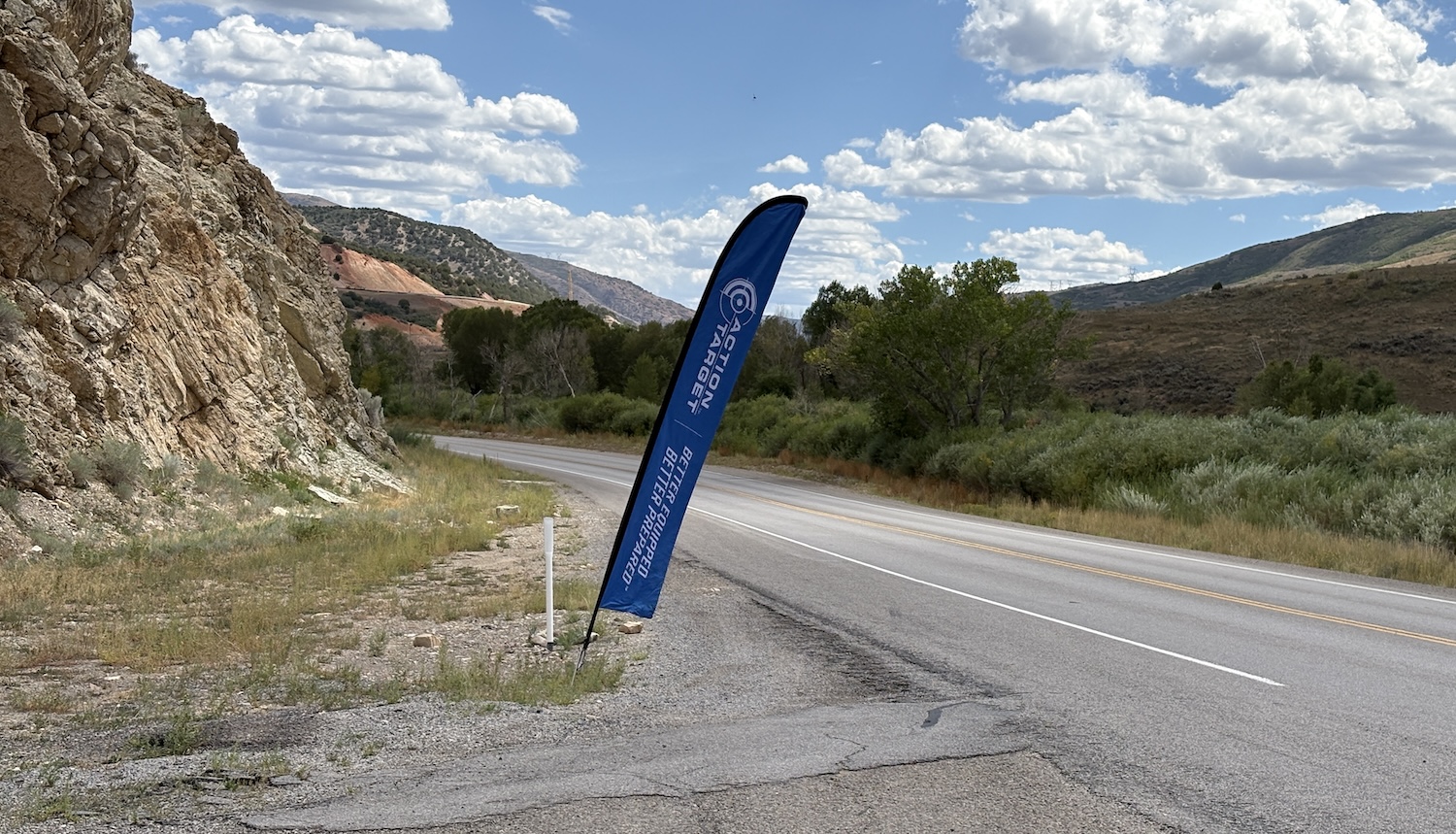
The entrance to the Thistle Range complex and the LETC.
The rest of the event took place at Utah County’s Thistle Gun Range on Highway 89, just off Highway 6 east of Spanish Fork, UT. The facility includes a shoot house (more on it later) and a long-range (sniper) pad.
Like many conferences, the event offers a variety of one-day blocks attendees can sign up for. I tried to hit most of them, though not all, and I’ll work through them in this article and a subsequent one.
Offerings
LETC had these classes tee’d up for the attendees:
Red Dot Pistol Performance
Advanced Firearm Techniques
Shooting on Reactive Steel
4-Lane Carbine
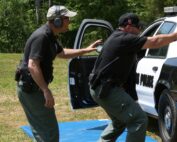
Vehicle Threat Interdiction (VTI)
Low-Light Employment (SureFire)
Patrol Structure Clearing (CQB)
Precision Patrol Rifle
Modern Training Concepts: Carbine & Shotgun
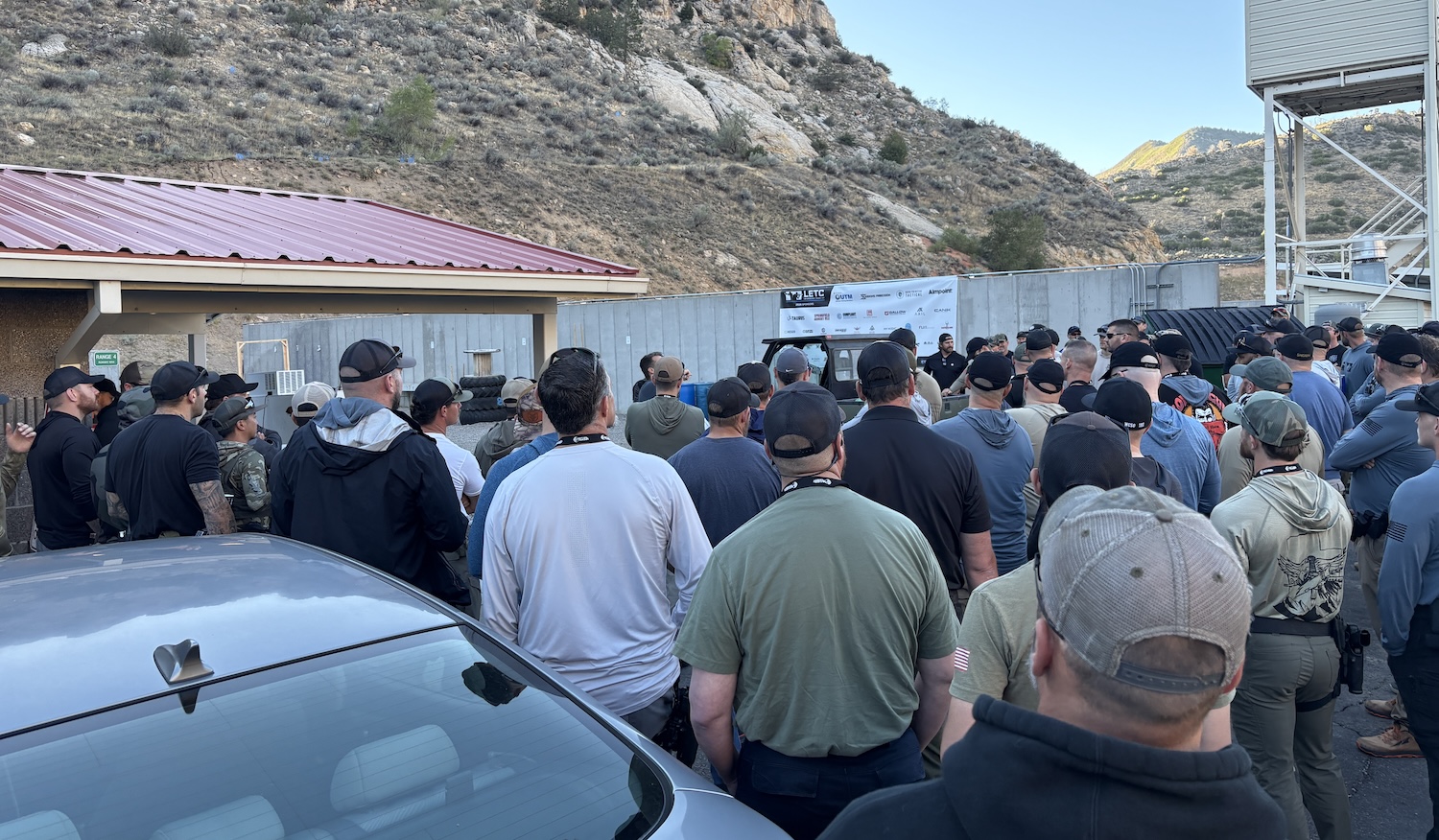
Tusday morning’s safety brief, more than just the four rules – it covered environmental concerns too.
Tuesday
The range portion started with one all-encompassing safety brief for everyone. Yes, it covered the four rules and the unique environmental concerns that kick in when you are on the range in late August, about 5000 feet above sea level in the desert.
During the three days I was on the range, I would try to catch two or three classes each day. I then split my time between classes, catching one to two hours before moving on to another. I’d return and repeat. As a result, with one exception, I didn’t cover all the material in any one block.
Aimpoint
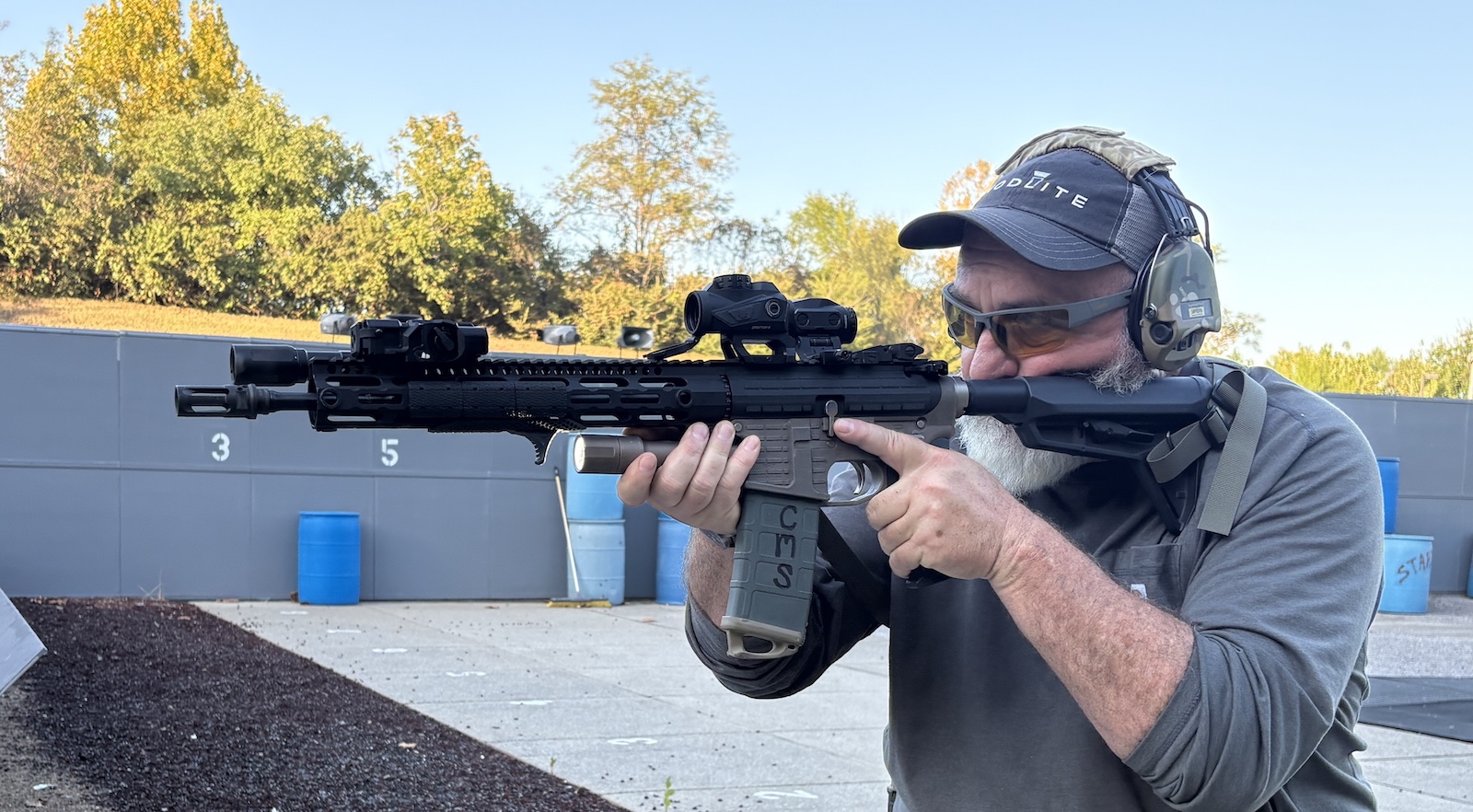
The company sent out the instructors for their block. Two veterans from the Marine Corps Special Operations Command (MARSOC) and one from the company’s technical side. They began by talking with the students about their experiences with pistol-mounted optics, the distances they zeroed at, and the specific models they used.
Before running their initial assessment drill, they addressed both Hit Factor scoring and accuracy concerns. Their initial assessment course consists of:
3 yards, Bill Drill (six rounds to the A Zone from the holster);
7 yards, 3 Reload 3;
20 yards, a 180-degree turn before another Bill Drill.
They said they would repeat this at the end of the day.
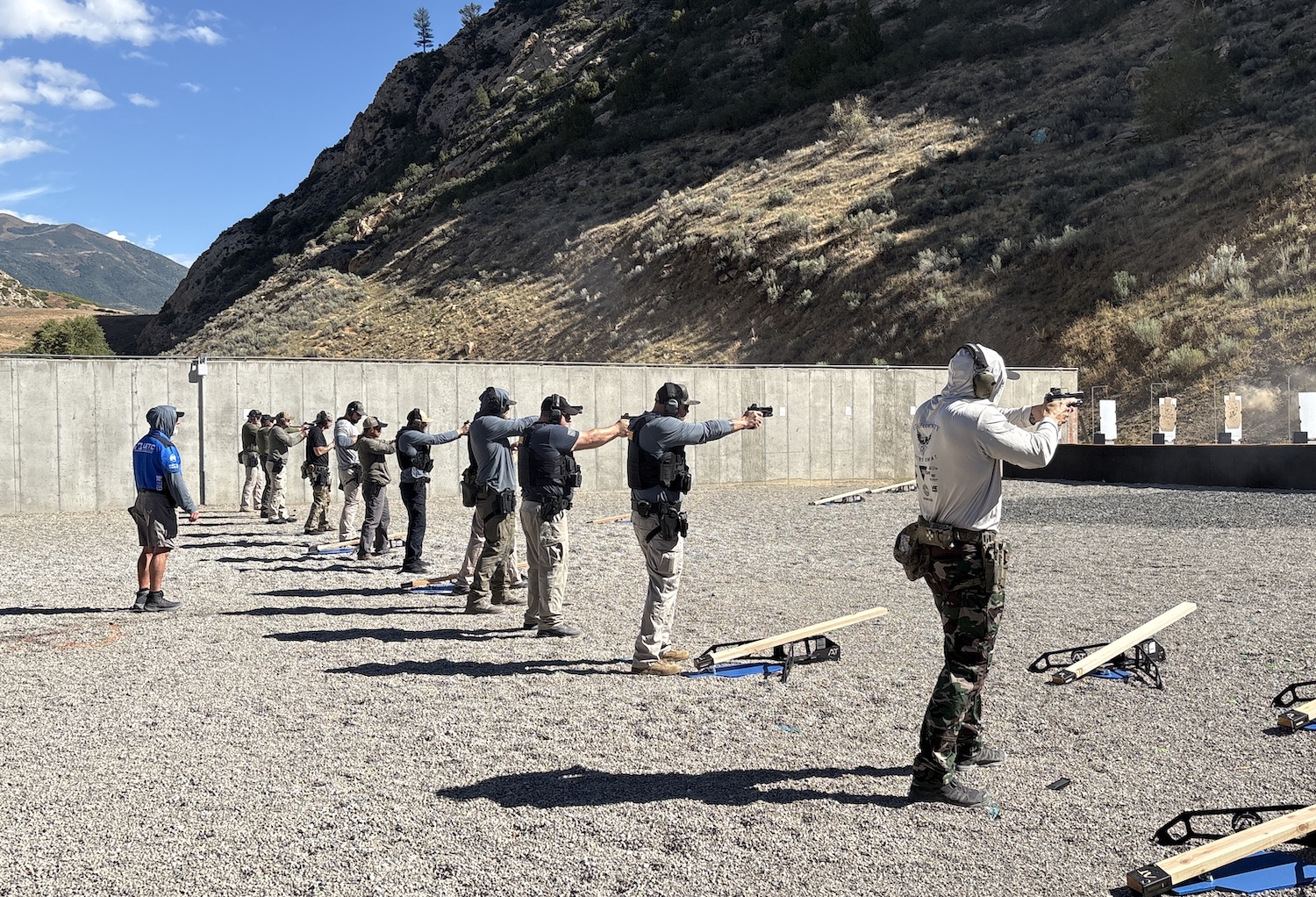
Putting in the work on paper before moving to steel targets and timers.
After that was done, they dove into grip and presentation. On the grip, they covered holding and pressing with the strong hand while cranking down with the support hand. Locking the wrists was discussed as being quite important as well. Somewhat uniquely, they demonstrated appropriate support-hand pressure for each shooter, with the support hand on the shooter’s strong hand, rather than just discussing it.
In terms of draw or presentation, they discussed the differences, advantages, and disadvantages of using an elevator draw (reverse L) versus going straight from the holster to the target diagonally.
Next up was a discussion on batteries. This is becoming more and more of a concern, as bitterant coatings to minimize children swallowing coin cells are becoming industry standard. This resulted from the 2022 Reese’s Law. https://www.cpsc.gov/Business–Manufacturing/Business-Education/Business-Guidance/Button-Cell-and-Coin-Battery
Unfortunately, these coatings are also causing service-life and conductivity problems. Originally, it was Duracell batteries; now it is all of them. Aimpoint’s recommendation in the class was that all coin cells be wiped with an alcohol pad at a minimum. Their tech said you might even have to wash in hot, soapy water.
While I understand the concerns, we need some compromise when it comes to life-support equipment.
Mounting was discussed, and they made a recommendation for Perma-Tex rather than Loctite or Vibra-tite. The orange version was specifically mentioned as it requires steady pressure, rather than heat, to release.
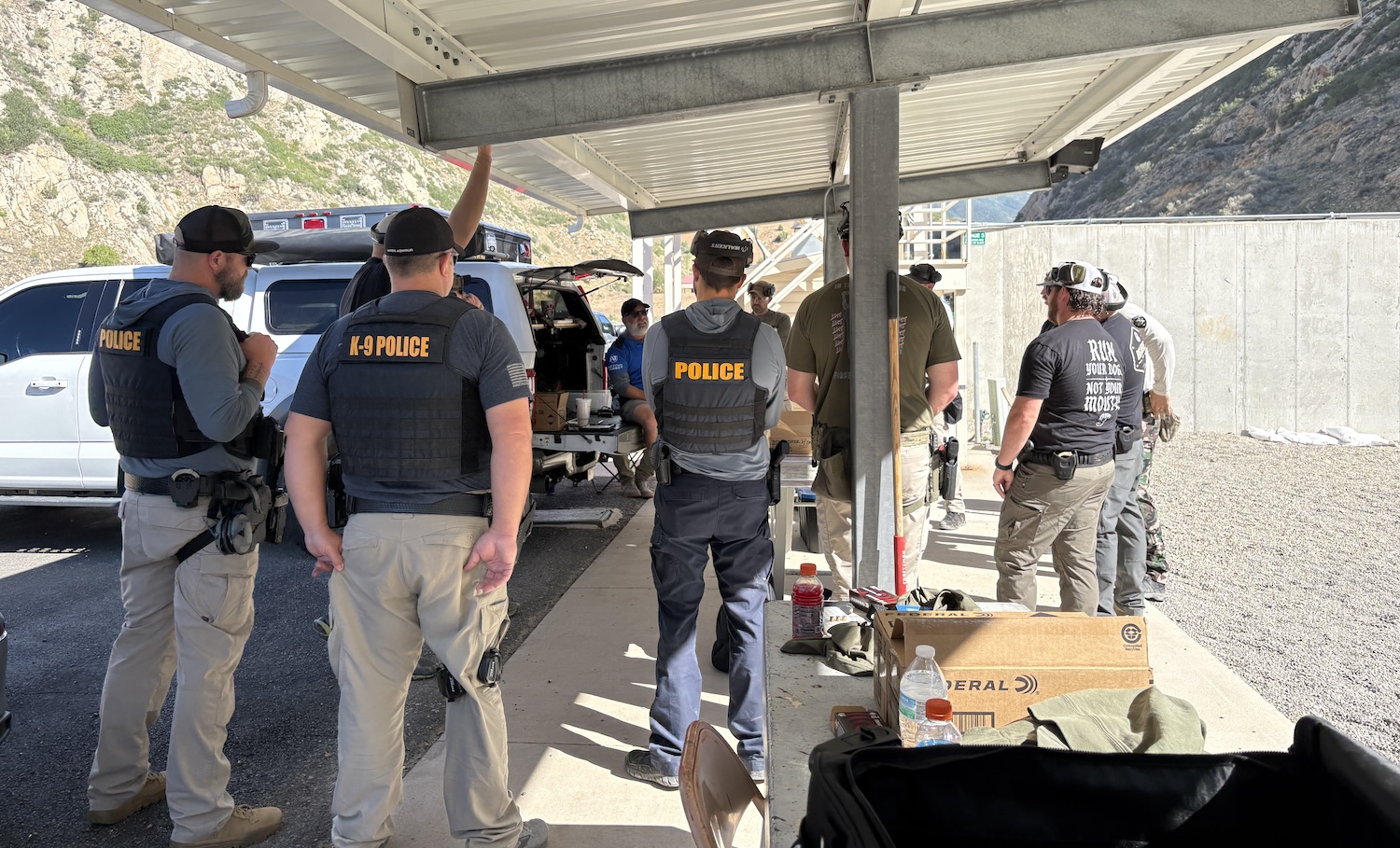
Schmidt talking with the class about trigger control before the next block of material.
Advanced Firearms Techniques
When I moved over to this session, I walked into a discussion of trigger presses. The instructor, Kyle Schmidt (Tempe, AZ PD), described his goal of you jerking the trigger without moving the gun off the target.
He addressed what he described as a deliberate vs. an instant press. Schmidt acknowledged the reality was somewhere in between. That third type of press mirrors what I have heard from others.
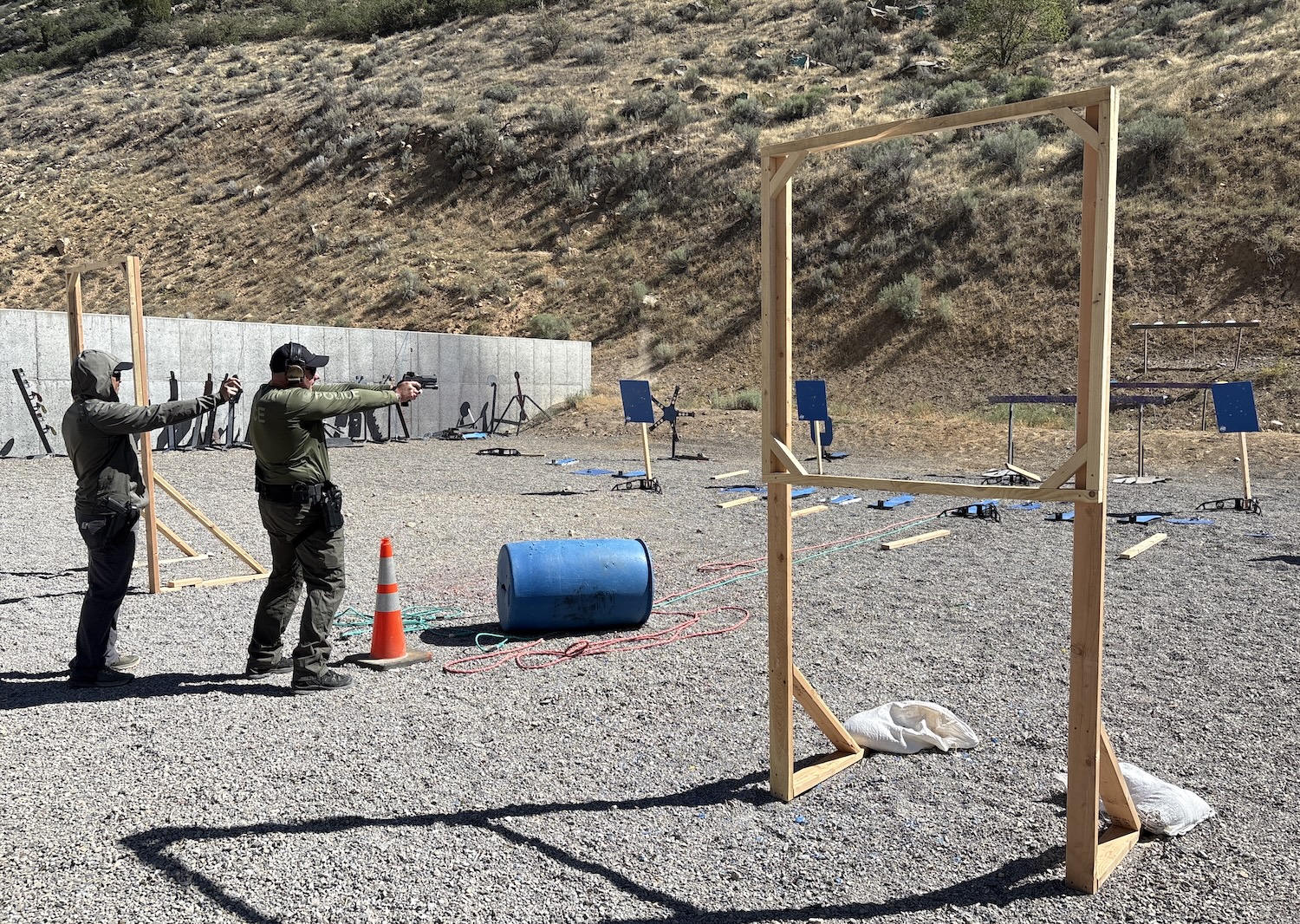
Students timing their peers on the target transition drill.
Regarding students’ shooting issues, he said instructors need to address the specific gun and ammunition first. Rule out any concerns there and then move on to other concerns.
The drills I saw included variations of 6 shots in 6 seconds, from 25 to 10 yards:
Free style; 3 reload 3; Strong Hand Only; & Weak Hand Only;
The worst hit on each run was the score. D was marginal, C = adequate, A is excellent, the Head was exceptional, and the eye box = total control.
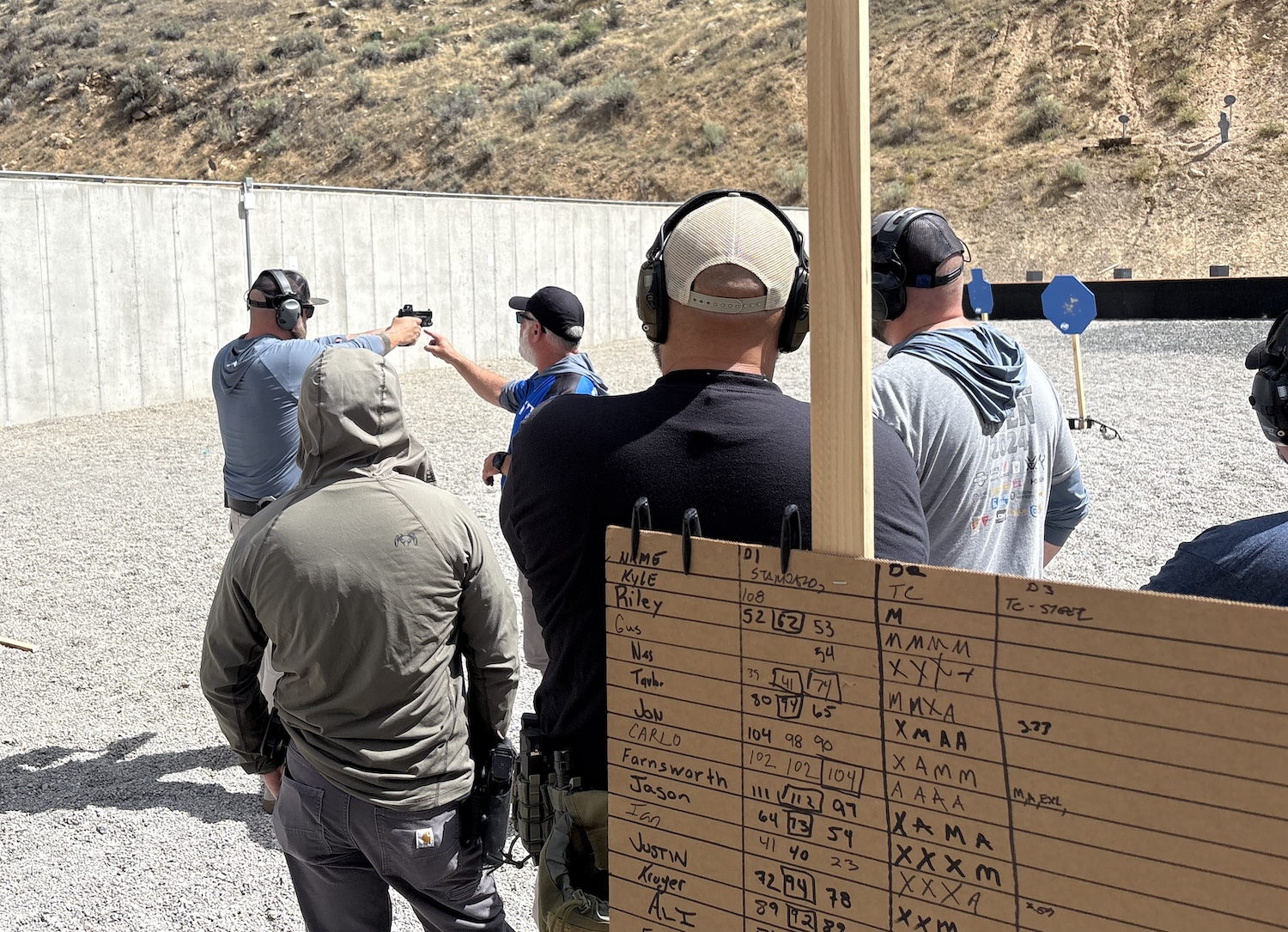
Kyle coaching a shooter during one block. The shooters are tracking their performance too.
Most of these started in the surrender position.
The material shifted to lateral target transitions. He had the class record their draw and transition times. The stated goal was to get target-to-target transitions down to your shot-to-shot splits.
Another segment applied 5 shots in 5 seconds to a variety of steel targets. Ranging in size from a 24” tall rectangle to a head-sized circle. The goal was to clean that 5-shot drill on each, in sequence.
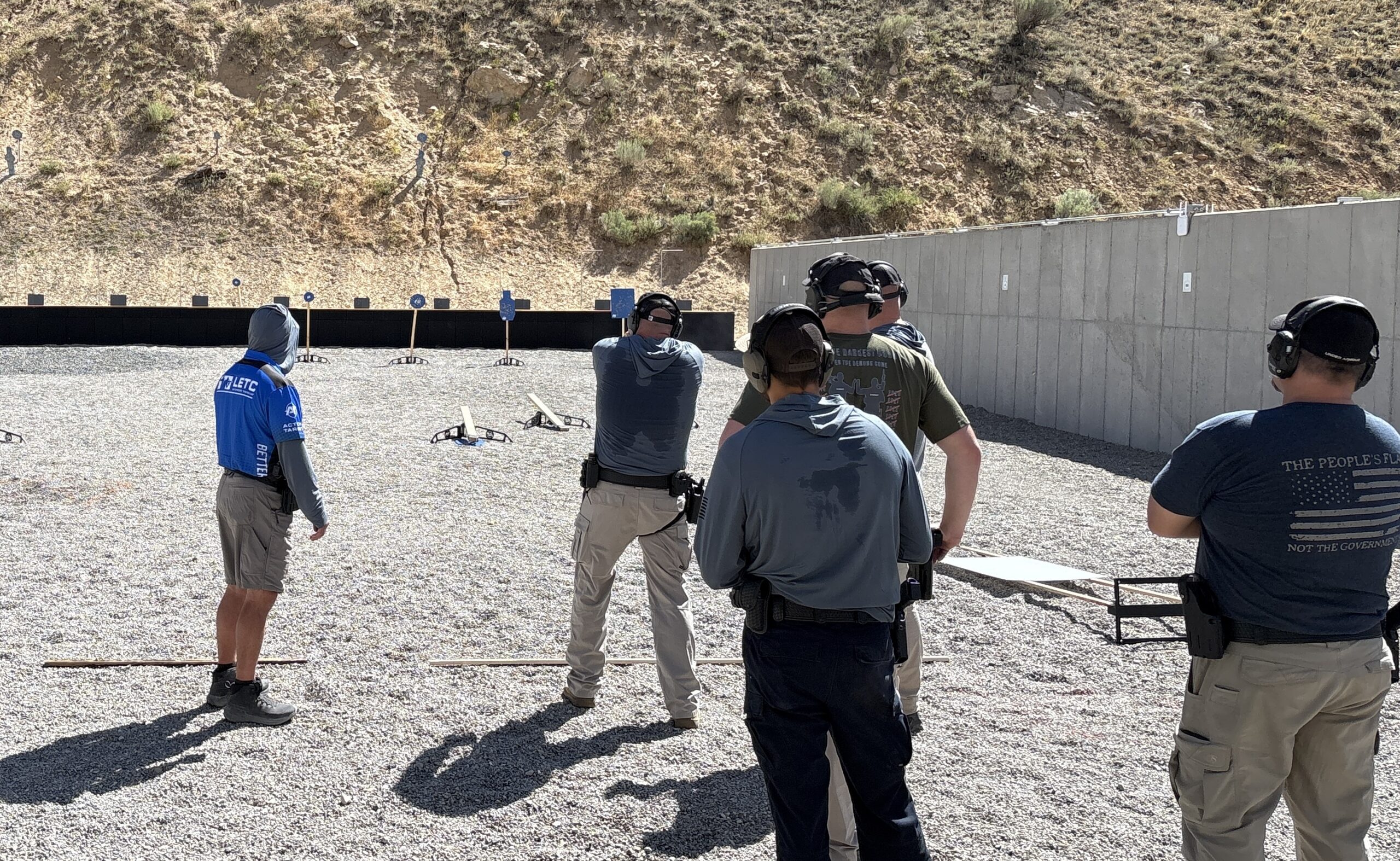
One shooter working on the 5 in 5 performance drills, working on progressively smaller targets.
For Now
The 2026 tuition was $950 for four full days of training, plus multiple social or networking events. I wish I had gotten to this when I was still working.