I have never been even close to becoming a pilot. It has a lot to do with my color vision issues — and probably a general inability to do much math. Regardless, I pay attention to some things from that world. One line I’ve repeatedly heard from both fixed- and rotary-wing pilots, military or law enforcement or civilian, is: Aviate, Navigate, Communicate. Especially when really bad stuff happens. Fly the plane, first and foremost. Know where you are going. Then broadcast that to those who need to know.
In the immediate aftermath of the very tragic fatal Learjet crash in Florida, several ill-informed individuals were providing foundationless commentary. Fortunately, some incredibly articulate and competent aviators weighed in. They told the ignorant to shut up and let the grown-ups handle the discussion.
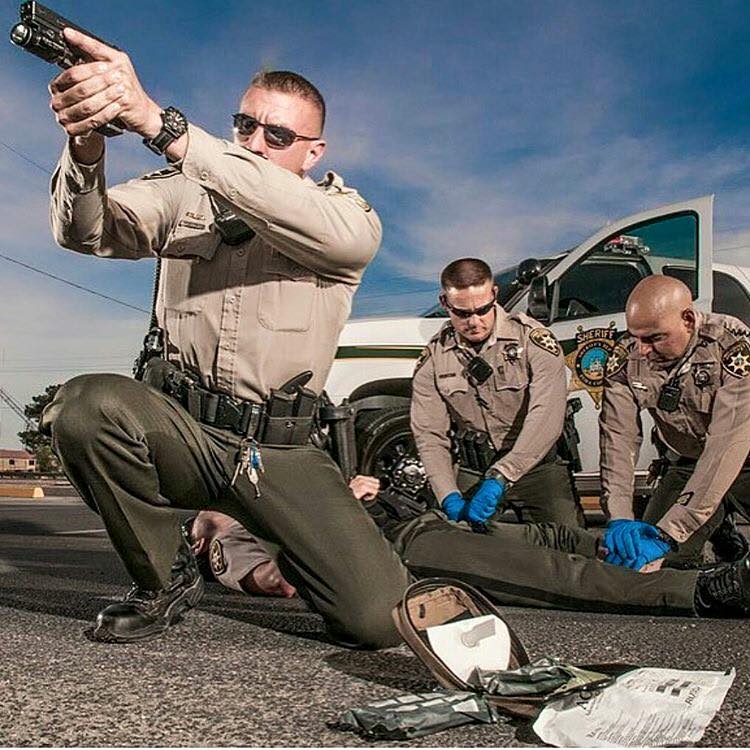
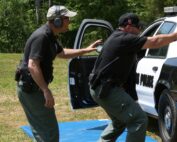
All three deputies are doing what needs to be done. One is providing deadly-force cover while blocking for the two providing aid. (2016 internet capture)
Shoot Move Communicate
My time in the Army (active, reserve, and Guard) was all spent in ground units. The non-aviation side of things uses the phrase Shoot, Move, and Communicate. Or, do what needs to be done, move when you need to, and let others know what is going on.
Cops & Radios
The article is about radio traffic and the equipment involved, along with a couple of observations about trained culture.
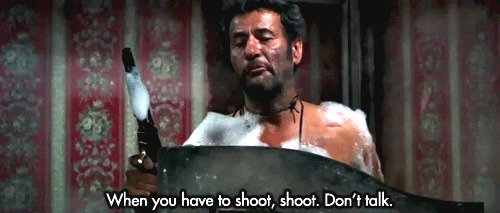
Tuco’s bath scene with the line about doing or talking. (source: internet search, no credit given)
But First
If you have not watched, really watched the great Spaghetti Western “The Good, The Bad, and The Ugly,” you need to. Maybe a couple of times. There are some solid quotes. One is by the character named Tuco. He’s The Ugly. While bathing in a tub, a bad guy invades his space. He is blathering on and on about hating Tuco and what will happen. Alas, Tuco could not care less and, more importantly, has a gun in hand. Within seconds, Tuco shoots the interloper multiple times. Then he utters one of the best lines in movie history: “When it’s time to shoot, shoot, don’t talk!”
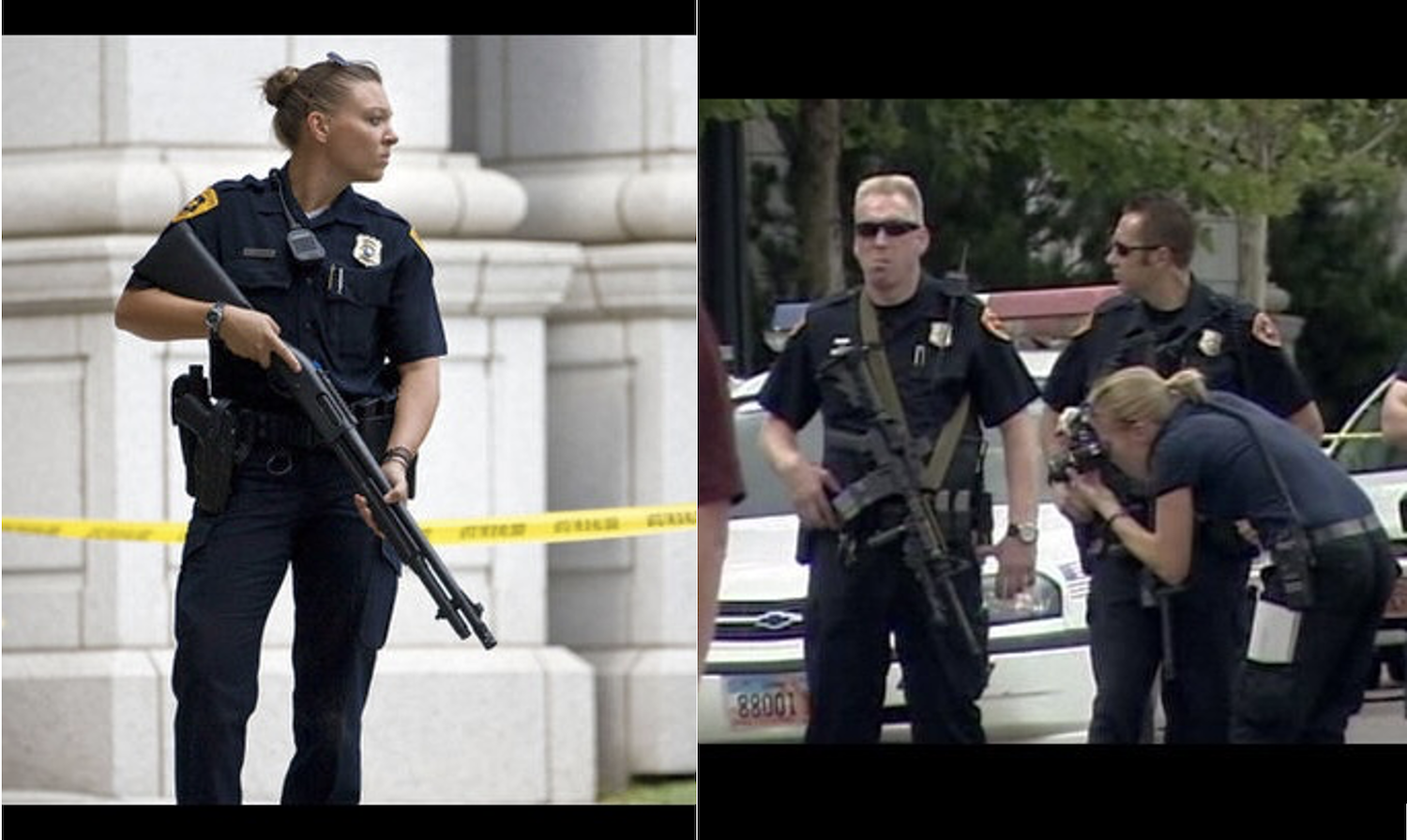
A mic on the chest makes it far easier to deploy a long gun and still communicate.
Radio Traffic
Yes, our radios are our life lines. We get our calls that way, generally convey our self-initiated activity, and listen to what our partners are doing. Coolness.
We need to use them, as well as our MDCs to let dispatch and our co-workers know where we are and what we are doing. To a point.
However, in certain high-risk encounters, being on the radio is contraindicated. Meaning, we should be doing something else.
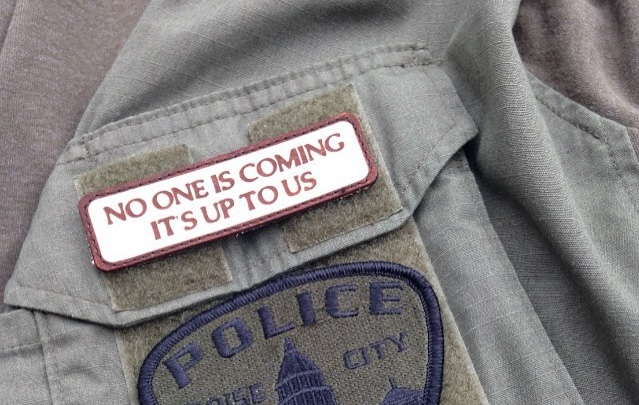
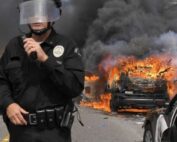
At some point, it is just you, or those already with you, to fix things. (2015 internet capture)
Cultural Observation One
While the radio is our lifeline, it alone will not save us. More often than not, we have incredible dispatchers who do amazing things behind the mic for us and our communities. But when things go sideways, other than starting help our way, they are bystanders. Likewise, unless our co-workers are a few yards away or have recently invented teleportation, they won’t get there in time.
When fecal matter strikes the fan, devote 100% of your attention, bandwidth, and processor capability to resolve the problem.
Scott Reitz, of LAPD-Metro and ITTS fame, recently did a podcast episode with a deputy district attorney who supervises his county’s Crimes Against Peace Officers unit. Even that deputy DA commented on the tendencies of officers to talk on the radio during shootings. Meaning, they have one hand (not two) on the gun and the other on the radio. Yes, instead of using the most effective shooting method, they’re compromising it to talk on the radio. And usually, from hearing that traffic, they aren’t communicating well either.
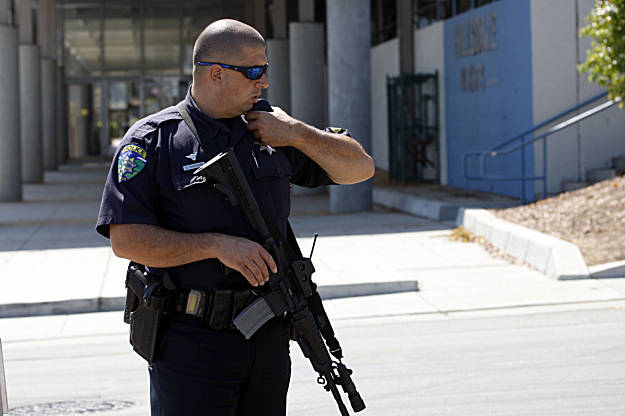
SF Bay Area officer using the remote mic while holding a long gun.
Why?
I wish I knew. Are we over-emphasizing letting dispatch know in the academy and field training? Is it something Hollywood-driven, meaning they saw it in movies or on TV and think they must?
Maybe the fix becomes forcing our recruits and trainees to STFU (shut the # up) until they have solved the problem. Except for an initial get-help-coming call, I’m good with this.
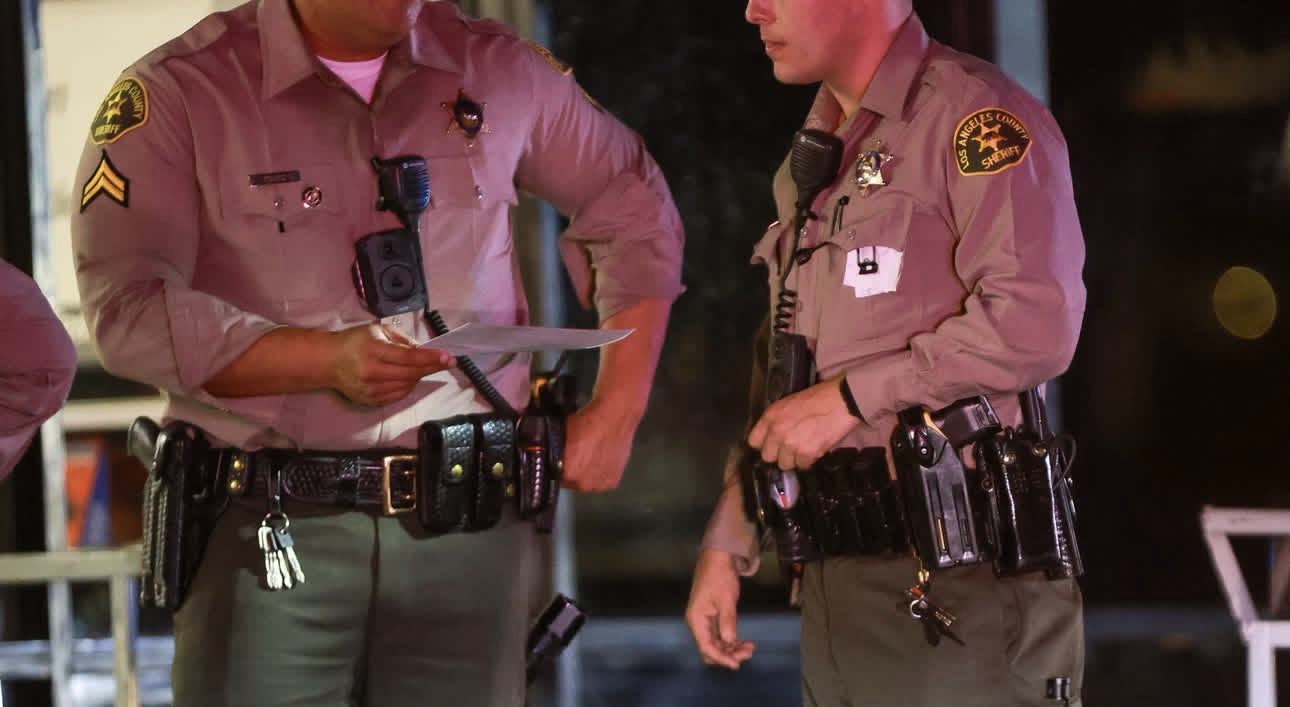
A deputy in training and his FTO both have the mic centered high on their chests. They can access it with either hand and communicate without getting very distracted.
Been There
In the past, I was involved in a shooting, an OIS. My radio traffic, which I’ve heard replayed numerous times and was questioned about, went like this:
“Sheriff 1, Edward Three Two, Code 20 (send help), 2 units, Moorland and West Robles.”
Sheriff 1 acknowledged me, and a whole lot of cops started towards us.
Seconds later, either my trainee or I broadcast “Shots fired.” About seven or eight seconds later, following a tac reload, I radioed, “Suspect down, I need code 3 medical.”
There was additional traffic for incoming units, how to approach the scene, etc.
Once the suspect’s actions forced that outcome, nothing I could have said on the radio would have changed anything. And I can recall a similar situation while being on the receiving end of an IED-initiated ambush in Iraq – once the initial contact report was sent, we were busy.
Plaintiff’s counsel made a big deal about me not narrating the event. Or describing the firearm he had.
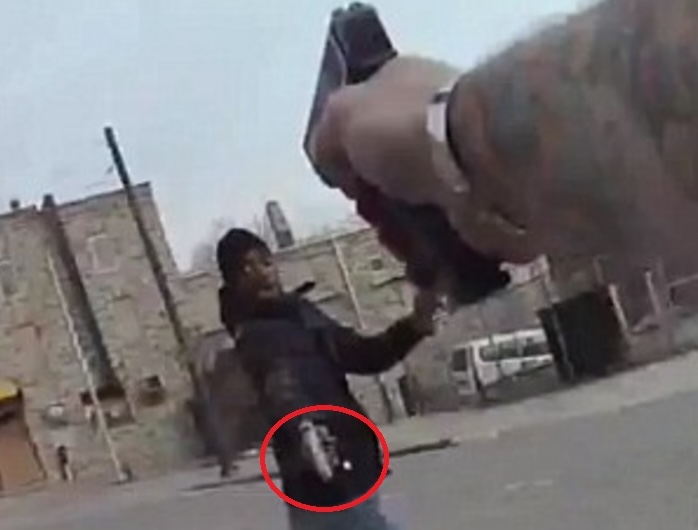
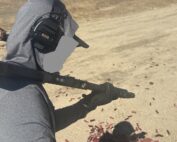
Two hands on the pistol could lead to better hits, sooner! (2019 capture).
You, your cops, your trainees can talk once the threat has been ended. I’m curious about how many cops we have lost because they were talking instead of engaging suspects assaulting them.
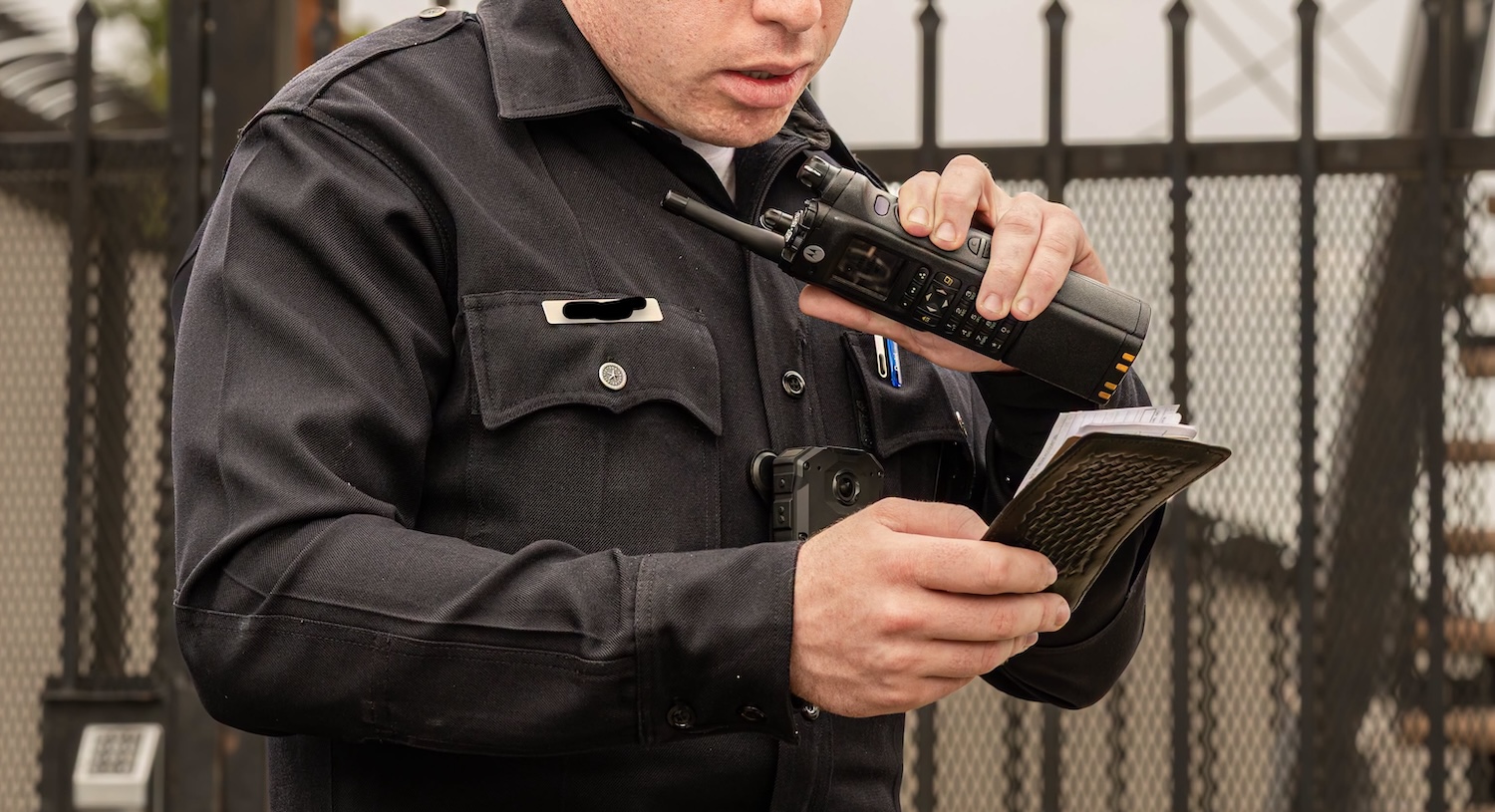
The officer’s hands are completely tied up with the radio and the notebook. If he has to act or respond, it will take him longer.
Cultural Observation Two
Why in this day do I still see officers at one very large West Coast agency using portables, handhelds, whatever, without mics on cords? Why are they always removing the radio from its pouch to talk? Get an earpiece and a remote mic; be done with it.
Keep your hands free for your problem.
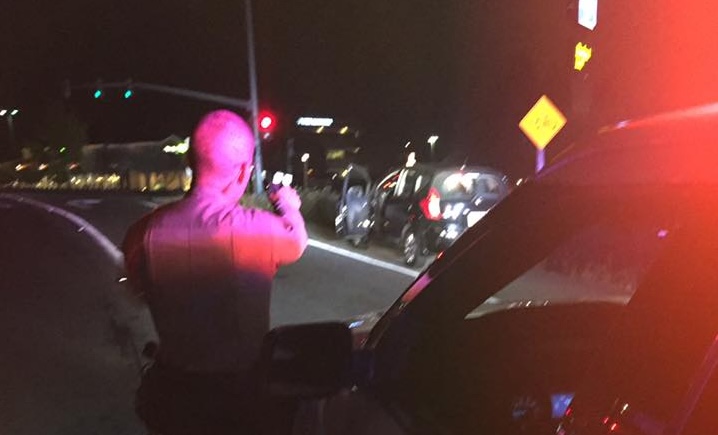
An old co-worker … his support hand is on the mic on his chest, and he is radioing others, while keeping his visual attention on those in the car. (We can talk about using cover later)
Closing
Aviate, Navigate, Communicate. Shoot, Move, Communicate.
For the record, based on listening to the competent people in the space, it sure sounds like the Co-Pilot did her specific job very well, right up until they were “… out of time.” Godspeed.
Resource:


 (No Ratings Yet)
 Loading...