
 (No Ratings Yet)
 Loading...
feaextend026-11-23 at 5.13.13 PM 1
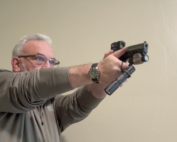
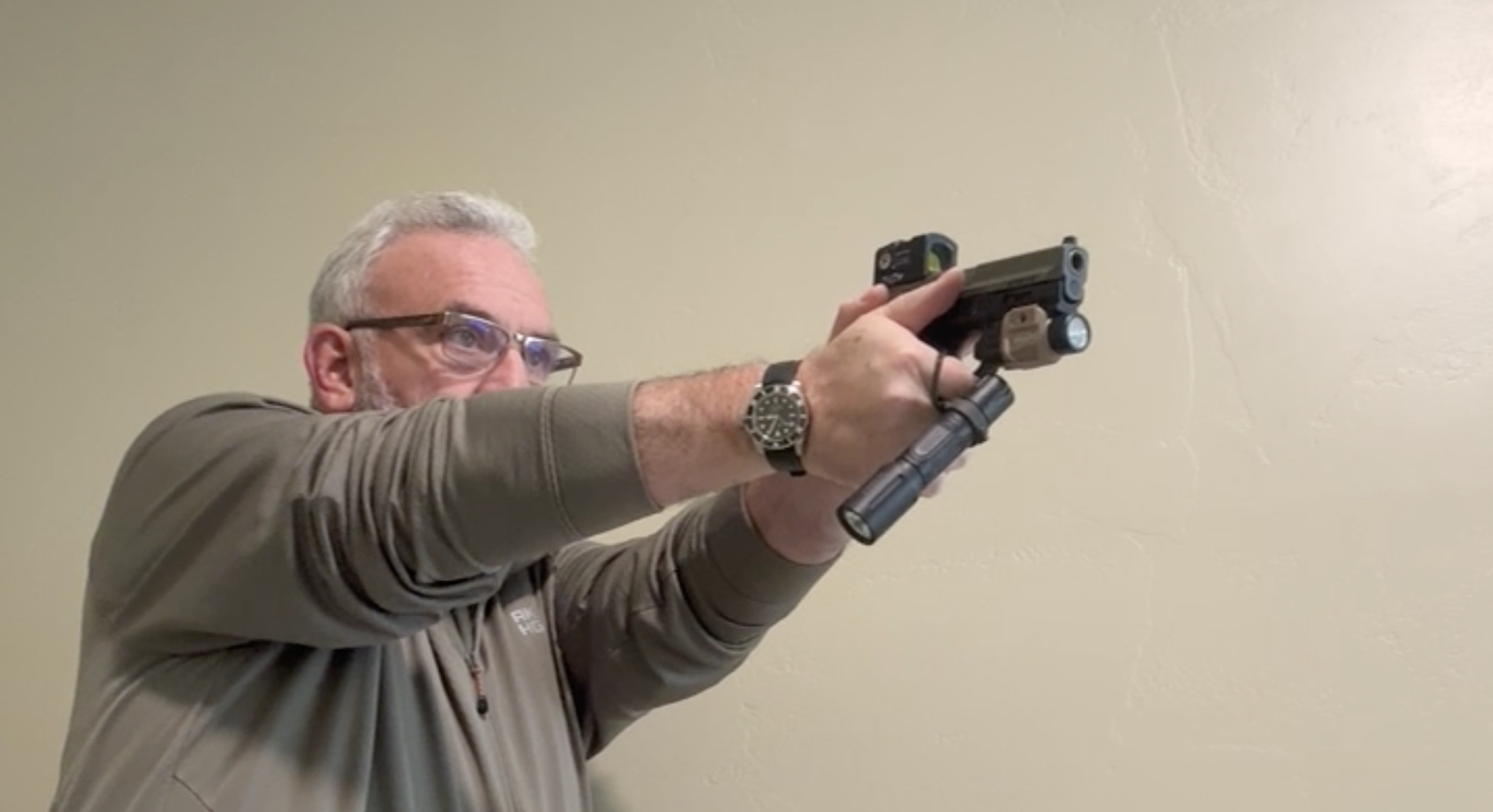
Extended towards the target, with the light retained on a Thyrm ring.
There are times when it would be great to have a third hand for any number of reasons. As I’m writing this, it would be great to hold my flashlight in one hand, my pistol in another, and use the third to handle a magazine or run the slide.
Alas, the reality is that we only have two hands. So we need to find a way to handle that handheld when other tasks need to be addressed.
So, what can you do with your handheld light when you need both hands?
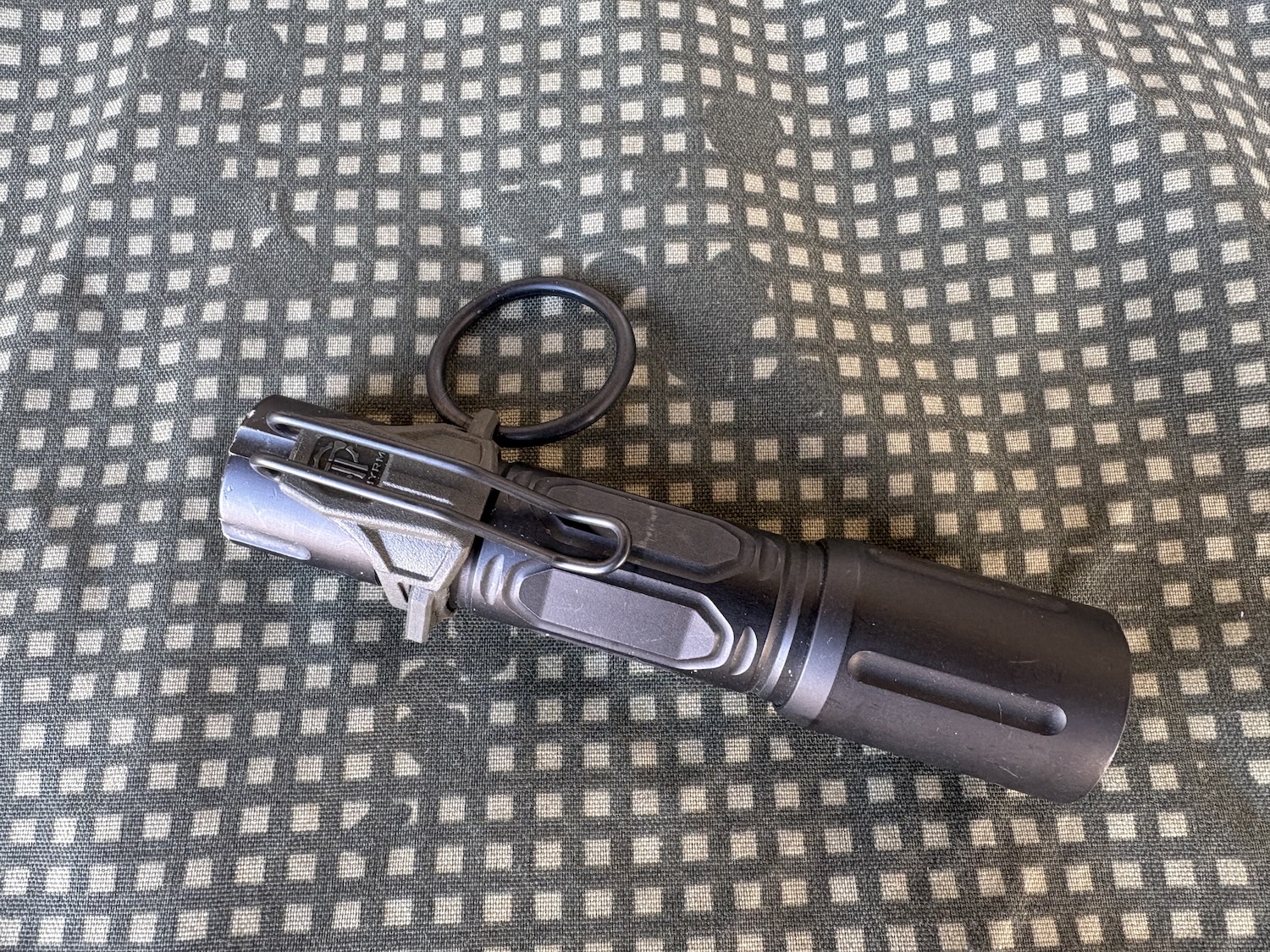
Thyrm’s Low Profile Clip 2.0 on a Modlite. Ambidextrous ring mount, adjustable ride height. Nice features!
Pocket or Pouch
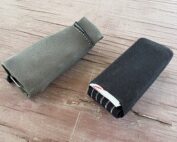
Plenty of shooters will try putting the light back in the pouch it came in. Or they want to shove it into a pocket. That’s viable IF the pouch hasn’t collapsed or if the pocket isn’t blocked by other gear, especially on your belt.
Arm Pit
Not just under the arm, like we were taught previously, because it can work pretty well. Instead of trapping the light with your strong-side arm, remember to turn it off, then shove the light’s head completely up into your armpit. Then trap it with your strong-side arm. This works well while reloading or clearing a stoppage.
Digits
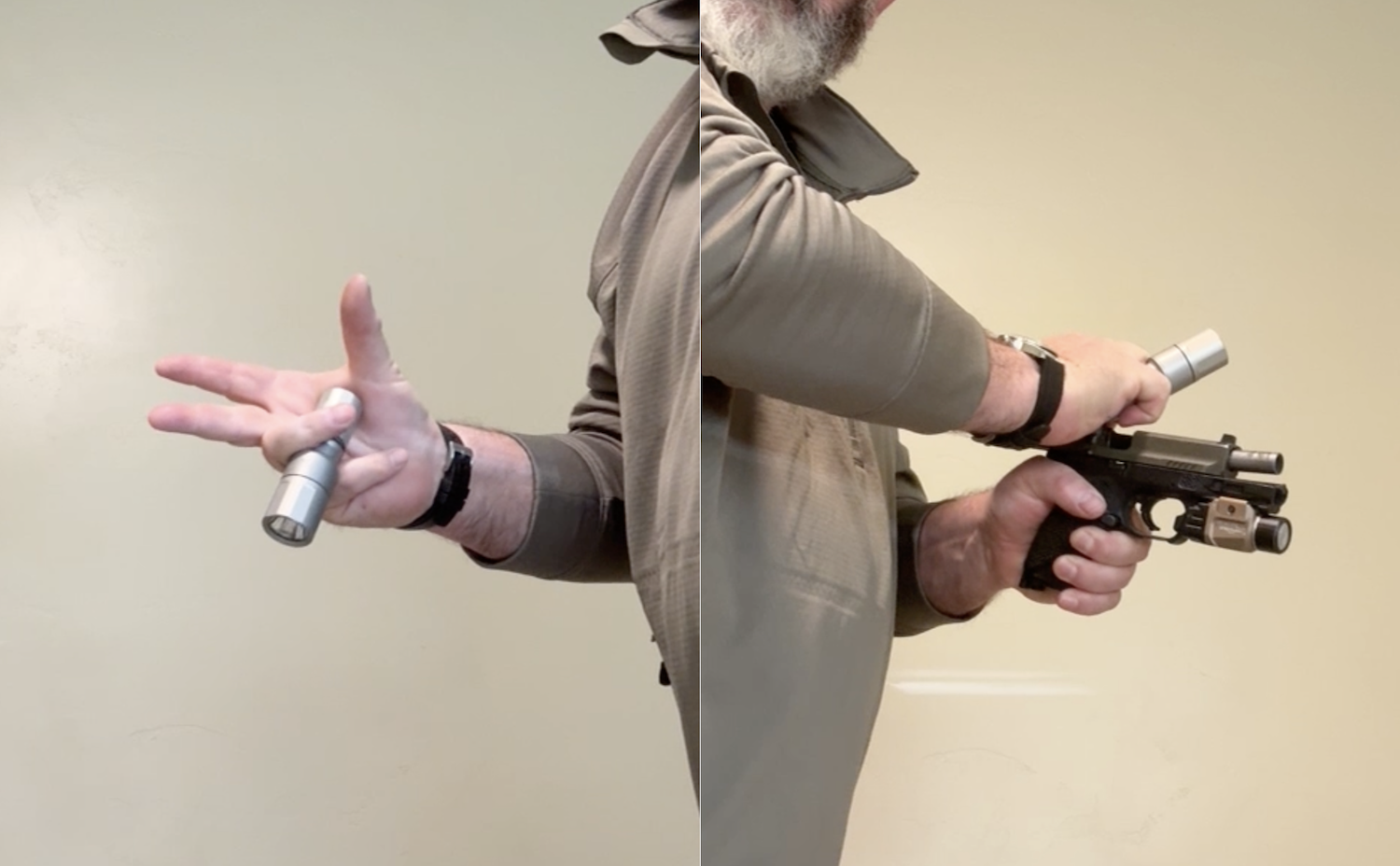
You can retain the light between the pinky and ring fingers. You can work the slide, it just isn’t quite as easy.
If the light’s body is narrow enough or your hands are large, you have two options. The first, and my preferred method, when there is no other way to retain the light, is to hook my pinky finger underneath and hold it between my pinky and ring fingers. Second, roll it downward and pin it against the palm, just below the fingers, with your thumb.
Lanyards
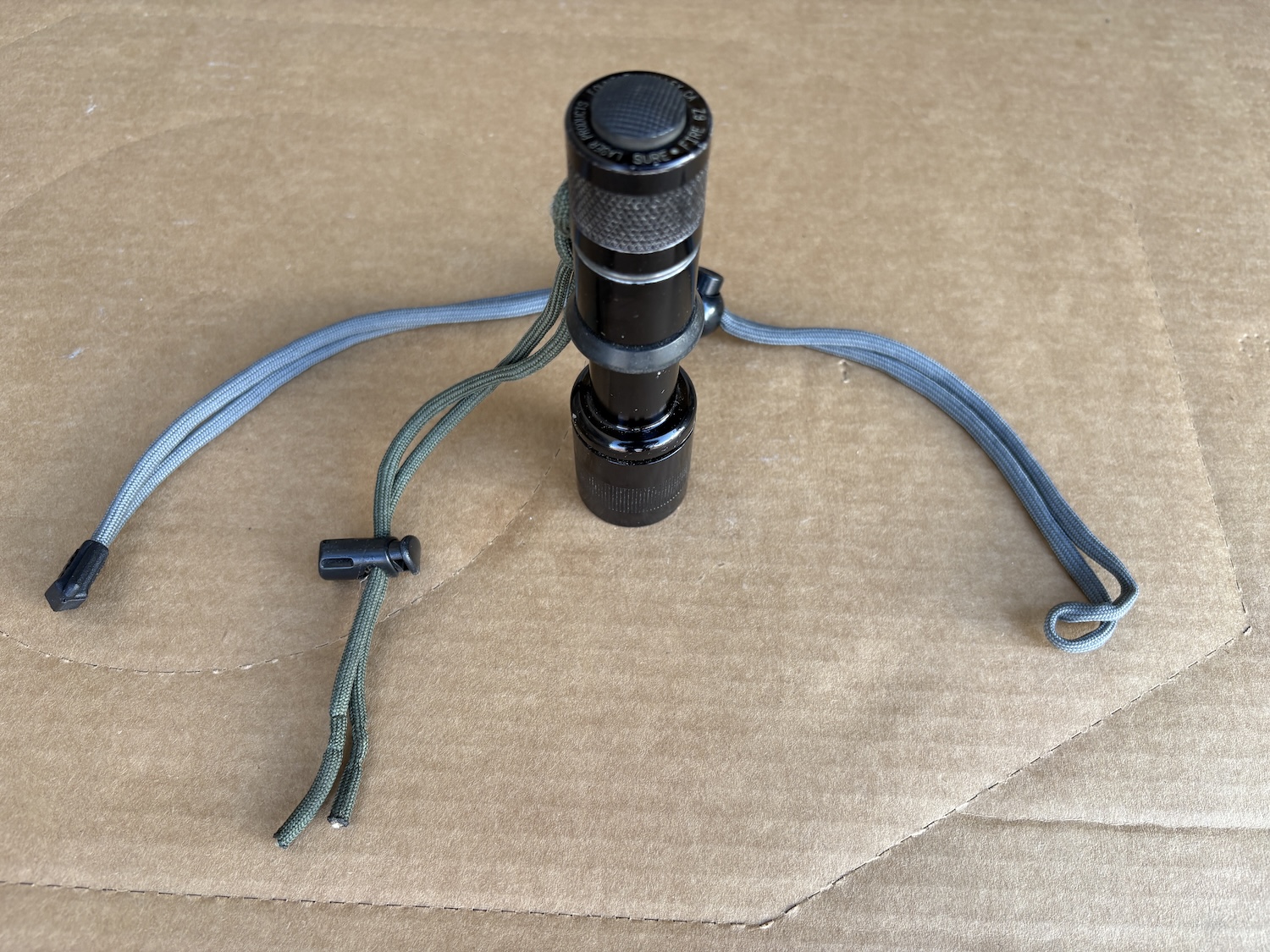
An early Surefire lanyard that is a bit long, and one made at home of actual 550 (parachute) cord. The short one is much more user-friendly.
A lanyard is a solid option, IF … it isn’t too long, and you can come out of it if the light gets hung up. The first lanyards I can recall for the smaller lights came from SureFire in the early 90s. They were long, like 18” plus, and had a closed end, rather than an open one, with a cord lock or two.
The first trick was to use a shorter piece of cord with an open end. A single cord lock allowed you to adjust the length and still get out of it.
Eventually, an alternative was developed that used a narrower piece of elastic Shock Cord. A 1/8-inch-diameter piece was most common. I have seen and used versions that had a cord lock or were tied at the end. Regardless, there was enough stretch to get out of them.
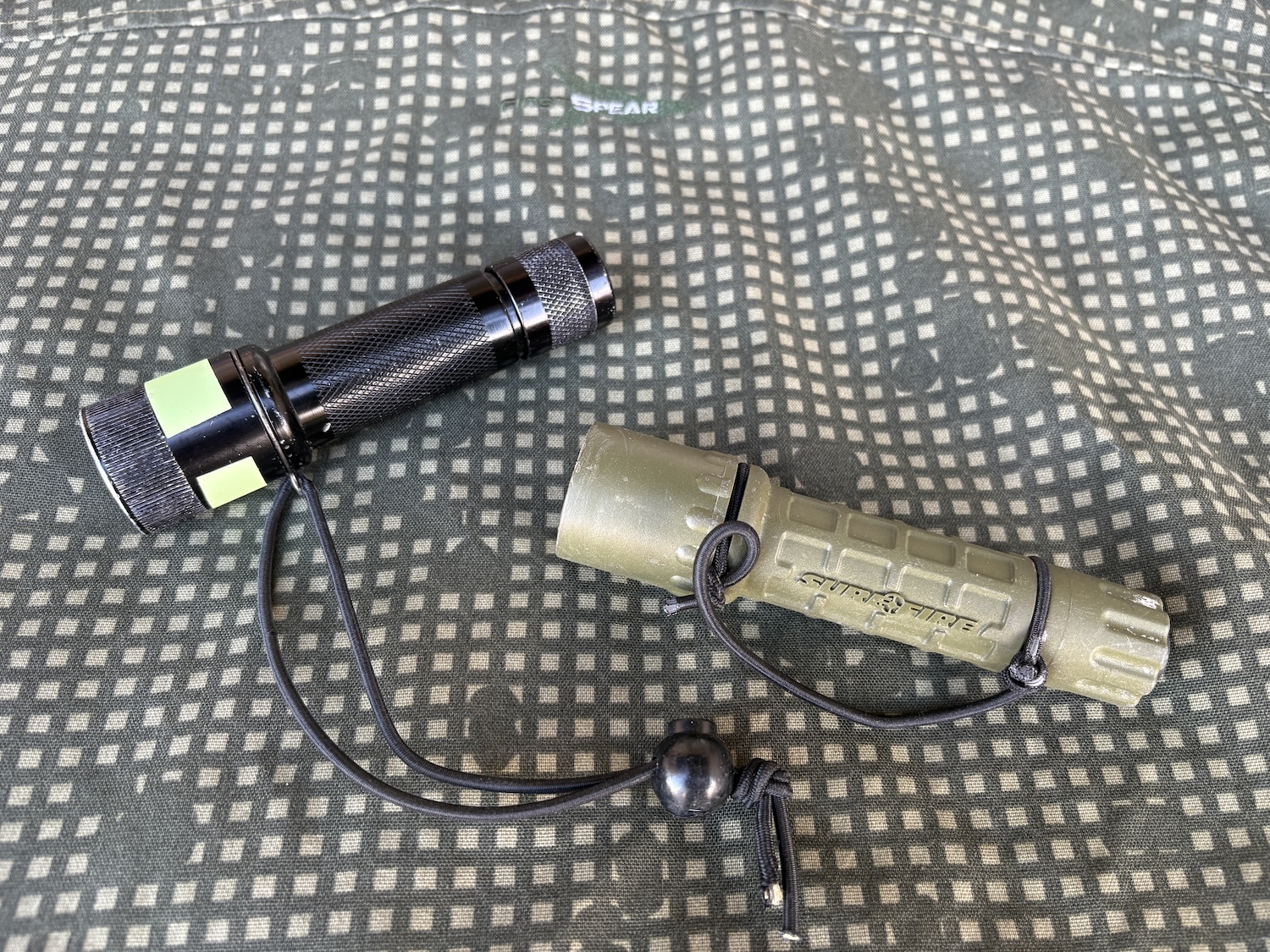
Two examples of using Shock Cord to retain the Surefire lights. One is tied onto the light front and back; while the other is closer to the early lanyard.
Regardless, the best location on your hand was no further back than the inside base of your thumb, toward your fingers, not your wrist.
I saw another Shock Cord-based version via Kyle Lamb (retired Army Sergeant Major). He showed a 6P-sized light with that Shock Cord tied off between the head and body on one end and the body and tail cap on the other. You leave just enough slack to slide your four fingers into and hold the light’s body.
All of the above worked. The paracord and shock cord variants could be put together easily through local businesses.
Enter Raven Concealment
Mike Goerlich and crew combined a metal pocket clip with a rubber grommet. This has been my favorite design for many years. The clip and rubber grommet were lower profile, though not low. There was give when pocketed. And it would still store in a duty belt pouch.
Unfortunately, Raven Concealment stopped making these a while ago.
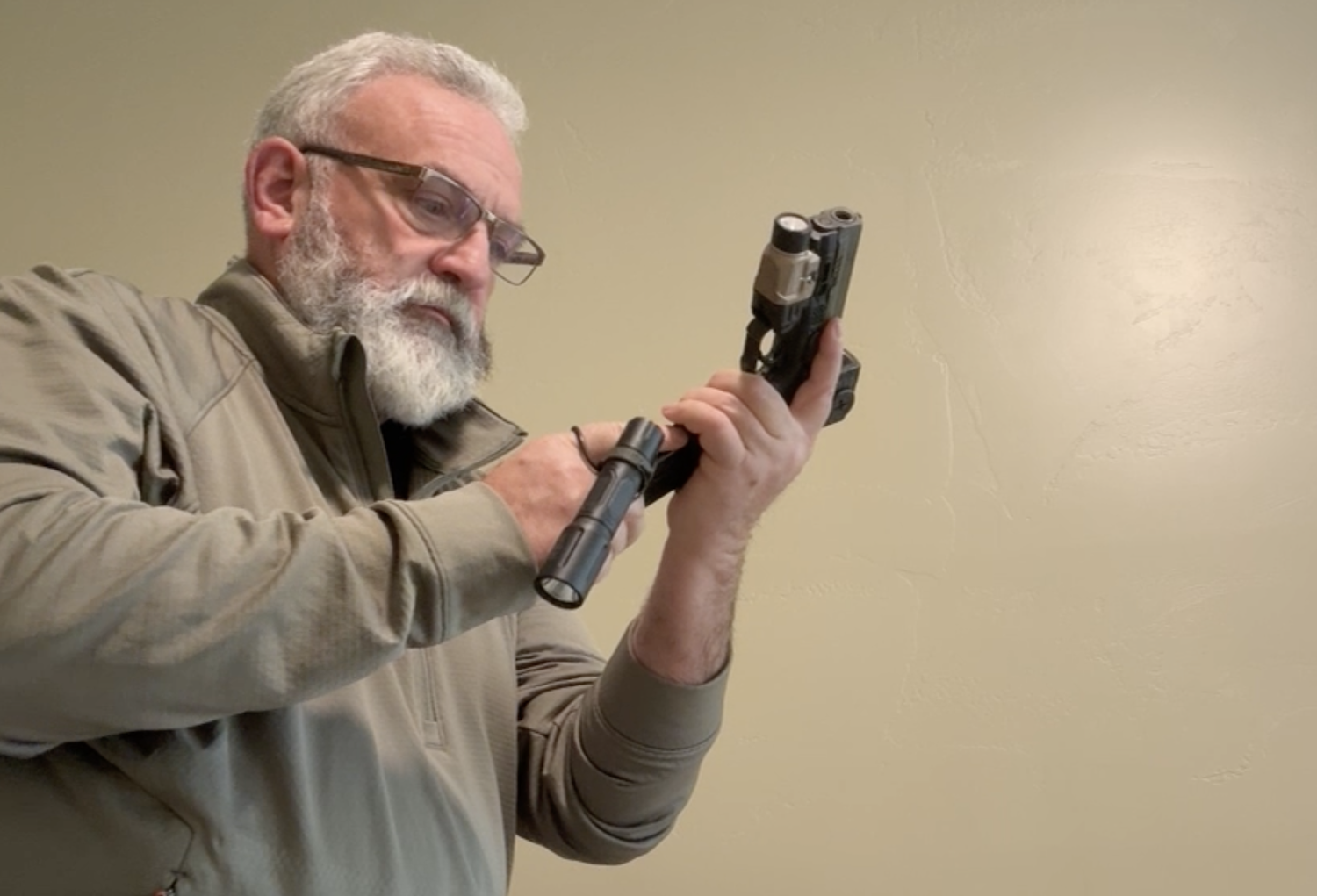
While the light is outside of the hand, hanging on the Thyrm LPC 2.0, all of his fingers are available to insert and seat the magazine.
First Thyrm
This is the plastic Switchback that combined a pocket clip with a rigid plastic finger ring. The ring has a ridged nub molded in that you can use to help turn on the light when holding your pistol with two hands.
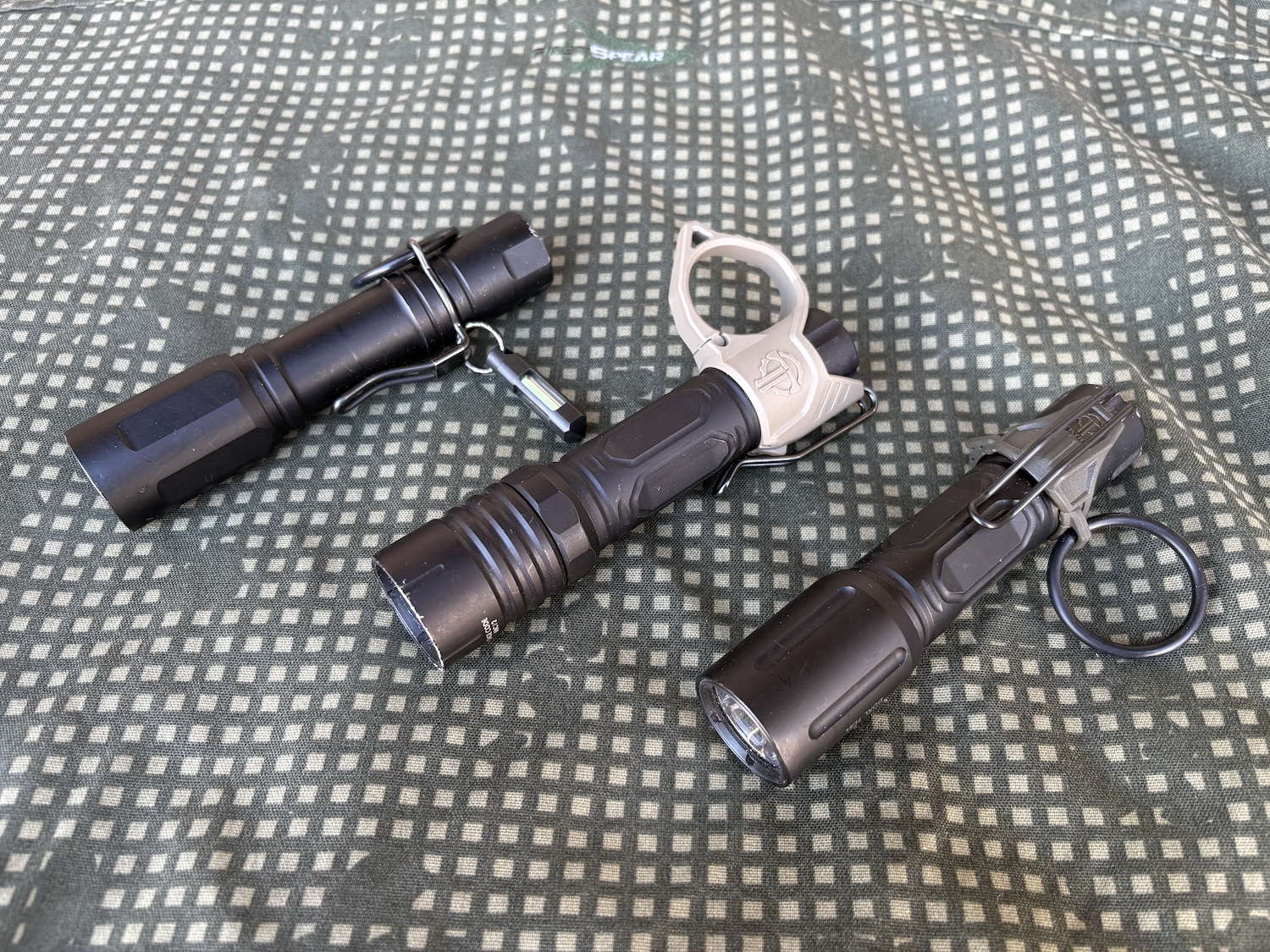
How these clips and rings have evolved – Raven Concealment System’s clip and grommet, a Thyrm Switchback pocket clip & ring, and their Low Profile Clip 2.0 (L-R).
Second Thyrm
They replaced the plastic clip with a smaller, adjustable metal one. These were a bit lower profile.
Current Thyrm
Recently, the Thyrm crew released the Low Profile Carry Clip 2.0. From my perspective, it combines the features I liked from multiple previous designs. The metal clip is adjustable for lower or higher ride height in the pocket. Instead of a rigid plastic ring, it utilizes a rubber grommet.
It is also ambidextrous. The clip’s body lets you move the grommet attachment to either side.
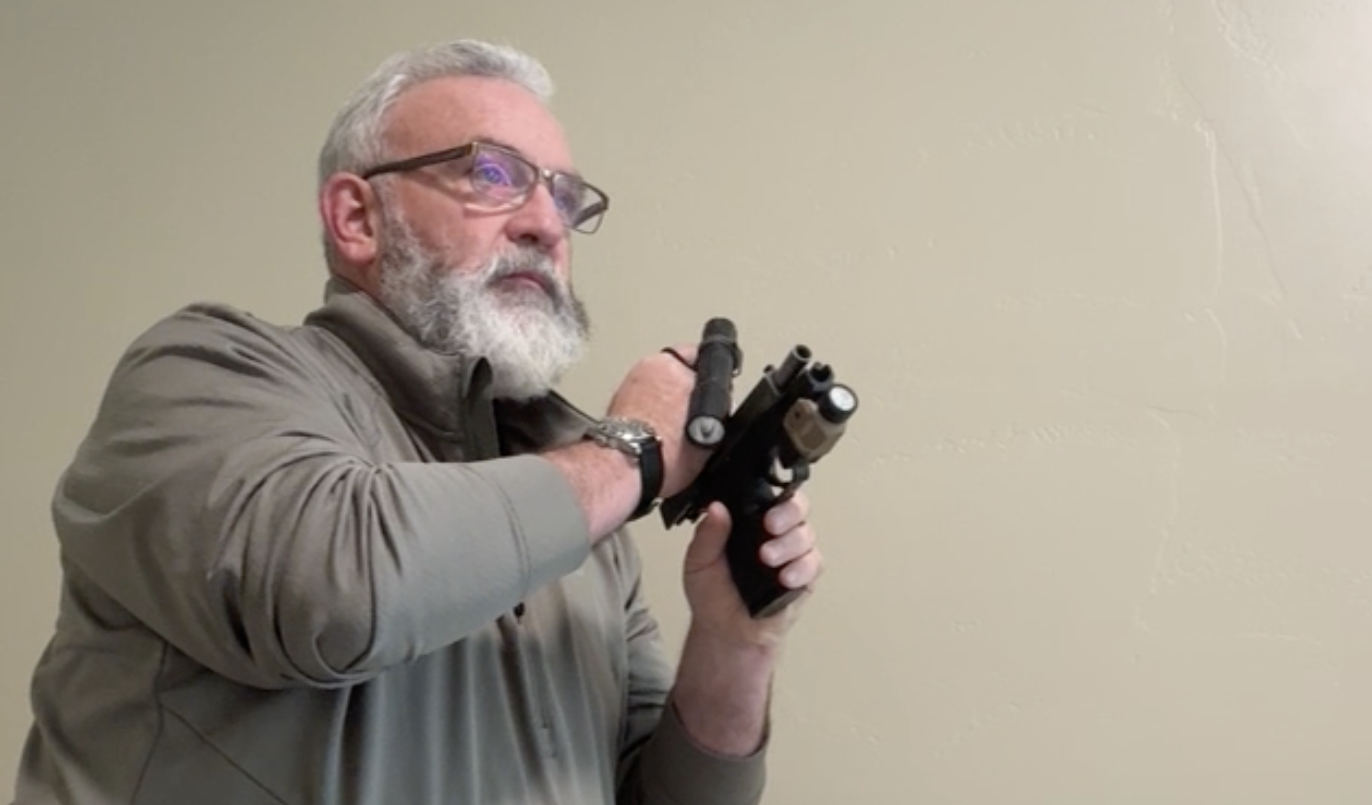
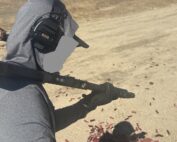
Releasing the slide is easier with the LPC 2.0 retaining the light, which frees up the hand.
How Do You Use These?
Whether the light is in my pocket or a duty belt-mounted pouch, I orient it the same way. The clip faces out, away from my body. The rubber grommet is oriented forward, or towards my belt buckle. When I grab the light, I stick that hand’s index finger in through the grommet. Then my fingers close around the light’s body.
I can search and shoot from any of the usual or modified light positions this way. With my handgun and long guns too.
Should I need to reload or clear a stoppage, I let go of the light, and all my digits are free to work the weapon. If I have transitioned to the weapon-mounted light and want a two-hand grip on the pistol, I can flip the light over my hand.
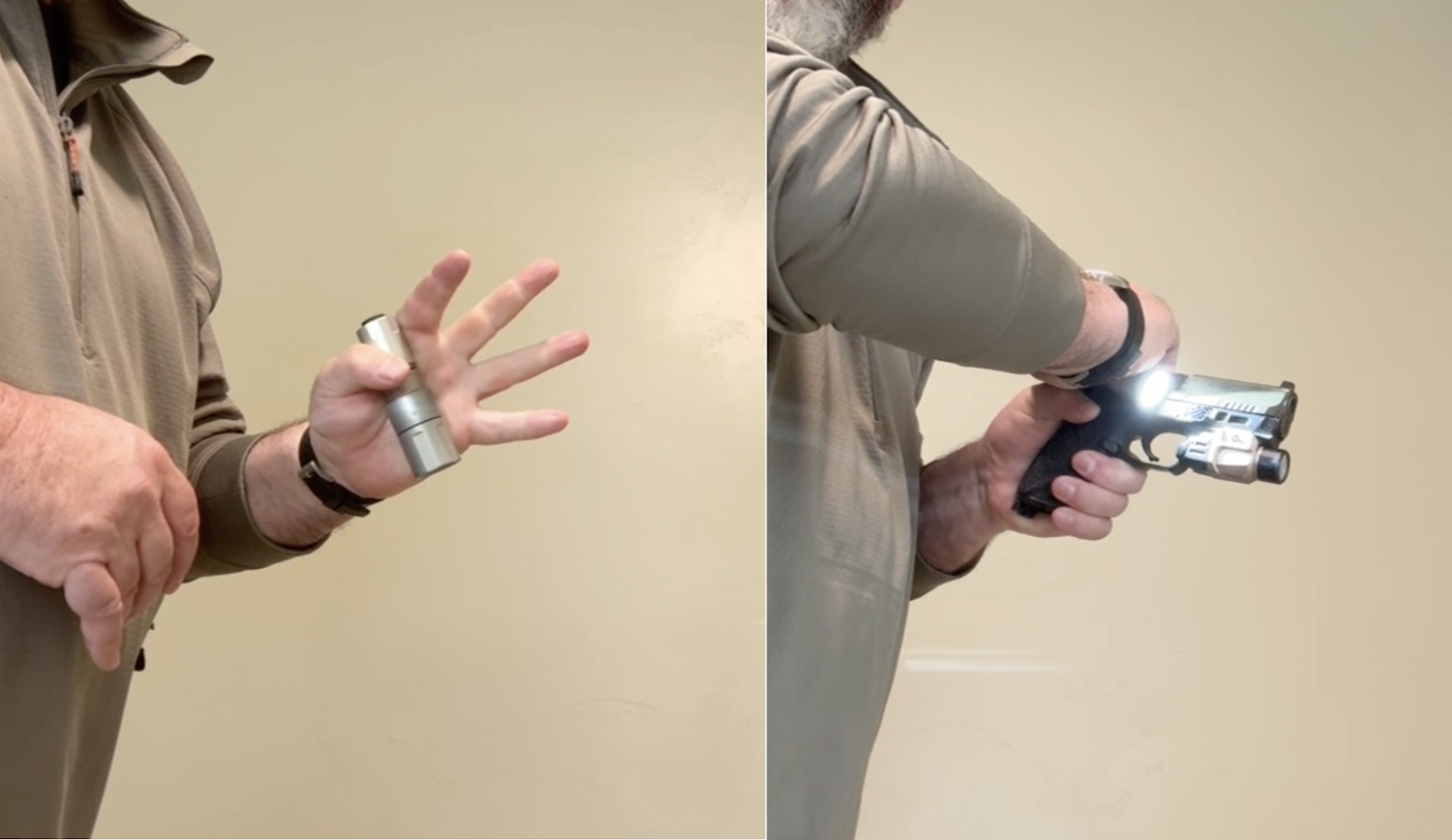
If you secure the light against your palm with your thumb, you can still manipulate your pistol.
Mouse Trap
Thyrm’s LPC 2.0 is a significant evolution from what I started with – paracord lanyard on my Surefire 6P. Is it a better mouse trap? Heck yeah. As I pick up newer lights, they’ll likely be outfitted with the LPC 2.0.
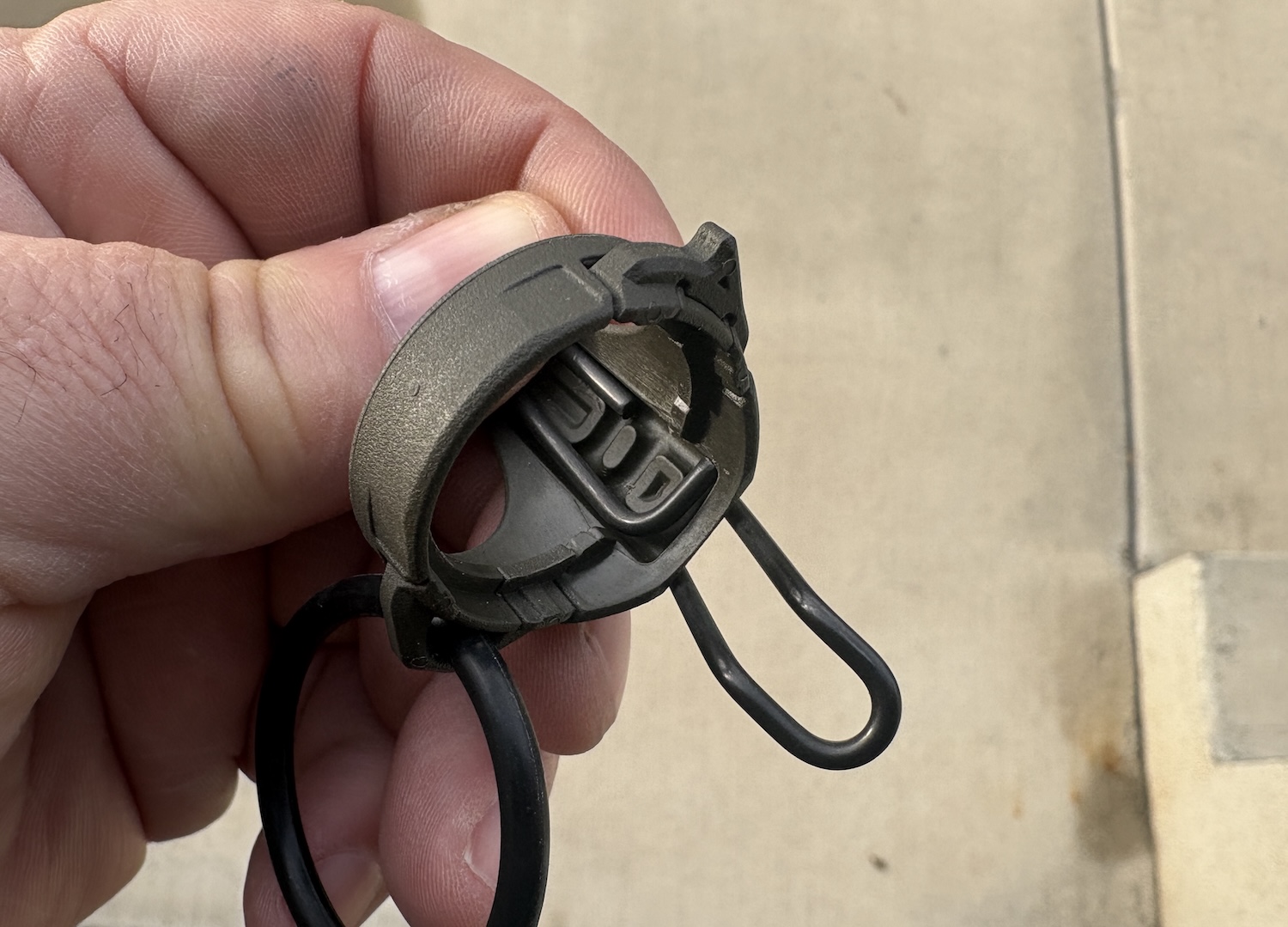
You adjust the ride height here before you put it on the light.
These keep the light where I want it when I don’t have it in my hand. And when it’s in my hand, it gives me the full range of options for what I need to do.
Closing Thought
Regardless of which way you choose to retain your handheld, identify the best way for you to do it. Then practice with it.