
 (+5 rating, 5 votes)
 Loading...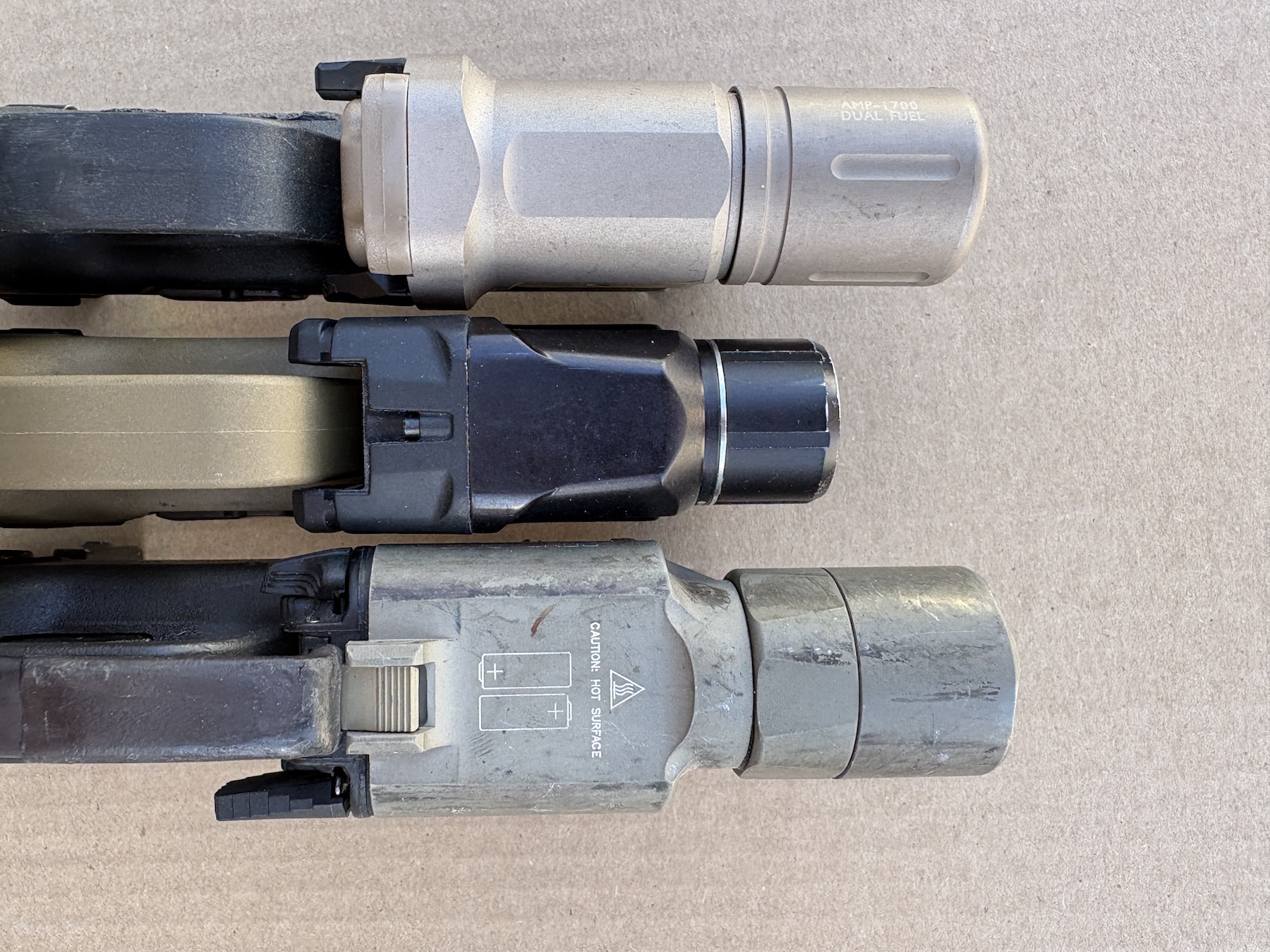
feature_AllTogether_1547
Modlite's PL350C, Streamlight's TLR-7 HL-X, and Surefire's X300-Turbo - all on 4.25" M&P pistols
Role
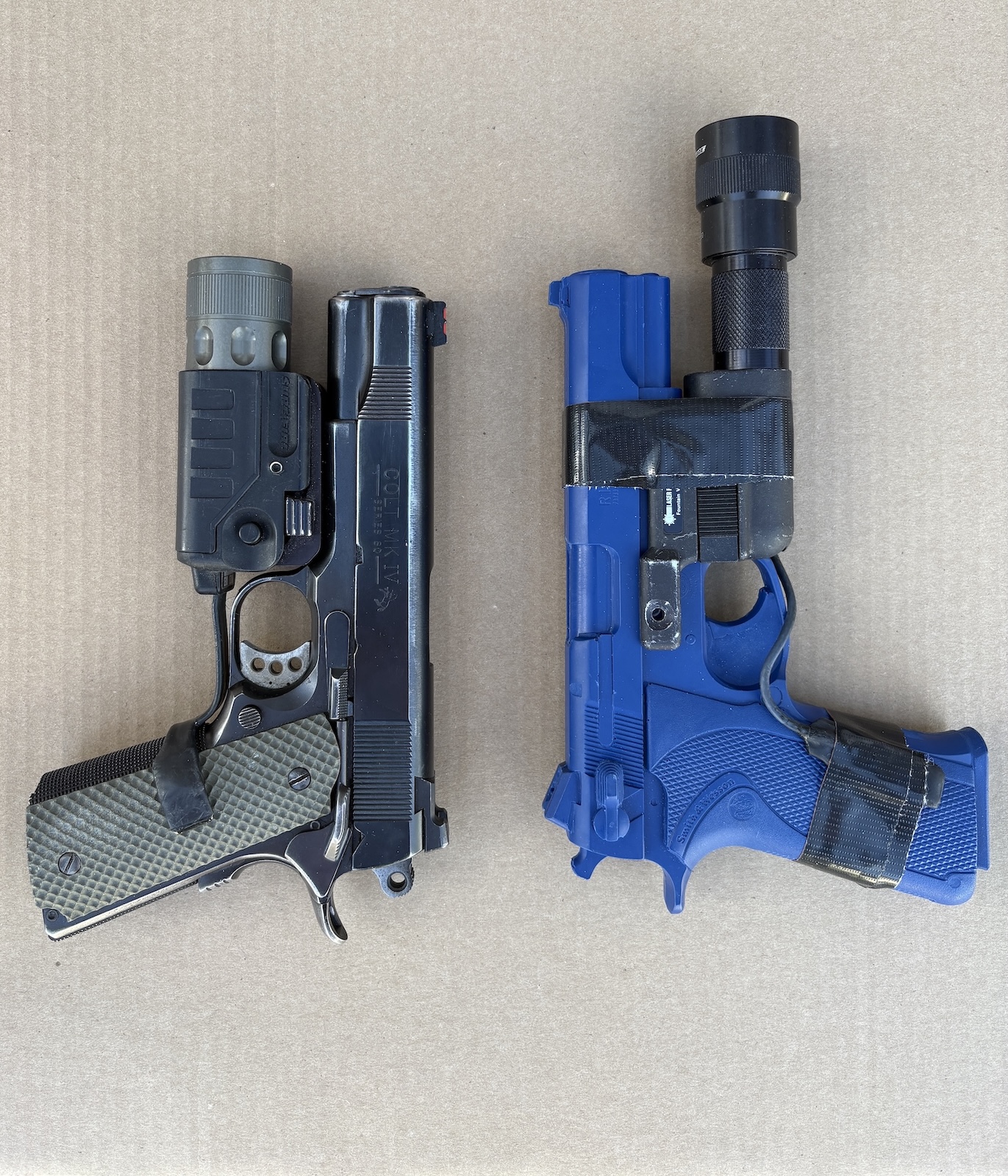
The author’s first two pistol lights. Surfire’s 6v Classic (right) shown here on a S&W 645 (because he sold the 1911 version) and a Surefire Nitrolon on his 1911.
Historical Foundation
Observations

More or less head-to-head – Modlite’s PL350C (left), Streamlight’s TLR-7 HL-X (center), and Surefire’s X300-Turbo (right)
Models
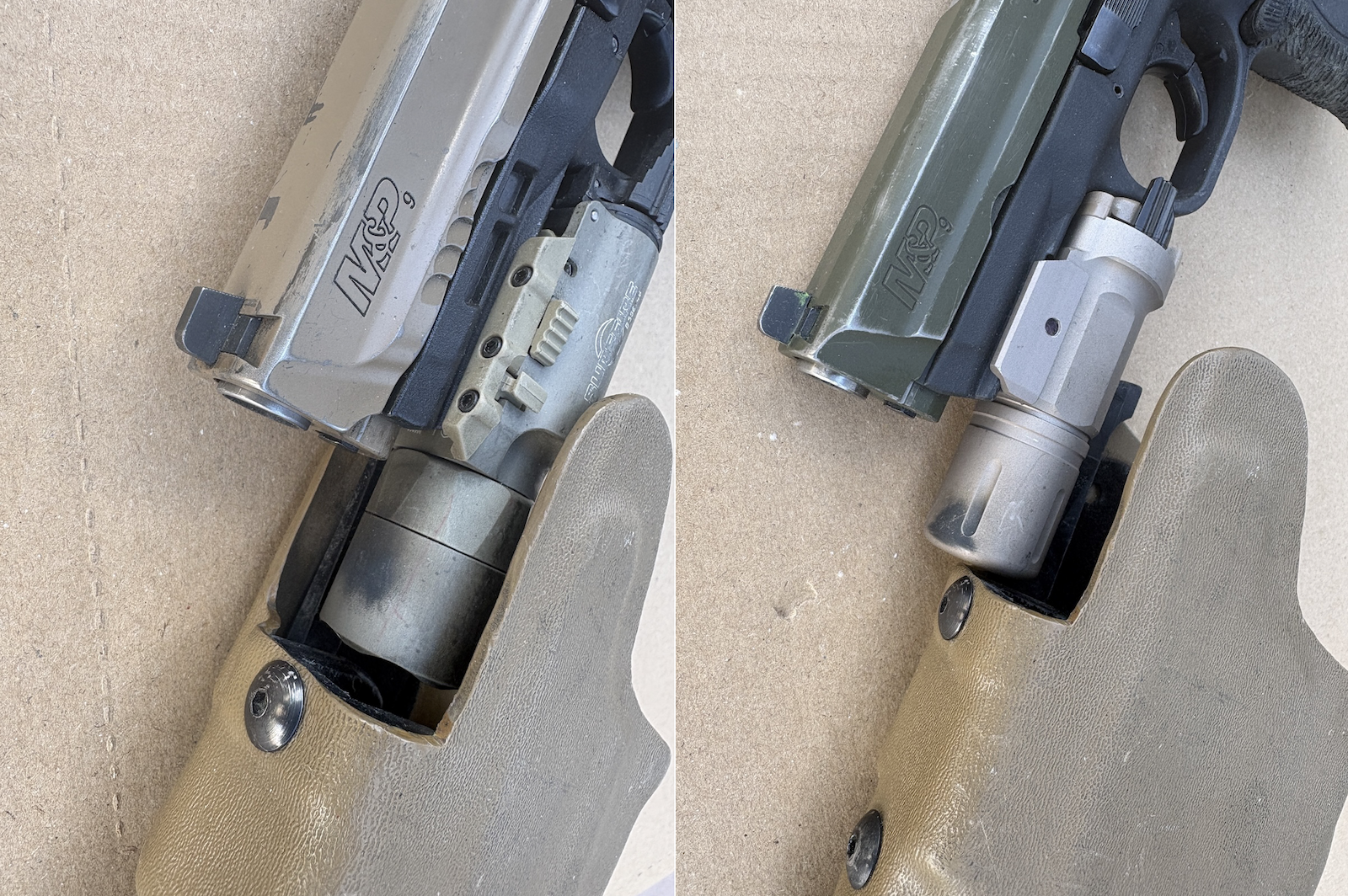
How high does the muzzle need to go when clearing US Duty Gear’s 4.25″ M&P holster?
InstaGram feedback:
- “I carry an X300T and a Streamlight TLR1-HP-X. No issues with extra length. “
- “I’ve never had any problems, is it a looks thing or what?”
- “Compact guns get compact lights; full-size guns get full-size lights.”
- “Full-time LE/uniform wearer here. Added holster length is my gripe. The holster is still going to be full-size in length, which, for me, means it’s just long enough to hit the flare in the seat and push the belt uncomfortably into my hip without a deliberate adjustment. Every. Single. Time I get in the car. This may not apply to many because of physical and vehicle considerations, but I’d love a ¾” shorter holster.”
- “I still carry a light that extends past the muzzle because it is one of two duty-grade lights that fits our G45s. I’d love to shorten the WHOLE package.”
- “I like the WML to be longer than barrel. I doubt I will ever need it, but it makes a good stand-off device. The added length is no issue for me.”
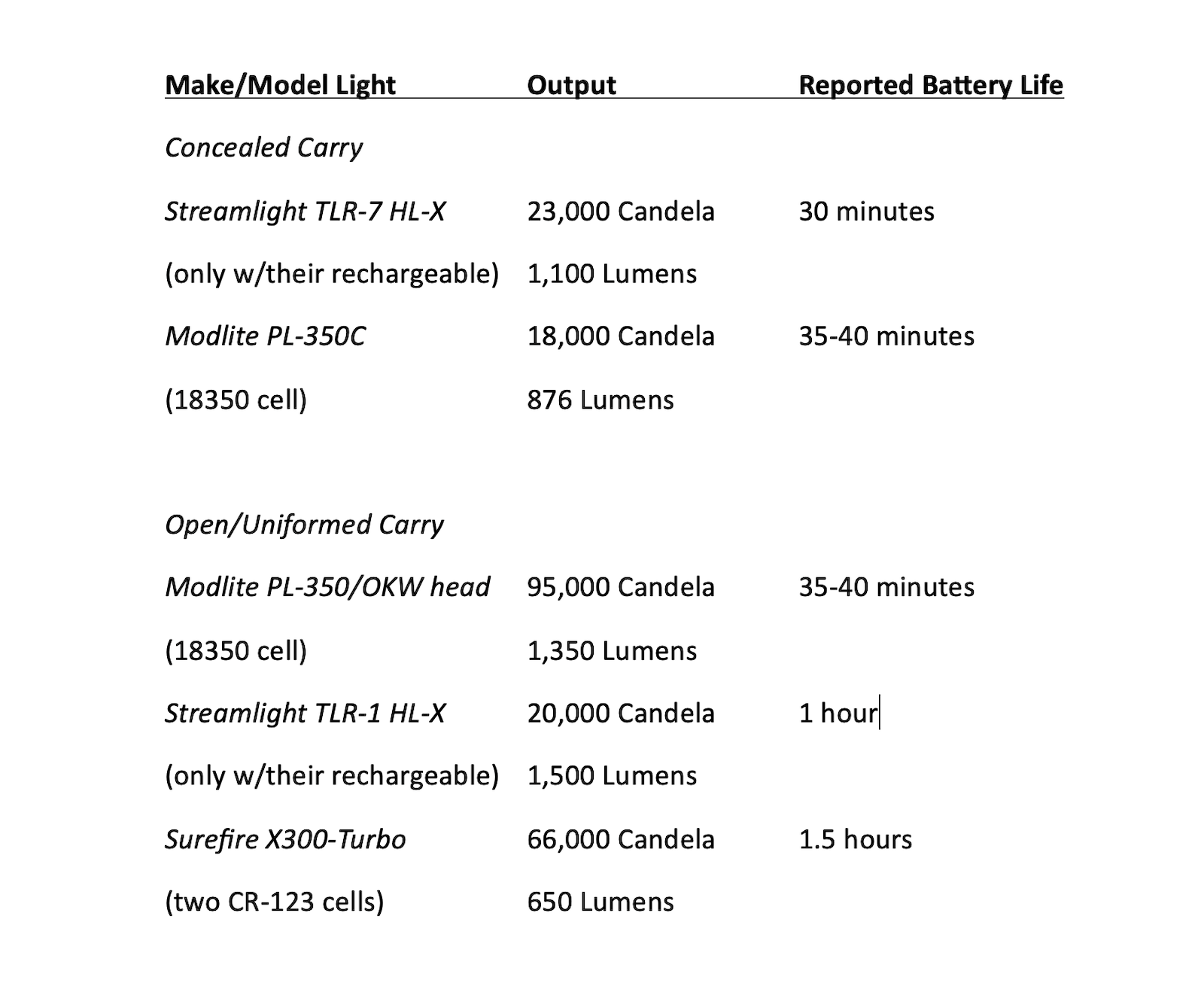
Output in Candela and Lumens, as well as the reported run times, per the manufacturers.
Facebook feedback
- “I see no benefit other than (potentially) getting the gun out sooner, I think that’s more optimization of the draw than the light.”
- “Being tall with a long torso helps a lot. But setting up gear correctly goes a very long way, and I see a lot of younger officers who have not optimized their holster to their body type.”
- “For duty carry the downside is a smidge longer to clear the duty holster.”
- “I wanted a shorter duty holster, so I didn’t have to sit awkwardly in the car all shift.”
- “Shorter OAL means the pistol clears the holster earlier, which is nice for speed of draw. It’s a necessity for smaller officers with shorter arms. I see shorter officers get their gun hitched up on the draw because the long WML hits the holster body as the muzzle starts forward. Shorter OAL and low-ride holsters allow them to draw without contorting their whole upper body away from the holster.”
- “My holster choice drives the light. But I don’t use a WML 90% of the time.”
- “I like the light to extend beyond the muzzle. Keeps the lens cleaner. Lights are bulky but, handier than shirt pocket when it’s dark!”
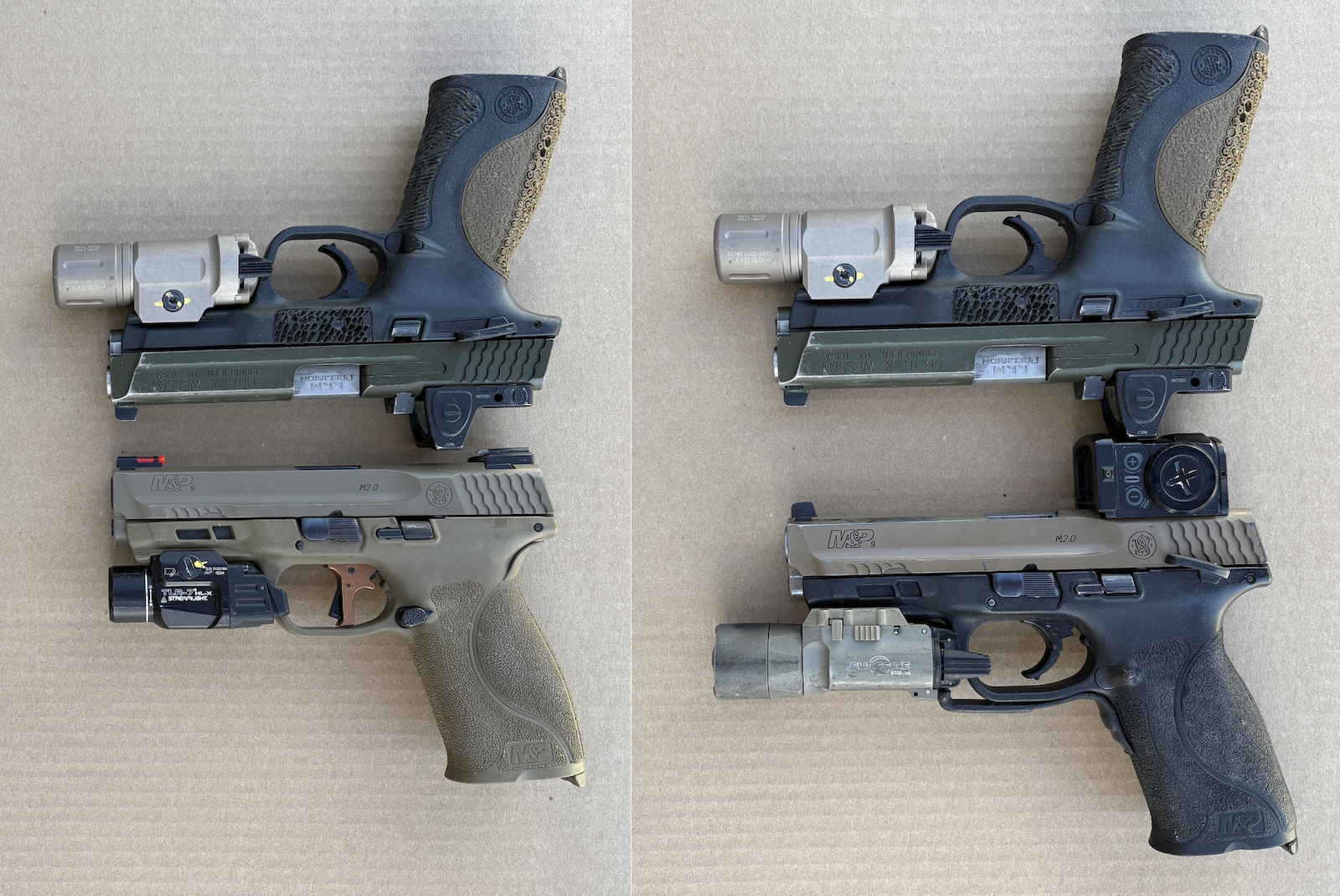
How much difference is there, side by side?
Draw Speed
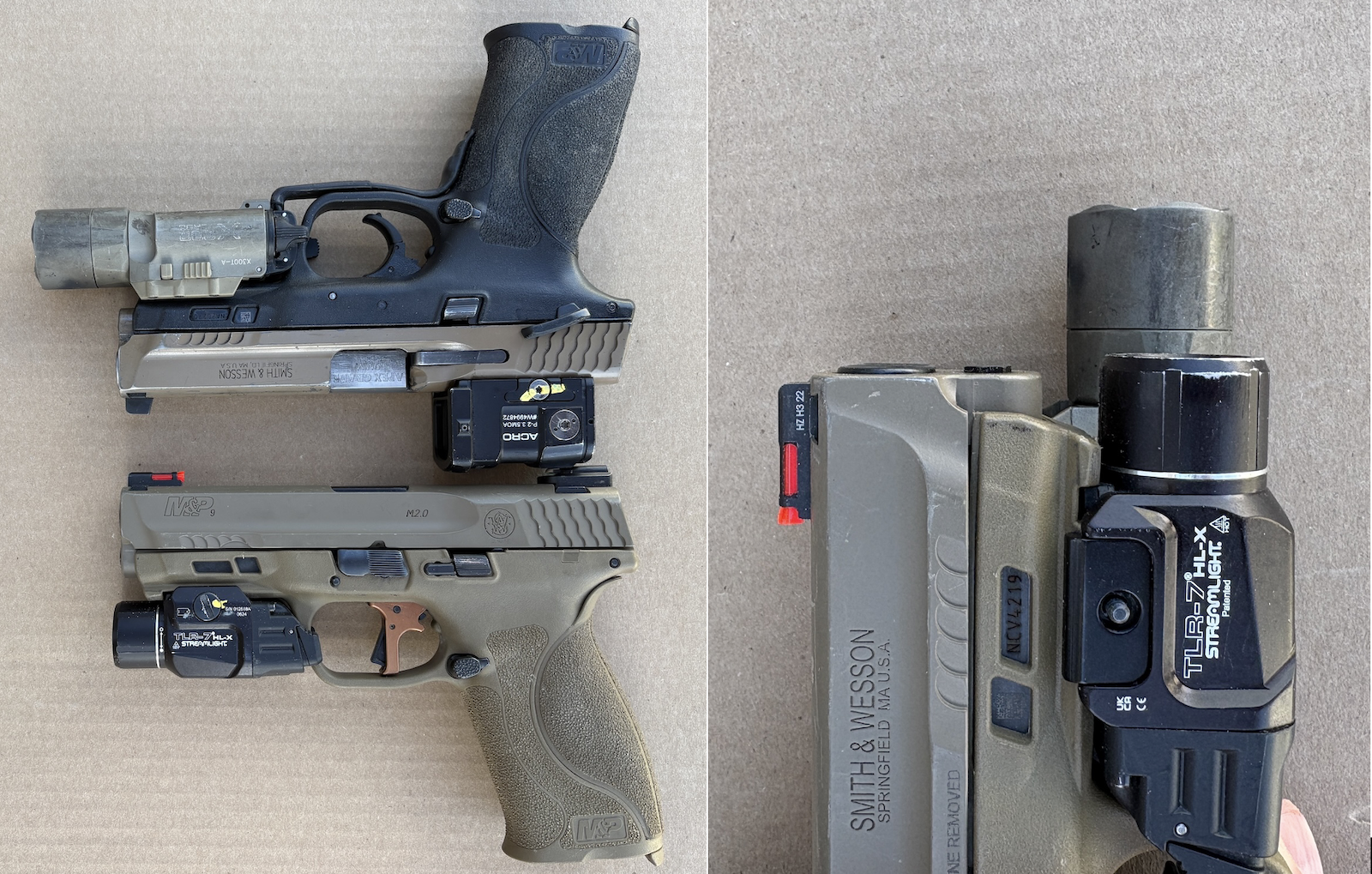
A TLR-7 HL-X compared with an X300-Turbo.
Stand Off
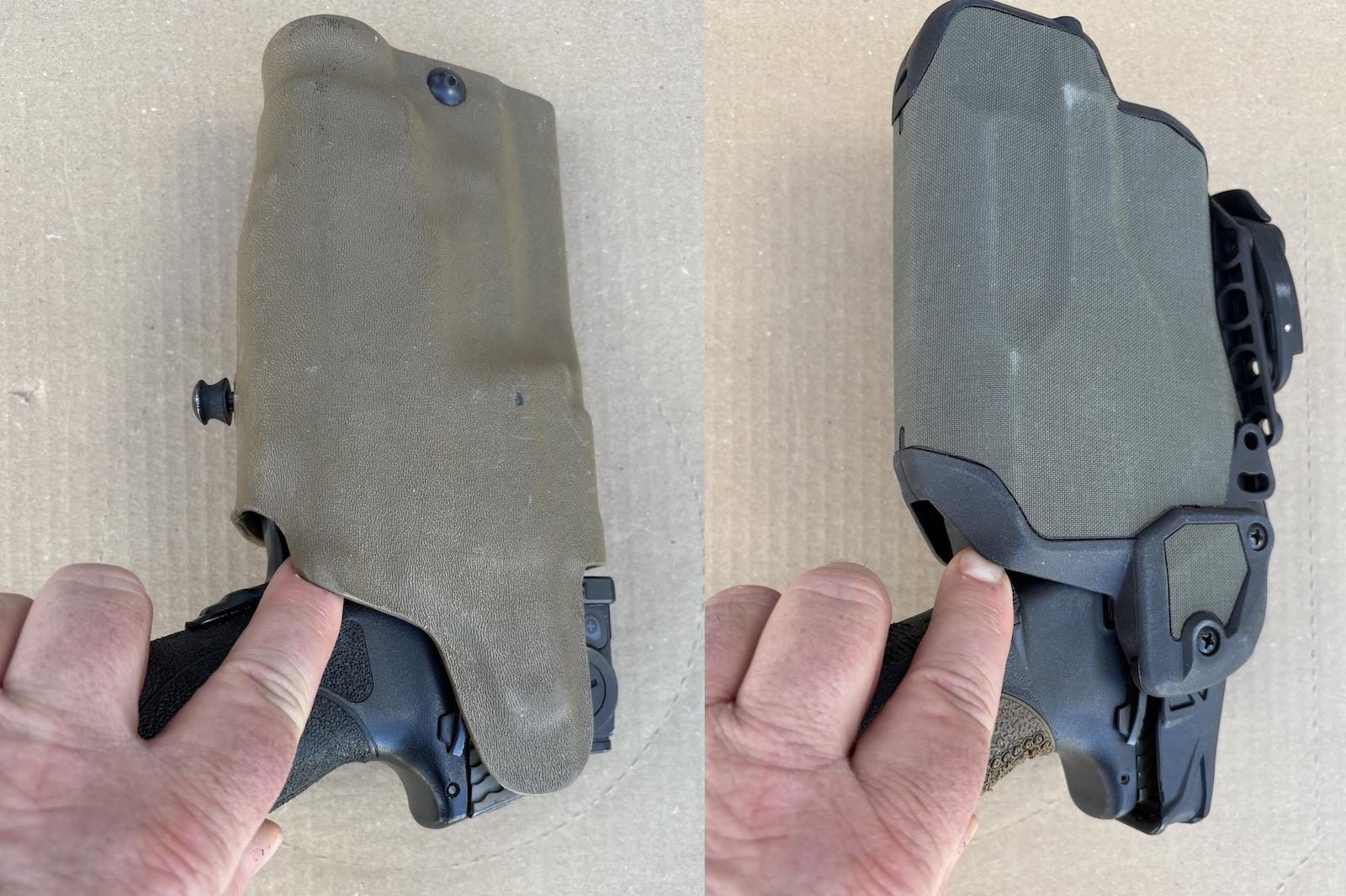
There’s been concern about holster fit with pistol lights. Some feel larger lights allow access to the trigger. Both US Duty Gear (left) and Blade-Tech (right) are designed to prevent that with full-size lights.
Holster Fit
Oh, Another Concern
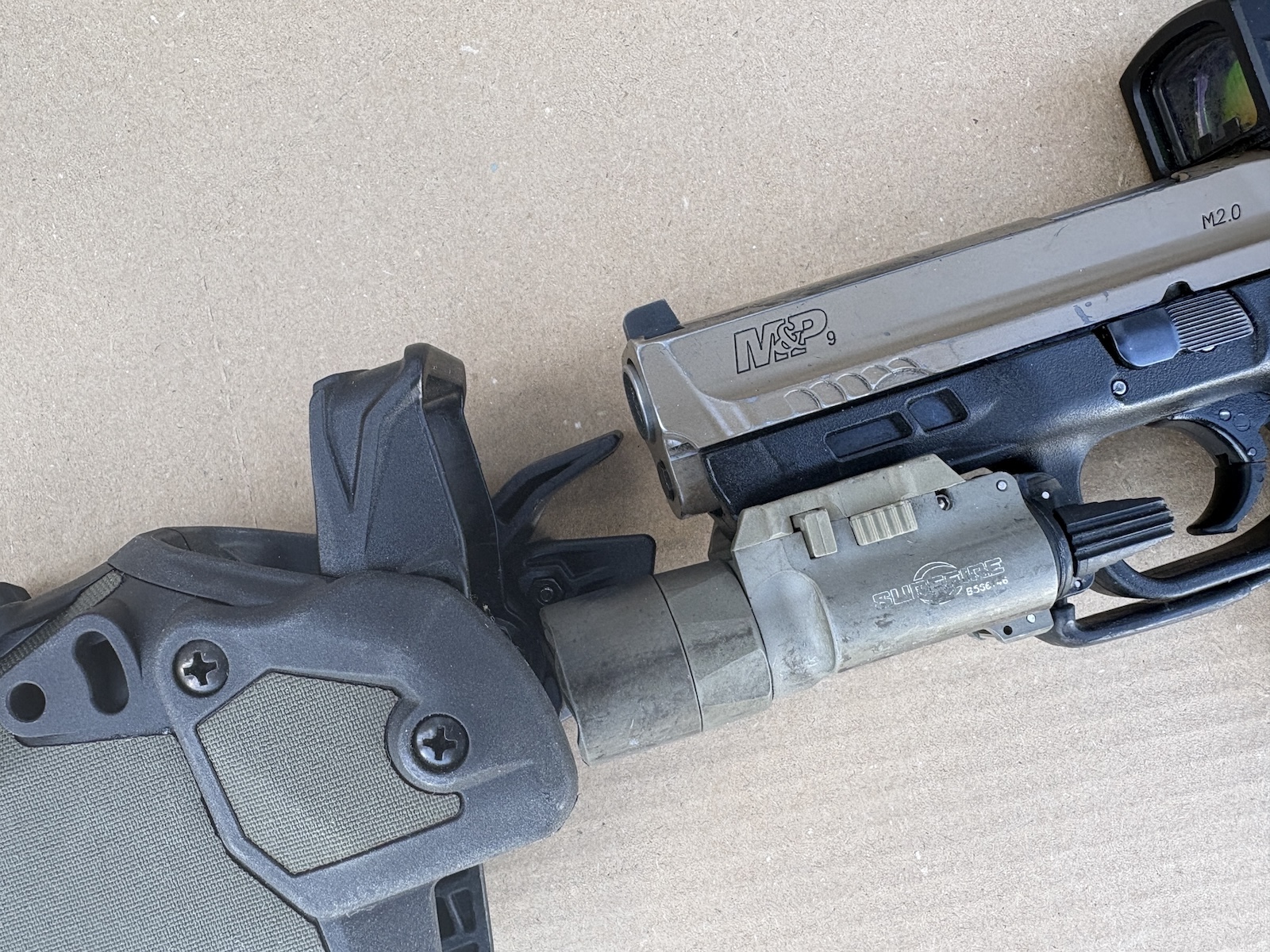
The rotating bale of Blade-Tech’s Valor holster will require a higher draw, regardless of the light.
Duty Choices
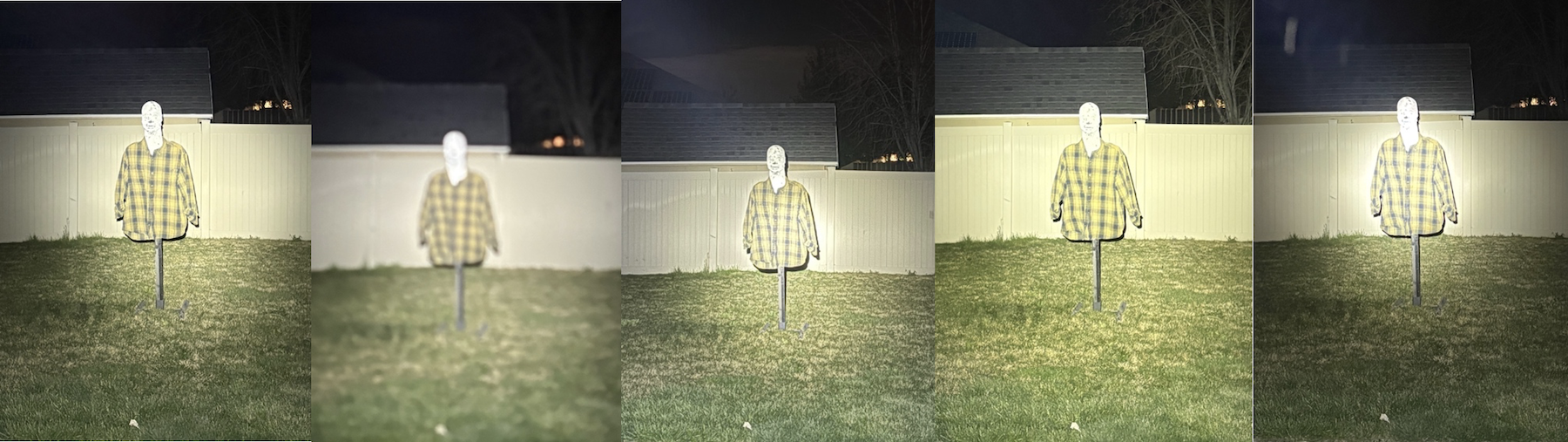
For a weapon light, I want a tight beam, hot spot, with some spill. From L to R: Modlite PL350C, Streamlight TLR7 HL-X, Surefire X300T, and Streamlight TLR-1 HL-X. For a handheld light, I want spill and throw (Far R) Modlite’s 18650 PLHv2 handheld.