
 (+8 rating, 8 votes)
 Loading...
feature_1140
Just because an instructor told you to do X when shooting one-handed doesn't mean it's the best way for you.
Most of our handgun shooting relies on a two-handed grip for control. One hand shoots while the other, the weak hand, provides lateral support to steady the pistol.
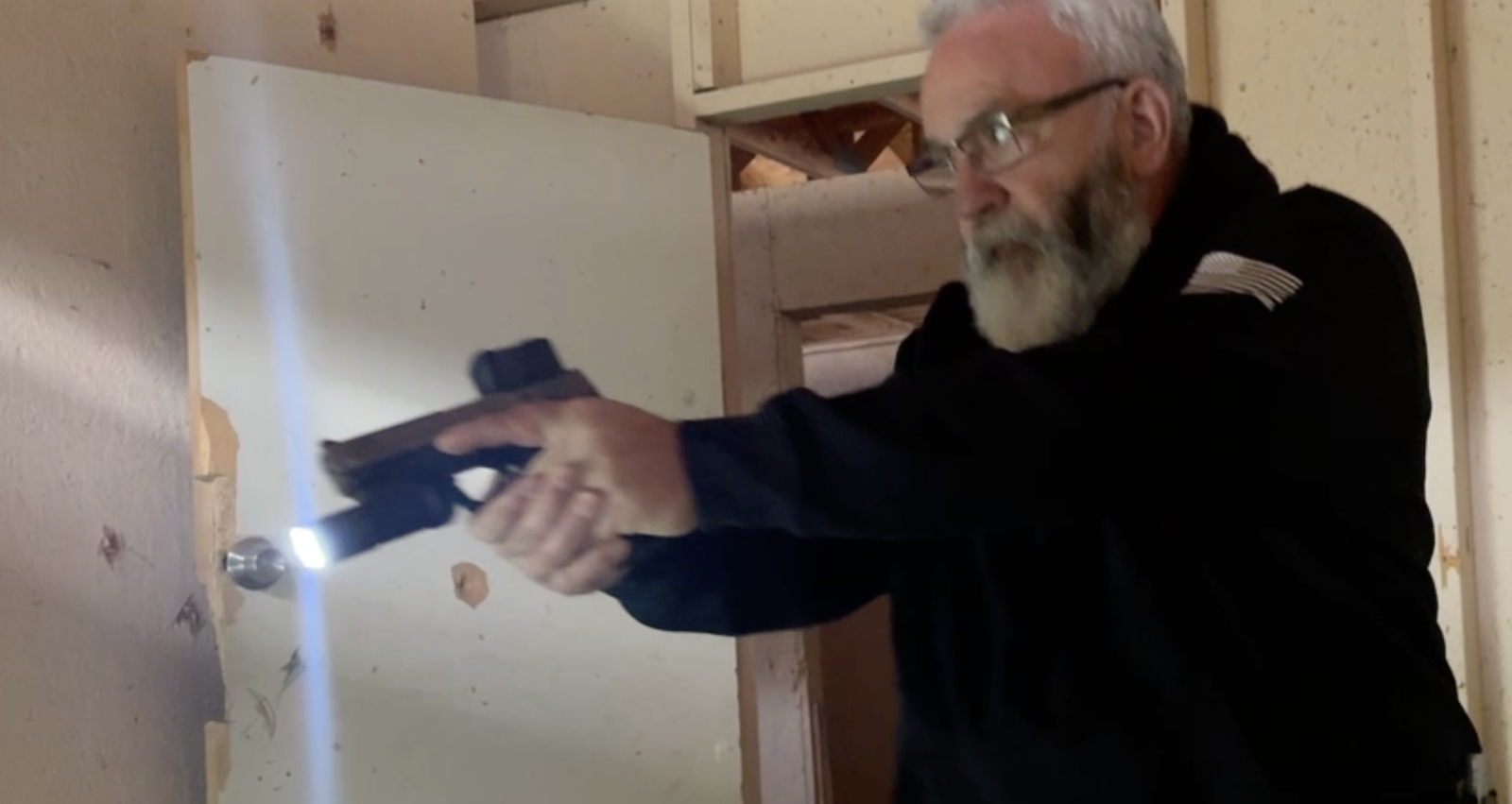
When shooting with only one hand, it’s typically your strong hand. This is often because your other hand is occupied—opening or closing doors, moving objects, or using a flashlight in low light.
All very valid reasons.
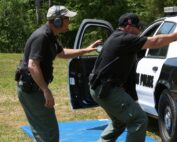
(Editor’s note: the photos are intended to depict weak-hand only shooting by a left-hander. They are not a recommendation for shooting steel targets at close distances.)
What about the weak hand?
Shooting with only the weak hand occurs almost exclusively due to injury, whether from a medical issue or an incident during an event.
Regardless of the “why” behind having to shoot one-handed, except for getting the gun in your hand, everything will be the same.
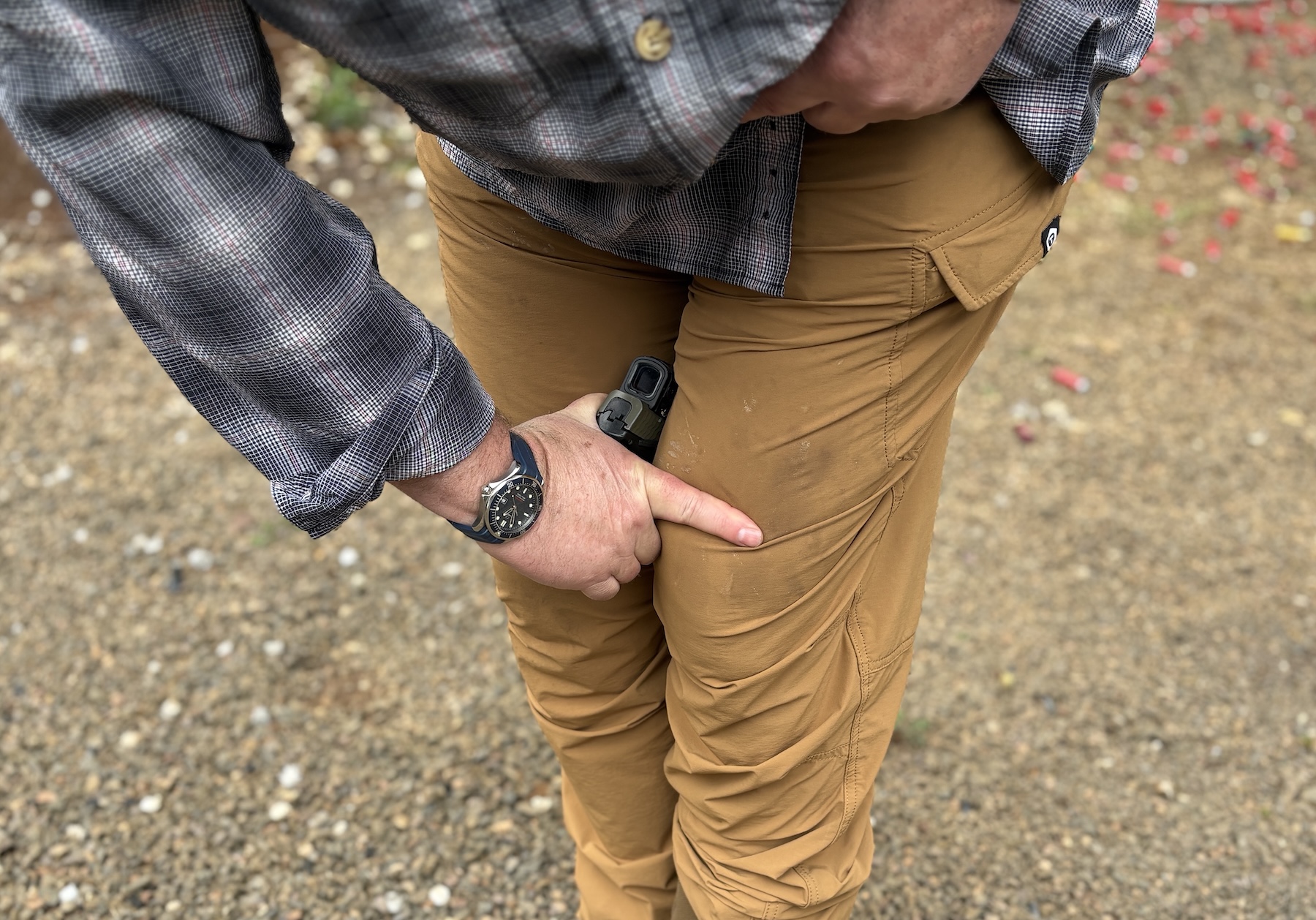
If you are going to clamp the handgun between your thighs to acquire your grip, be very conscious of where the trigger finger is. Ensuring it is on top of the quad can mitigate issues.
Need
I’m realistic about this; you are not going to use this skill daily. However, when the day comes, you will really need it.
Why
Years ago, Scotty Reitz addressed the need to shoot with just one hand. After several years on LAPD’s full-time SWAT element (Metro Division, D Platoon), Scotty became the primary firearms and tactics trainer for the Metropolitan Division, specialized units, and several patrol divisions. In one article, Reitz noted a double-digit number of LAPD officers took rounds to the hands or forearms during gunfights and shootings. Regardless of what others might believe, this is solid data.
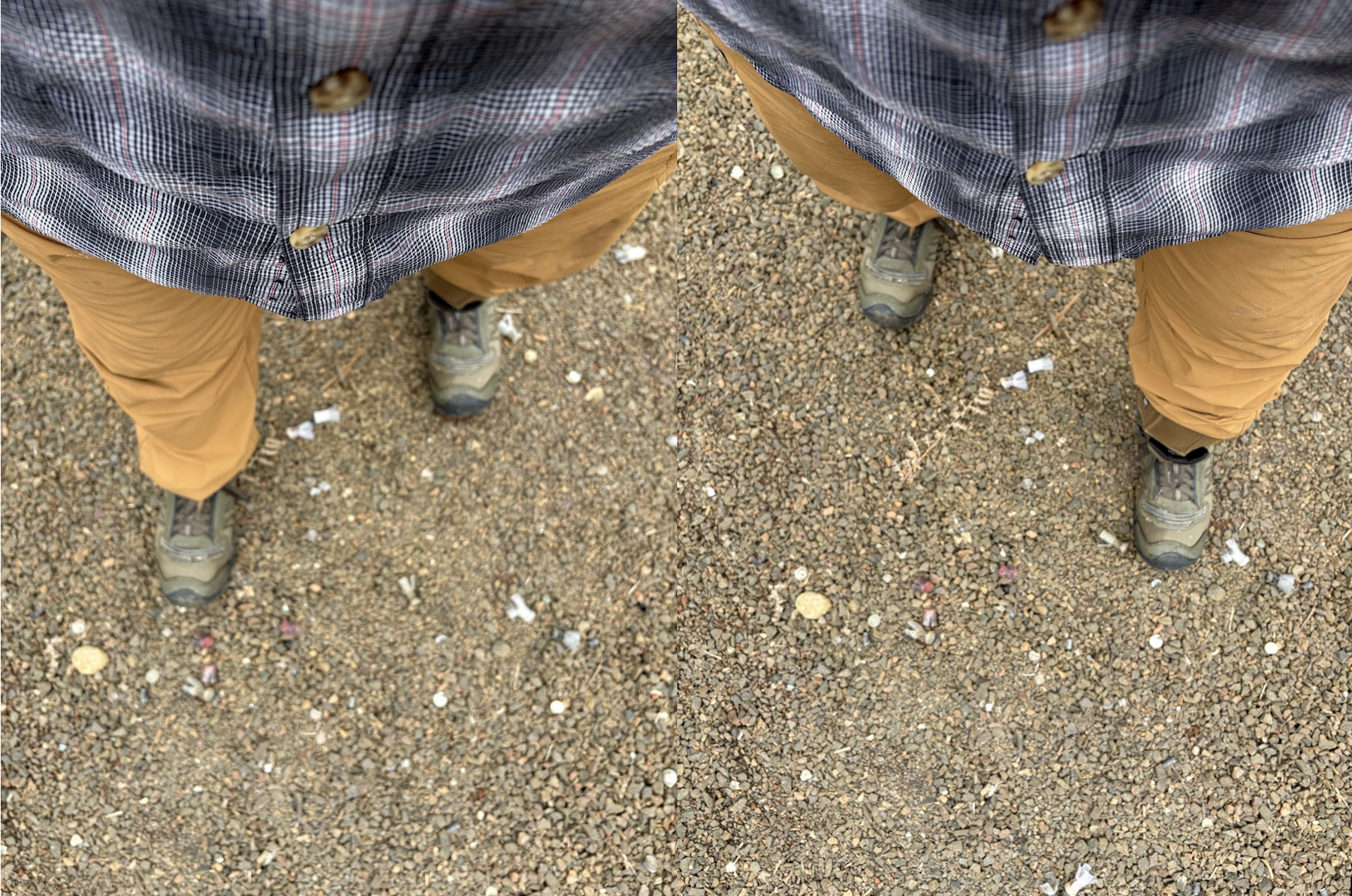
Which foot forward gives you the best results?
Learning & Exploring
Before going into this, if there is a fifth safety rule, it’s this: if you start to lose control of the pistol, let it go to the ground. Do not try to catch it.
In classes, I begin with students drawing using both hands before transitioning the pistol to their weak hand. Three ways to do this. 1st, relax your grip on the pistol enough to let the muzzle drop. Once it does, there will be a gap between the top of your hand and the beaver tail. Go in with the weak hand and re-establish your grip.
Or, with both hands on the pistol, you can switch your thumbs from one side to the other and then adjust your fingers.
A final option is to pancake it. Open your weak hand with the palm up. Roll the pistol 90 degrees inward and lay it into the open palm. Then reacquire your grip.
If it starts to drop, let it go.
After some dry work raising the pistol and getting the sights into the eye/target line, it is time to go.
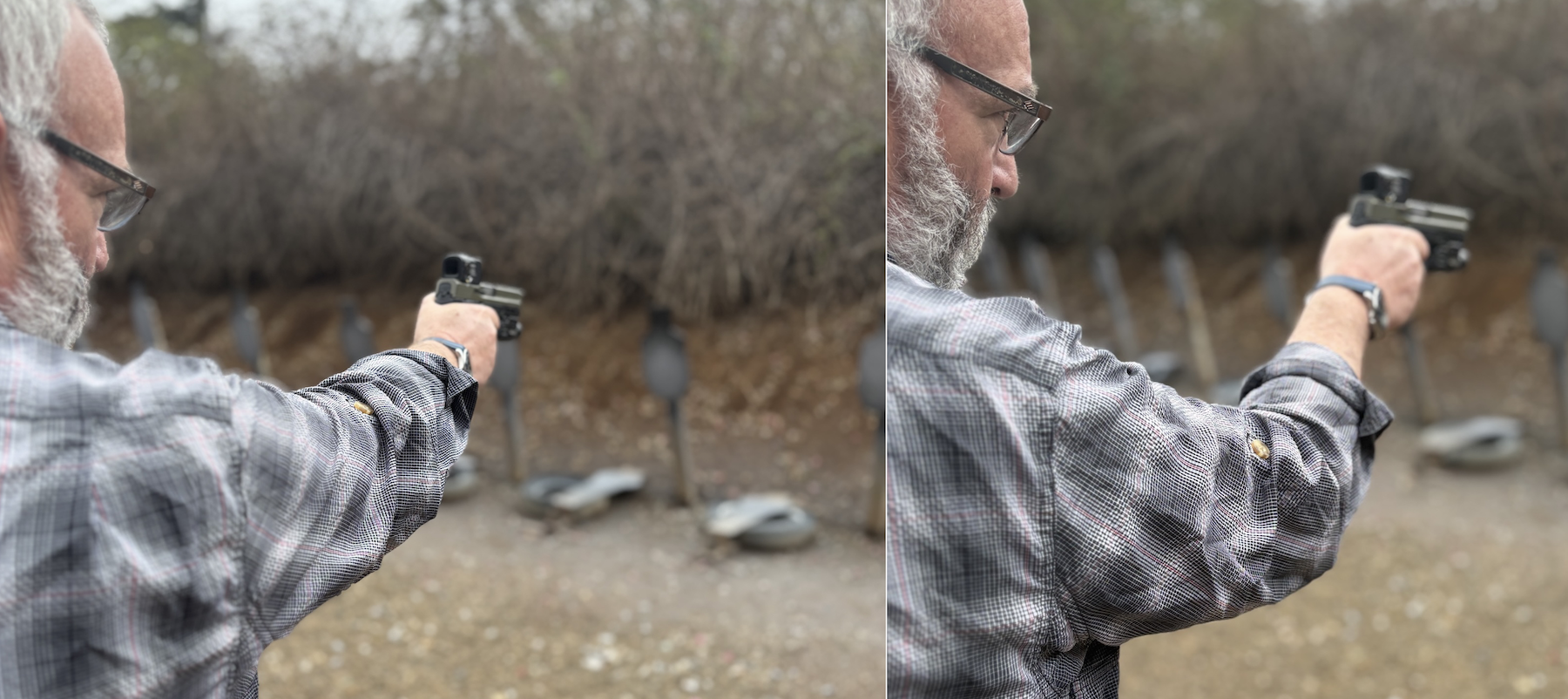
Experiment with your arm extended nearly all the way, with the elbow bent downward.
Options
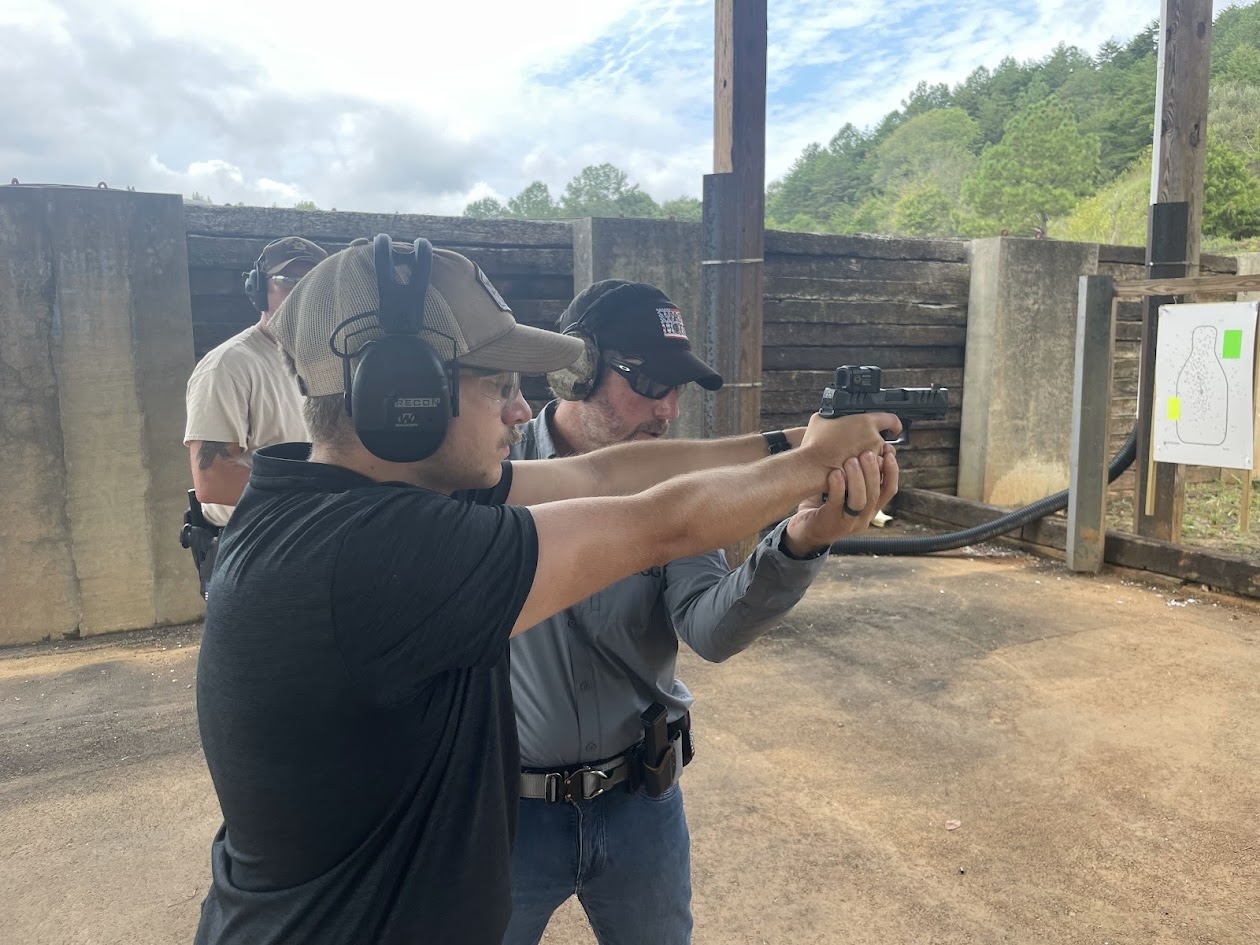
Rather than someone telling you what to do, experiment. Have an experienced range buddy watch how the pistol moves with muzzle rise and recoil while you process the sights. The target will answer other questions later.
Shoot with your weak foot forward and then back. Next, try extending your shooting arm to just shy of locking it out – 96-97% – before bending the elbow downward (rather than out). Discuss what each of you are seeing.
Stick with what works best overall.
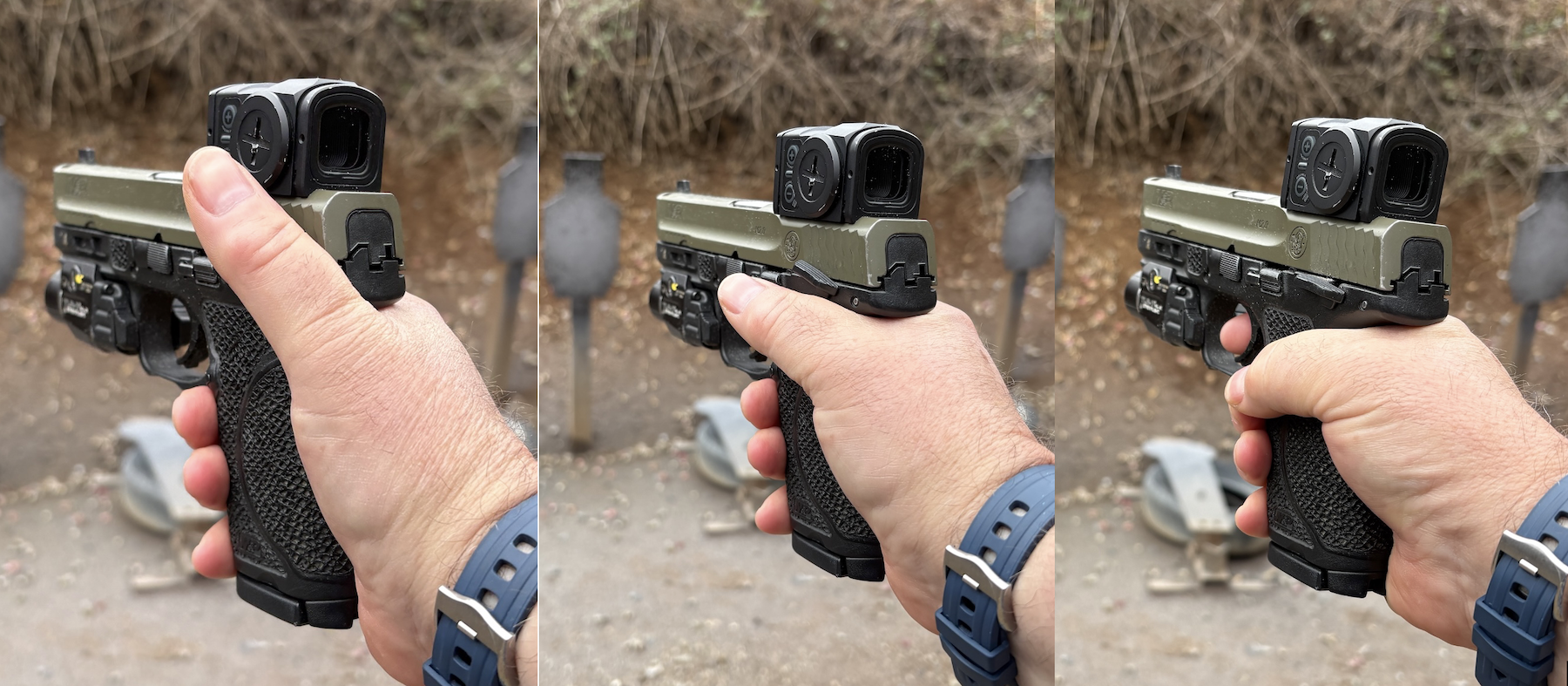
Preferred thumb position varies. High like a 1911, forward, or down near the magazine release.
Thumbs?
Then experiment with the thumb’s position. Try high, like using a 1911. Next, push the thumb as far forward as you can. Finally, bring the thumb down to the area by the magazine release. Not on the release, but somewhere close.
What did you see the sights do? What did your partner see happen?
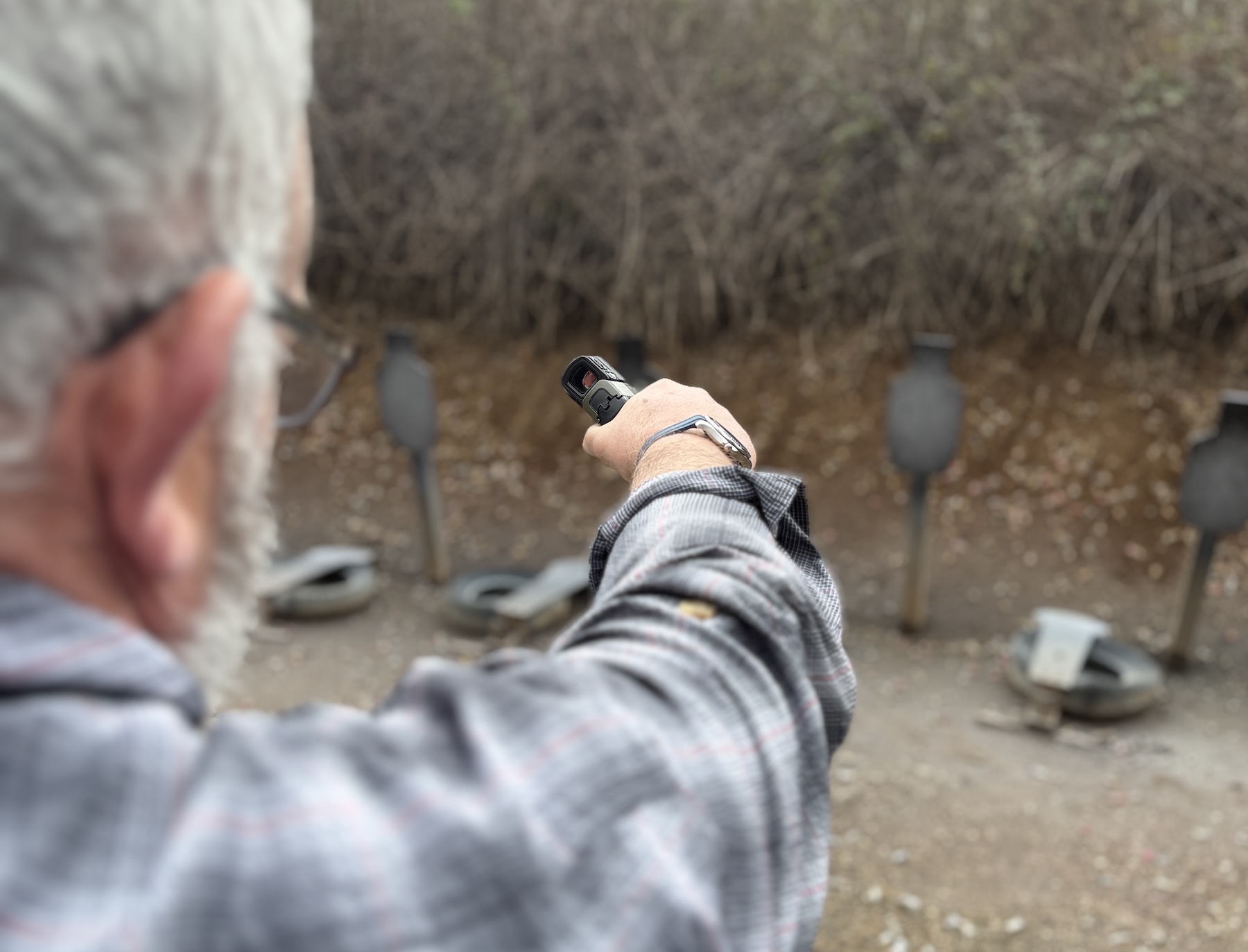
Will a slight in-board cant give you better recoil management and sight recovery?
Cant or Not
The last experiment is to shoot the pistol in a straight-up-and-down orientation (sights up, mag well down). Follow that with a slight inboard cant. Not ninety degrees, no. Try for 5-10 degrees, almost how the hand rolls when you’re throwing a punch.
Again, consider what the pistol is doing in recoil.
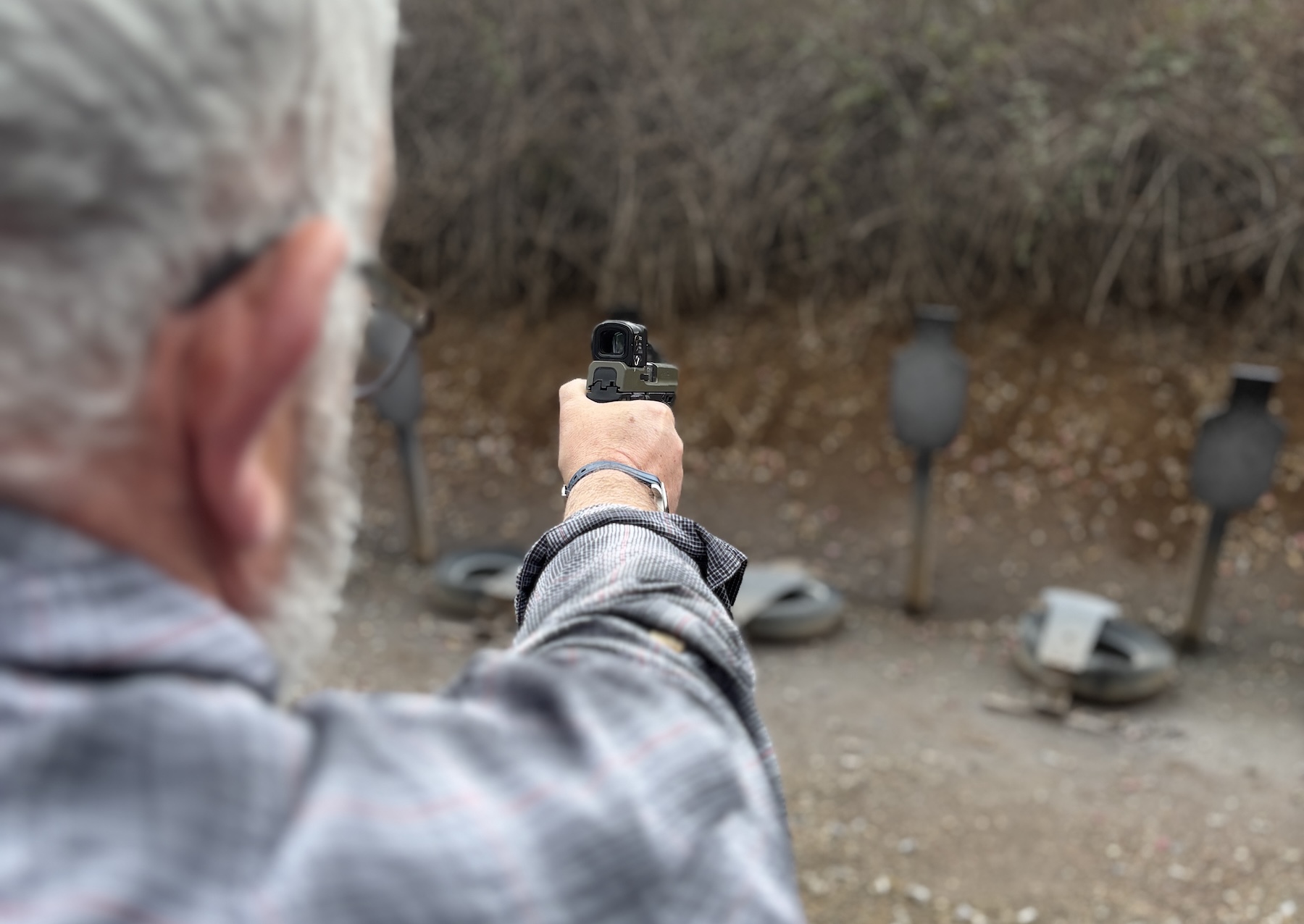
Having the sights up and the magazine well down may work better than canting it.
Drawing to the Long Term
During post-surgery recovery, I have carried on my weak side using a concealment holster that mirrored my primary carry holster. That draw should mirror your usual draw.
Likely Draws
In the immediate heat of a deadly-force encounter, a weak-hand draw will be spicy. I know there is a generational difference when it comes to back-up guns (BUG). A BUG carried where the weak hand can easily access it would be a godsend if you find yourself there.
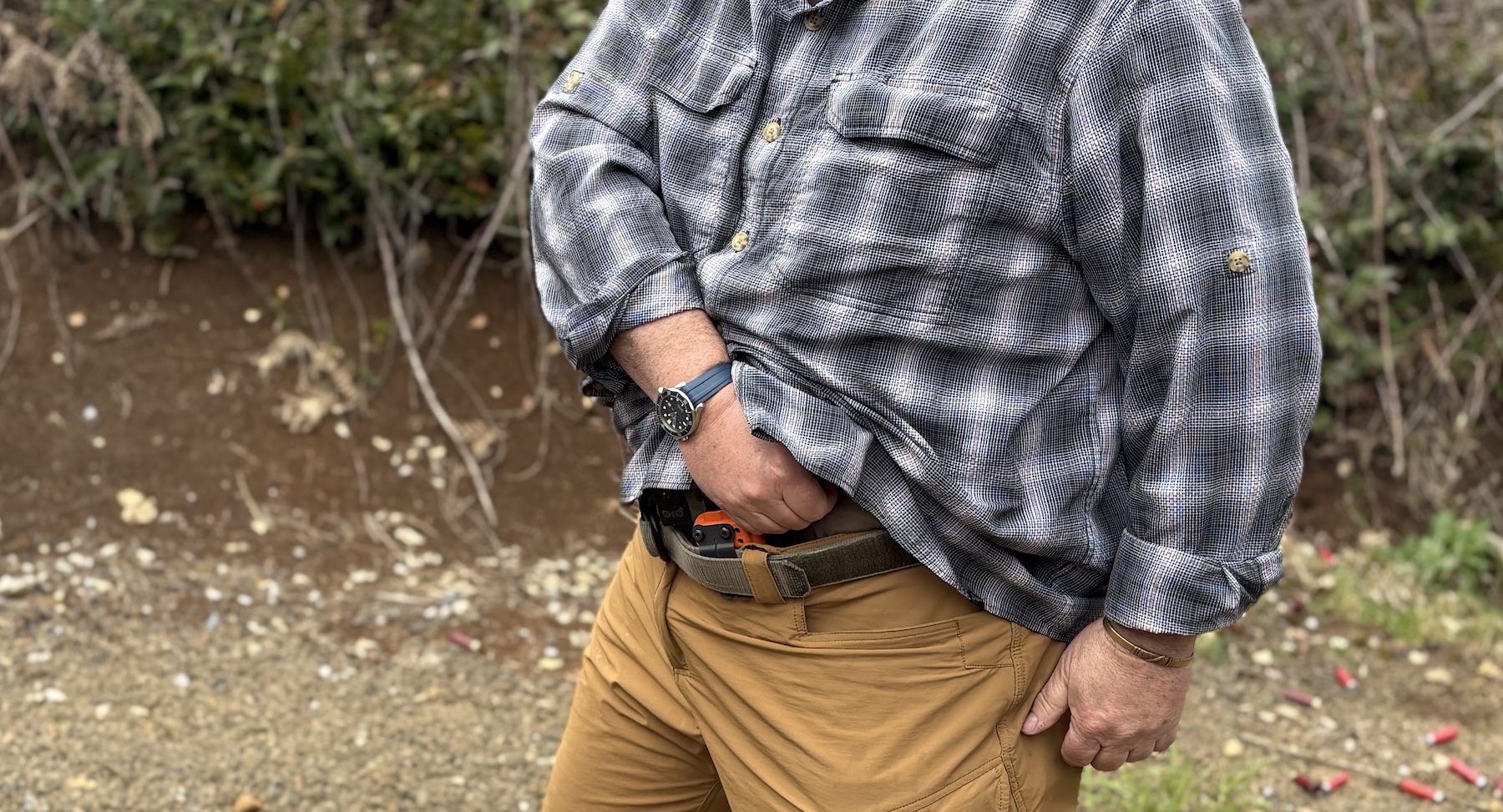
Most of us will start a weak-hand only draw with a reverse grip.
Ways
Regardless of your preference, the closer you can get the holster pistol to your support side, the better off you will be. Pulling the whole belt around is “a” way.
This can be more difficult for uniformed officers wearing a duty belt and holster. As they grip the pistol, they will need to defeat all the retention devices. That applies to a rotating bale and any levers that have locked on parts of the pistol. Once those things have been done, they can remove the pistol from the holster.
I know some rather flexible people who can twist their hand around and get a traditional grip on the gun in the holster. They complete the draw from there.
The remaining options involve changing your initial grip.
2nd, lift the pistol up out of the holster enough that you can rotate it at the holster’s mouth and get a proper grip.
3rd, bring the handgun from the holster to between your knees, lower thighs. Clamp them on the slide with the muzzle oriented rearward and the mag well forward. Next, flag your trigger finger on the front of your thigh while establishing your grip. More than the others, this adversely impacts your mobility.
Finally, as the pistol clears the holster, drop your strong foot farther back. Bring the gun, still in reverse grip, to the junction between your torso and weak side thigh. There, drive the sights into the crease. Still applying inward pressure towards the crease, roll your hand around the frame and get your firing grip.
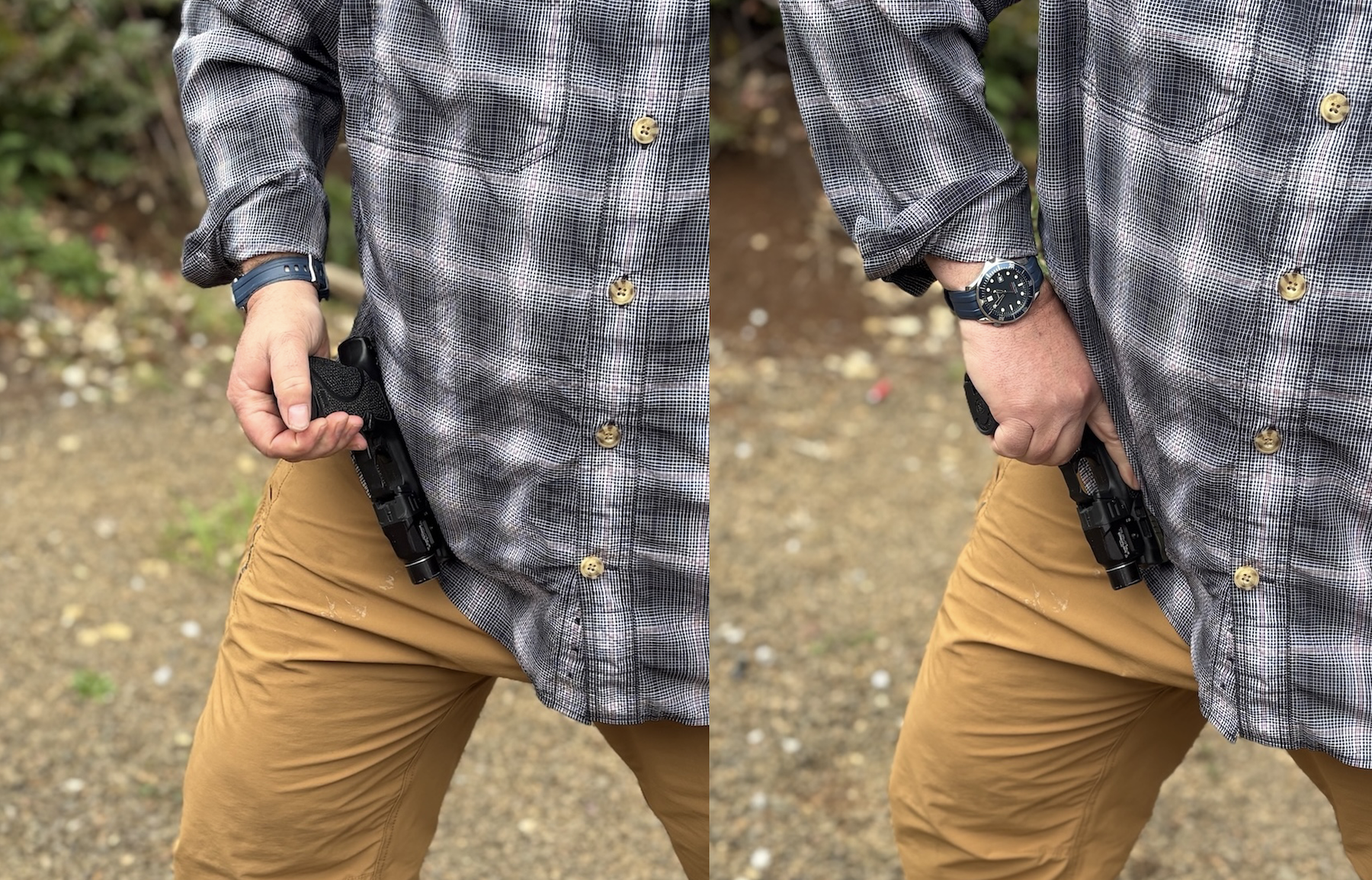
“A” way to get a firing grip on this. After clearing the holster and taking a step back with the strong leg, drive the top of the slide into the junction between your weak side thigh and your torso. While applying inward pressure, roll your hand around & into a firing grip.
Practice
I strongly recommend seeking competent instruction on these methods. Supplement that with structured and supervised dry practice.
With a bit of work, you may find that your support hand is not the dumb hand.
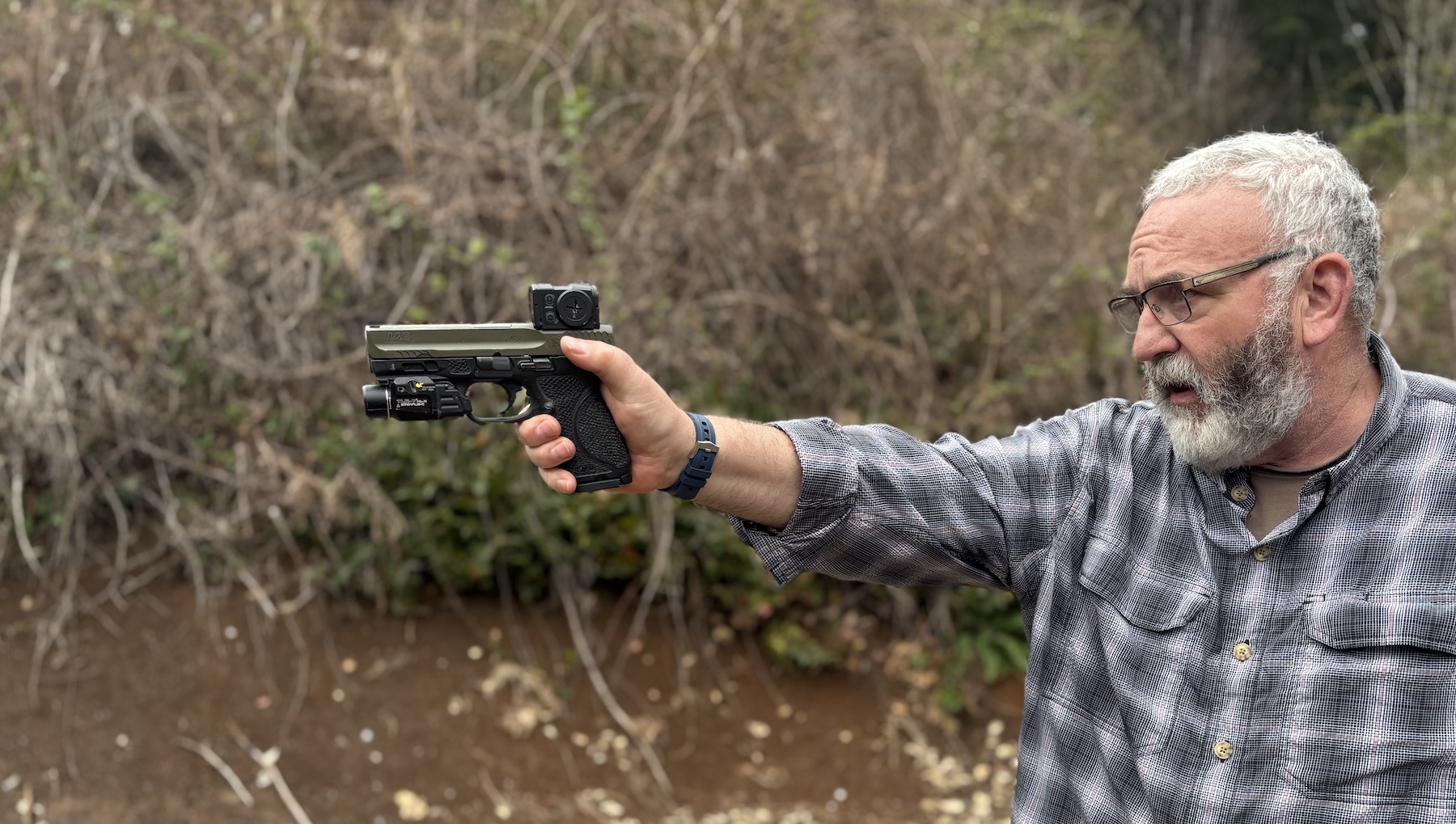
The author, a left-hander, has worked through all of the weak-hand-only draw issues and is on target.
Final Thought
It’s a really bad day if this is your path to success. If you have already traveled the road and put in some work with it, you will be much better off.