
 (+2 rating, 12 votes)
 Loading...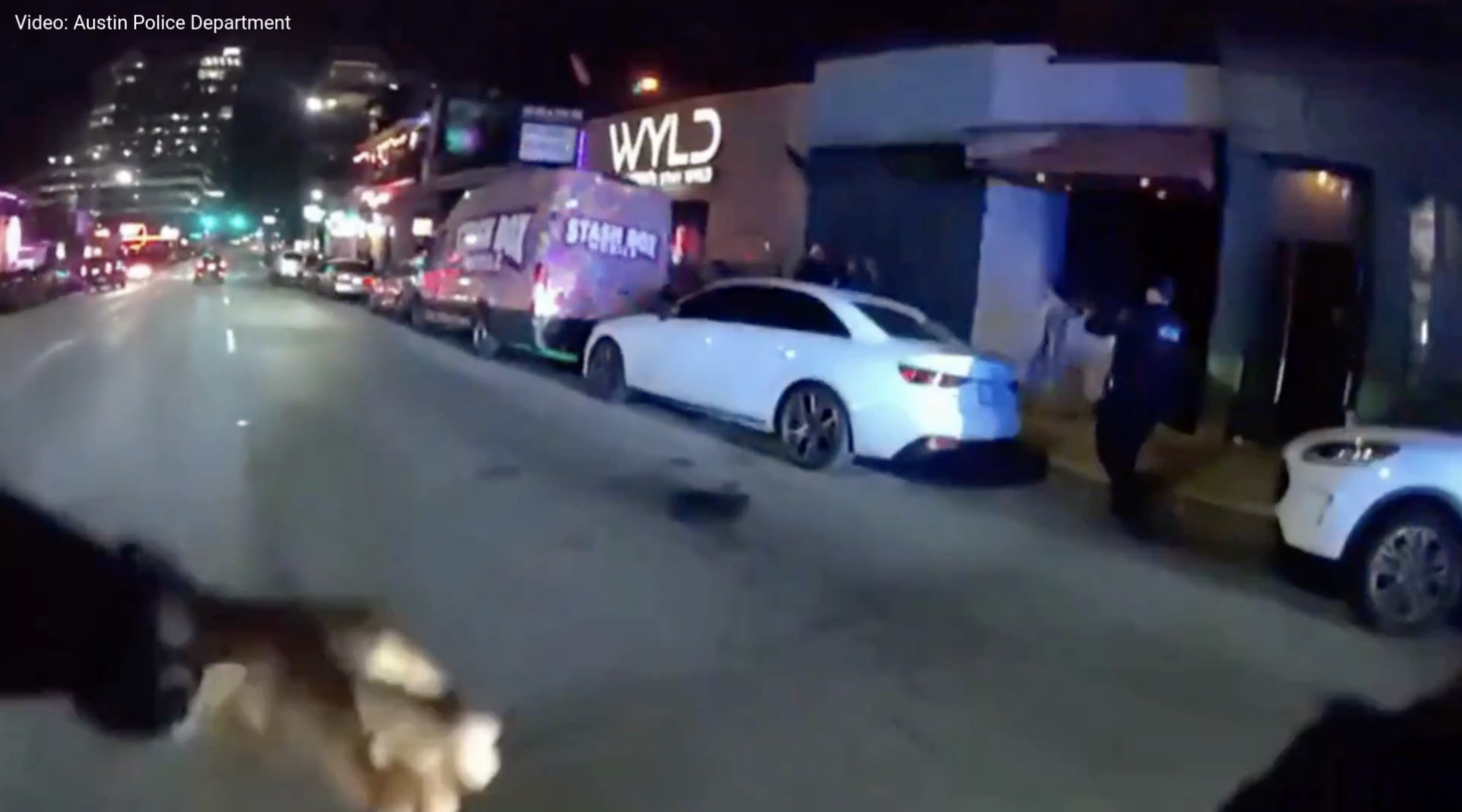
a-Screenshot 2026-03-09 at 2.03.27 PM
Austin PD officers partnering up while moving to find and engage the terrorist in the recent attack (Austin PD released BWC footage).
principles /prĭn′sə-pəl/
noun
- A basic truth, law, or assumption. “the principles of democracy.”
- A rule or standard, especially of good behavior. “a man of principle.”
tactics /tăk′tĭks/
noun
- The study of the most effective ways of securing objectives set by strategy, as in deploying and directing troops, ships, and aircraft against an enemy.
- Military actions or maneuvers used against an enemy.
- A procedure or set of maneuvers engaged in to achieve an end, an aim, or a goal.
These definitions came from the American Heritage® Dictionary of the English Language, 5th Edition.
Before I start, this is not about the “militarization of law enforcement.” Making that claim shows an exceptional level of ignorance. This is about applying principles to what our uniformed men and women are doing on the roads, streets, and highways when circumstances call for it. And this is focused on patrol, not specialty teams.
Regardless of the uniform color, law enforcement is task-organized very differently from any military organization. Largely, we work alone. About 70% of agencies have twelve officers or less. A rural sheriff’s office might have more, but with a greater distance between them. In a few places, officers have a partner – that can vary between your regular partner and whoever you get that day. Rare is the luxury of multiple two-officer cars that frequently train and work together.
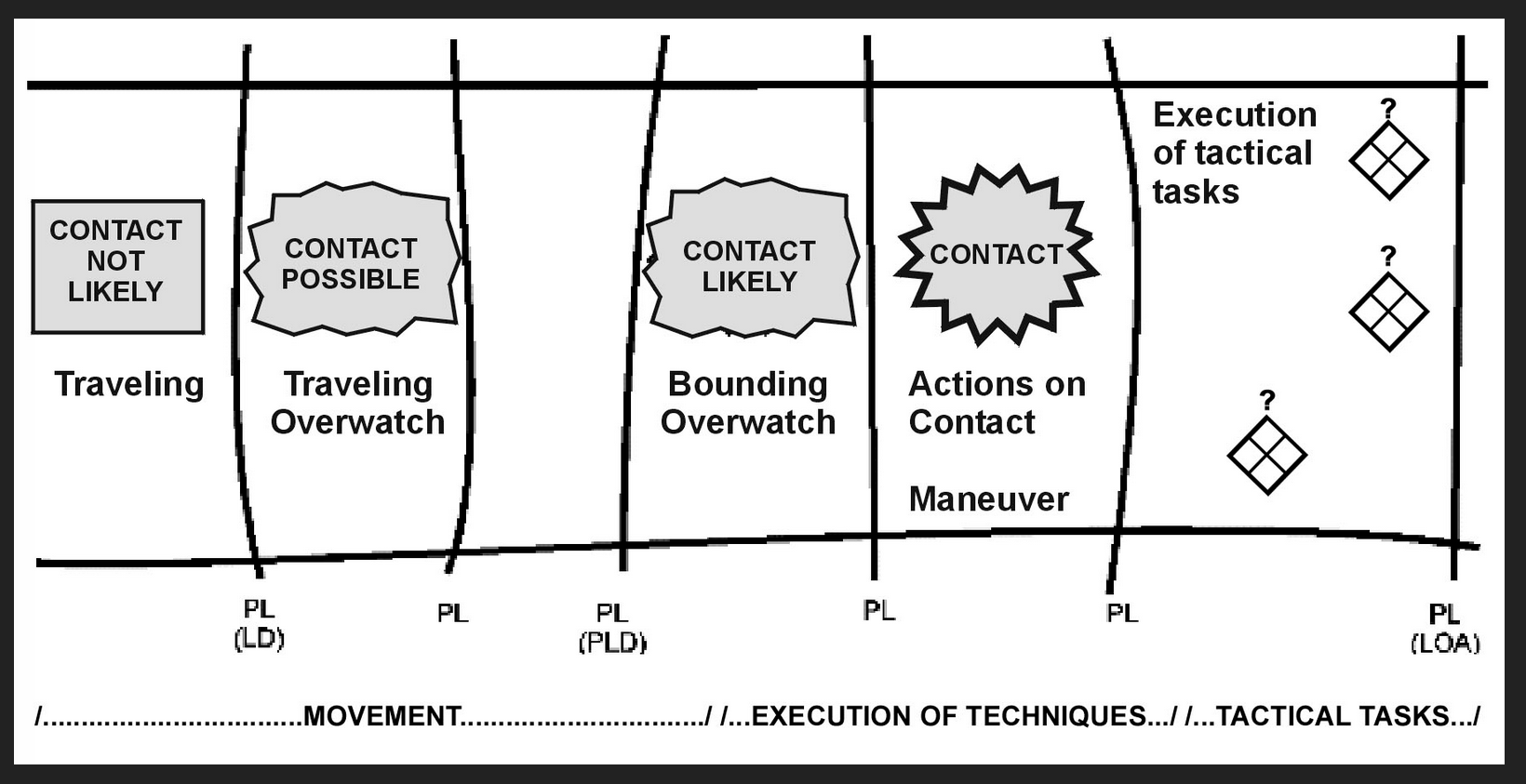
Tying the likelihood of contact to the movement technique used by the involved elements. (US Army FM 3-21.11)
How do we get to the tactics side then?
A lot of our tactical training focuses on entering and searching structures. This might carry over to that, but it also applies to open-air environments.
If you aren’t working two-officer cars, then go back to San Diego PD in the 80s and the development of Contact/Cover. Look HERE. If you aren’t familiar with it, your academy and FTOs failed you miserably.
That is the foundational block because it is a buddy team. By design, it allows for overwatch. One moves while the other provides security and the ability to decisively deliver force. Add two more officers, and you would have what the infantry calls a fire team. Now, multiple officers can maneuver while two can provide that overwatch.
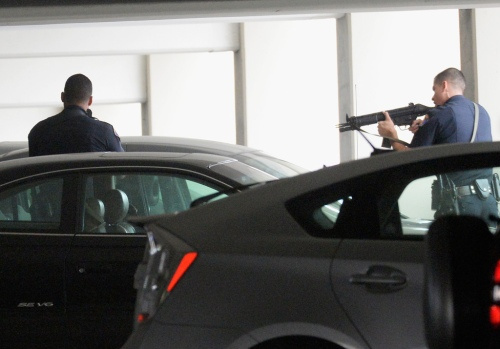
It can start with Contact/Cover. While one officer searches, the other provides cover (overwatch).
Movement to Contact
You can’t solve a problem or end a threat until you find it.
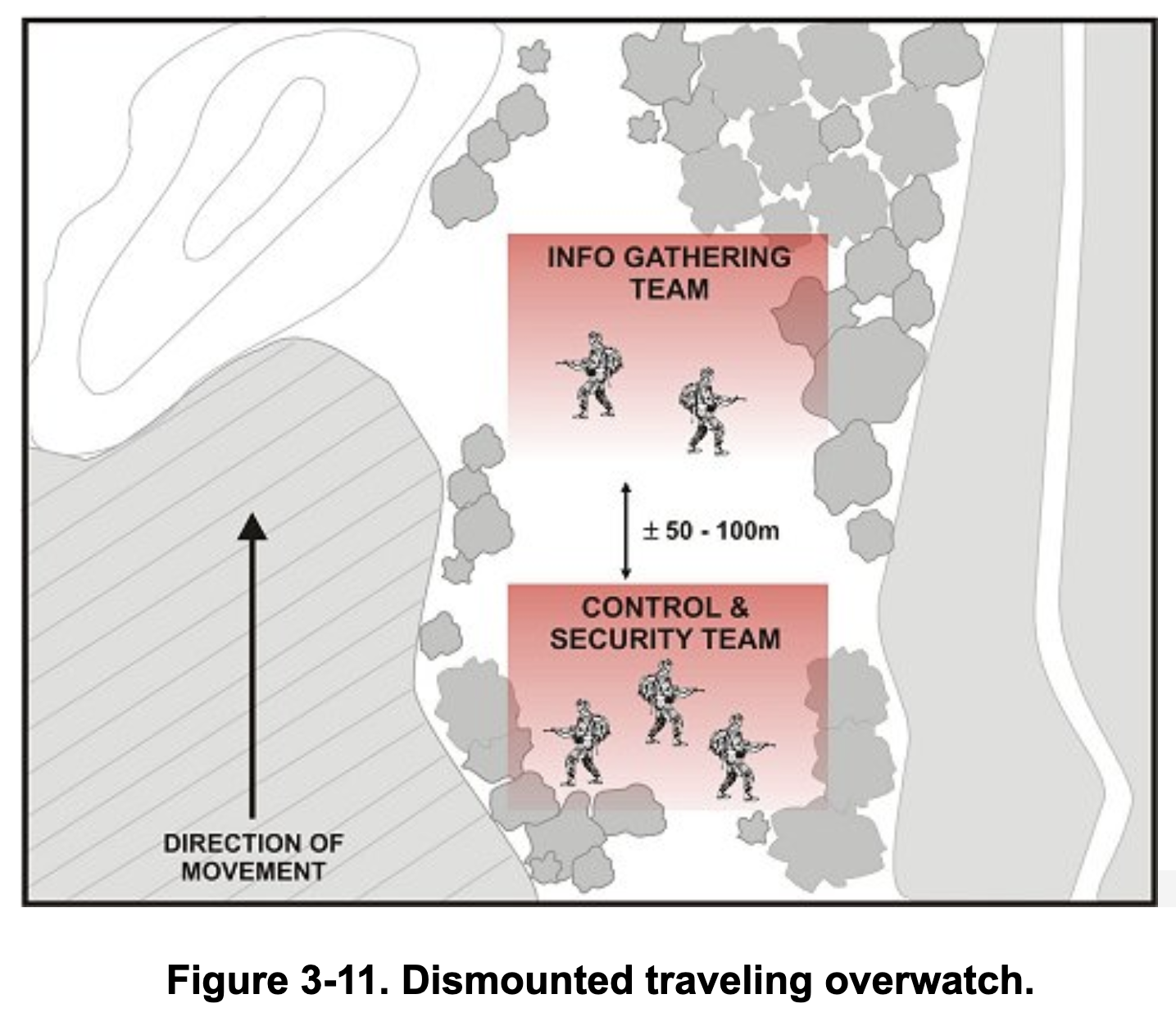
Dismounted (walking) traveling overwatch. Both elements could deploy to support the other if the situation changes. (US Army FM 3-21.9)
Traveling Overwatch
One pair is in the lead. The other follows, offset if possible based on terrain. The rear pair is ready to address threats as needed and prepared to move forward.
Bounding Overwatch
You, or you and your partner, move forward to the next piece of cover or terrain, while my partner and I watch for threats. We can provide cover as needed. You stop, we move up and past you to the next position. We repeat as needed until we get there. Speed depends on the nature of the threat and the amount of information you will need to process.
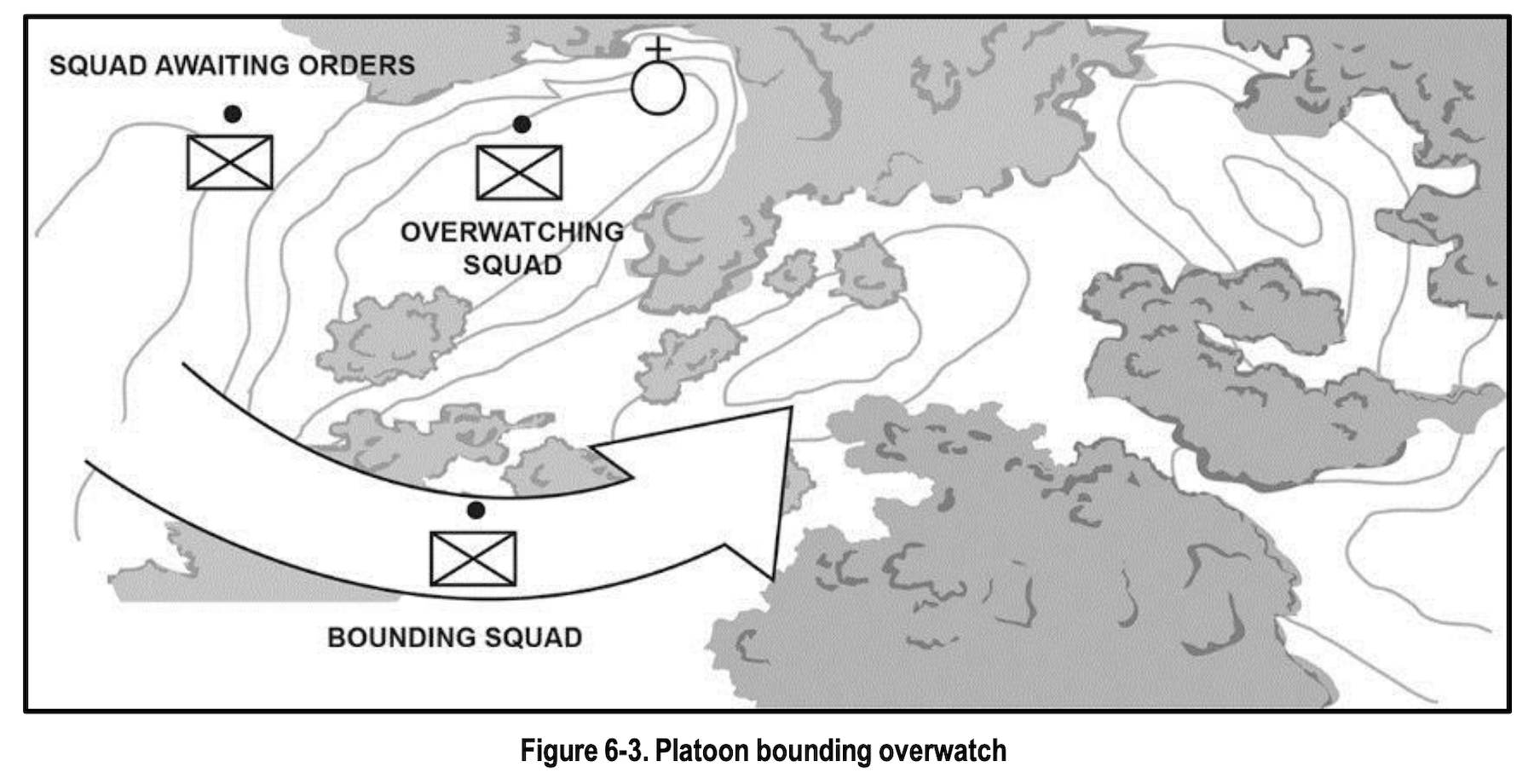
How three or more officers or elements could perform a bounding overwatch when moving. (US Army FM 3-21.9)
Find, Fix, Engage
Once you have found them with eyes on, remove their mobility by blocking escape routes.
Military doctrine is Find, Fix, Finish, but for law enforcement, the last F becomes Engage, either verbally or with some level of force.
Their actions will determine your engagement based on the threat (imminent, immediate?), legal, and policy considerations. I’m not a lawyer, but the US Supreme Court has said it’d like a warning before using deadly force, if feasible. Some circuit courts have different standards; know yours.
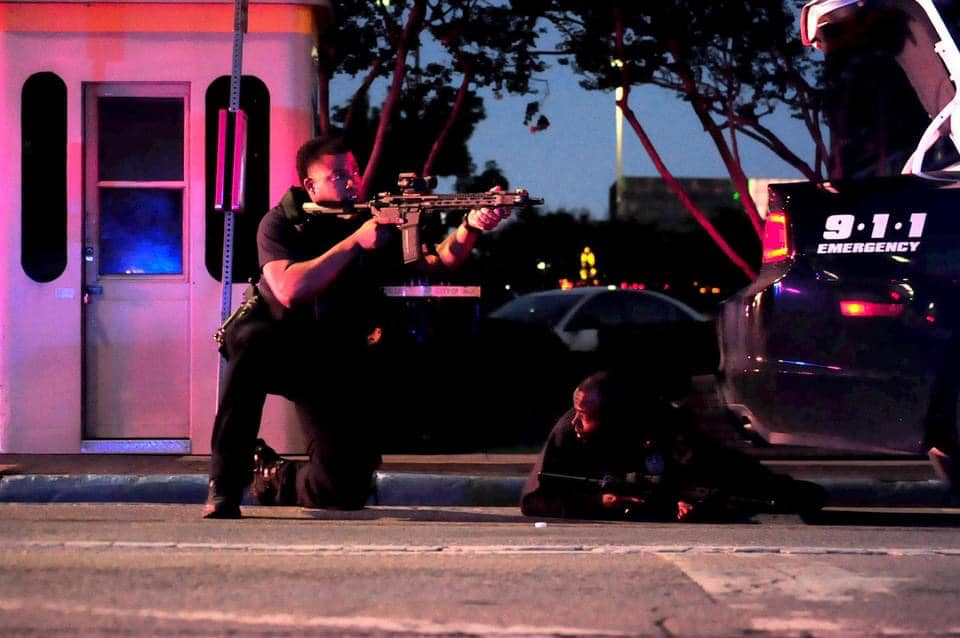
Knowing how to use your equipment while working with the terrain is part of this.
Support by Fire
The other cops can be sent to a flank, one side or the other, to block flight or provide support by fire. When to do that has to be taught. Then it needs to be practiced, rehearsed.
Marksmanship absolutely matters. Few officers carry enough ammunition on them to provide suppressive fire.
There is nothing wrong with having a bandolier of loaded magazines available.
Communication
There are 18,000 agencies in the country. We can’t even adopt the same radio codes. Meanwhile, look at the fire service. Their verbal communications are in clear text.

The BWC view from the third APD officer, who also engaged the terrorist. He is verbally communicating, without the radio, it seems, as he is approaching the terrorist; they all engaged (Austin PD released BWC).
Because our radios always work, right? We can easily connect multiple agencies to a single channel, right? What about visual communications? Hand & arm signals?
All this needs to be universal. Within a county, everyone needs to be on the same page. Until you can get there, start with your shift, station, department, or office.
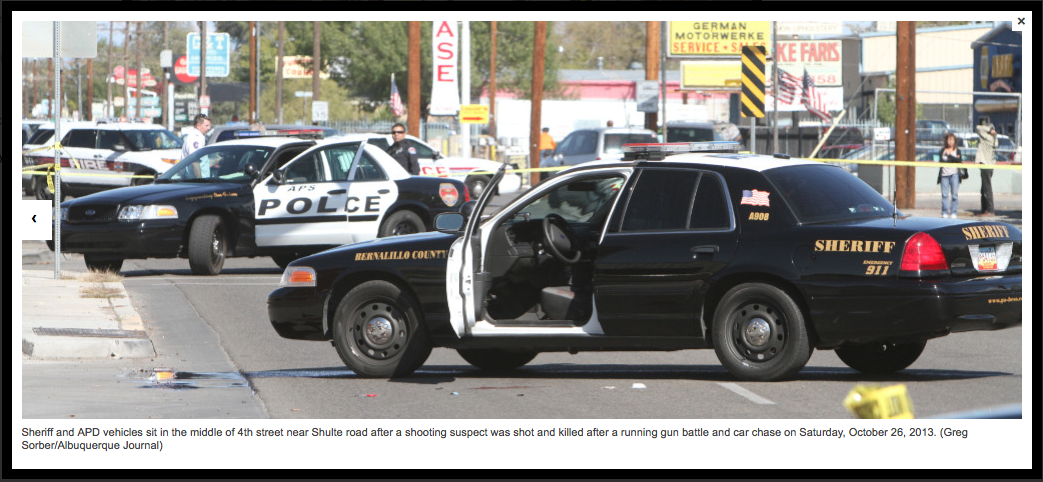
Late October 2013 – a violent felon shot up multiple police cars as well as carjacked one of them in Albuquerque, NM. This event called for small unit tactics by patrol.
Training
Some years back, the National Tactical Officers Association pushed the concept of a tactical patrol officer. I attended a SHOT Show LEEP presentation by Kentucky police officer Don Alwes. The premise combined a variety of relevant skills.
There is the MACTAC program (Multi-Assault Counter-Terrorism Action Capabilities) from the Los Angeles PD. It was designed by Joe Witty, a National Guard Special Forces sergeant and LAPD SWAT officer, who has since retired. I know some agencies, like the Las Vegas Metro, are training in it.
Teach contact/cover, then apply it to overwatch, teach flanking on lone and multiple suspects, and rehearse those encounters from the best available angle.
How three or more officers or elements could perform a bounding overwatch when moving. (US Army FM 3-21.9)
Suggested Reading
Look for a copy of the Army’s FM 3-21.8, addressing the Infantry Rifle Platoon and Squad. Then get copies of the current Ranger School and Special Forces Small Unit Tactics handbook. While none of these are L/E centric, they will give you relevant principles and techniques that can be adapted.
The current material on active killer response is viable when done. Look at ALERRT’s study on room entry tactics for patrol for how to vet a specific tactic or technique.
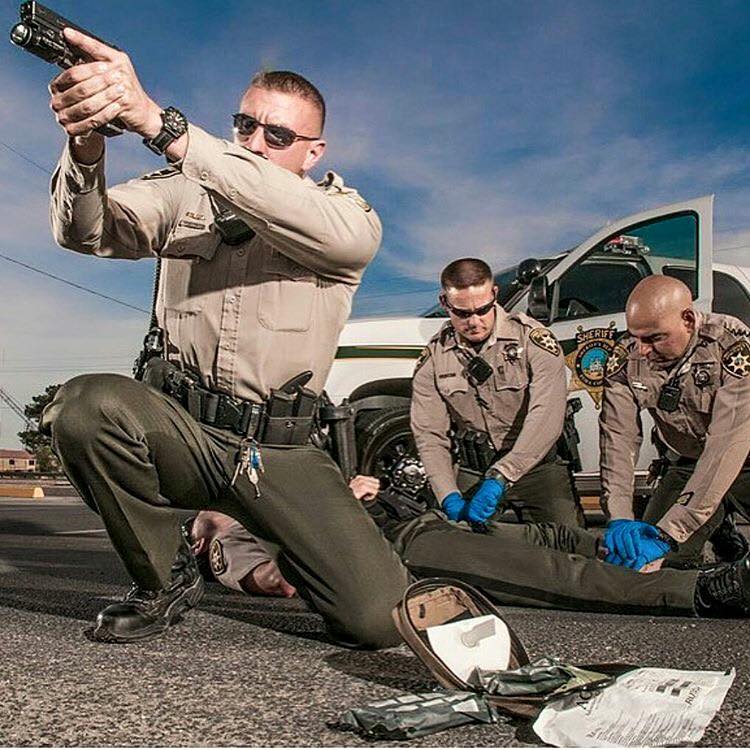
One deputy is providing security (cover) while others have contacted their co-worker and are treating him.
Austin’s Recent Terrorist Attack
The body-worn camera footage is out. Watch and listen to it. Two officers are moving as a team and communicating. They locate the suspect. A 3rd officer moves into a flanking position. All three engage the BadGuy and finish the problem.
Strong work!

Instead of vehicles doing it, could four officers move up a street or across an open area this way? (US Army FM 3-21.9)
Final Thoughts
When the time comes, this must be done aggressively. Do not wait for permission; rather, take the initiative and move to save innocent lives. Appropriately apply the Priority of Life.