
 (+13 rating, 15 votes)
 Loading...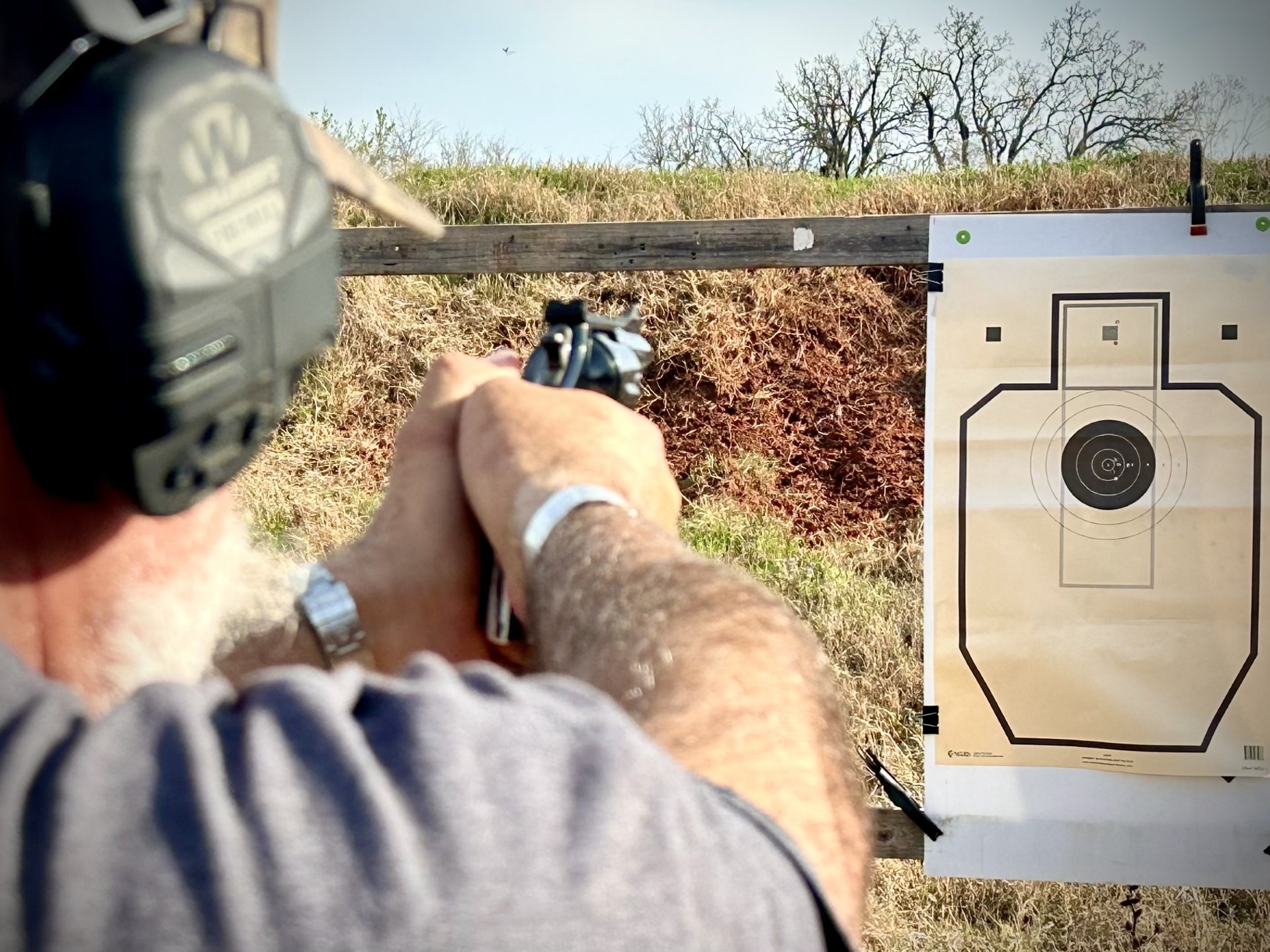
feature_IMG_2400
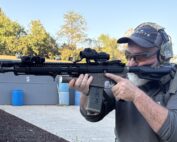
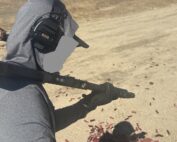
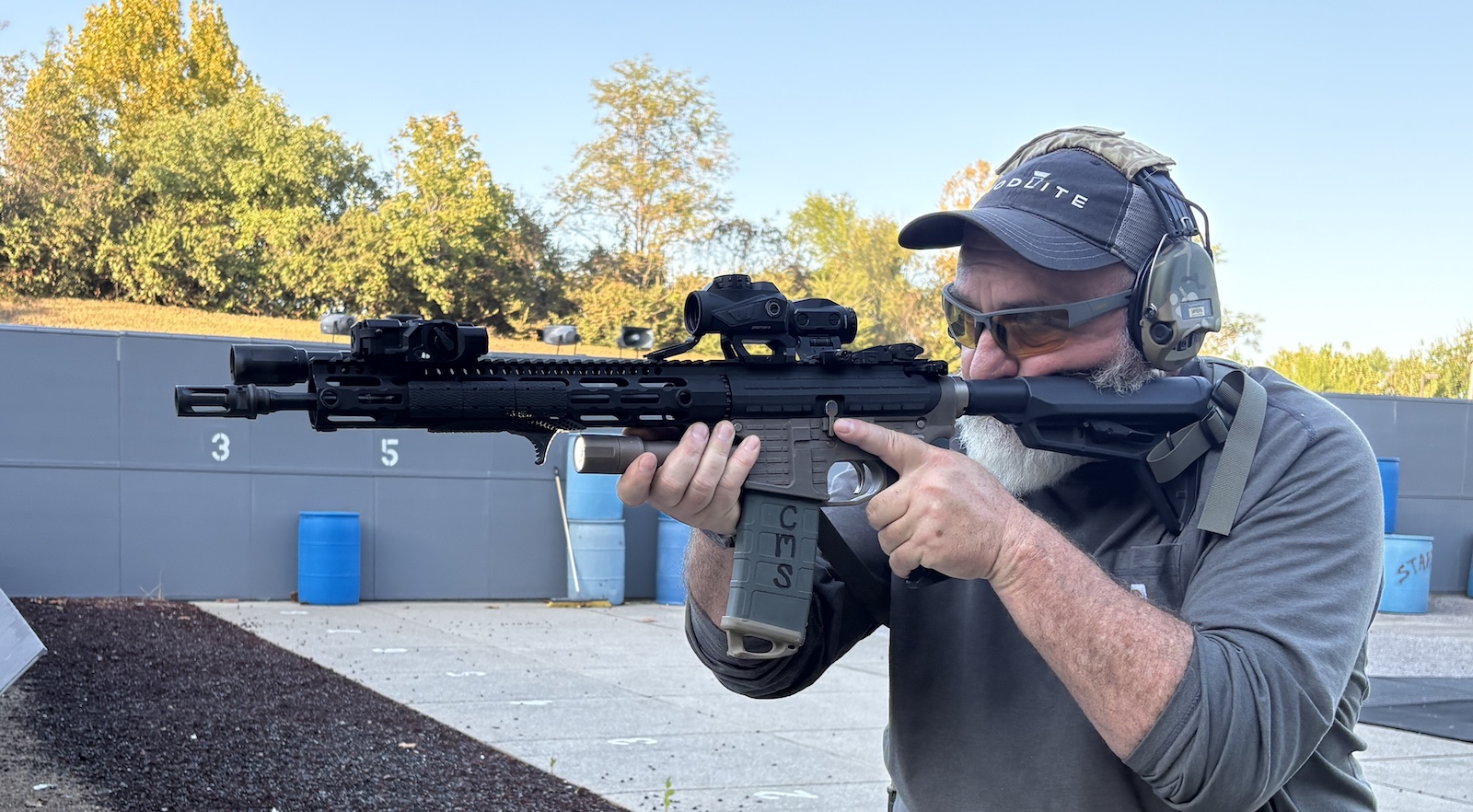
Bolke working failure drills.
Recently, the pros and cons of Failure Drill again became a topic of discussion in the firearms training space. I have a good understanding of the subject.
Instructor Development
In 1989, I was assigned to my agency’s SWAT Team as a Firearms Instructor. I was young and knew that, while my level of firearms knowledge was well above that of anyone in my agency, I was underqualified for the task. To fix that, I called a friend in the firearms industry – Ron McCarthy. Ron was a legendary member of the LAPD SWAT team and SWAT’s Godfather. Ron told me he would handle the situation.

Larry Mudgett, one-half of the pair that evolved the Mozambique into the Failure Drill.
Arrangements were made for me to spend time with their firearms cadre, specifically Larry Mudgett, to learn how to conduct top-level firearms training for a tactical team. Mudgett is one of the finest firearms instructors this country has ever produced. I was blessed to have him and others build my foundation as an instructor. Because most of my questions were dumb, the answers often came in the form of an intense disquisition. I drank through a fire hose that week.
In The Beginning
An important takeaway was the Failure Drill as a core skill. This is done with two rounds to the body, as an Accelerated or Controlled Pair, followed by a single head shot. The article will cover how the Failure Drill came about, its terminology, how it is conducted, and why it is important.
This method of resolving a lethal force confrontation came from an encounter in Mozambique during the terrorist bush wars of the Seventies. Mike Rousseau was a mercenary in the War of *Independence. While armed with a Browning Hi-Power, he was attacked by a guerrilla with an AK-47. He fired two rounds into the center of the chest and lowered his pistol. Seeing that two chest hits failed to stop him, Rousseau raised the pistol for a headshot, which hit the enemy’s spinal cord, ending the fight.
After returning to the States, Rousseau told this story to Jeff Cooper, who felt it was useful. He incorporated into Gunsite’s late seventies curriculum as the “Mozambique Drill,” with credit to where it happened and Rousseau. As originally taught, after two rounds to the chest, the firearm was lowered to the ready to assess, and -if needed- firing a single shot to the head.
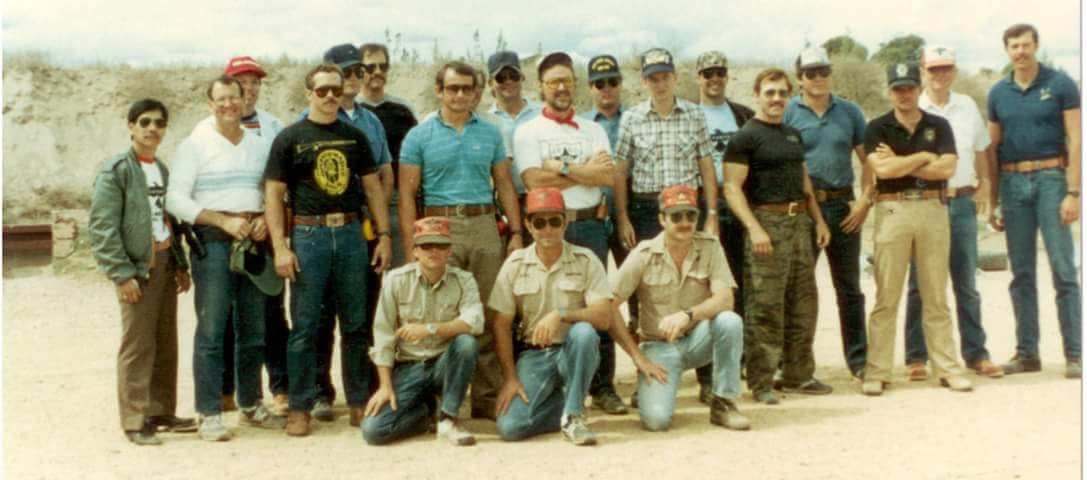
Helms and Mudgett, as well as another LAPD SWAT officer – Scotty Reitz – at the American Pistol Institute.
Evolution
In 1980, Mudgett and his SWAT partner, John Helms, took Gunsite’s 250 pistol class and were introduced to the drill. They took much of what they learned in that class back to LAPD and incorporated it into their training.

Then Detective John Helms, one of the two officers who developed the Mozambique into the failure drill.
However, the Mozambique drill had two significant issues. First, the name. A technique involving intentional head shots by officers would not fly in Southern California with that name. Second, neither believed that lowering the firearm to assess if the body shots worked was appropriate for law enforcement. It was both risky and unnecessary.
Both believed one only needed to see if the suspect’s head was behind the sights or not to know if the body shots worked. This changed the technique to firing the two rounds to the body, then driving the sights to the head and only taking the head shot, if necessary.
To address both issues, they re-named it “Failure to Stop”, or Failure Drill in its current form. This was explained to administrators to deal with suspects when shots to the chest failed to stop them because of body armor, drugs, or other reasons. After implementing it within LAPD SWAT, Mudgett and Helms took it back to Gunsite. Since other instructors had expressed the same concerns, they were incorporated into the curriculum.
While the Mozambique name has often become synonymous with the Failure Drill, they are not the same.
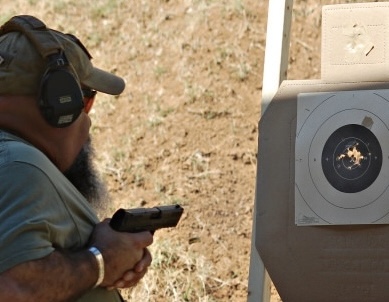
The author demonstrating a Failure Drill that began with retention-position shots.
How It Is Done
An Accelerated (or Hammer) Pair is two shots fired off the initial sight picture. This is done from arm’s reach to no more than five yards. If farther away, a Controlled Pair is fired via sight picture, shot, sight picture, shot, final sight picture, and used from three yards and beyond.
While the reason for using just one sight picture is often explained as the shots are fired so fast that a second flash sight picture cannot be seen. Statements like that are false, and constantly repeating them tells your students they can’t see and verify their sights. Even when shooting doubles, you can see your sights without visually fixating on them.
The real reason we do not seek a final sight picture after a Failure Drill’s second body shot is that it’s like shooting multiple targets. When doing that, we move our eyes first, and the gun follows. Here, shooting the second shot off the initial sight picture allows us to shift our eyes to the head. If we see it, we have already assessed and processed what we need to see. Now, it is a matter of waiting for visual confirmation of sight alignment. Then a deliberate shot is delivered to the head to solve the shooting problem.
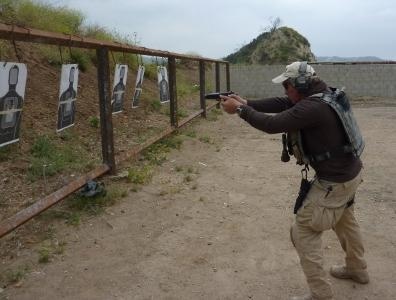
Reitz continues to teach the failure drill as Helms and Mudgett developed it.
Minimizing Numbers
Immediately directing one’s eyes to the suspect’s head has another benefit. It can reduce the overall number of shots fired in an event, which, in the current environment, can be a very good thing.
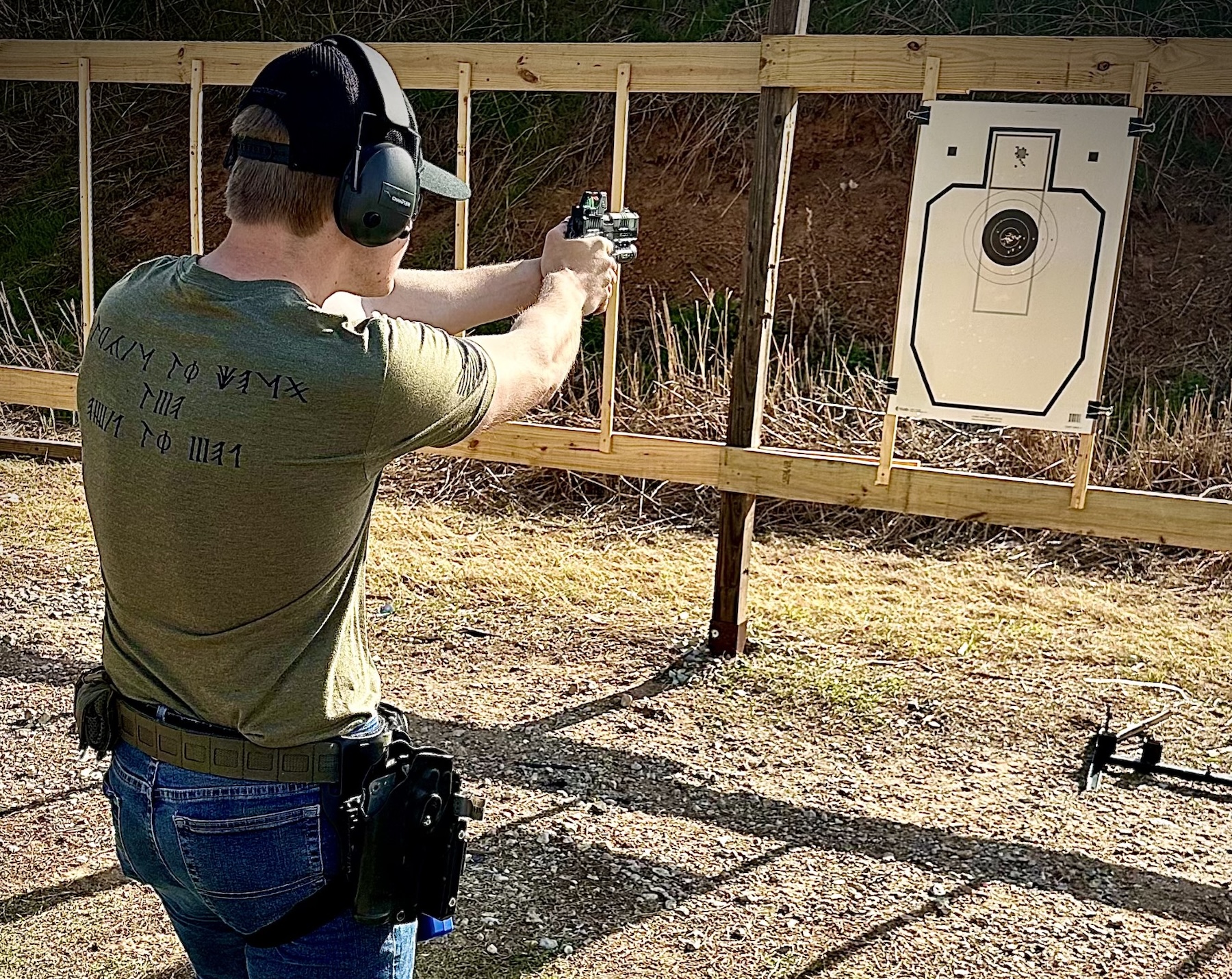
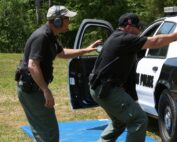
A currently serving police officer working on the mechanics of the failure drill.
Benefits
After a few years of using the failure drill with realistic time standards and accuracy demands, my SWAT officers performed exceptionally in field shootings. They shot at over 90% in the field, while differently trained patrol officers shot at 17%. This was consistent with the results from LAPD’s specialized units and others who used the same methodology in training. The benefit of heavy emphasis on shooting failure drills is that the process becomes almost subconscious. They also solved difficult hostage incidents in patrol with single head shots. This resulted in low round count shootings and no criminal or civil liability in the 9th Circuit Court.