
 (+7 rating, 9 votes)
 Loading...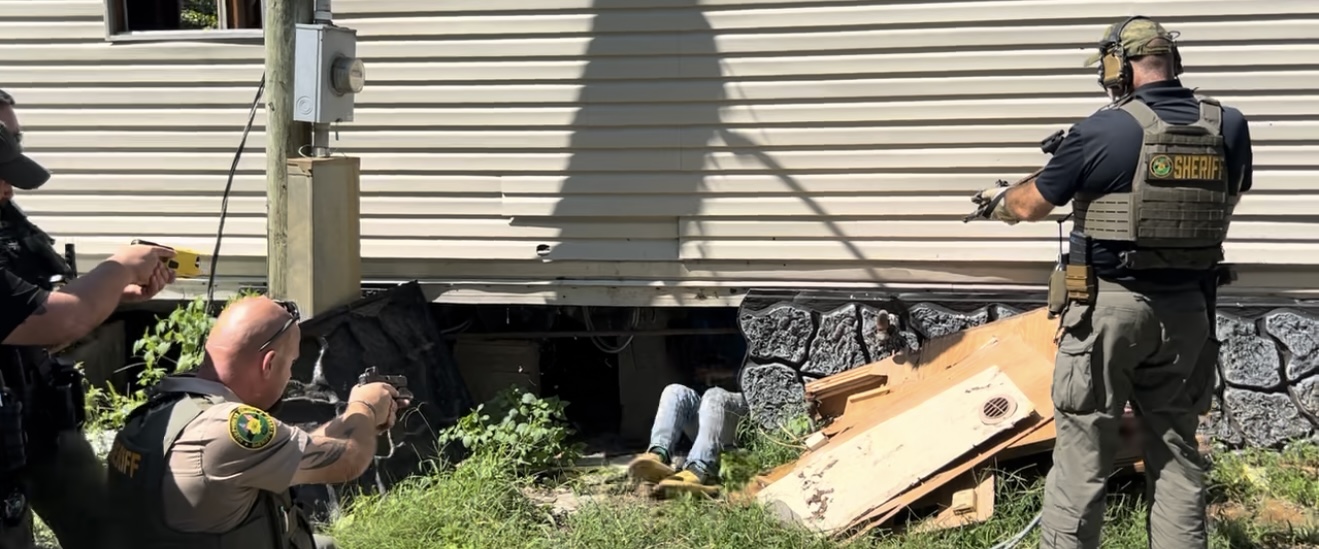
Screenshot
Small departments are the norm. How do you provide the ongoing, recurrent training every cop needs?
The best number I have seen indicates that there are over 18,000 law enforcement agencies in the country. Police departments, sheriff’s offices, state police, parole/probation, and specialized agencies. It becomes interesting when you examine the actual number of officers, which varies significantly. For this article, we will use 720,652 full-time officers, as of circa 2023, according to Statista.com.
Diving into those numbers and data on populations, you quickly discover that large agencies are not the norm. Pretty small ones are the norm.
This article will examine one solution for providing competent training to officers in smaller agencies.
70%
The Task Force 70 Foundation is the culmination of years of thought on this issue by John Chapman. He started in the US Navy, serving in the fleet, before becoming a cop. Chappy worked at smaller agencies in California, Ohio, and, most recently, Tennessee. He has had assignments in patrol, training, SWAT, and investigations. Along the way, he ran LMS Defense before working at EAG Tactical and Forge Tactical.
With those numbers, Chapman found that seventy per cent (70%) of them serve populations of less than ten thousand residents. That’s done by about 540,000 of the officers out there. His best educated guess is that most of those agencies are working with fewer than twelve officers, more like 6-8.
How do you develop competent, knowledgeable instructors for the high-risk skills? What about scheduling recurring training?

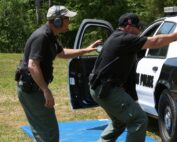
Attendees at one Mobile Training Team course run by the Foundation.
Standing Up The Foundation
Seeking answers to these problems led to the establishment of the TF-70 Foundation.
Along the way, John began interacting with Hillsdale College, which is a private school best known for two things. One, not taking any money from the federal government. Second, it focuses on the US Constitution.
With guidance and advice from school staff, Constitutional policing became a guiding principle of TF-70.

The physical design of the Foundation’s campus.
Components
There are three core components to the Foundation’s efforts.
The first is the Training Center, an onsite, residential, one-week training program. It focuses on enhancing the skill levels of officers from smaller agencies. A small cadre of vetted staff instructors will teach there.
Next is the Patrol Institute, a think tank focused on identifying problems and developing solutions for uniformed officers in those agencies. A larger number of current or former officers will be associated with the Institute. Their goal is to produce peer-reviewed research and white papers that can serve as a foundation for policy and training. The intent is for these documents to withstand outside scrutiny and be discoverable, if needed, in the legal system.
Third is a mobile training team. However, rather than sending staff somewhere, teaching a class, and leaving, this will be about mentoring the agency staff. Members with appropriate, relevant expertise will spend time with the agency. Once they have identified concerns together, the mentors will assist in developing long-term training plans and policies.

Breaching – both ballistic and mechanical – is one of the five focus areas for the Foundation (PC J.W. Ramp).
Class One
Taught onsite, the first class dives into the areas of Constitutional Judgment, applied marksmanship, both mechanical and ballistic breaching, medical, and tactics.
The Constitutional Judgment part is not case law restated. Rather, it focuses on what the Founding Fathers intended and how to apply it in the present moment. A “commander’s intent” version, if you will.

The Constitutional underpinnings to the Foundation’s work come from Hillsdale College’s classes.
Marksmanship is being addressed because in a significant number of agencies, individual officers are only shooting fifty rounds per year. Qualification gets mistakenly prioritized over real training. The goal is to provide a shooting program they can take back and implement.
Analysis of numerous events has shown Chappy that breaching is a repeated failure point that becomes a significant issue. It will be covered from a patrol perspective.
Regarding the medical block, it is assumed that most officers have received training in Stop the Bleed and Tactical Emergency Casualty Care (TECC). What they have not had is the application part, especially not “under fire.” This will address it.
Finally, tactics. The most common active shooter courses focus on tactics for that problem, rather than on these principles that work across the spectrum of events. Specifically, they are looking at those that can be easily retained and then disseminated.
John told me the goal for class one is tactically proficient patrol officers who can work within the Priority of Life while help is coming – rather than sitting and waiting.
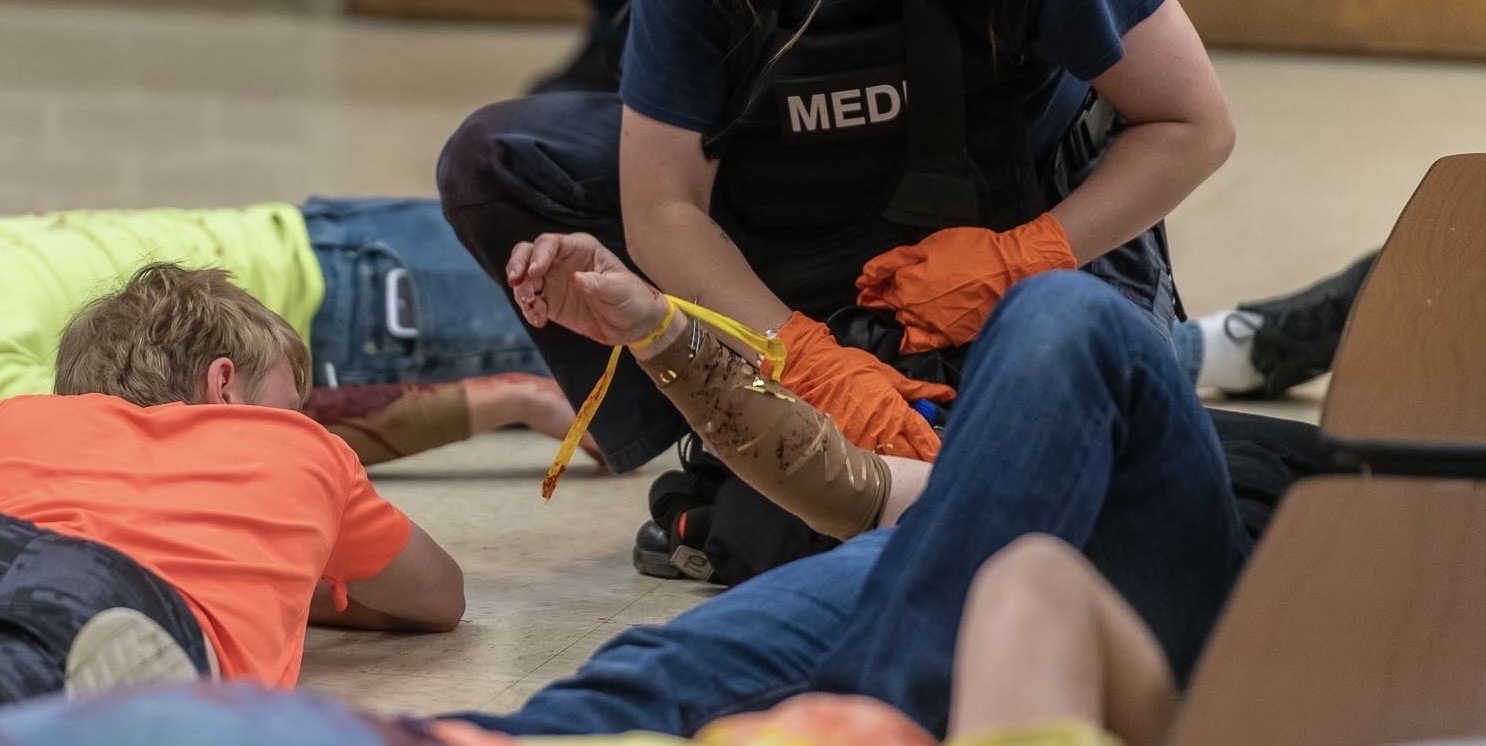
Once taught, tactical medical skills need to be reinforced under pressure (PC – J.W. Ramp).
Class #2
The second class builds on the material from the first class. Focusing on the hostage rescue skills needed by patrol officers. Why? These events are frequently resolved within 90 seconds of patrol arrival. The vast majority end due to in-person negotiations, although a few require the use of force to resolve them.
Money is always a concern for training, especially for smaller agencies. The officer’s agency will have to cover most of the cost of travel to and from. The Foundation will cover tuition, ammunition, lodging, limited travel, and most importantly, employee backfill.

Officers need to be trained with the equipment that they have, whether issued or personally owned (PC – J.W. Ramp).
Funding
After guidance from Hillsdale College faculty, Joh informed me that TF70 was established as an actual non-profit, rather than as a Non-Governmental Organization (NGO). As a result, they are looking for donors to support this effort.
(Note: If you are a working cop, invest in your training)
Existing (and future) big donors are covering staff expenses. They are looking to develop a significant number of monthly donors to cover the remaining costs. Larger sponsors have agreed to recognize smaller donors with material items that can be kept or passed on to agencies.

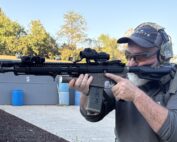
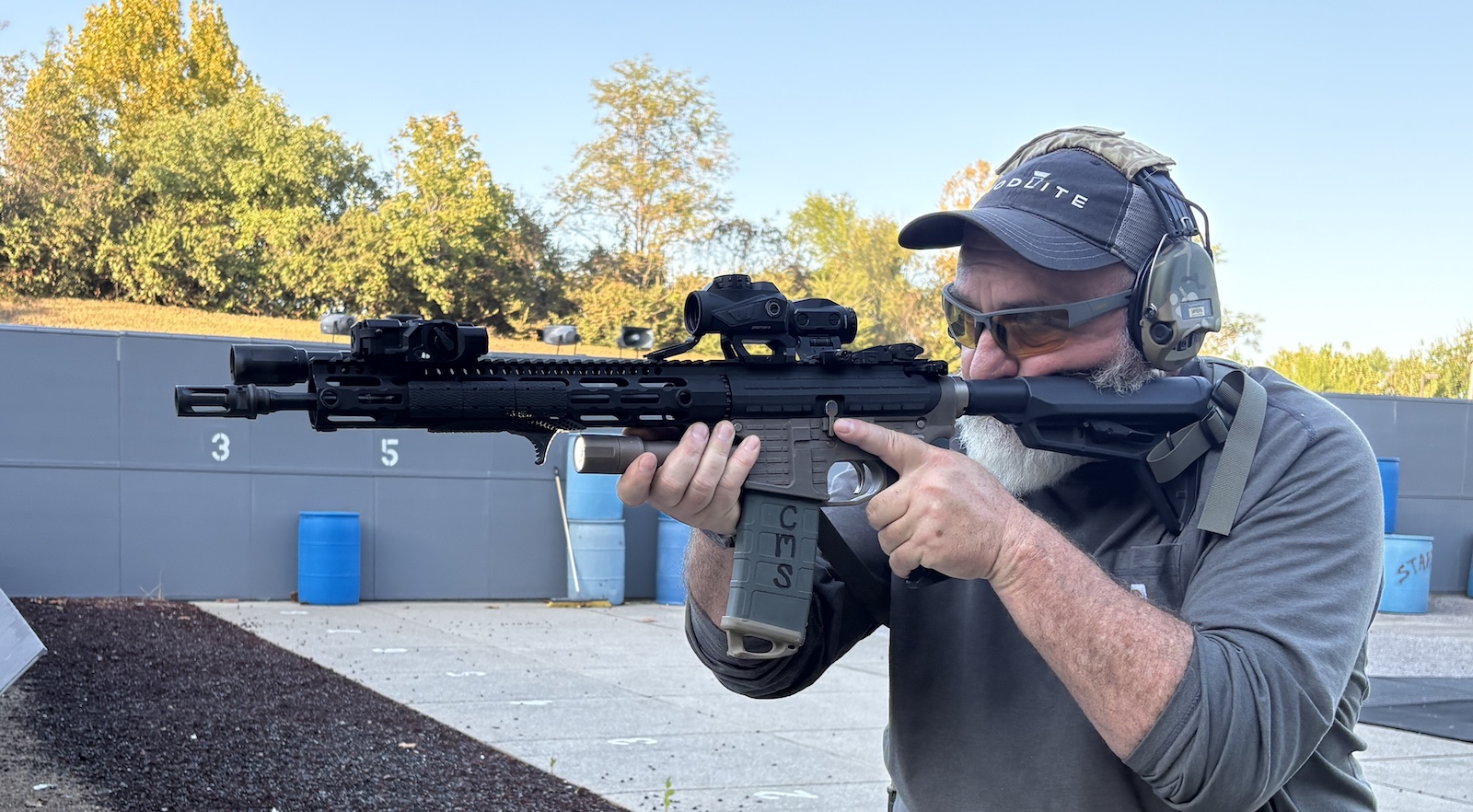
Chapman is demonstrating the tactics part in the Alliance, OH PD shoot-house. He’s using a BCM carbine and a TangoDown magazine.
Final Thoughts
The goal of the TF70 Foundation program is to fill an identifiable need – training officers in small agencies that lack the necessary resources to provide the training themselves. A concurrent goal is to mentor and set up those officers for success when they return home. The Foundation wants them to push the training out to others.
Collectively, “we” need to ensure better, justifiable, and competently presented training for officers working at the smallest agencies. TF70 is a method for doing that.