
 (+1 rating, 3 votes)
 Loading...
vectorstock_5173408
(PC - VectorStock)
“I’m going to use a number 2 guard on your beard.”
That was my barber, Audrey, yesterday when I was getting a haircut and beard clean-up.
When I realized she was thinking out loud, rather than telling me, it reminded me of training, of teaching.
After a laugh, I told her she had just reminded me of teaching stuff. And that it was funny to have that happen there.

A window and a corner? Not much to talk about, right? Actually, there is a lot to verbalize.
Development
I take no credit for the following method or technique. Somebody far more knowledgeable than I had to have passed it on. And I don’t even know when that would have happened. If I had to guess, it could have been my field training officers, maybe the cadre at Survival Shooting Instructor, or the staff at the first Simunitions FX class I took.
We have all been in a stressful (to us, at least) situation while our brain was going a million miles an hour. Right? I would struggle with how to slow my thought process down enough to make sense of what was going on.
Do I think slower? Or do I talk slower? Wait, I cannot talk anywhere near the speed of my brain. (nor, as I repeatedly re-learn, do I type at the speed of my brain.) If I can slow my thought process down to something near the speed of speech, I can process at a better speed.
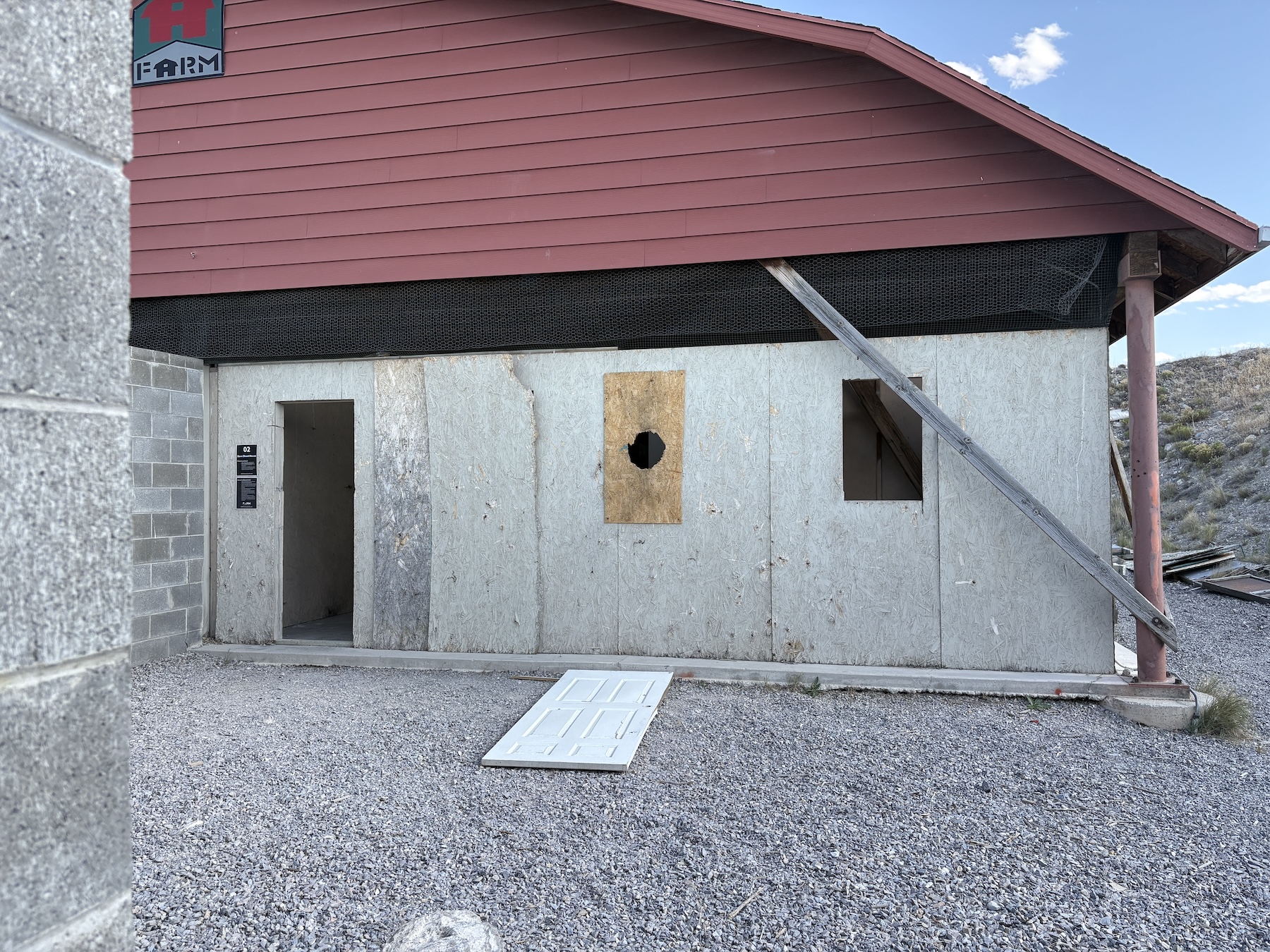
Now, it’s a corner, two windows, and a door. Verbalizing your thought process and planning can help those working with you.
Where I Got It
The reason I give my field training officers at least partial credit is for teaching me how to handle calls as a baby deputy. What type of call are we going to? High priority or low? Where is it? How are we going to get there? If conditions change en route, what alternative routes can we take? What kinds of things will we need to do as we approach? What about when we arrive?
Hearing those verbalized by my FTO helped me prepare to do those things as I took on more of the workload.
I can recall a multiple-victim attempted murder scene I handled a short time into my career. Every few minutes – until a sergeant showed up – I talked myself through what had been done and what I still needed to do.
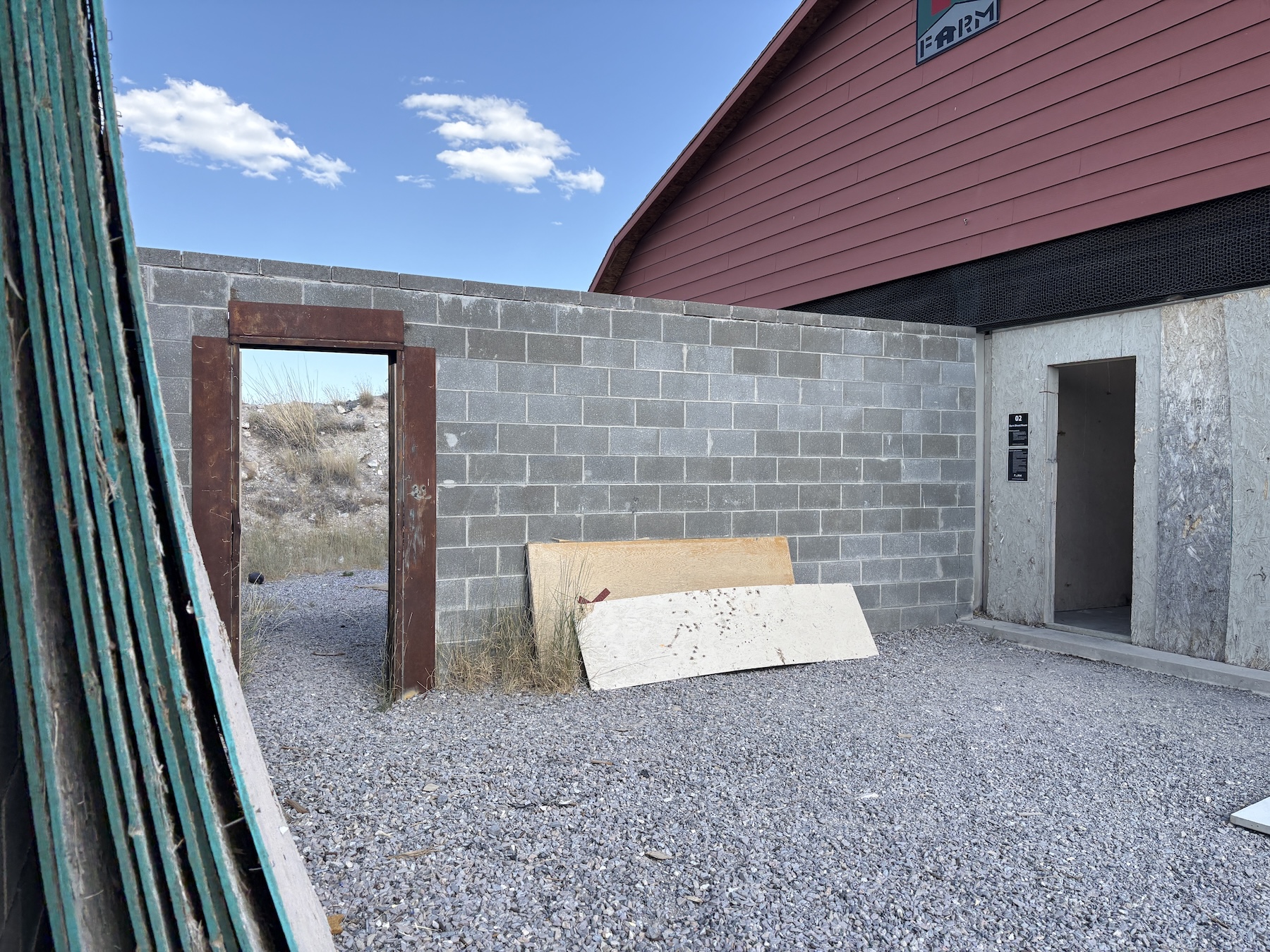
And now a second door is in play with the other architectural features.
Finding A Need In Training
Fast forward several years, and I had begun teaching defensive shooting and tactics in the commercial sector. That teaching often included taking students through live-fire simulators, both indoors and outside. A note – in most of these classes, the students were going through the runs solo.
The anticipation of the experience often led to some hyper-aroused students. Students whose minds were racing faster than a new trainee on a “good” call.
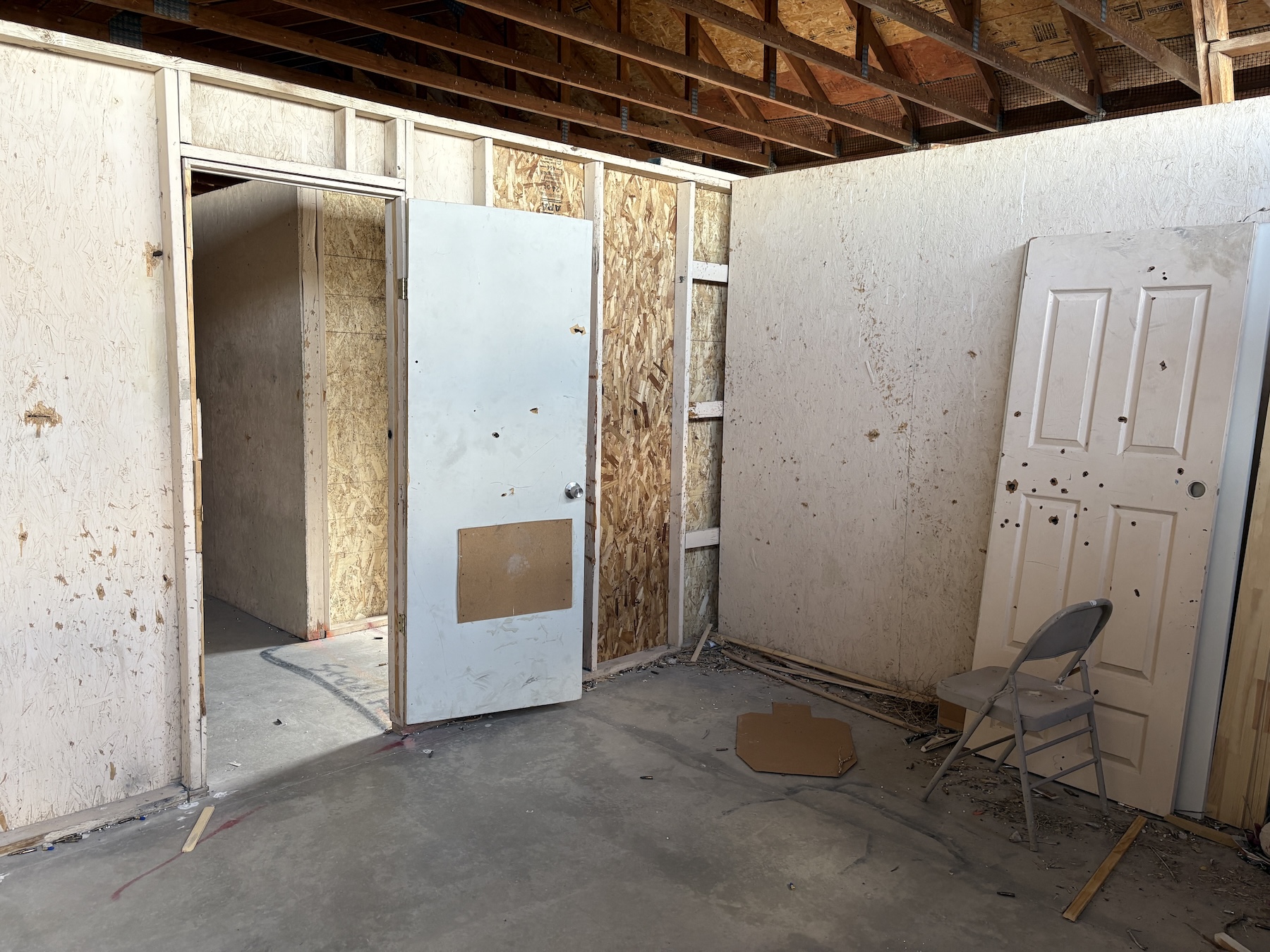
Moving through that first door, and here’s the room. What plan for the door and halls are you communicating?
What?
At some point, the idea of having them verbalize what they were doing re-entered my head. Hey, how about having them think out loud?
What are you seeing?
Does that door open in? Or out? Towards you or away from you?
What is my primary threat area? Secondary? Tertiary (third) threat? Now that you handled the primary, what changed?
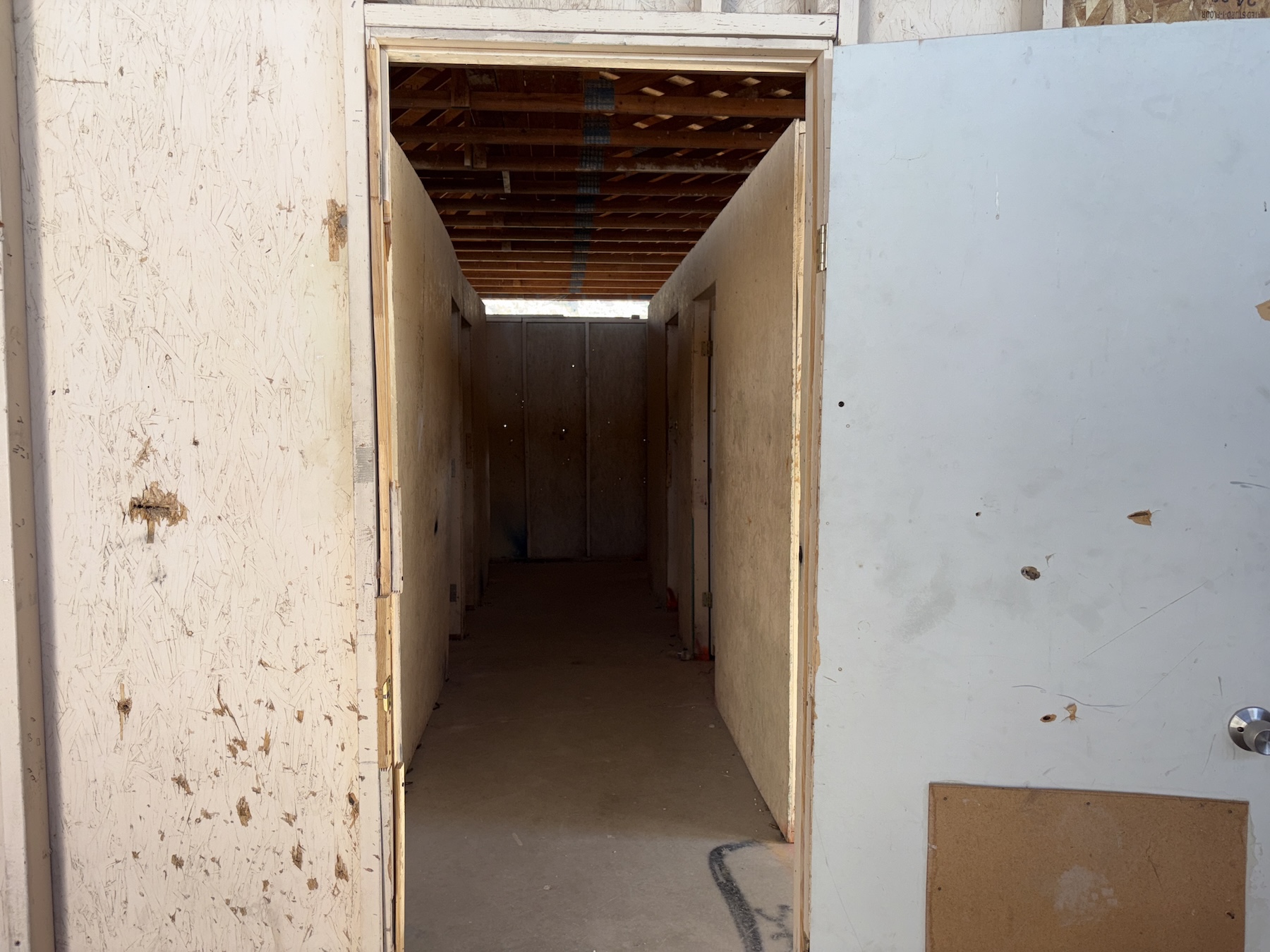
Hallway to the right, several doors on either side of the straight ahead hall, and then a “T” intersection.
How Might This Go?
Thinking of one specific indoor simulator, the thinking out loud might go something like this:
‘There is the door. I can’t see the hinges, but the door knob is on this side, so the door will open and from me.
“Bring the muzzle back and up to a retention position. Reach for the knob, keeping my arm from the muzzle. Turn the knob, open the door, and push in. I’m going to move back a step or two to stay away from the doorway.
“No people or projectiles came out, so I’m going to pie it.
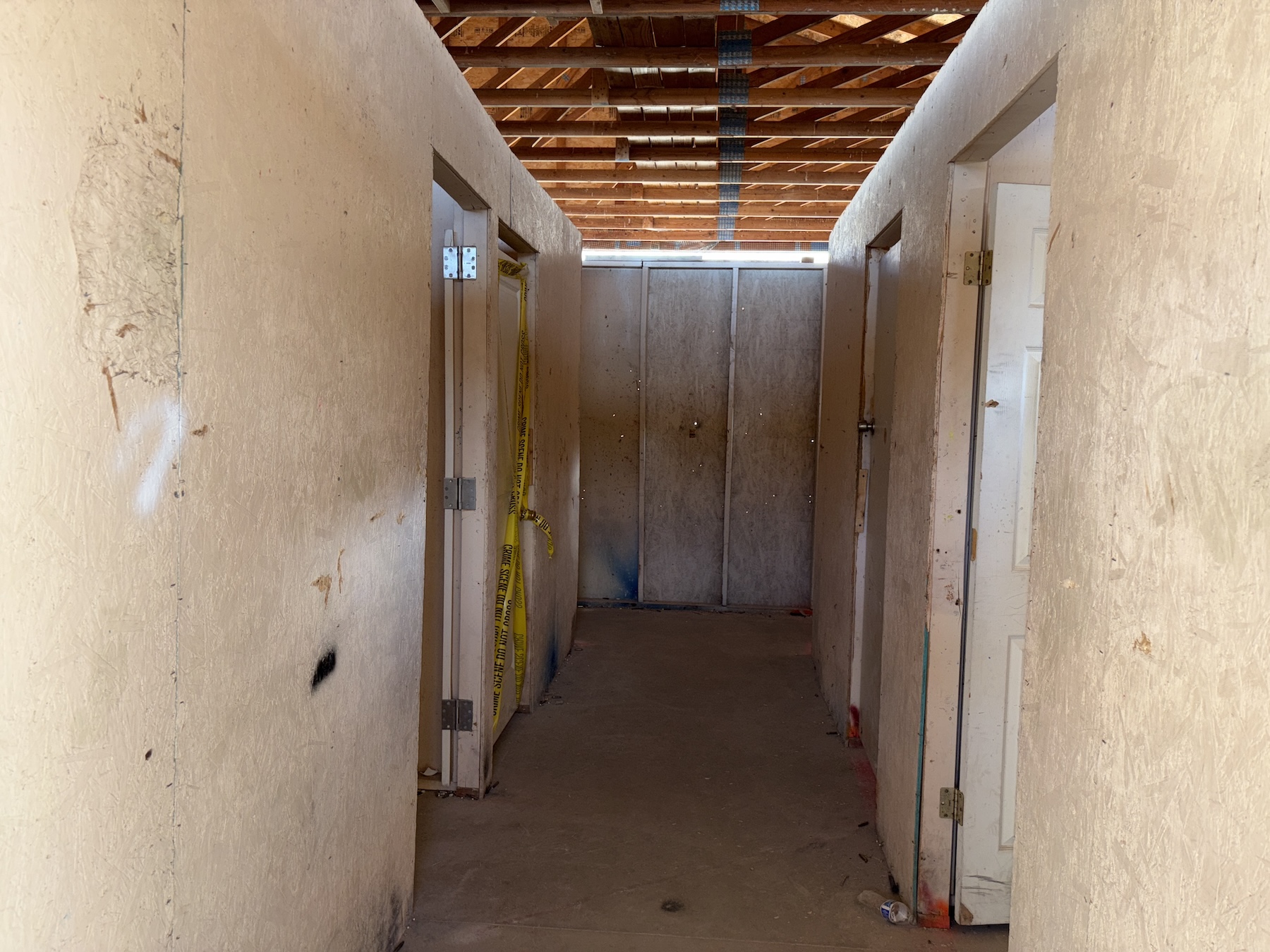
Open doors, closed doors, and a “T” hallway. How are you going to work this?
As the student pies, they’re saying “there is a hallway on the left, a door in the far wall, a refrigerator, a table, another closed door on the wall to the right, and a corner.
“I can see everything but that last corner to the right and the hallway to the left. I’ll go in to the room, clear that corner, and then check the hallway to the left.”
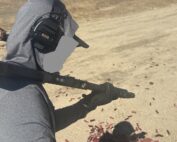
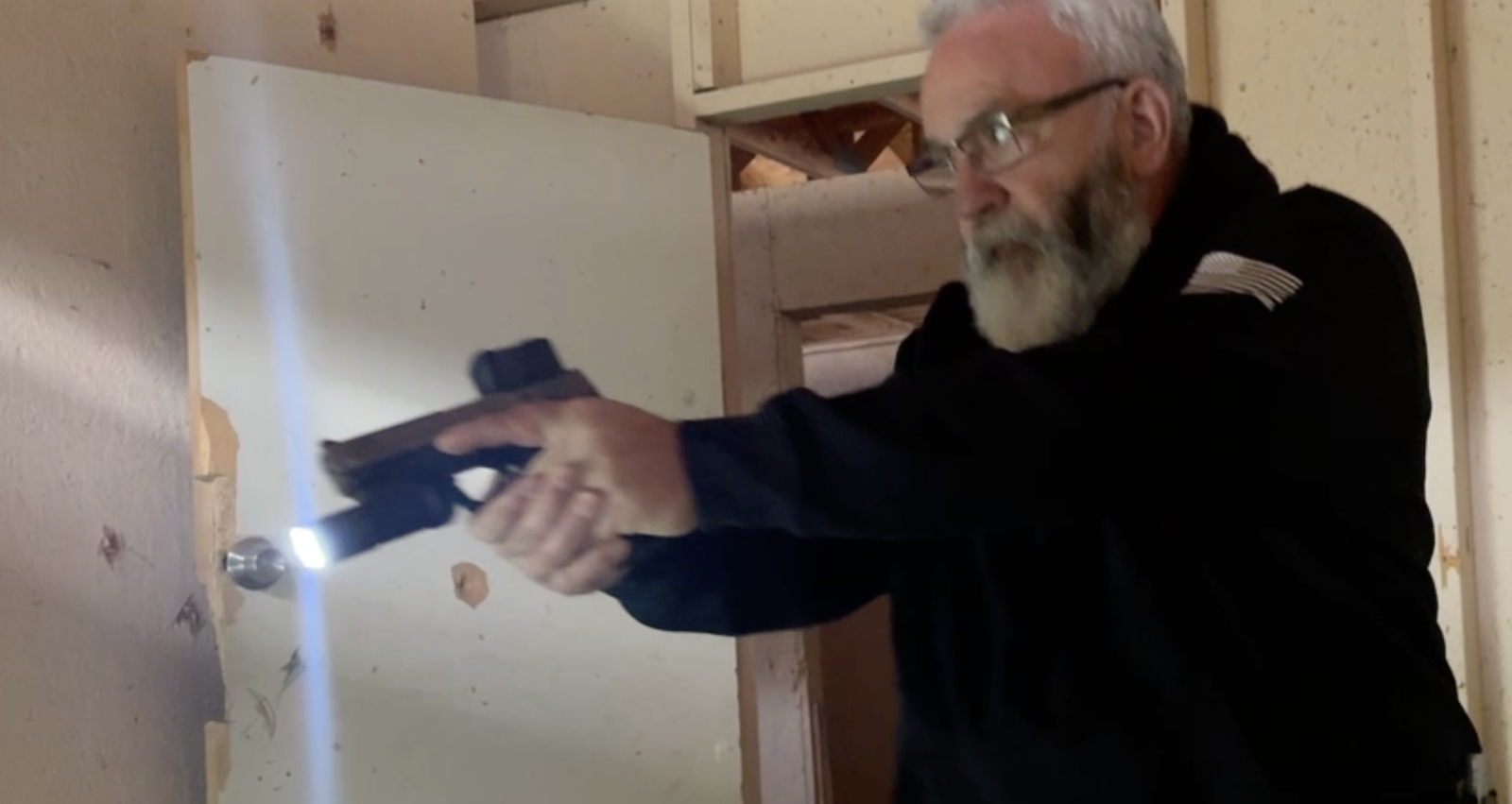
And, no, the paragraph above doesn’t match the photos.

I’m going to head down the hallway and work that right-hand corner.
Who Benefits?
While this is not intended for experienced individuals working in a team, it is applicable to individuals learning new skills or refining existing ones. It may be applicable to more experienced individuals who are new to a given team.
Solo room entry and clearing was the task I used for this article. However, verbalization is viable with any physical skills – driving, medical, arrest & control (or defensive tactics), and the list goes on.

Ok, turning the corner, there is one open, no, make that two open doors. Across from each other, too, so I will …
Final Thought
It is “a” way to help people working on new skill sets when the input is causing their mind to race.