
 (+5 rating, 9 votes)
 Loading...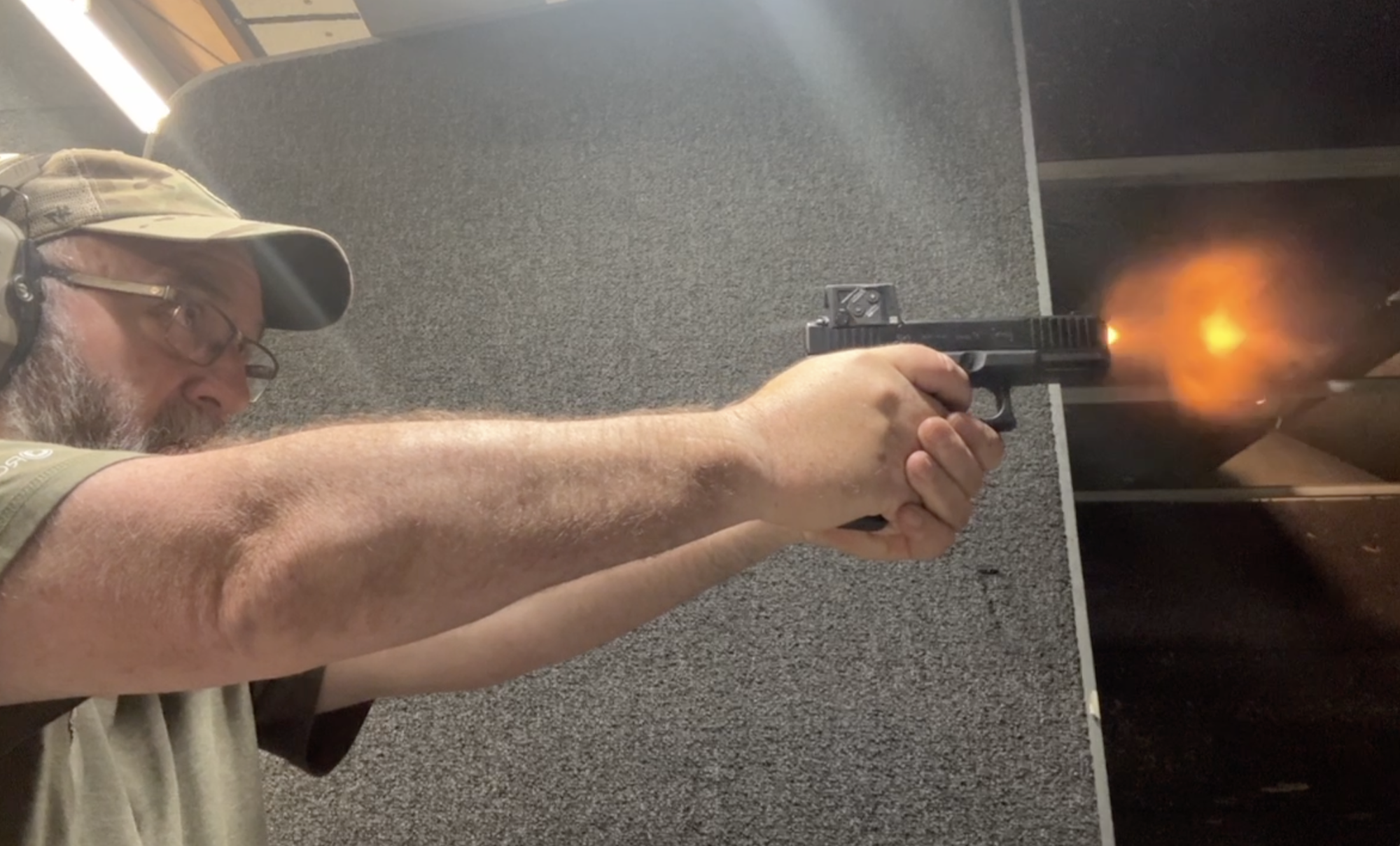
feature2025-08-03 at 8.12.15 PM
The first part of this article is posted HERE.
So, more than four months have gone by since I bought a new G-19 with Aimpoint’s COA optic at their Blue Label pricing. What have I found? What about others?
The Pistol
It’s a Glock; they are boringly reliable. If you are reading this, by now, you have likely experienced a stock Glock trigger – this one has it. I used both OEM Glock magazines and aftermarket Magpul magazines for the gun.
With about seven hundred (700) rounds through it, I noted one stoppage. That was during the last range. About two-thirds of the way through two hundred rounds, a single round failed to feed.
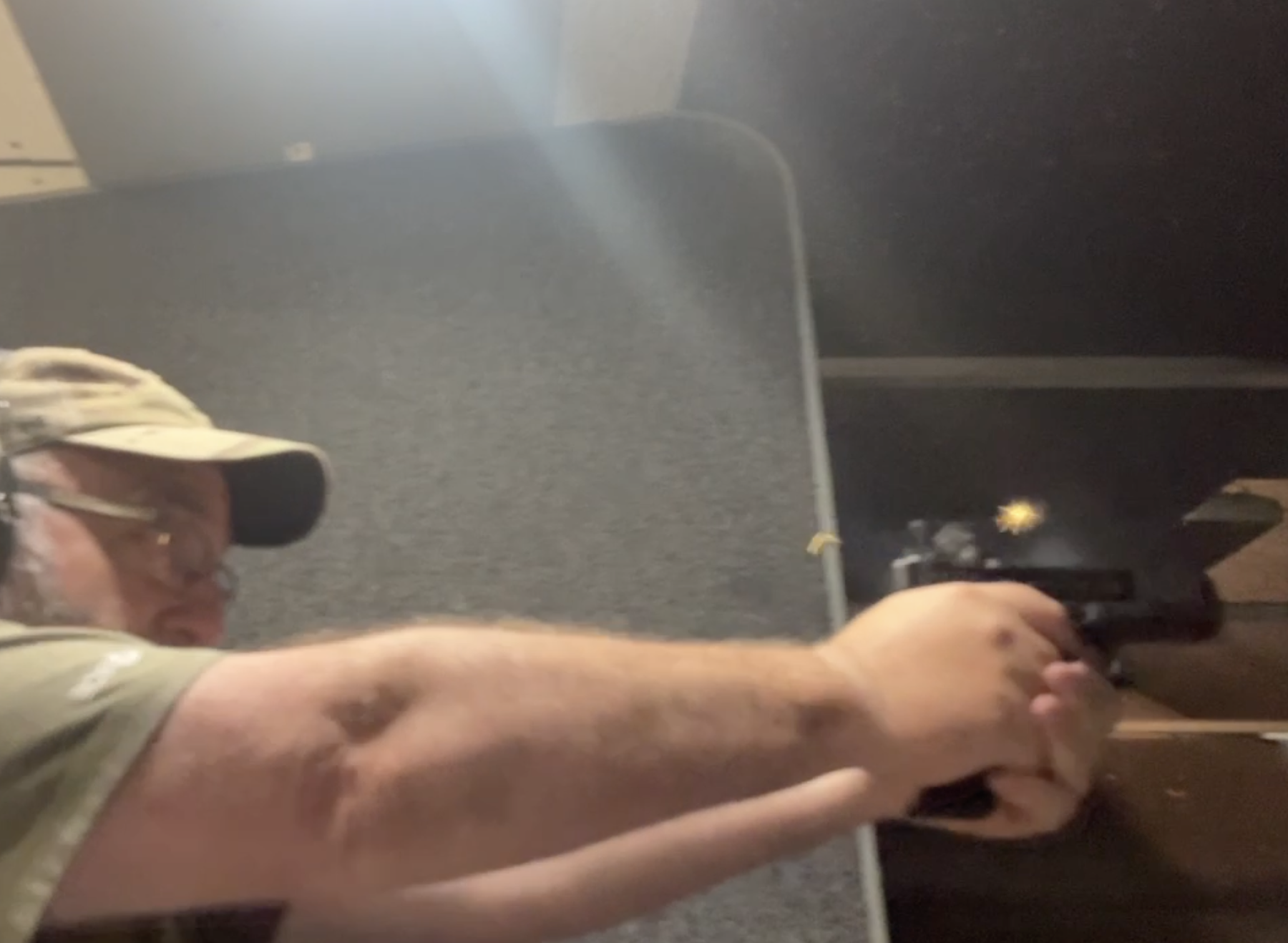
Not sure if this is two pieces of brass or not. We’ll go with two.
The Optic
As mentioned before, if you missed it, the COA is Aimpoint’s most current red dot sight. Three things seem to stand out quickly when first picking it up.
First, the housing. There is noticeably less material in the housing than the Acros or other enclosed emitter optics have. Part of this could be the new location for the battery. Regardless, people view it as improving their vision.
With the housing appearing smaller, the window can appear larger. Calipers show it to be in comparison with the Acro P2’s
Finally, there is the battery tray. Rather than being a capped cup on the left side of the optic, the COA utilizes an internal on the lower right front of the optic. One complaint, albeit an infrequent one, is that the tray’s screw is as easy to lose as that on a competitor’s optic.
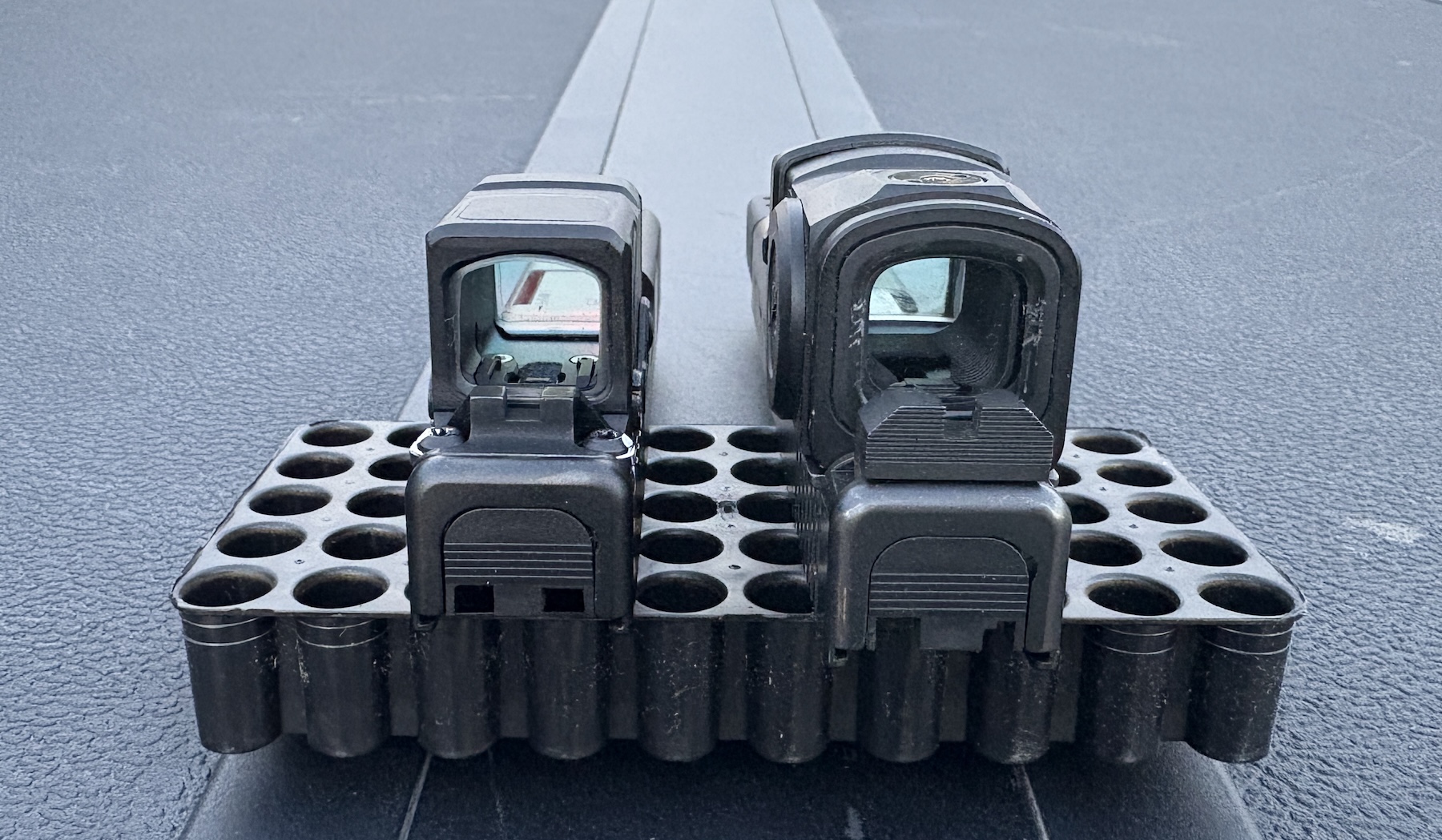
There is (maybe) a couple of thousandths of an inch difference between the COA window (left) and the P2 (right). That isn’t the difference though.
How Secure?
When I picked up the pistol/optic combination, I checked the mount for tightness. What I did not do was to unmount it, clean and degrease everything, apply thread locker, and remount it before torqueing to specifications.
Prior to the last range trip, I checked the mounting screws. One was about a quarter turn loose. The other was between a sixteenth and an eighth of a turn loose, based on my calibrated eyeballs.
After re-tightening both screws, I marked them with a paint pen. They held during the final session. Soon, I’ll remove the mount and optic to clean, degrease, and re-install it with thread locker while torquing the screws to Aimpoint’s recommendation.

The results of working random failure drills (I mean vertical transitions) at 10 yards.
Concerns
I have heard a few reports now of the battery tray screw coming loose and detaching from the optic. This isn’t uncommon with optics using a battery tray. Check it regularly and consider using a non-permanent thread locker.
The rear sight placement is solid on the Glock pistols. I will be curious to see how the COA optic works with other pistols, such as those with a loaded chamber indicator that is part of the chamber. Those designs tend to vent debris up onto the front lens. A couple of manufacturers of aftermarket plates have versions that mitigate that issue.
The engineers in Sweden seem to have cracked the code on much better battery life. My COA is still on its first battery. If you have concerns about battery life based on the Acro P1, those issues have not appeared in my COA.

No issues with the dot appearing strong-hand or weak-hand.
Drills
After my regular range sessions, this combo was shot on the last day of my pistol-mounted optics instructor class by a working street cop at a rural Washington state agency. That day has a rough round count of over two hundred rounds. His very first comment was how much smaller the housing was from previous models. The rest of his comments were positive as well.
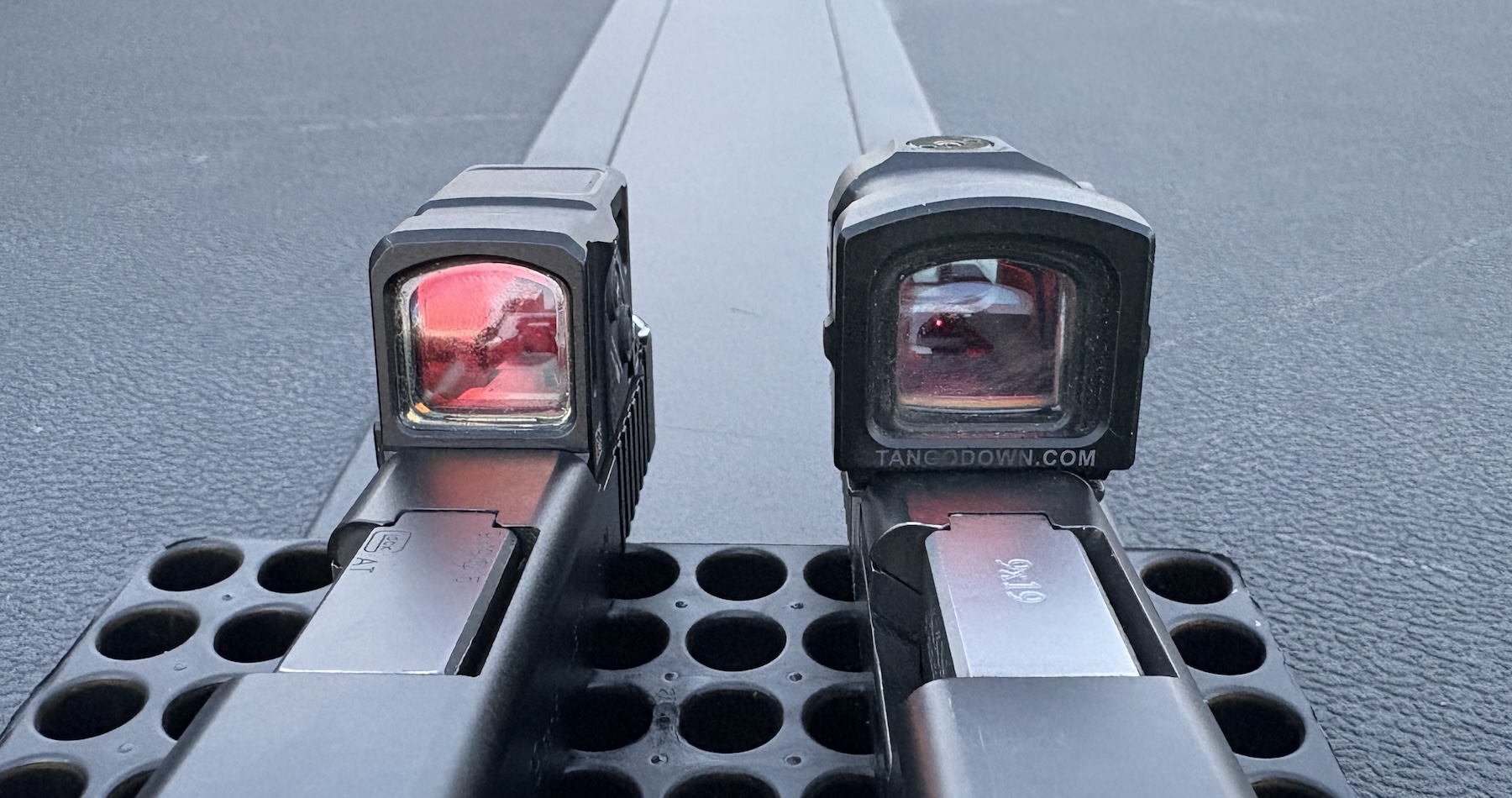
The visible difference between these is the size of the housing.
Local Indoor Range Work
I shot several singles from the ready, followed by 1-2-3-4-5 shot progressions to work on grip and dot tracking. Failure drills consisting of one, two, three, or four hits to the upper chest before transitioning vertically to the head for a deliberate central nervous system hit.
There were a few runs through what I call my 2×3 drill. Draw (or, in this case, pick up off the table) a dot-equipped pistol loaded with only two rounds and fire two shots, strong hand only. That forces a speed reload, from slide lock, with a magazine holding just two rounds, and fire those shots free style. After the second speed reload, transfer the pistol to the support hand for the last two shots. This is done at seven yards, normally shot on a B-8 target, but the upper chest area works fine. While I have been in the mid 9-second range working from the holster and magazine pouches lately, my times from the bench were 10.35 and 11.47 seconds.
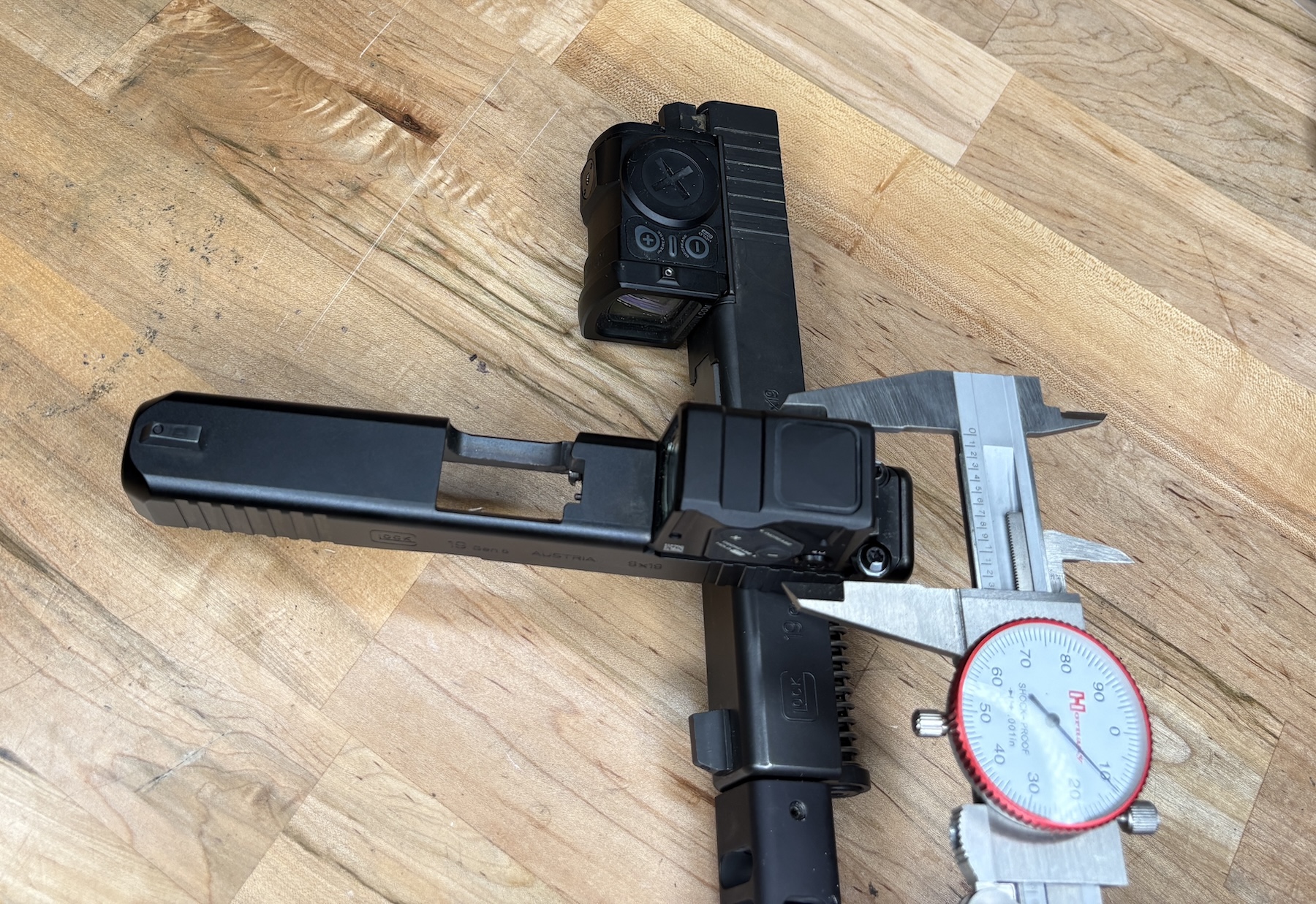
These calipers were set to external dimensions of the P2, including the battery cap. That is a difference between them.
And since a variety of starts are a thing in matches, I did several runs with an unloaded pistol and loaded magazines on the bench. Pick up the pistol and magazine on the beep, seat the magazine, run the slide, bring it on target, and shoot. I was doing those as three-shot drills with split times in the 0.39 to 0.45 second range.
This was a total of two hundred and twenty rounds. The mount remained tight during the session.
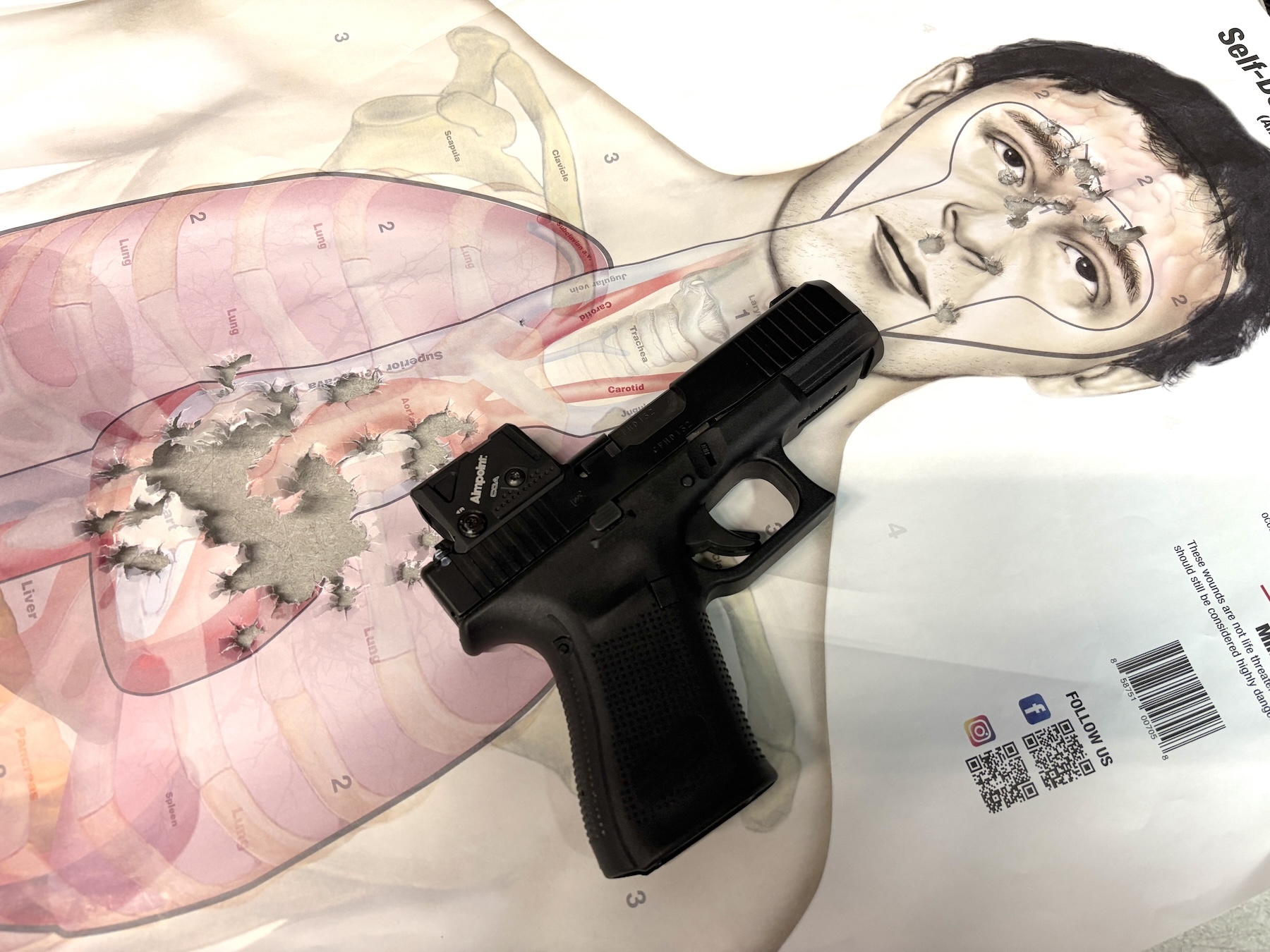
At least the last of the session. Working at 7, 10, and 15 yards. Forget about those two low ones on the head.
Final Thoughts
I’ll keep shooting this combination, and it will be a loaner in my optics classes. Hopefully, Aimpoint reaches agreements with other firearms manufacturers, and we see this cut and design proliferate in the practical application community. Despite it giving us another footprint to consider, it is a very solid option.