
 (+4 rating, 6 votes)
 Loading...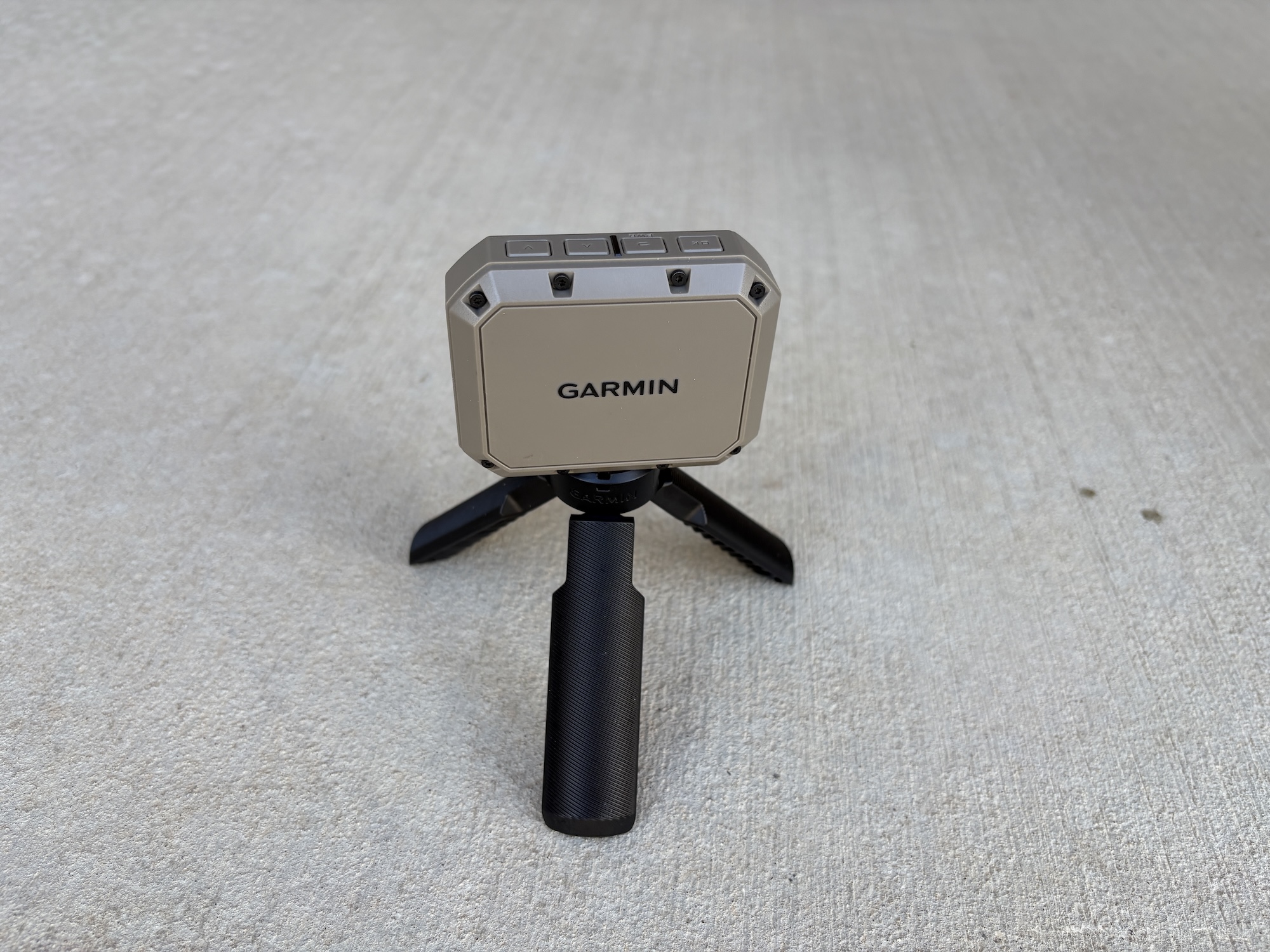
featureGarminXero_9164
chronograph /krŏn′ə-grăf″, krō′nə-/
noun
- An instrument that registers or graphically records time intervals, such as the duration of an event.
- An instrument for measuring or recording intervals of time, upon a revolving drum or strip of paper moved by clockwork. The action of the stylus or pen is controlled by electricity.
- Same as Chronogram, 1.
So that is Wikipedia’s definition; we will be talking about something a bit different, with the same name.
Ah, yes, the joys of the American English language.
OK, the type of chronograph I’m covering this week is an instrument that gives me information about the muzzle velocity, speed if you will, of the projectiles launched from a firearm.

After powering the Xero up, you select the platform you’re using.
Why?
Yes, why would I need a chronograph is the first question. The easy answer is to gather data. There are times when only empirical data, documented, will answer the questions you have.
Three concerns immediately come to mind.
The muzzle velocity listed on the ammunition box is from a very controlled setting with a barrel length that may not be consistent with what you use. You need to verify the information yourself.

The software allows you to plug in the projectile weight in grains or other ways.
Reasons
The first is for your agency’s sniper or those involved in precision rifle shooting. When you get into shooting at distance with a requirement for accuracy, you need quantifiable data that is specific to your rifle, your barrel length, your altitude, temperature, and the like. The muzzle velocity information allows you to start building your data set for windage and elevation adjustments.
Second, to identify the potential causes for stoppages. Yes, muzzle velocity can adversely impact how the firearm functions. Two specific examples from my career.
One involved organizational issues with Generation 3 Glock .40S&W caliber pistols. If you aren’t familiar, and these issues were addressed with future generations, there were functional issues when a weapon-mounted light was attached. One of the issues we identified was the changes in muzzle velocity. We identified a difference of more than 200 feet per second between our training loads and our duty rounds. That was significant because we were not seeing those stoppages with our practice ammunition.

Early on, you’ll select the muzzle velocity, and it allows for a broad range.
Another involved a 00 Buckshot load that ran great in pump-action shotguns. However, it frequently failed to cycle in a semi-automatic gun. When we chronographed that load, it was about 100 feet per second slower than what the manufacturer claimed.
Third, acceptance testing. As an agency, you should have specifications for the equipment you buy. Even if it is only “… must perform within the manufacturer’s stated specifications.” If the firearm or the specific load does X, then you need to confirm that.
For example, some 5.56mm (or .223) caliber rounds are velocity dependent to get the desired wound profile. If the round is traveling slower than that, you might get an ice pick effect rather than the desired wound cavities. (Yes, the terminal performance of other bullet designs is not velocity dependent.) The use of a chronograph will aid in identifying and addressing these concerns.

It will even tell you where to position the muzzle in relation to the chronograph.
Design Evolution
The chronographs “we” use with ammunition and firearms have evolved over time.
The first ones I was exposed to were box-shaped with a V-shaped stand at each end; occasionally, those screen-holding stands were covered. The shot had to pass through both V stands to be recorded. The LED display was attached to the device directly or via a cable. Those still serve us well and have the advantage of working down range, say, adjacent to the target. I used these to develop hunting loads.
Next up was the larger Lab Radar design. Pointed down range, it read the round traveling away from it. Several friends have very positive thoughts on this design.
Garmin Xero C-1 Pro Chronograph
For a few years now, Garmin has been providing its very portable and relatively inexpensive solution.

Using it to gather data in a precision rifle class. The screen is showing you what number shot it was, the muzzle velocity, and the minimum/average/maximum numbers to that point, too.
Earlier this year, I had the chance to buy one of the Xeros. And I am glad I did. I used it to develop load data in the introduction to precision rifle class I took (HERE). Interestingly, everyone in the class was using their own Xero.
The Xero is mounted on an integral tripod that ships with it. Together, it is a bit taller than a 17-round 9mm magazine. The box that contains the sensors and the screen is just a hair over an inch thick. It is roughly a third of the size of an Apple iPhone 16+ screen.
With the display screen towards you, there are four buttons atop the Xero. From left to right, they are OK, Power/Return, then Up and Down adjustments. On the left side is a rubber flap sealed USB-C charging or data port.
Battery life is indicated as six (6) hours or two thousand shots. While I have not hit that number of rounds, the battery has powered through parts of multiple half-day range sessions before needing to recharge it. And I was able to recharge it in my truck during the drive to the range.

The Xero retains the data from your previous sessions – until you clear them out.
Using It
You will turn the Zero on with the power button. Three options will appear on the screen – New Session, History, and Settings, along with the battery level.
New Session lets you choose from rifle, pistol, bow, air rifle, and other. Press OK for the one you want. With any of the firearms, you choose the rough muzzle velocity and can add the projectile weight. The Xero will show you where to place it in relation to the muzzle.
History lets you revisit the data from your previous sessions.
Settings address units of measurement, what is displayed and how, along with spread and deviation, kinetic energy, and power factor.

One of the Shot List’s from previous range sessions. It shows what number it was, the muzzle velocity in feet per second (FPS), and the deviation from the average MV.
Final Thoughts
Every organization utilizing firearms should have at least one chronograph available, for any or all of the reasons mentioned above.
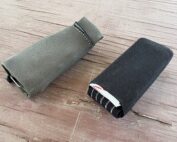
The aftermarket industry offers several accessories for the Xero, including carry cases that go beyond what Garmin sells. Retail pricing is between $547.90 to 599.99.