
 (+7 rating, 9 votes)
 Loading...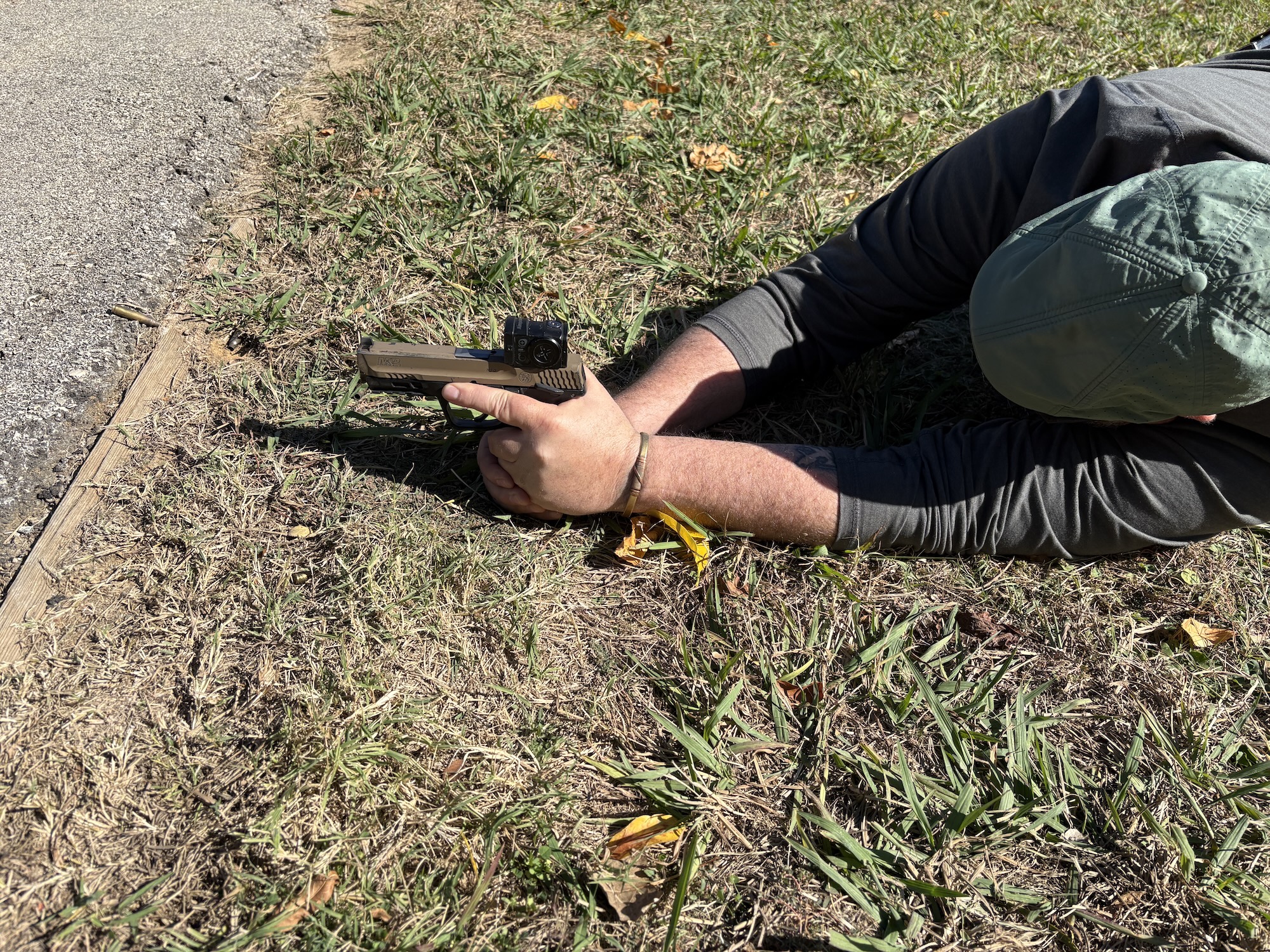
Feature_2064
I get it. Standing upright while shooting makes everything easier. You can move forward, backward, and sideways. Turn around. And lower yourself. Unfortunately, standing upright is not the most stable position. Nor does it radically lower your profile.
Sometimes, though, you must go to the ground. As mentioned above, stability and a reduced profile are two benefits. Assuming it does allow you to short underneath and around low pieces of cover. There are drawbacks as well. It can take some time to get into the position. And there should be little, if any, doubt that it will take longer to get out of the position and into motion if the event requires it.
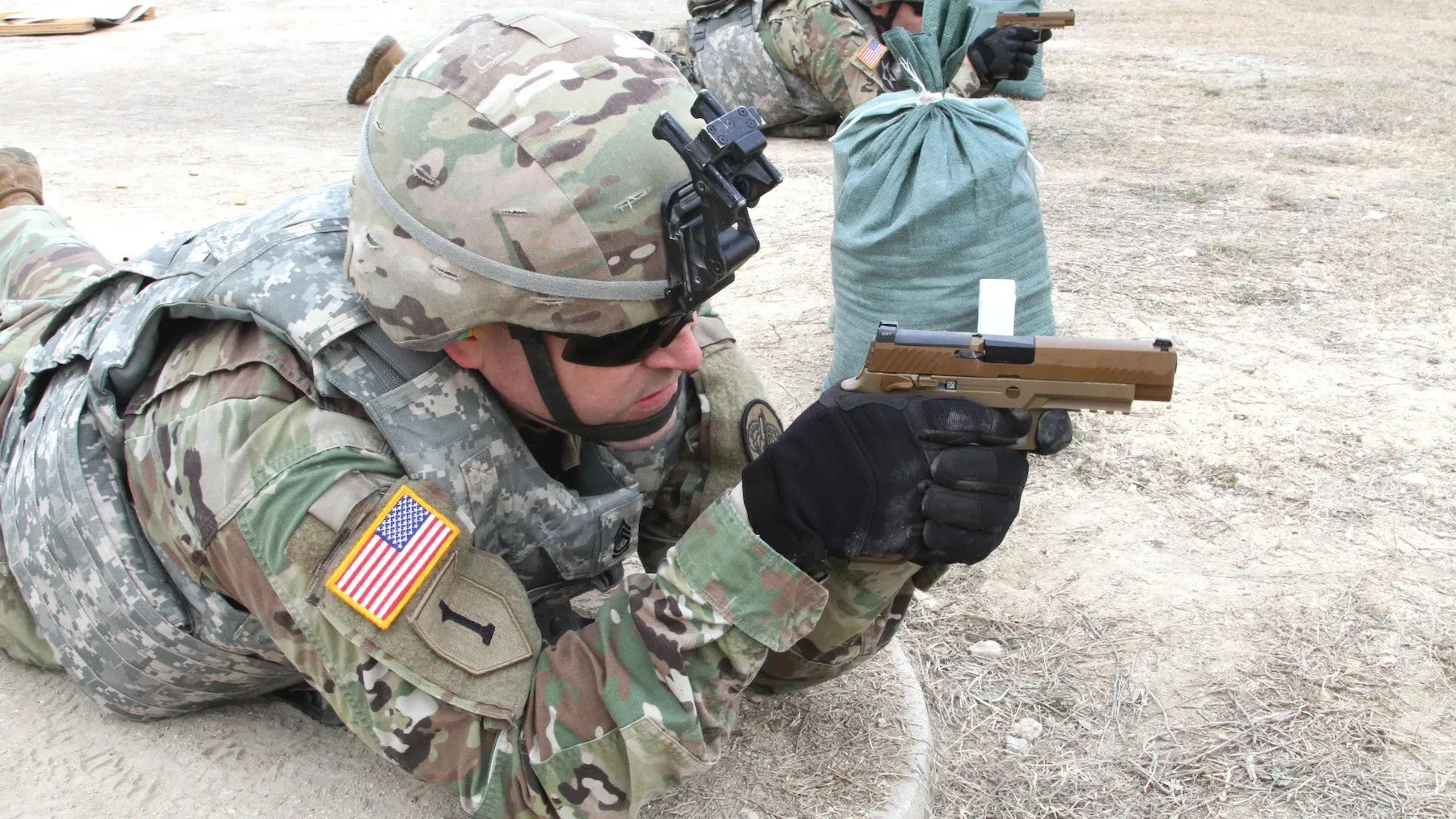
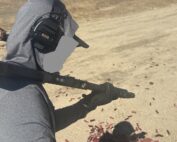
Nope, not this! Unfortunately, this version of the prone is taught too often. How many drawbacks can you see? (PC – DOD)
An Older Version
Before I discuss a more stable version, let me touch on an older one. When working from it, the shooter is pointed nearly (if not completely) straight on towards the target, the threat. Feet are shoulder-width apart and splayed outward while the hips are flat on the ground. Both elbows are on the ground, with little if any of the rest of both arms making contact with the ground. The pistol is held with both hands and brought up to eye level. Nearly all the support comes from one’s musculature. It is uncomfortable at best. A helmet and armor will contribute to that.
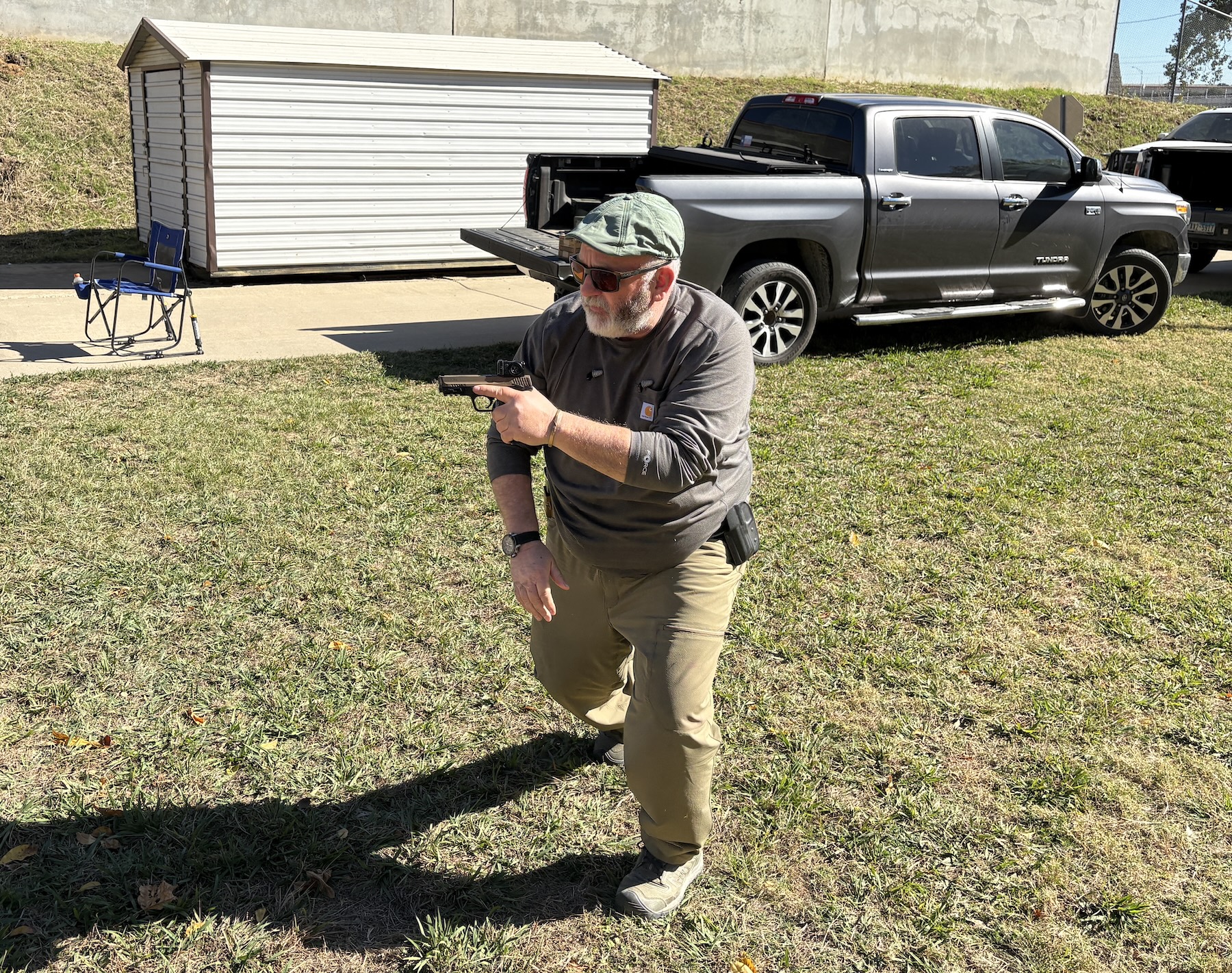
Your author has drawn, is angled off, and is moving towards a kneeling position.
Come On, Roll Over
Utilizing a roll-over prone allows the shooter to get lower with increased stability. It also provides additional points of contact for the shooter, which makes it more like shooting a long gun. Another benefit is – when appropriate – working around or under low cover.
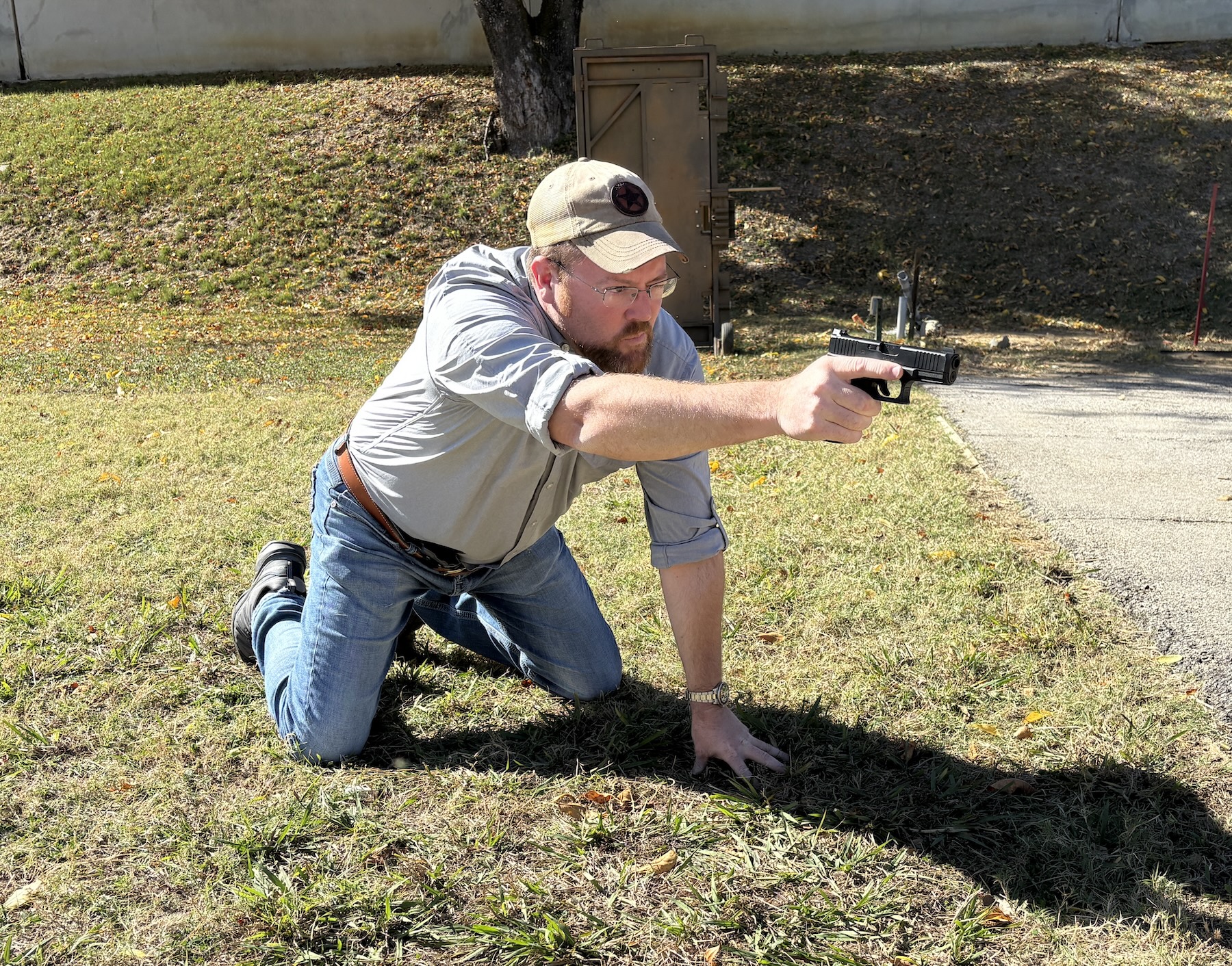
His muzzle is pointed towards the target, while his body is angled off. His support hand is helping him get down to the ground.
Assumption
The easiest way is to start by blading towards your strong side. For those with a military background, think of Half Right Face before doing push-ups. Or to the left as a left-hander. As you do that, draw the pistol and point it towards the target. The muzzle will continue towards the target while your body is heading on that 45-degree angle.
As you begin dropping into a two-knee kneeling (or catcher’s squat), your support hand is coming off the gun. After both knees are on the ground, your support hand is going out in front of you. Once it is on the ground, palm down, the pistol (regardless of sighting system) goes to the target while your legs go back.
On the ground, roll onto your strong side. The short-term goal is to have the bottom of your shooting hand, forearm, tricep, and lats on the ground. Your support hand comes in and re-establishes a two-hand grip.
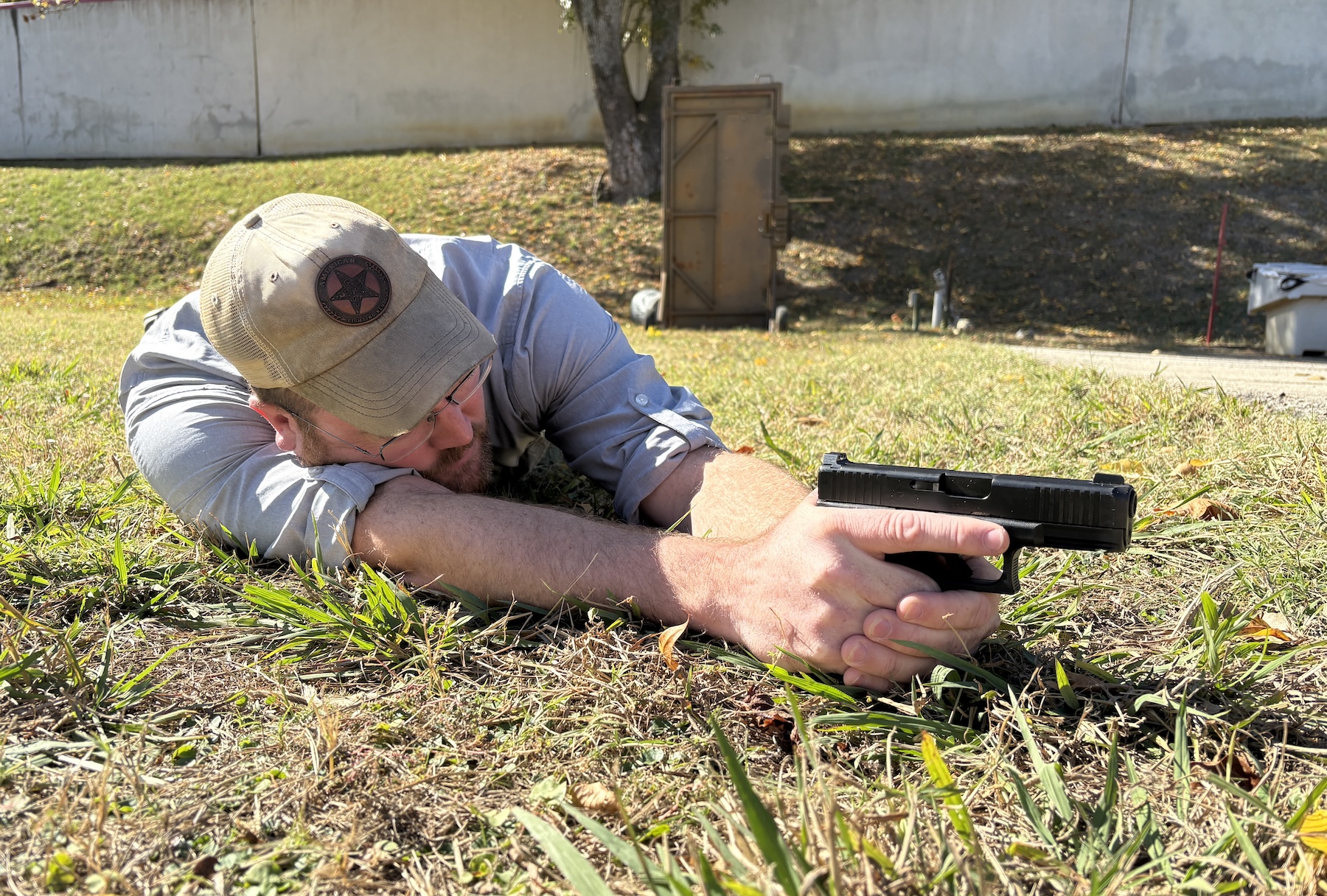
The shooter’s cheek is on his bicep, adding another point of contact.
Meanwhile, the outside of your strong leg is contacting the ground. Likewise, the outside of the strong foot is flat on the ground (no, don’t be up on the toe). Your support side knee comes up towards your torso – to take some pressure off your abdomen and diaphragm. This can minimize most influence from your inhalation and exhalation.
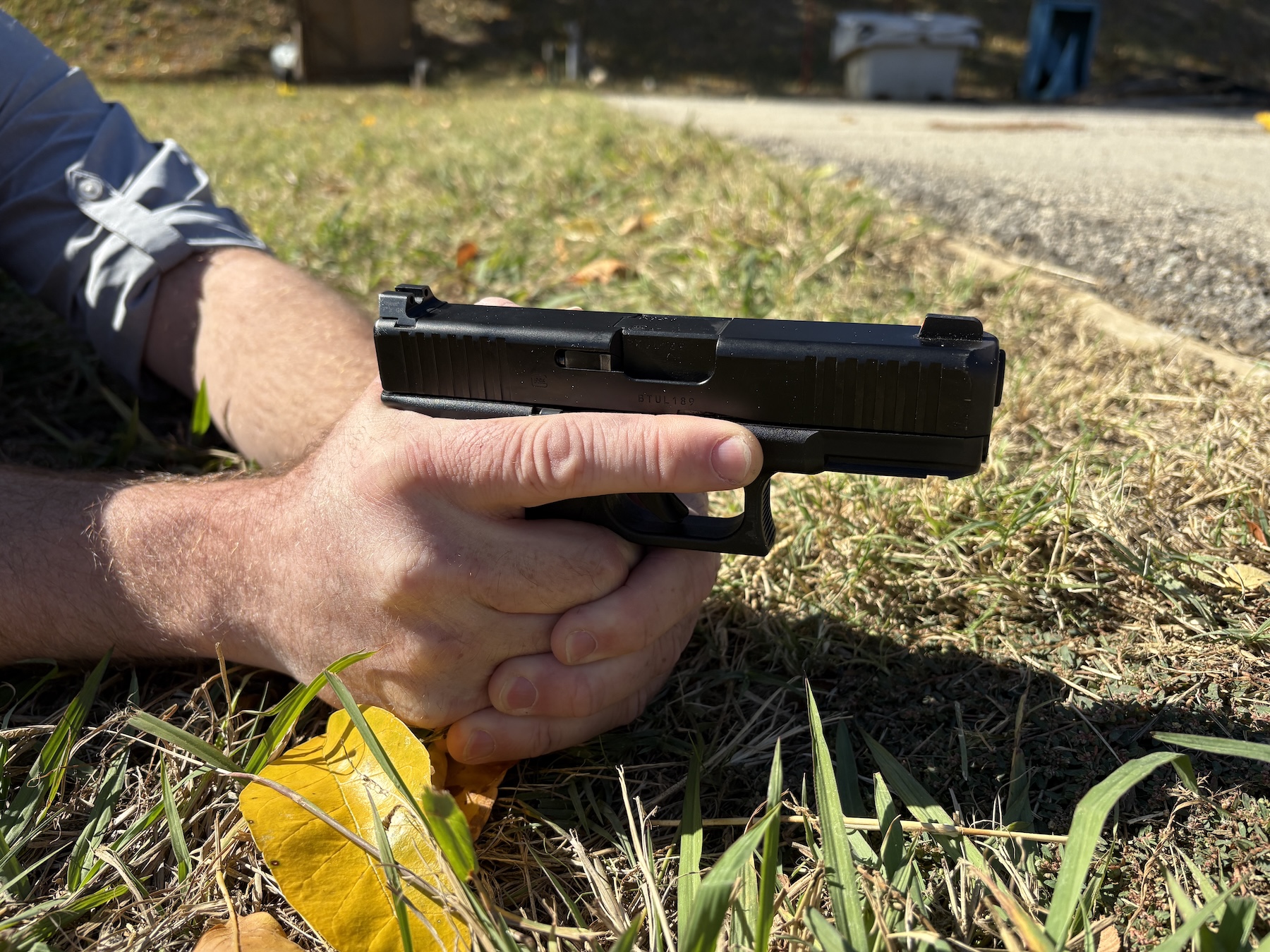
His support hand is not only doing its traditional job, but it can also help elevate the pistol by allowing the shooting hand to sit higher.
As you can see in the photos, you are nearly on your side. But not completely. You are definitely NOT up on your elbows, with the pistol floating back and forth.
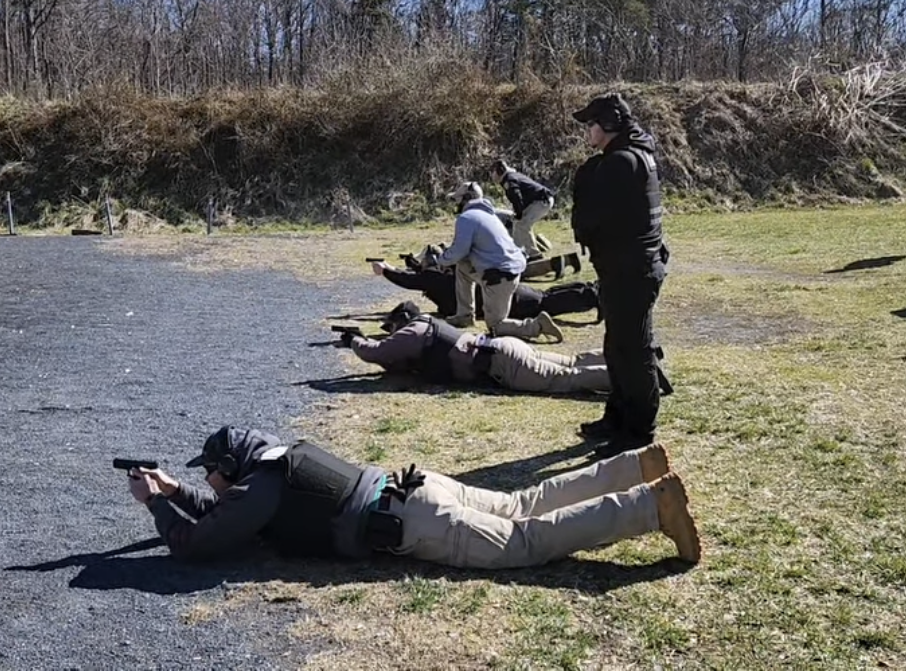
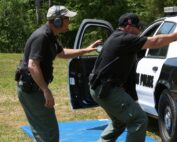
Not this either! Law enforcement is not immune to inappropriate or poor technique. (PC – unknown, photo was sent to the author by an acquaintance)
The gun side of your face is resting on your shooting arm bicep (or as close to it as you can be). While I use my dominant eye, regardless of the sighting system, I do know a few shooters who use their weak eye to sight from this position.
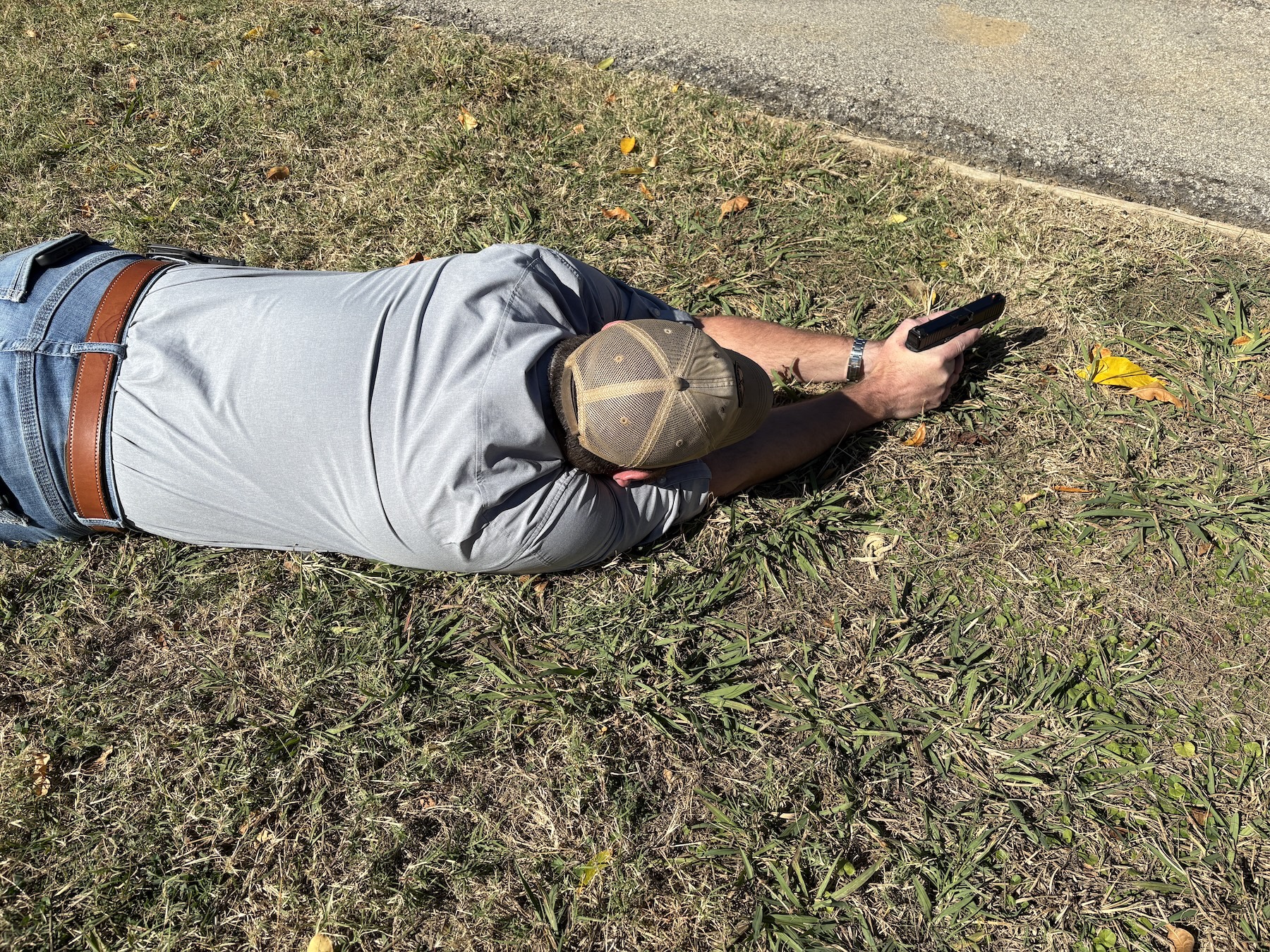
Retired from OKC PD, Bryan Eastridge has gotten all the way into the rollover prone.
Back To The Grip
For best results, keep your pistol oriented vertically—sights up, magazine well down. The bottom of your support hand stays on the ground. If you need to adjust the pistol’s angle or height above the ground, you do so by raising your shooting hand within your support hand.
Pistol-mounted optics have greatly simplified the shooting process as well.
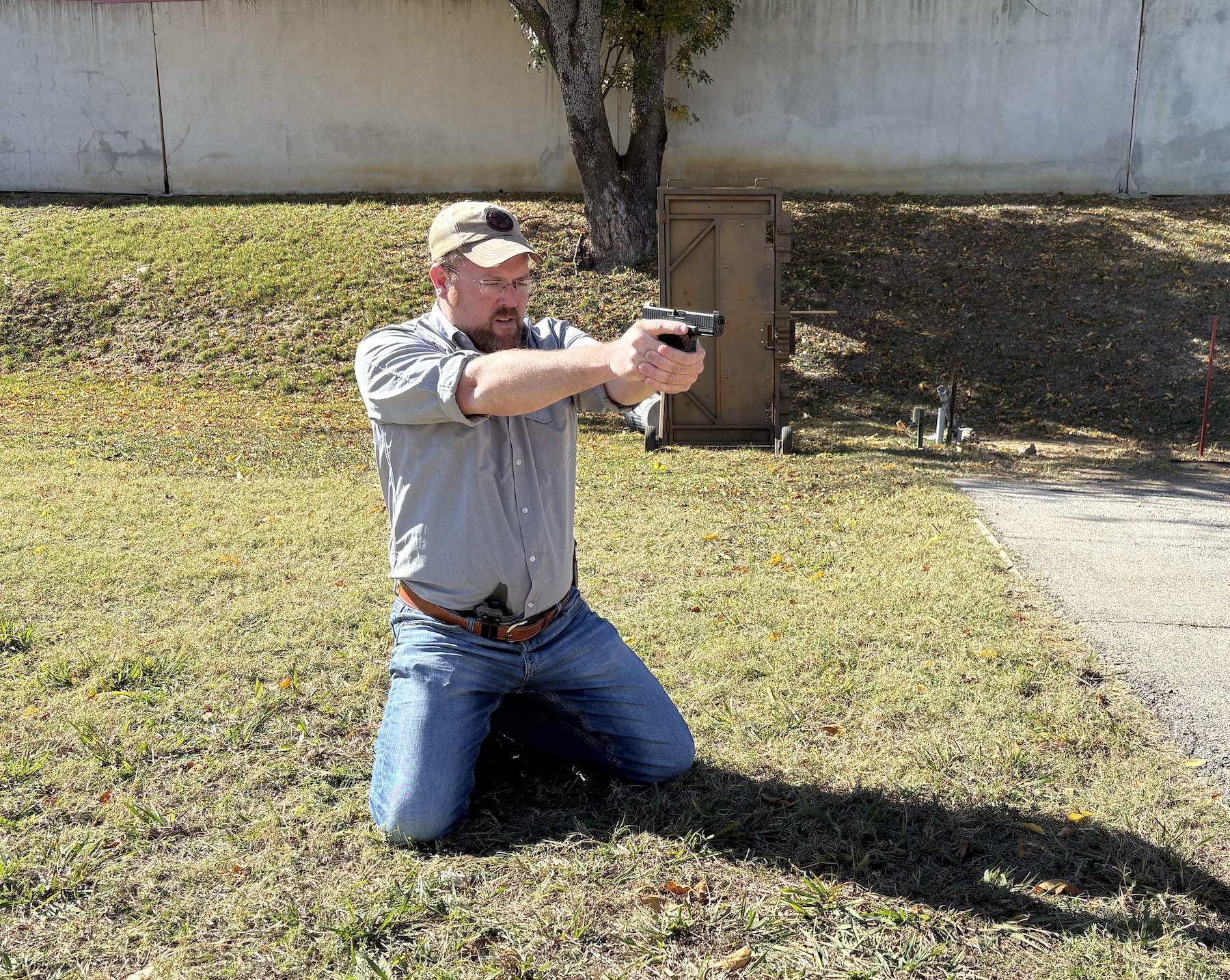
Having worked back up to two knees, he is looking for environmental changes before standing up.
You’re Done Shooting
What happens next? If you need to reload, now is the time to do it – before you stick your head up and change your view of the world. Once that is taken care of, get your head up and look around. Where’s cover? Other parties? Are there friendlies who have arrived? I’m worried about the last one because of fratricide. If you have friends there, strongly consider letting them know you are going to stand up.
Using your support hand, push yourself up off the ground. Look around. Get up to a kneeling position and look around. Finally, come all the up to a standing position, look around, and move. You may have to engage in any of those steps along the way.
Final Thought
The Roll Over Prone is not new; it has been around for decades. An officer used it when stopping the active killer at the Gilroy Garlic Fest in 2019. My first exposure to it was in 1994 from an old Navy SEAL Chief named Herschel Davis, instead of the police academy in 1989.