
 (+5 rating, 5 votes)
 Loading...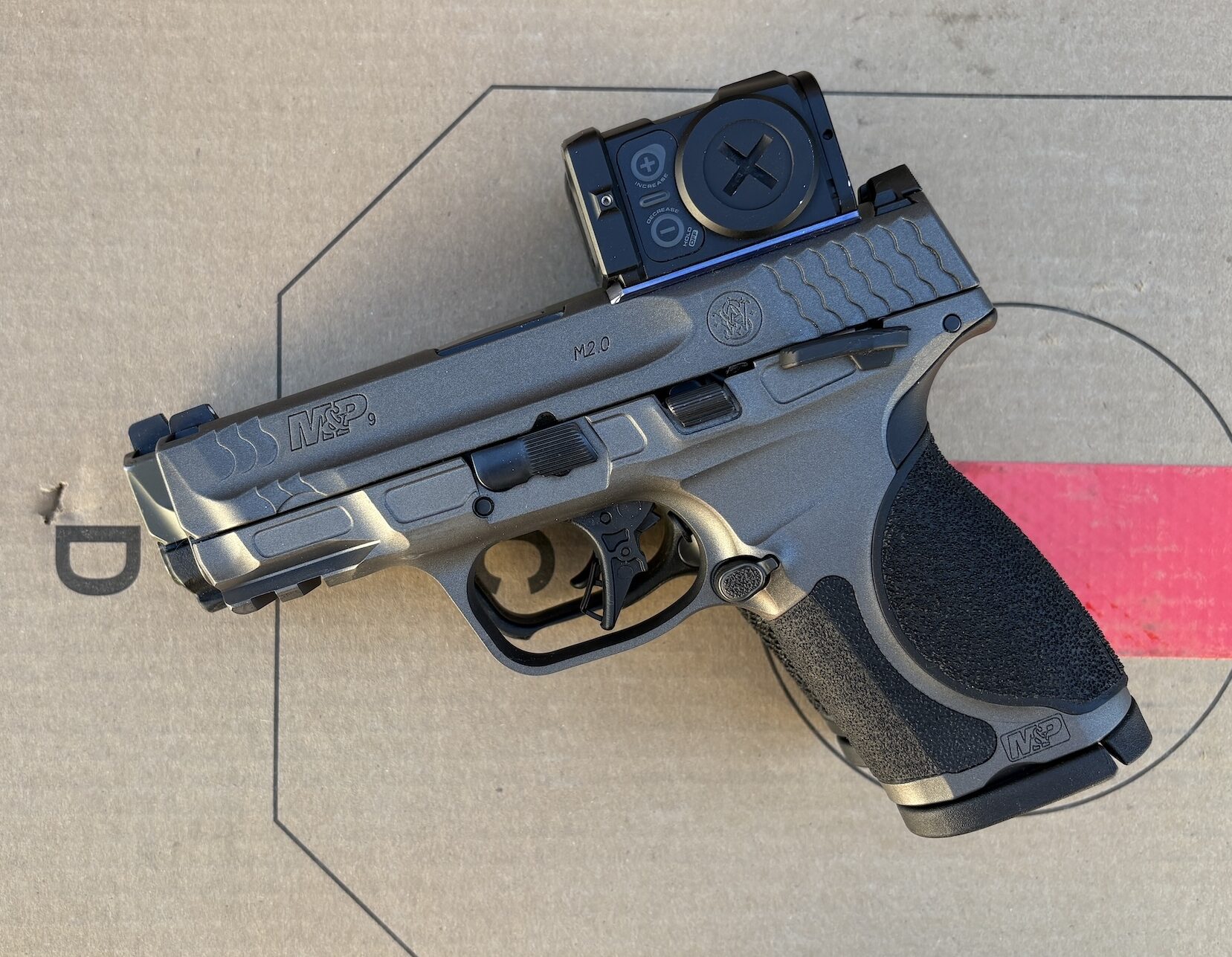
feature_0800
While Smith’s Military & Police family has been around for a very long time, the semi-autos are only twenty years old. I began carrying them in 2010. Permanent use of that line began in 2012 for me.
During the last few years, S&W has continued to develop and release metal frame versions of the M&P. After reviewing and purchasing a metal frame model that Ed Brown worked up, I eagerly awaited a compact version. This summer, Smith got one into my hands.
Initial Impressions
One significant positive in my eyes was that the metal-framed compact already had the thumb safety installed. I was glad to see this as I had to work with a gunsmith to get my Ed Brown model modified for a thumb safety. Except for a Glock, every other semi-auto or automatic firearm I have been issued or bought for duty had a frame or receiver-mounted mechanical safety. I appreciate their presence and use them religiously.

S&W includes a variety of plates and screws with their optic ready models.
While I would have thought the metal frame would add a noticeable amount of weight to the gun, it did not. Comparing my daily carry 4” Compact to the metal 3.6” Compact showed a difference of 1.4 ounces, 1lb 9.3 versus 1 lb 10.7.
After the weight, the feel of the pistol was next up. The interchangeable back strap and front strap have a much more aggressive texture. These panels aren’t stippled; rather, they have an aggressive, raised, micro post-like pattern that sticks in my hands with my grip. One note, both magazine wells have about the same slight bevel.

I am really enjoying High Desert’s offerings. One of the students had adjusted my zero about an inch right.
It has S&W’s new trigger design. Rather than using the earlier hinged design (which I have really grown to like over the years), the new design mimics that of another company. The design works; I have not had any issues with it on this pistol or a new 5” M&P I recently bought. An over-travel stop is embedded in the frame directly behind it. Grudgingly, I like the execution.
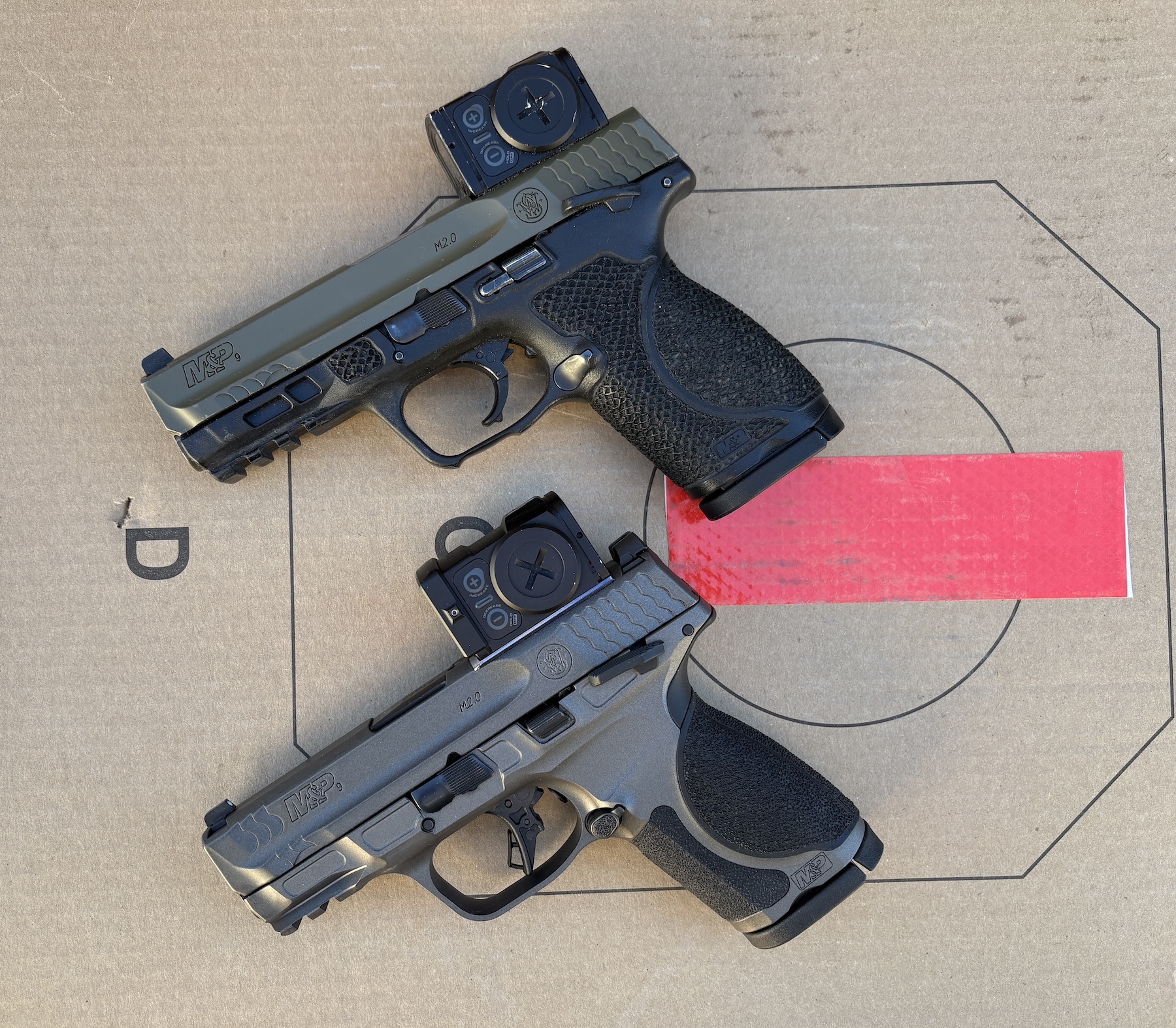
My daily carry – 4″ Compact – with the 3.6″ M&P. Both with Aimpoint’s Acro P2 optic.
Optics
I mounted an older, unused Acro plate from Eleven-71 Design. This version pre-dated their newer “dog tag” design. This plate fit very precisely. While there was zero need to remove any material to seat in it the slide cut, I did need to tap it into place with a mallet. I have been very happy with this plate and others I have seen of theirs.
Installing the plate and the Aimpoint Acro P2, as shown in the photos, was done easily using the method I’ve mentioned HERE before.
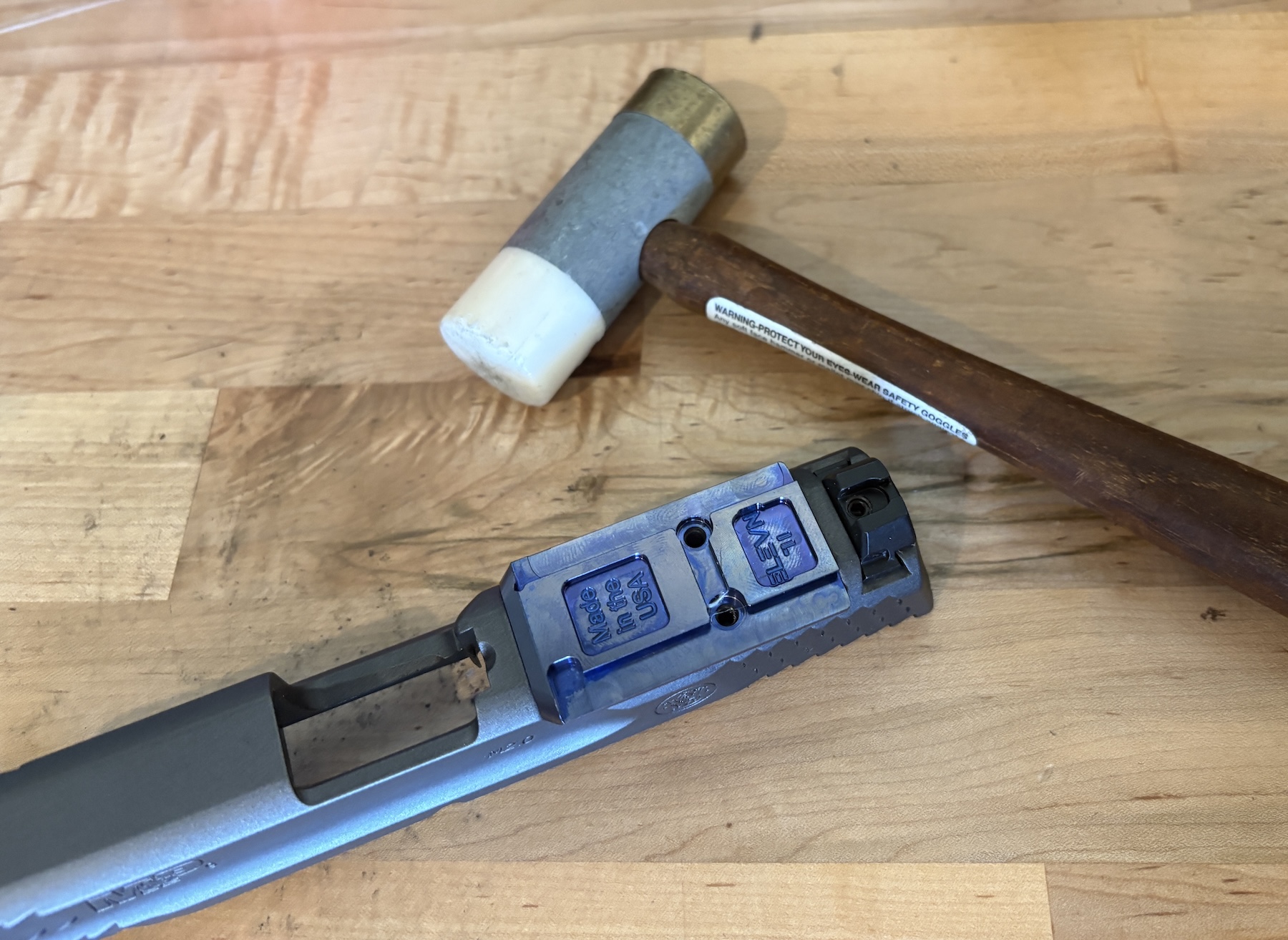
Eleven 71 plates have a very precise fit. I had to tap the plate into place to seat it.
Previously my optic equipped pistols have either had a sight in front of the optic or the optic sat farther back from the loaded chamber indicator hole. Unfortunately, that hole throws a significant amount of debris onto the optic’s glass. The Eleven 71 dog tag design mitigates that. I will shift to that design going forward.
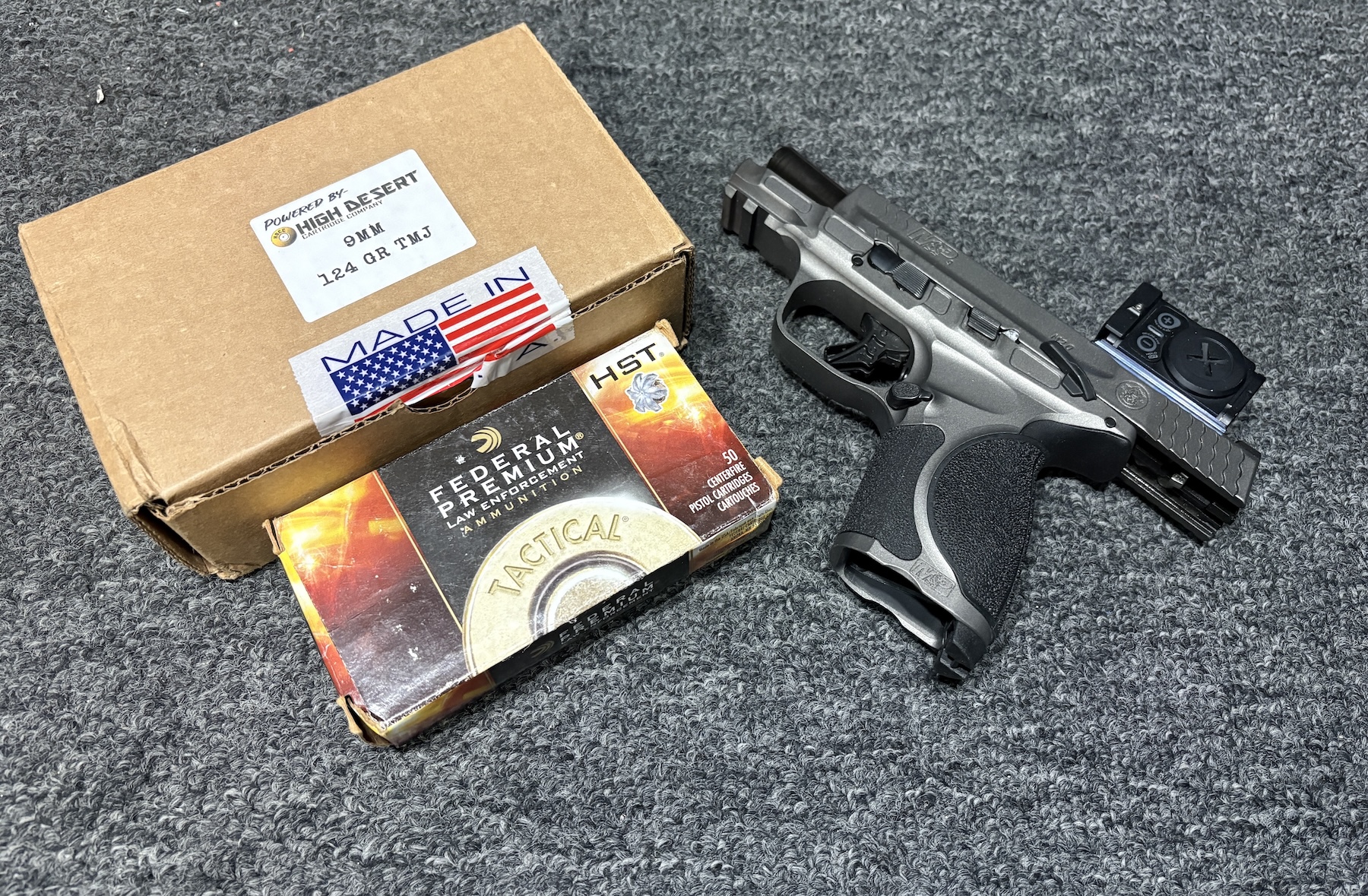
High Desert Cartridge Co and Federal Premium – a solid combination.
Ammunition
Ok, how does it shoot? I’m very happy with it and that it with at least 750 rounds through it. Likely more. You can see the grouping in the attached photos. Both of those were shot after a student re-zeroed the optic for them during a recent class. I had it there as a loaner. The student adjust the point of impact about that far to the right. Why? Because my zero was about that far left of center for them.
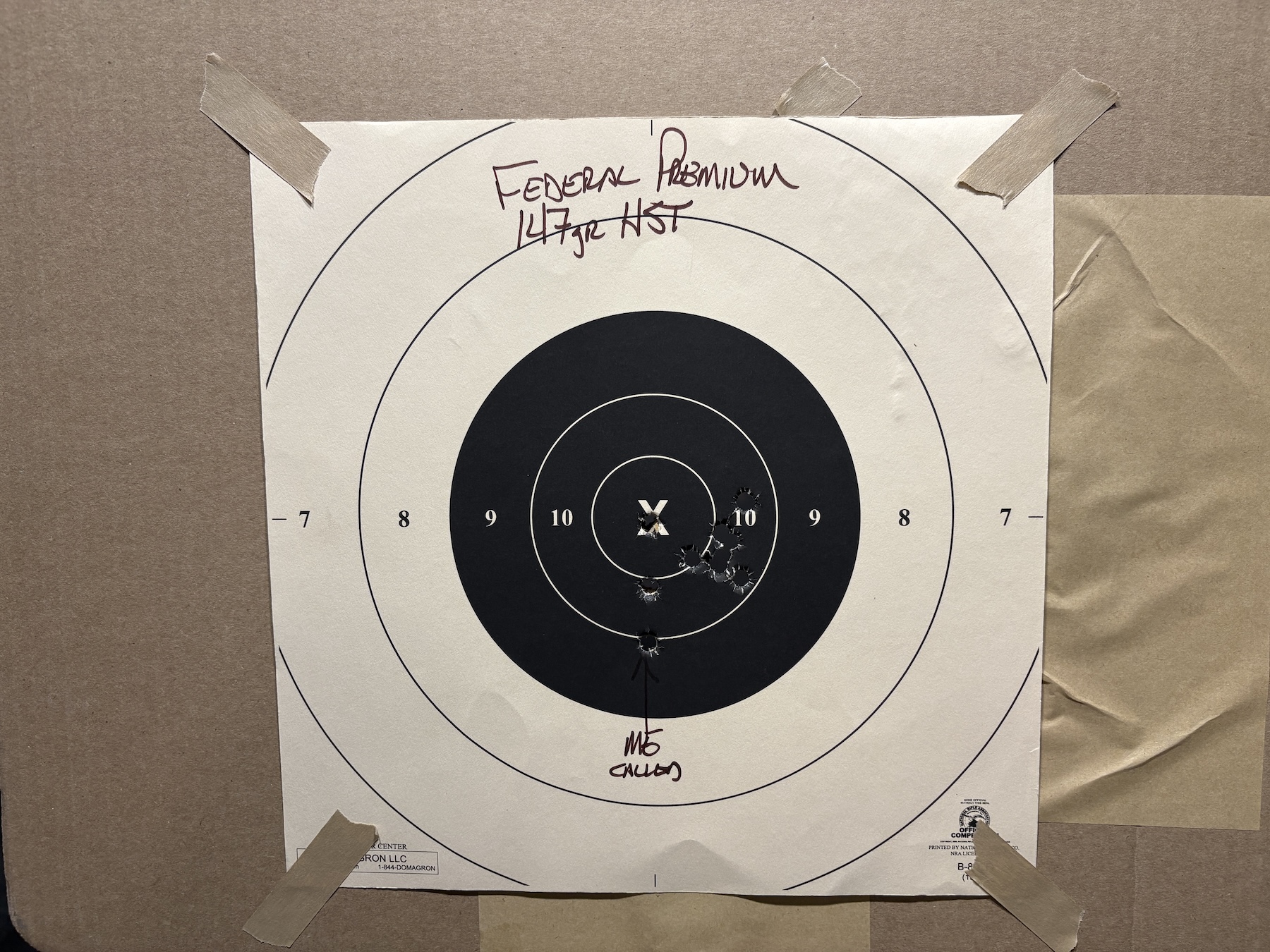
Ten shot group off a rest at 15 yards with Federal’s 147 grain HST. I called that one low hit.
I had one stoppage during this review. That was with a round that appeared to have a longer OAL – Over All Length – than the High Desert Cartridge Co 124 grain rounds I was using. It fed the High Desert loads as well as Brass-cased 124 grain Blazer and 147 grain Federal HST loads without any issue.
Second Opinions
I had the chance to loan this out to a few students in a recent pistol mounted optics class when their gun went down or because they wanted to try it. While the thumb safety took a but of work two of them, the third was a fan of that addition – like me. Both had previously used another polymer frame, striker-fired pistol.
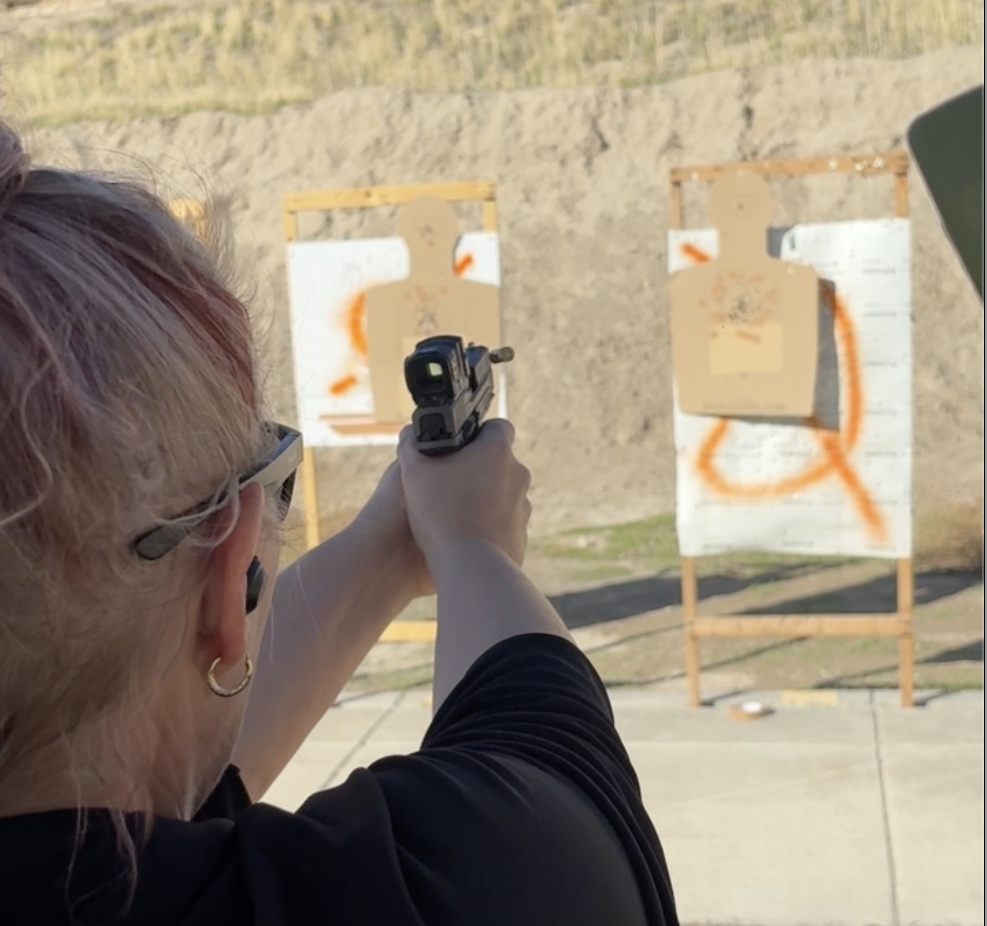
Lisa shooting it during the 2×3 drill. Draw and shoot 2 rounds strong hand only, reload & shoot 2 more freestyle, reload and shoot the last 2 support hand only.
Lisa
Who is a somewhat newer shooter told me – “The grip fit my hand well, I could reach the safety, trigger & mag release easily. The coarse texture made it easy to maintain grip, even one-handed! “I loved the weight of the metal, it felt solid in my hand drawing from holster and felt like it had slightly less recoil than the polymer. Both are comfortable, easy to operate guns, and “I’d buy either, but the metal frame is my top choice.”
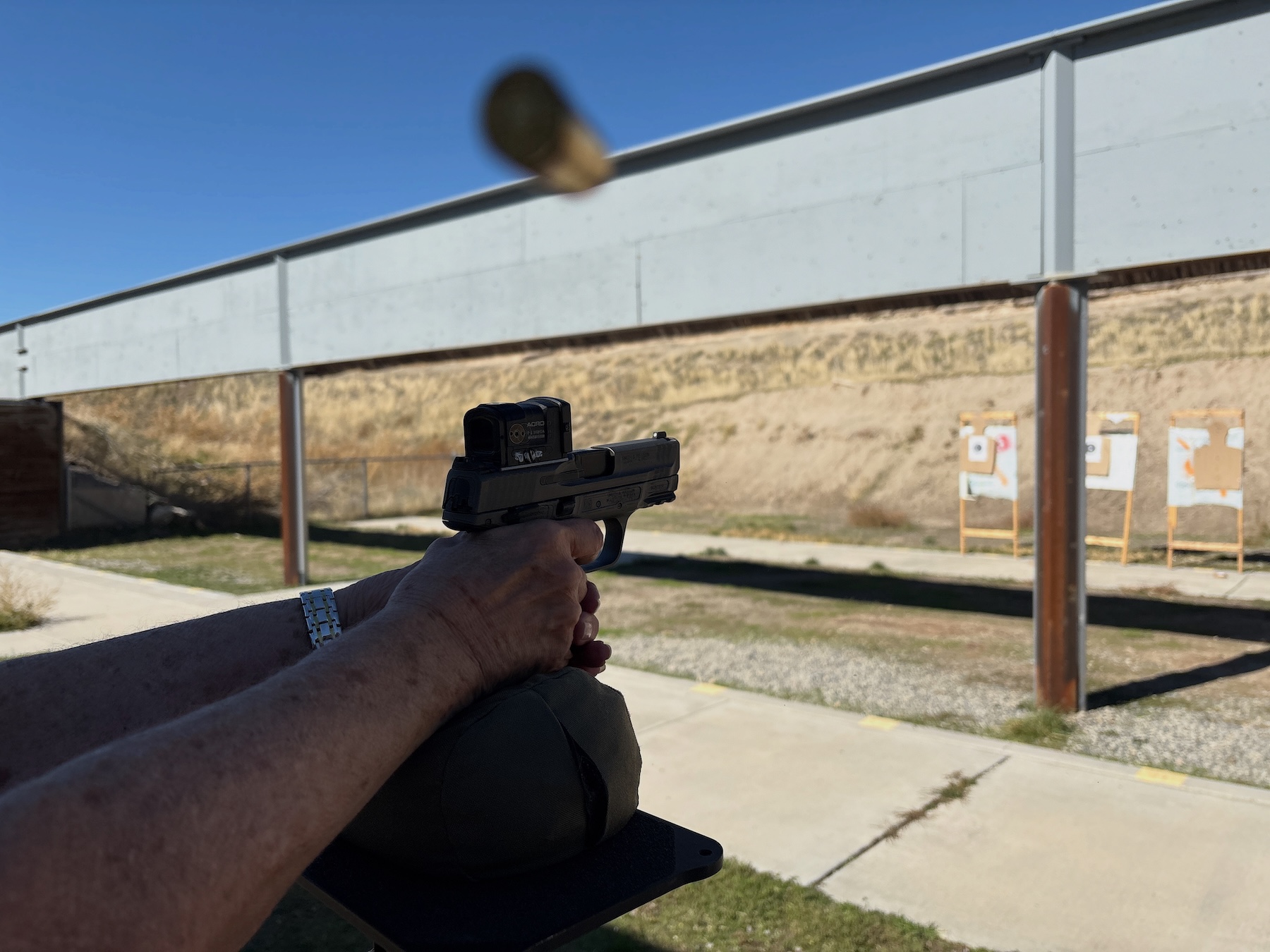
A student zeroing the Aimpoint Acro P2 to her while she was shooting the 3.6″ gun.
Lissa
An instructor and frequent student, offered:
“The metal frame felt slightly heavier, but it gave me a solid, stable feeling that balanced the weight of the slide and optic.
“The aggressive grip texture helps keep a firm grip through long summer days on the range.
“The new trigger design feels smooth and doesn’t stab my finger like other similar trigger designs do.
“I love ambidextrous manual safeties.
“The commonality of magazines for different designs (FPC and PCC) is a big help.
“Having inter-changeable backstraps is great for my small hands. The ability to manipulate the angle for mag changes was easy for me with small hands. I could keep control of the pistol and get back on target quickly.
“The back-up sights weren’t distracting but easy to see when I needed to.
“About lunchtime on day two I realized I found my replacement for the other pistol, and I can continue where I left off with that one.”
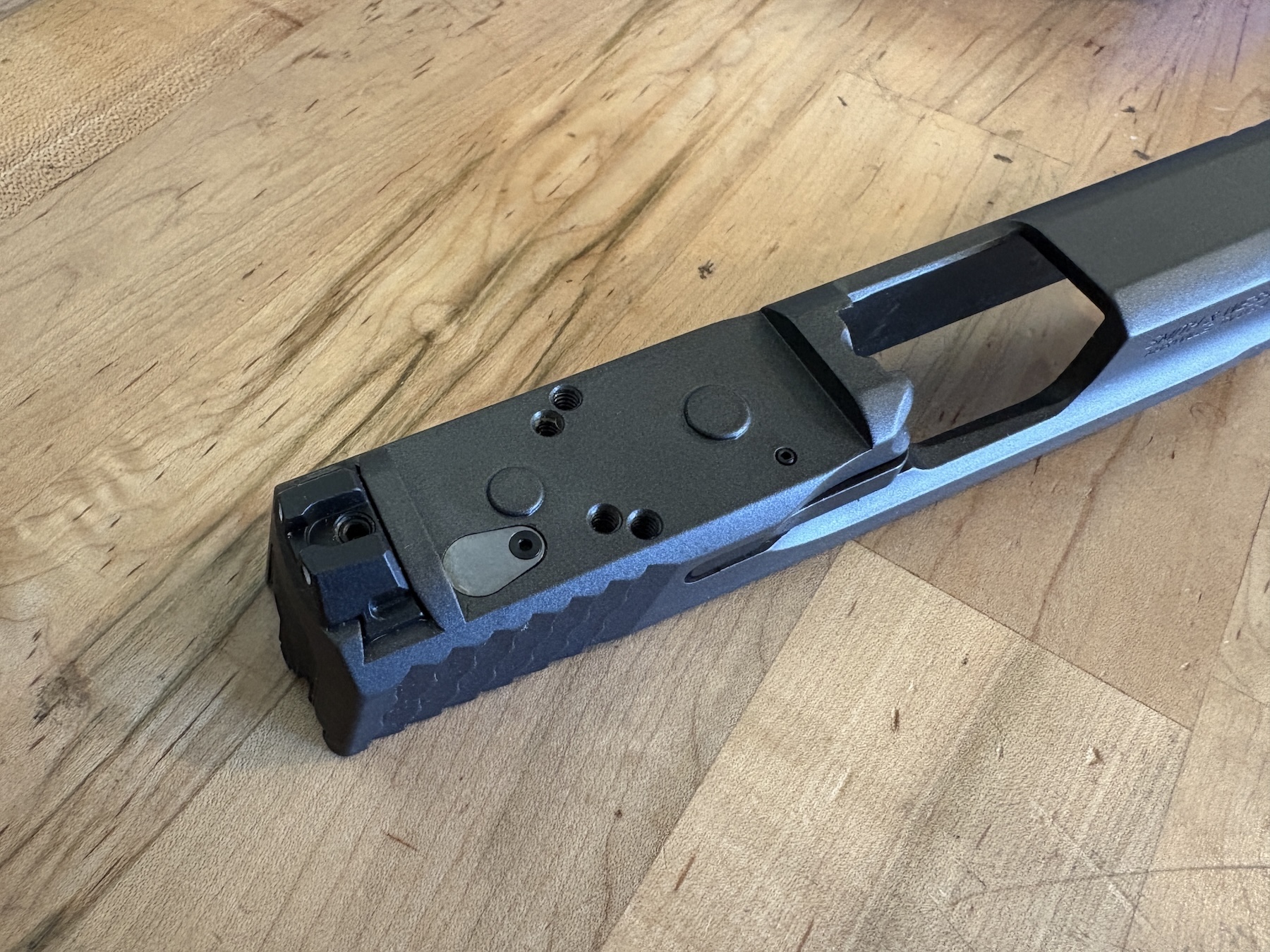
The optic mounting portion of the slide.
Final Thought
The metal framed M&P is a Win. It will serve off-duty or plain clothes officers as well as lawfully armed citizens equally well. The compact frame has enough of a grip for most hands and the 15+1 capacity is solid. More importantly, they are a proven product at a time when that is less common.