
 (+4 rating, 4 votes)
 Loading...
time_2895 copy
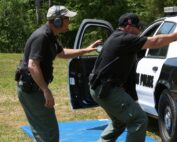
The author talking with suspected gang participants while patrol deputies cover him. And his partners search the car.
Good news – the number of murdered officers is down Year-To-Date this year (2025) when compared to last year (2024). However, it appears from media coverage that “we” are back to seeing attacks on L/E that potentially could have been minimized, if not prevented. Yes, I know there’s a media bias. And on “our” end, there are discussions on multiple solutions that could prevent these attacks.
Material solutions aren’t a bad idea if there is money to fund them and people to employ them. Let me ask, whose agency has all the officers they need (never mind, want) and enough money to buy equipment?
Note: Any time I say “we,” I’m talking about the whole profession.
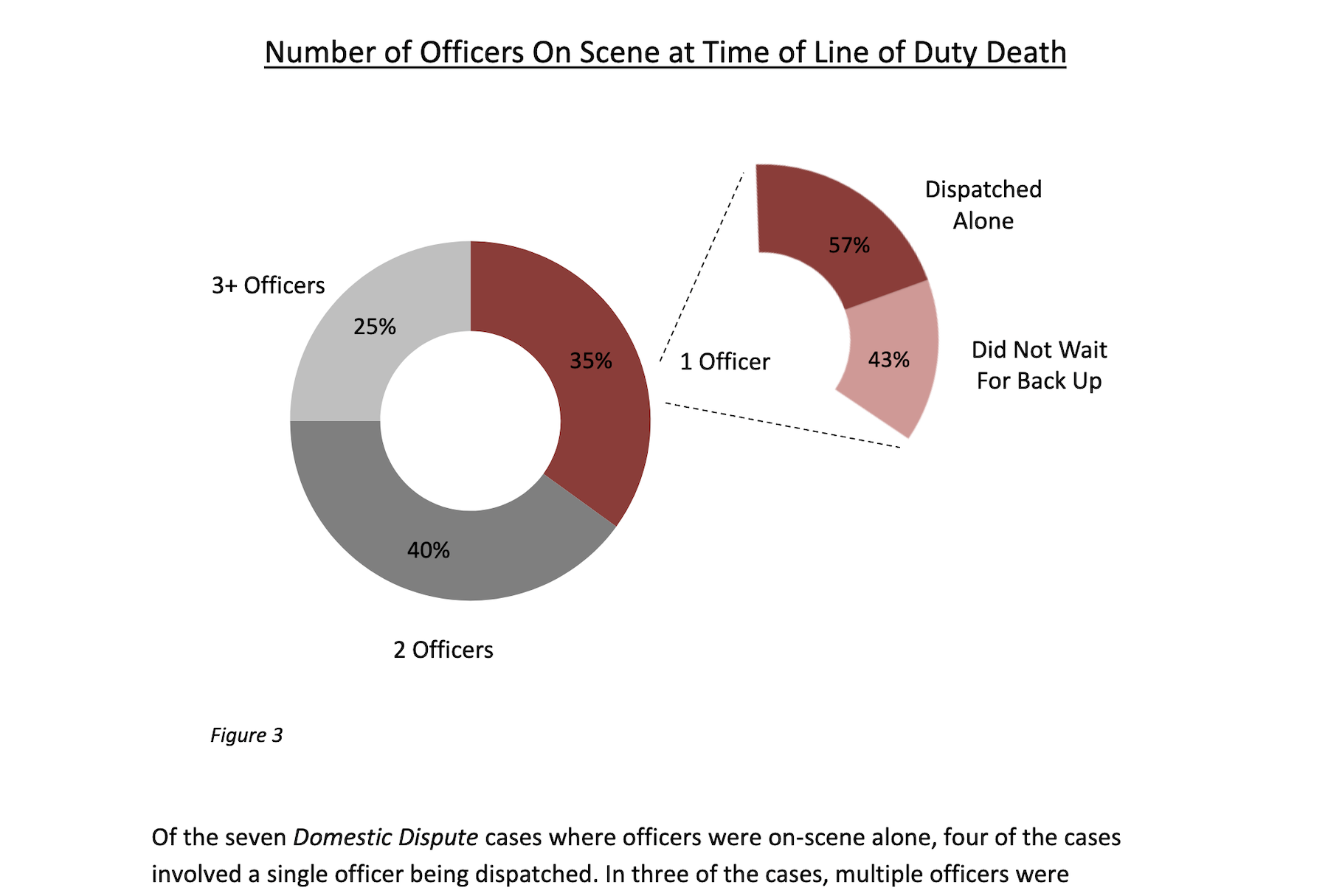
There are increased negative outcomes with a solo response or a failure to wait.
Some Solutions
I can think of three potential solutions because I frequently see two of them shared. Two of those are: 1) Prosecutors & Courts doing their jobs, and 2) Buying Equipment.
Employee associations and agency heads might be able to impact their local prosecutors. Still, given how many times “we” have begged & pleaded with them to seriously prosecute those who have resisted and assaulted officers to no avail – I’m not holding my breath. Not every refusal to comply with an officer merits a full tilt prosecution. However, any assault with body parts or weapons on an officer should be pursued to the full extent of the law. What changes? Hold the bad guys accountable.
I have seen a couple of proposed equipment solutions, but I don’t think they will work in rural, suburban, and urban environments.
After previous attacks, there was discussion of 360-degree camera or sensor coverage on patrol cars. The sensors would feed into the mobile data computer and provide an early warning to the occupants. If you are watching that monitor, what aren’t you doing?
One that has come up in the past few days is the use of handheld FLIR (forward-looking infrared) devices to look for suspects hiding before officers arrive at a location. That will take two officers to do safely – one with the FLIR, the other watching everything else.
That brings me to the other idea.
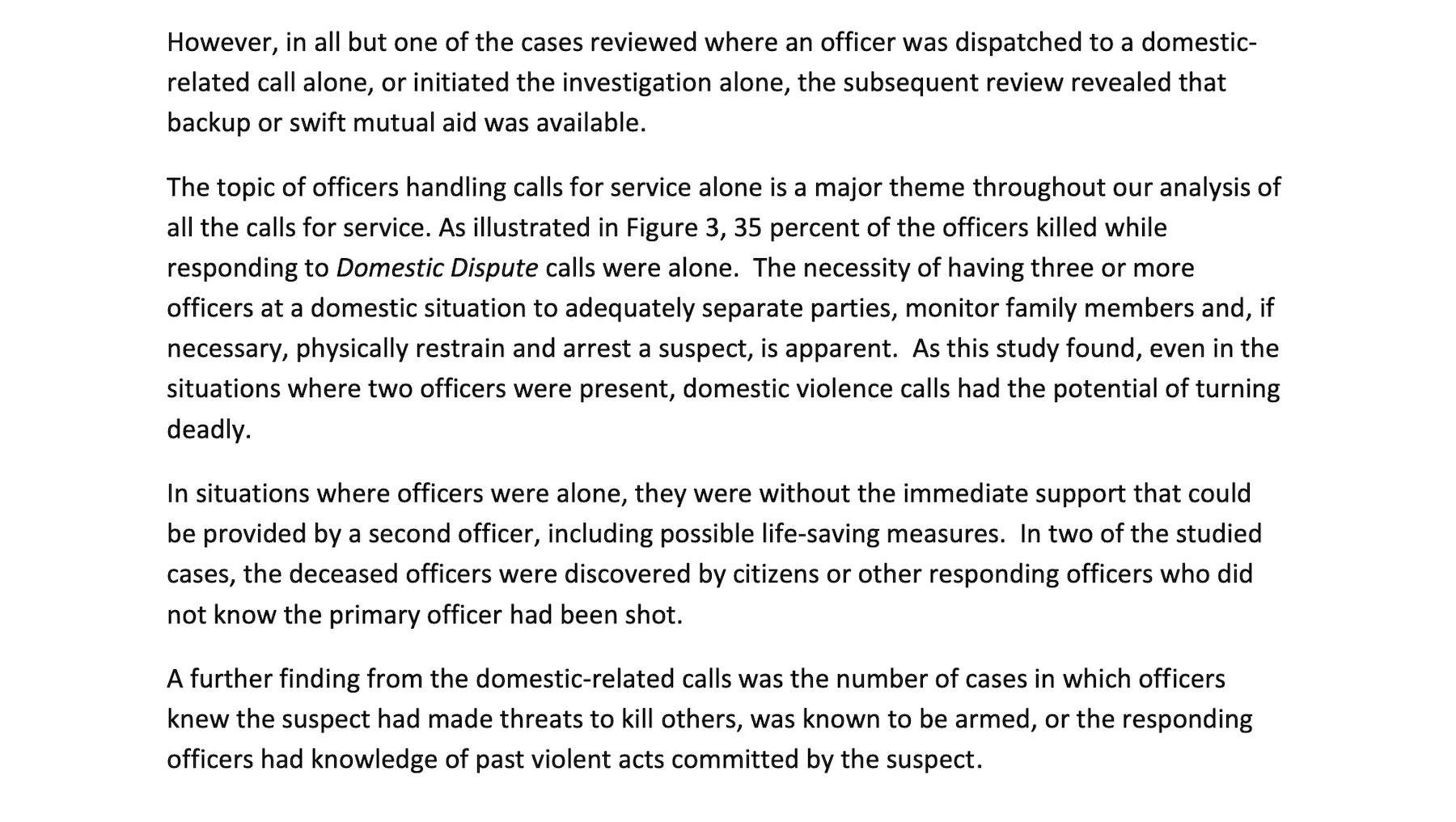
Frequently, it was later determined a cover officer was available. Additionally, the lack of cover officer equals the lack of several resources (Deadly Calls & Fatal Encounters).
A Third Option
No, not the one the President can employ.
I’m talking about getting more officers on the scene. Earlier, sooner in the encounter versus in relation to the dispatch.
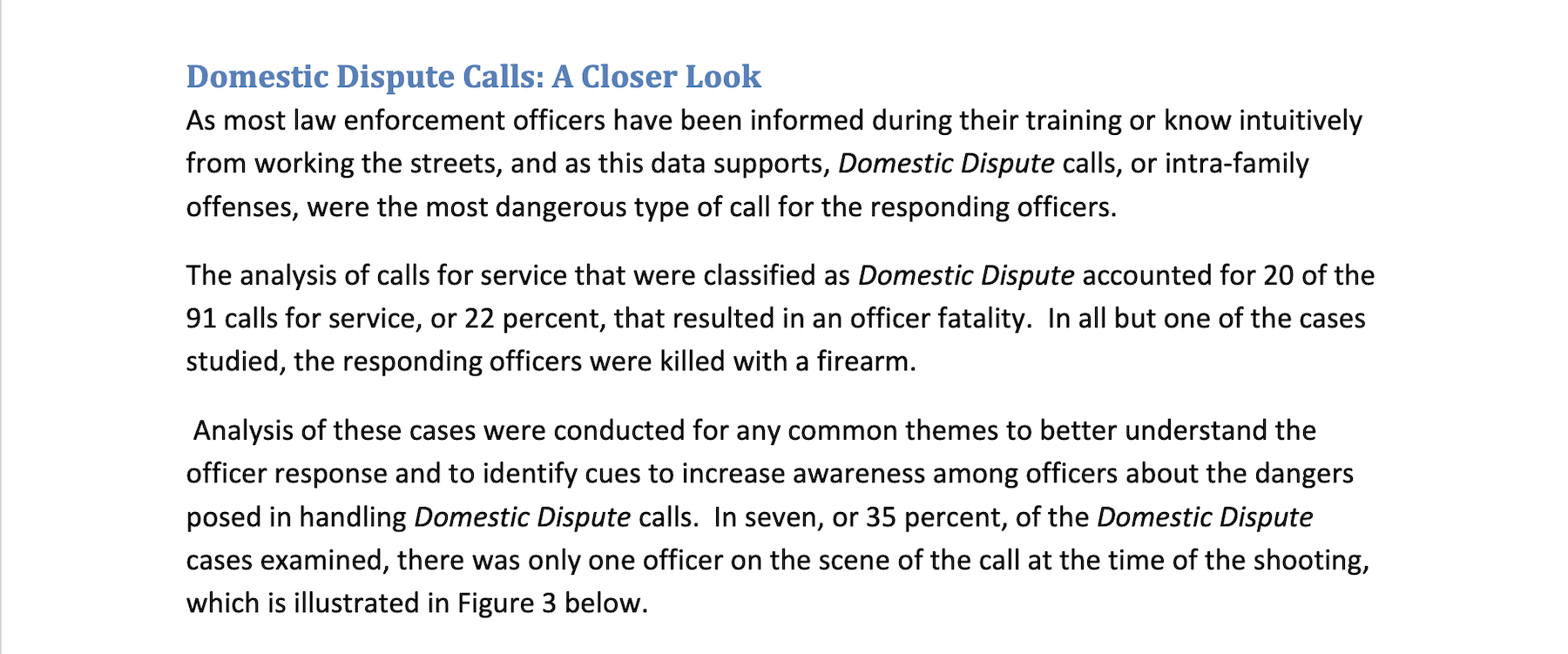
In one year, 22% of the officer fatalities stemmed from domestic violence calls. In a third of those, the officer was alone (Deadly Calls & Fatal Encounters).
Contact/Cover
This technique originated with the San Diego PD in the 1980s. It grew out of the murder of several officers in a relatively short period of time. Most of the police oriented publications have covered it. AmericanCop has as well – https://americancop.com/officer-survival-contact-and-cover/ and https://americancop.com/contact-cover-re-visited/. It can also be found in both the Street Survival series from Calibre Press. (Briefly, on the “older” sources – yes, of the tactics, techniques, procedures, and equipment have been over-taken by evolution in each of those areas. That does not render the material worthless. Rather, read it for the principles, not just the specifics. Lessons from Sun Tzu, Musashi, and Clausewitz are all still considered worthwhile.)
Having done multiple stints as a field training officer and in gang enforcement, I was fortunate to have a lot of time with another cop in the car. Unfortunately, fewer agencies deploy two deputy or officer patrol cars these days. Because of that, your cover officer is rarely immediately there. Contact/Cover cannot kick in until there is a second officer present.
So, your Third Option is to Wait
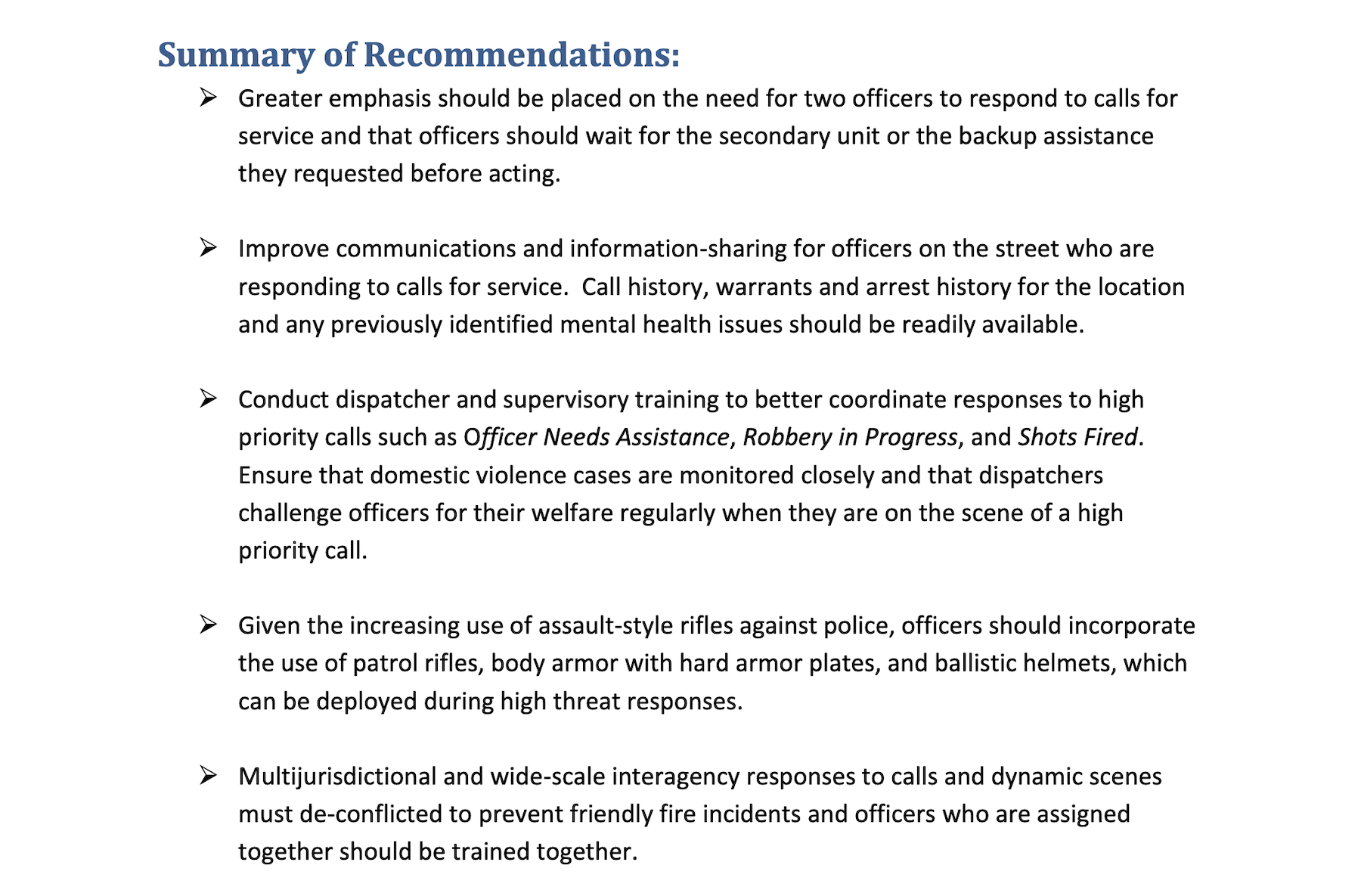
Several recommendations for officers, supervisors, dispatchers, and trainers (Deadly Calls & Fatal Encounters).
Stand-By
Absent an active killer event, there is almost no need to go in alone, without waiting for your cover officer. Stop around the corner or just outside of the neighborhood until your partner is there. Then go in together.
Parking & Approach
And stop short of the scene, preferably at least a couple of houses away. While that is the better solution, it is by no means foolproof – refer to the 1991 murder of LAPD Officer Christy Hamilton at ODMP.org
While not perfect, today’s mapping programs are generally accurate. Please take advantage of them and park far enough away. Turn your headlights off early. And close the doors, trunks quietly. Sound carries.
Rogers’ Standing Orders
Small Unit Tactics has become part of the conversation. So, start with Rogers Rangers Standing Orders. Three of which are specific:
– When you’re on the march, act the way you would if you was sneaking up on a deer. See the enemy first.
– Don’t ever march home the same way. Take a different route so you won’t be ambushed.
– Don’t sit down to eat without posting sentries.
Think principles, not specifics.
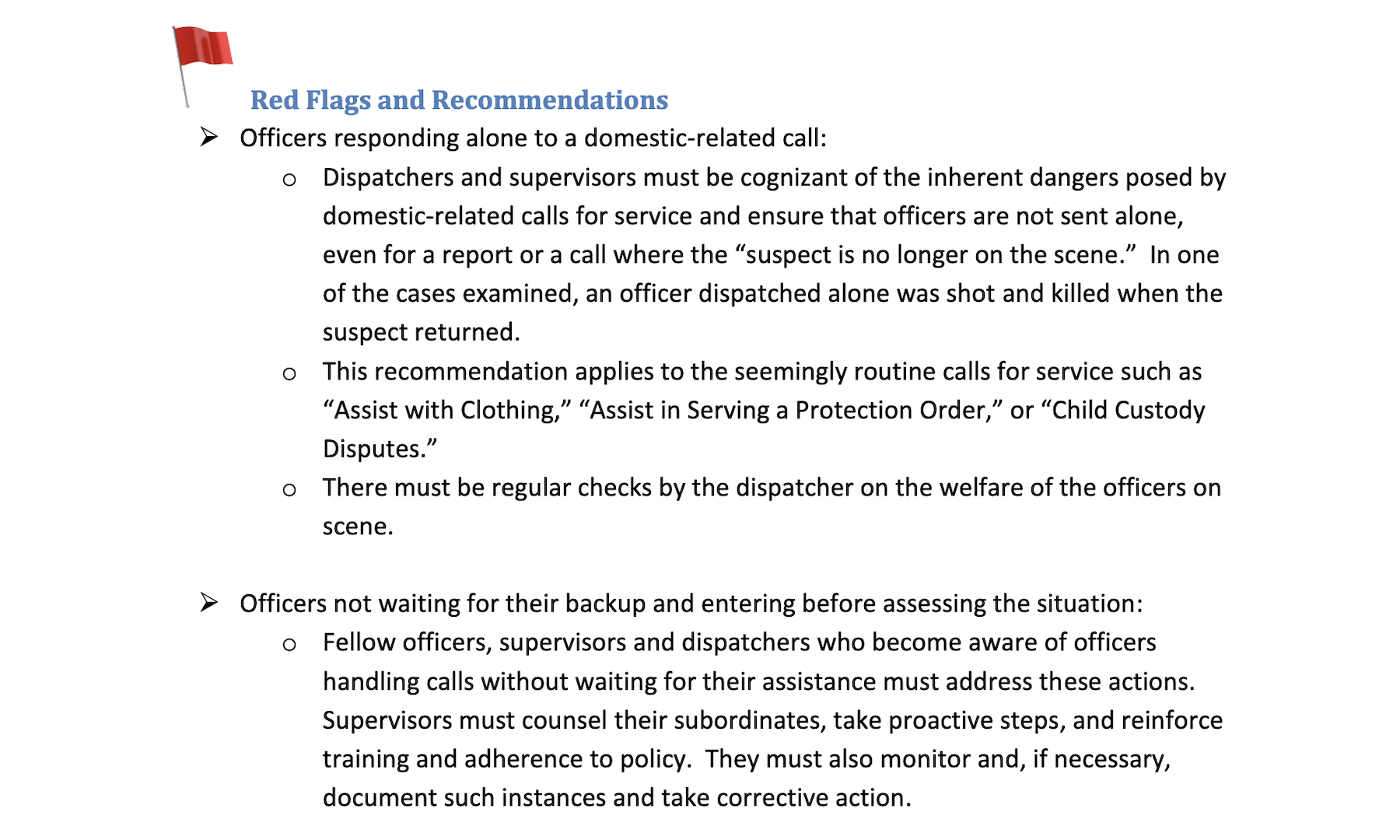
Some calls have enough Red Flags that officers should not respond solo (Deadly Calls & Fatal Encounters).
Call Outs
There is an ongoing discussion about the benefits or dangers of Surround and Call-Out for tactical teams. This is a bit different. Rather than approaching and entering a structure with both the suspect and victim in there, consider calling them out. One at a time. The primary officer can interact with each in sequence, while the cover officer can provide overwatch.
And I’m guessing that nearly all of us have handled calls where the suspect left before we arrived. Only to have them return while we talked with the victim. Having that second officer is a huge benefit.
Training
For 70% of the agencies in the country, you are small enough that you depend on cops wearing a different uniform to be your backup. Discuss and train on these TTPEs at the county level rather than just within your agency.
Over the past several years, there has been an ongoing demand for us to use Time, Distance, & Shielding before using force. Let’s make that work for us, take advantage of that time to get at least a second unit there before initiating contact.
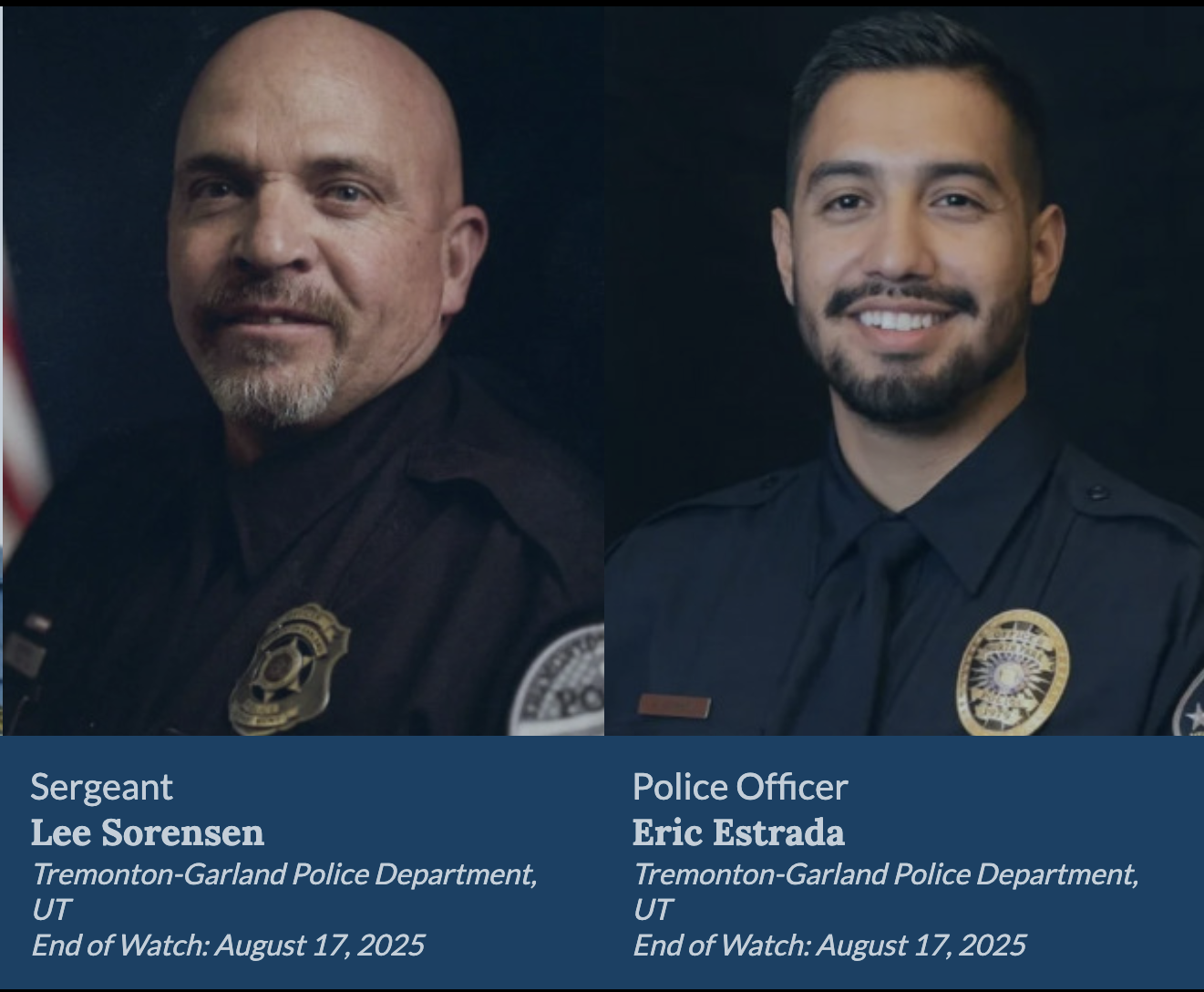
On August 17, we lost two dedicated officers on a domestic violence call. Per media reports, the first officer was talking with the victim when he was murdered. The second officer was murdered when he arrived a short time later. Resquiat In Pacem, Sgt Sorensen and Officer Estrada (Agency photos and ODMP.org).
Small Unit Tactics
Tactical principles need to be taught and understood by patrol officers, not just SWAT’s leadership. We can discuss them in a follow-on article.
The foundational element is a two-person buddy team, two of which form a fire team. Contact/Cover is a solid introduction to that principle.
But it only works when you have a second officer on the scene.