
 (+10 rating, 10 votes)
 Loading...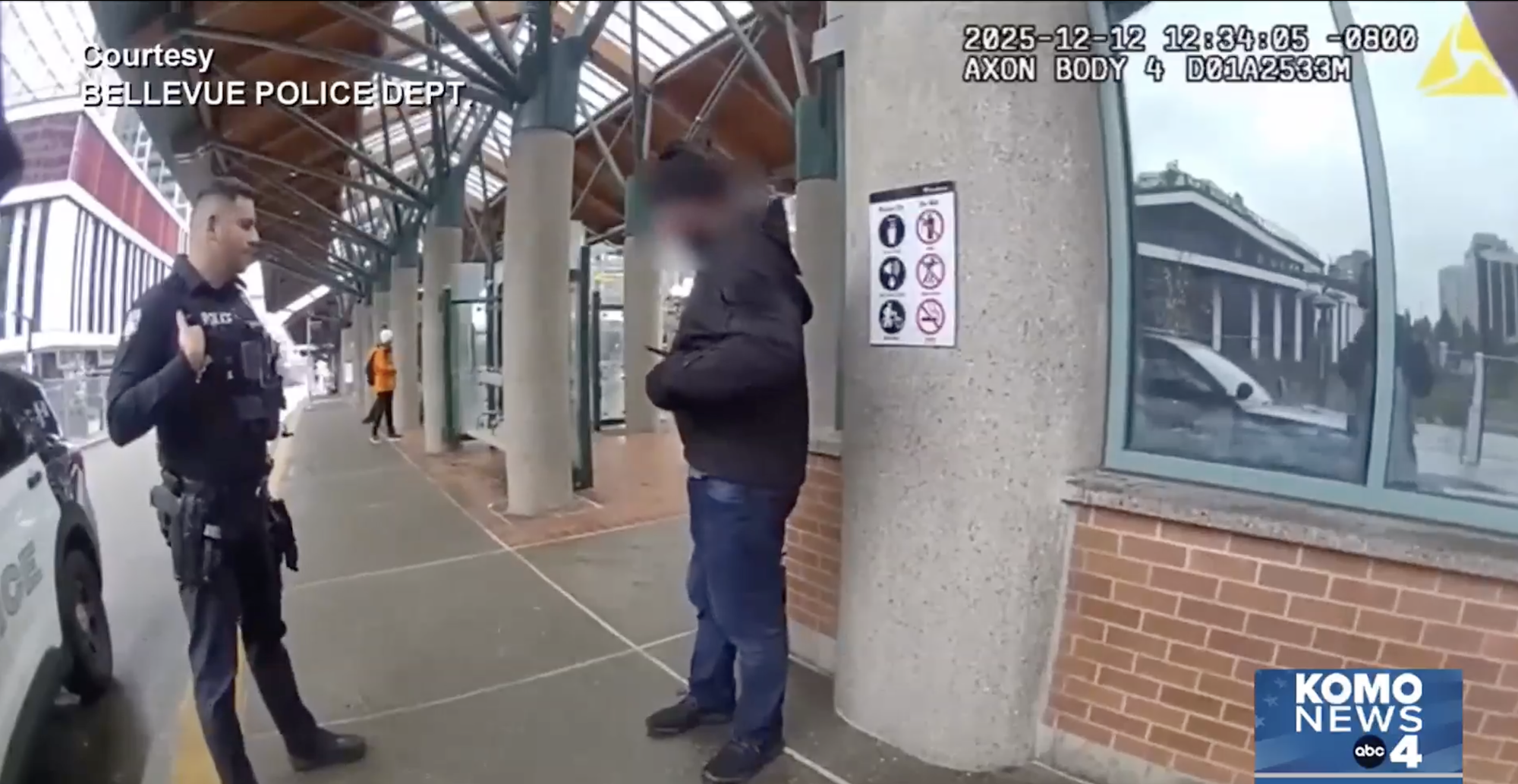
bw_nohandsJustBefore2026-02-16 at 11.43.58 AM
(Bellevue, WA PD BWC footage)
Our hands do both good and bad things. On the BadGuy side of the equation, they are what is going to hurt you. Not her eyes, not his feelings. Their hands. They will push, punch, and grab. Find and employ a knife, a gun, a bat. Those hands will access and discard evidence, too.
On our side of the equation, our hands, our partners’ hands can do any number of amazing things. However, they are worthless if you do not have them in a position to work for you when you need them.
I am reflecting on two different edged weapon attacks on officers that were recorded on body-worn cameras (BWC) and surveillance video. Sadly, I’m sure there have been more, but I am thinking of these two. This is not judging the officers; rather, it is attempting to learn from what they suffered.
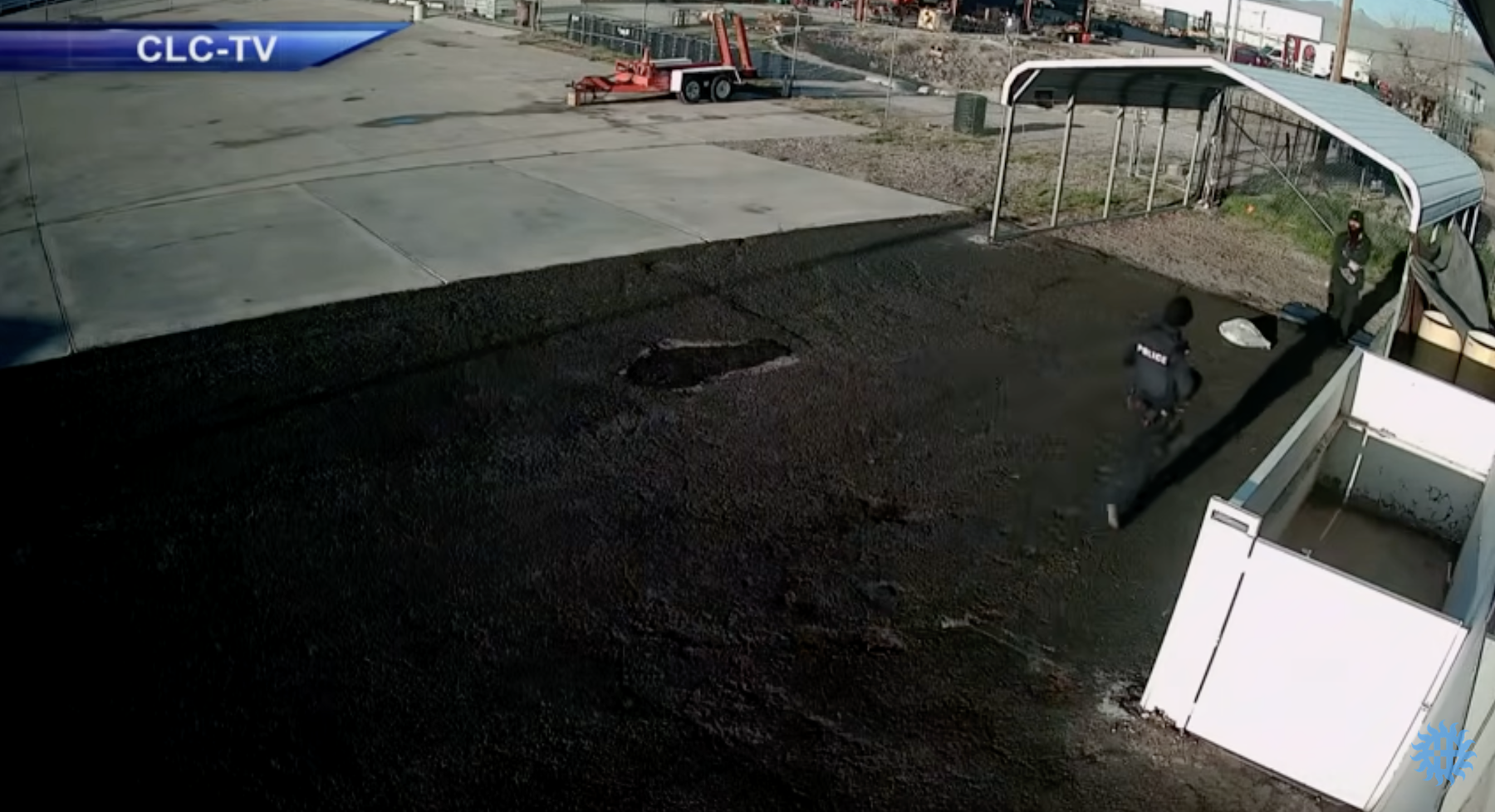
Surveillance footage of the officer, whose hands are in his vest, approaching the suspect. (Las Cruces, NM PD BWC footage)
Las Cruces, New Mexico
Officer Jonah Hernandez was murdered on 2/11/24 by a trespassing suspect armed with a knife. There is both surveillance and BWC footage. When Officer Hernandez steps onto the property, across the lot from the suspect, both of his hands are out in view. As he approaches the BadGuy, both hands are inside the armpit openings of his external vest. Once he’s within ten feet, the suspect pulls the knife and attacks. Fatally stabbing the officer. A lawfully armed citizen shot and killed the suspect before using the officer’s radio to call for help. The citizen stayed with the officer, reportedly comforting him.
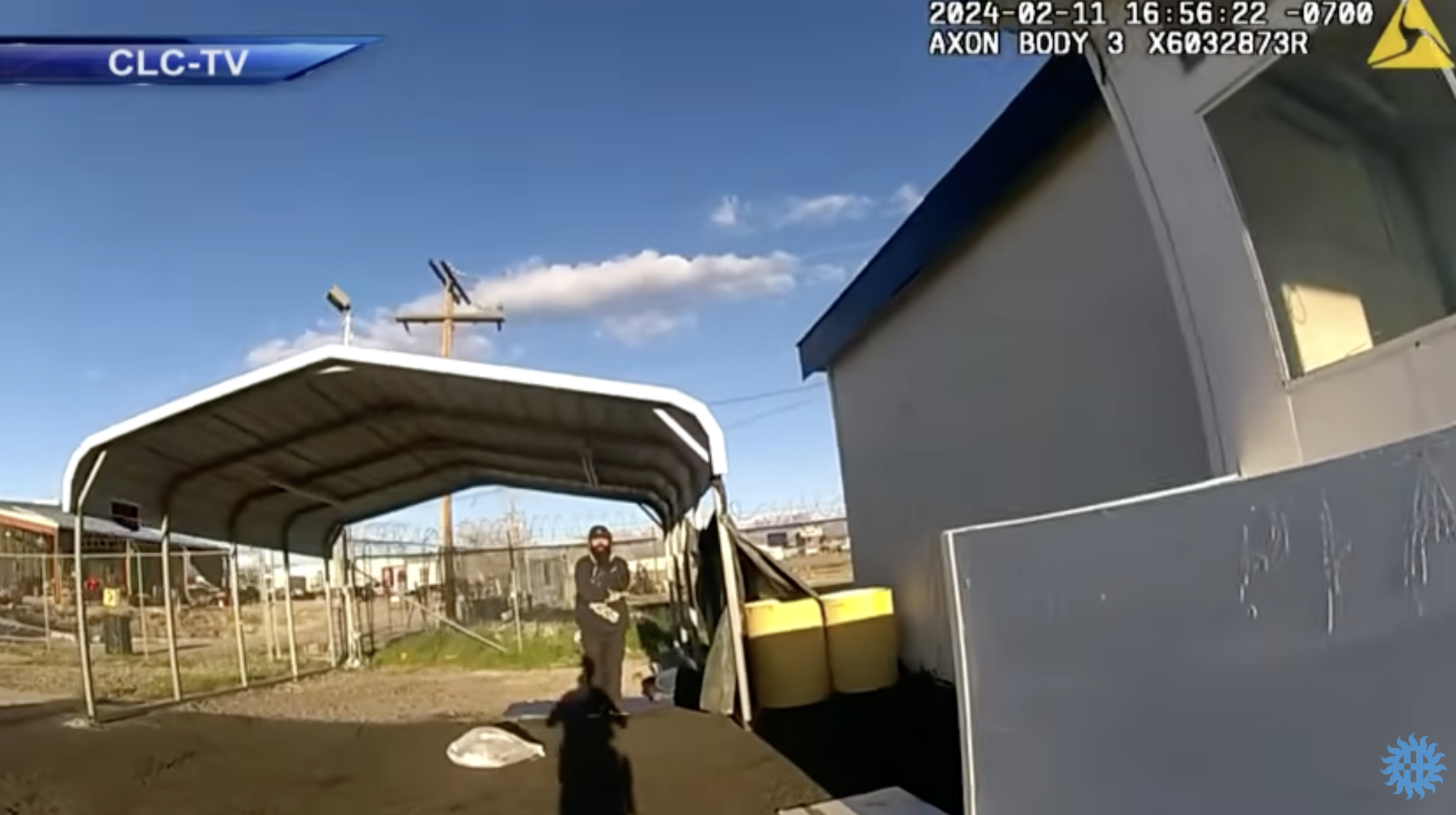
Just before the Las Cruces, NM, police officer was murdered. Look at his shadow. What do you see? (Las Cruces, NM PD BWC footage)
Bellevue, Washington
December 12, 2025, Bellevue police officers respond to a report of an alleged DV incident at a transit station. It was a planned attack as the caller was the attacker.
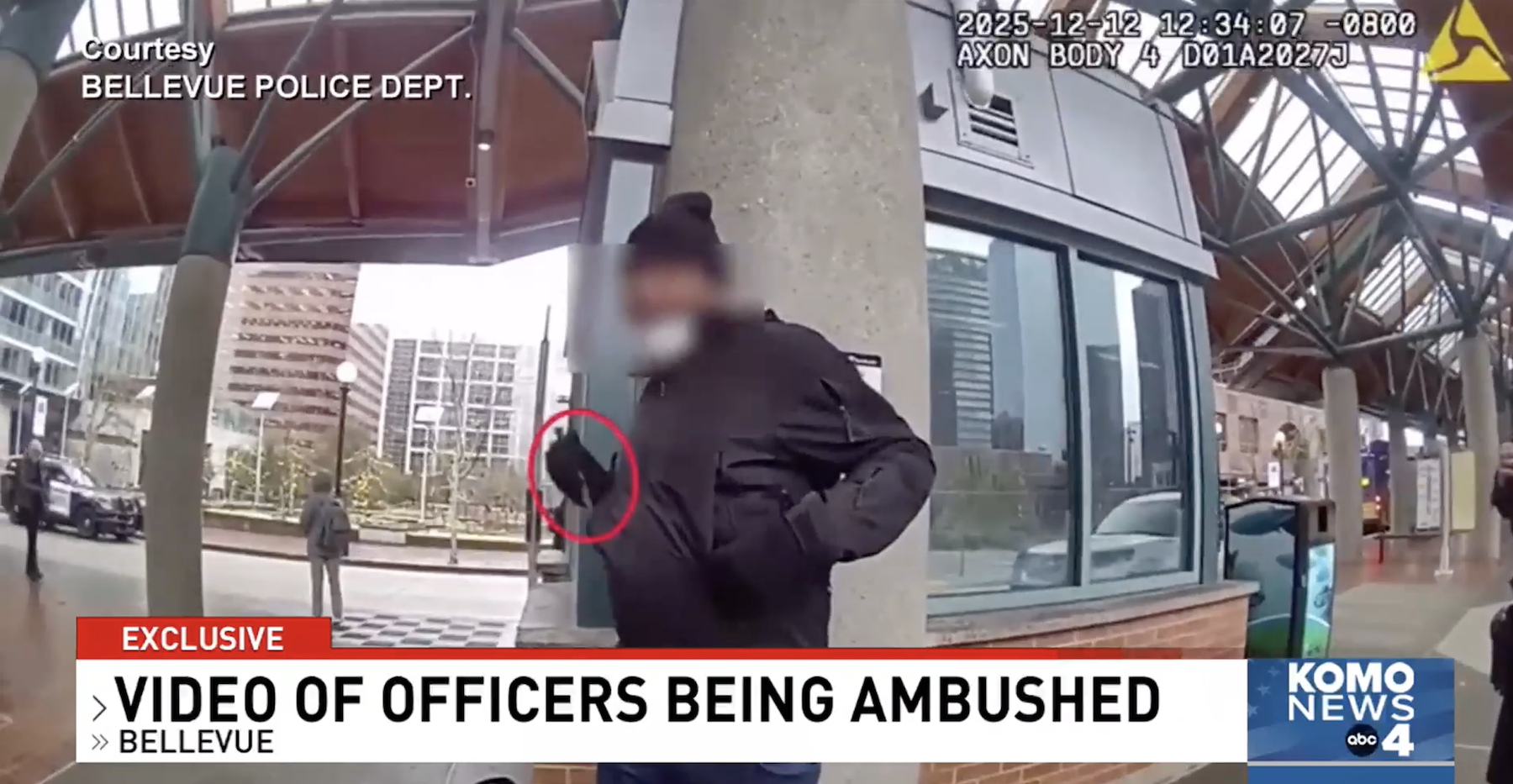
His camera caught the suspect pulling the knife. The officer’s hands are not in view. (Bellevue, WA PD BWC footage)
From a co-worker’s camera, I initially see the victim officer’s support hand in his vest with his strong hand free. In the immediate lead-up to the stabbing, both hands are in the vest and do not appear in the BWC footage. Of interest, he is almost/leaning against his patrol car and quite close to the suspect.
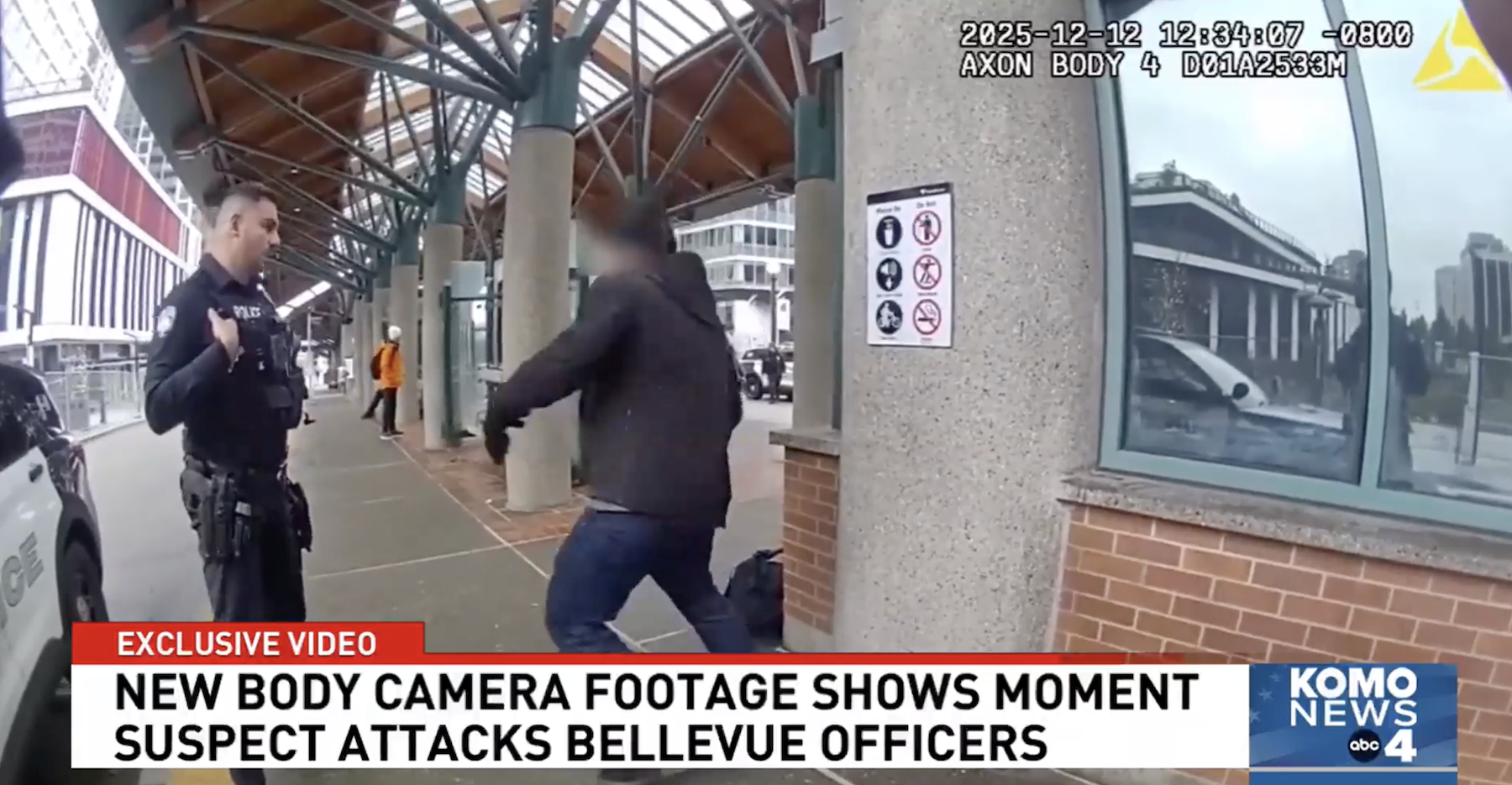
His partner’s BWC captured the victim officer’s hands inside his vest as the suspect is moving, closing the distance with the knife. (Bellevue, WA PD BWC footage)
The officer was slashed across his face and stabbed in the back; the suspect was shot by another officer and is being prosecuted.
External Vest Carriers
The commonalities? Attackers with edged weapons and officers with their hands inside the arm pit openings of their external vest carriers.
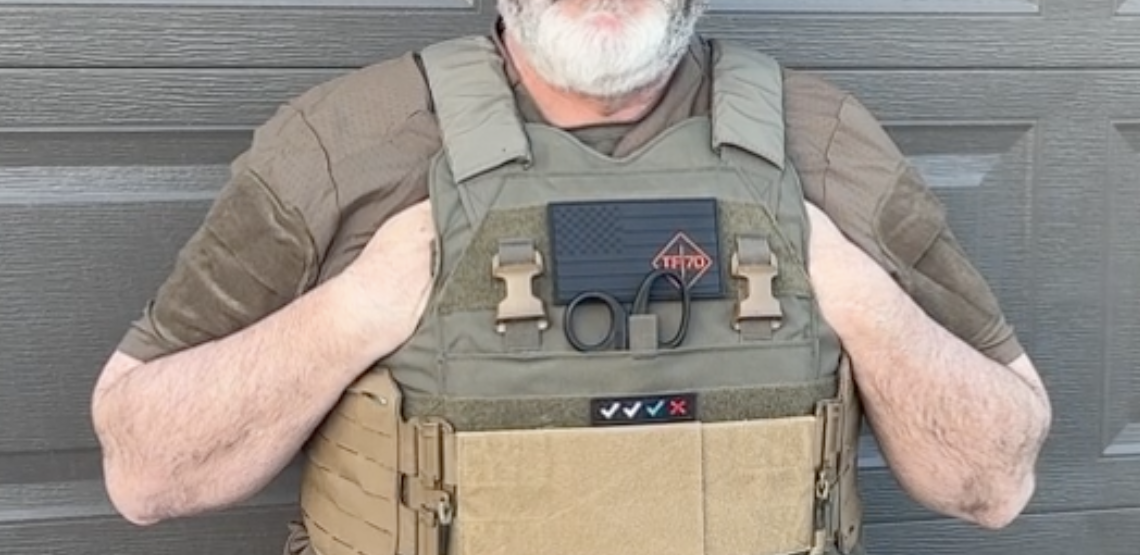
There are several reasons this is a bad position. Not the least of which could be the mental state it puts you in.
This article is not a case of yelling “get off my lawn,” even though I never decided to go with an external carrier. It should be viewed as a call to be aware of our capabilities and limitations when using certain equipment.
Jackets
Where I am in Utah, we have barely had winter weather. Yes, it has dropped into the teens on occasion. We haven’t seen the winter weather that nearly everyone east of the Rockies has been hit with.
If it is so cold that you are wearing heavy jackets or parkas, I understand the temptation to put your hands in your pockets. However, having them in those pockets creates the same problems we are seeing with tucking them into the vest.
Gloves
There will be times when nothing but a pair of gloves will work. You might even be in an environment that requires mittens – but that issue is well beyond my experience.
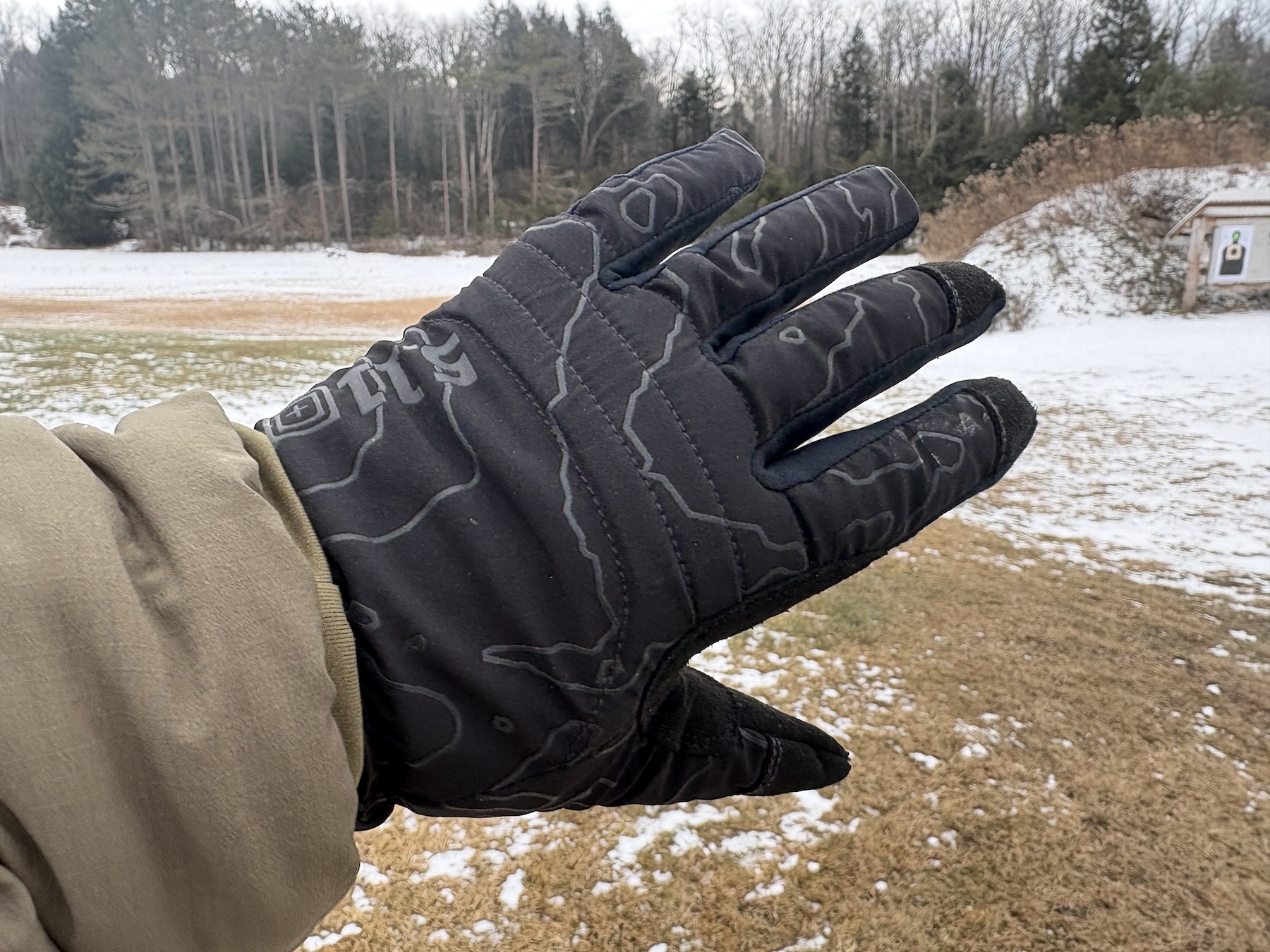
5.11 Tactical Competition Primaloft insulated glove – I’m really happy with them in cold environments when I need dexterity.
Currently, my go-to cold-weather shooting gloves are 5.11 Tactical’s Competition Primaloft insulated glove. They come in black and kangaroo (coyote-ish), with a subtle topographic pattern and a synthetic suede palm. Recently, I wore these while teaching a red-dot/new-pistol transition class in northern Pennsylvania, with temperatures in the teens. I was quite happy with them and recently picked up another pair.
Fence
Your hands need to be available for any of these to work; by that, I mean not in pockets or tucked into the vest.
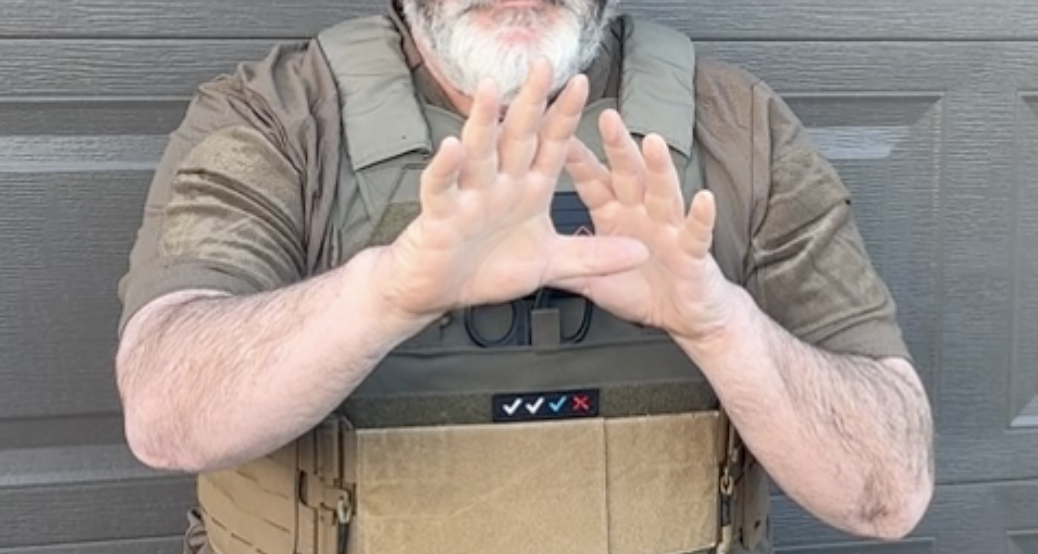
Employing a fence with both hands while communicating with a subject during a contact, detention, or interaction that has already escalated.
One of several takeaways from Craig Douglas’ Shivworks ECQC – Extreme Close Quarters Concepts – class was the idea of a fence. You build a fence between you and the other individual – subject, suspect – with your hands. It can be overtly high-profile, obvious, or lower-profile, even subtle, but it’s there nonetheless.
These include the finger-and-thumb-tip teepee used by some in the executive protection field.
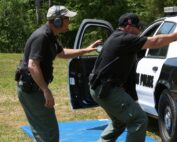
Another is both hands open, raised up to collarbone level. One hand six to eight inches ahead of the other. This style can be easily coupled with overt verbal interactions, even commands.
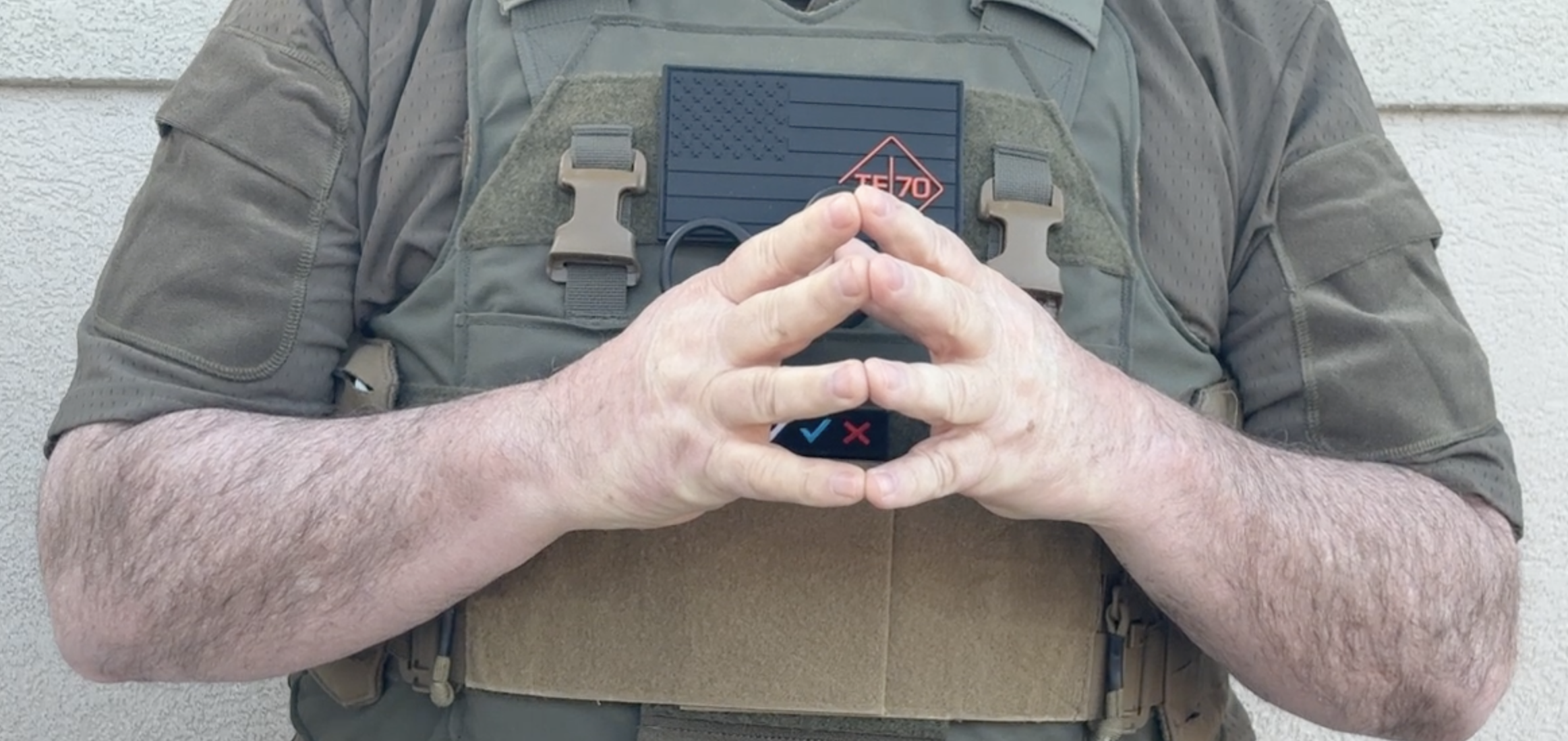
A lower profile position for your hands. Not threatening and a much easier way to engage when needed.
A more relaxed version, when warranted, could even be the teepee just above the belt line with the forearms resting on pouches across the front of your belt or the bottom of your armor.
Regardless of which ones you adopt, have a couple of ways, scalable to the nature of the encounter, that keep your hands free to use your physical skills, your tools, or, if deadly force is necessary, your firearm.
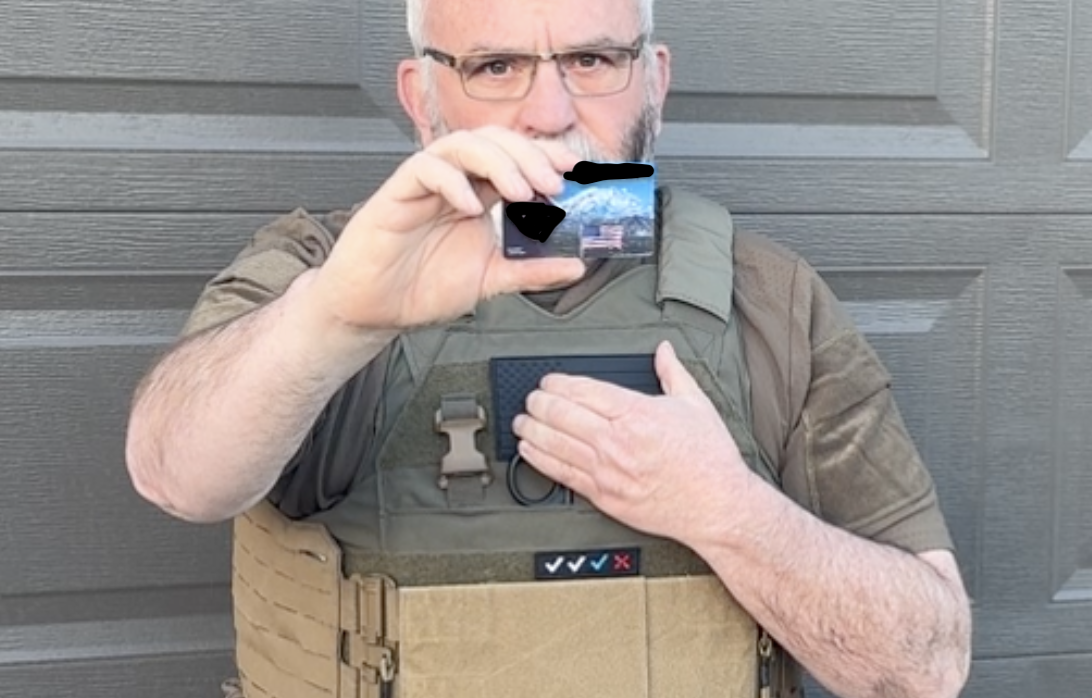
Looking at a subject’s ID and potentially running them while keeping your eyes, head, and hands up – not down. Notice how the Velocity System’s rugby shirt and their armor carrier are a close match color-wise.
Colors
A brief note on the color of the external carriers. When the Army transitioned to the digital Universal Camouflage Pattern in ‘05/’06, there was a significant push to field matching armor and load carriage in the same pattern immediately. This was driven by a belief that previous mismatches in patterns – woodland and desert – contributed to successful attacks by insurgent snipers.
In the current environment, I’d argue that agencies should specify that their armor carriers match their uniform shirts as closely as possible in color.
Final Thought
As always, seek out competently presented training specific to your role.