
 (+8 rating, 10 votes)
 Loading...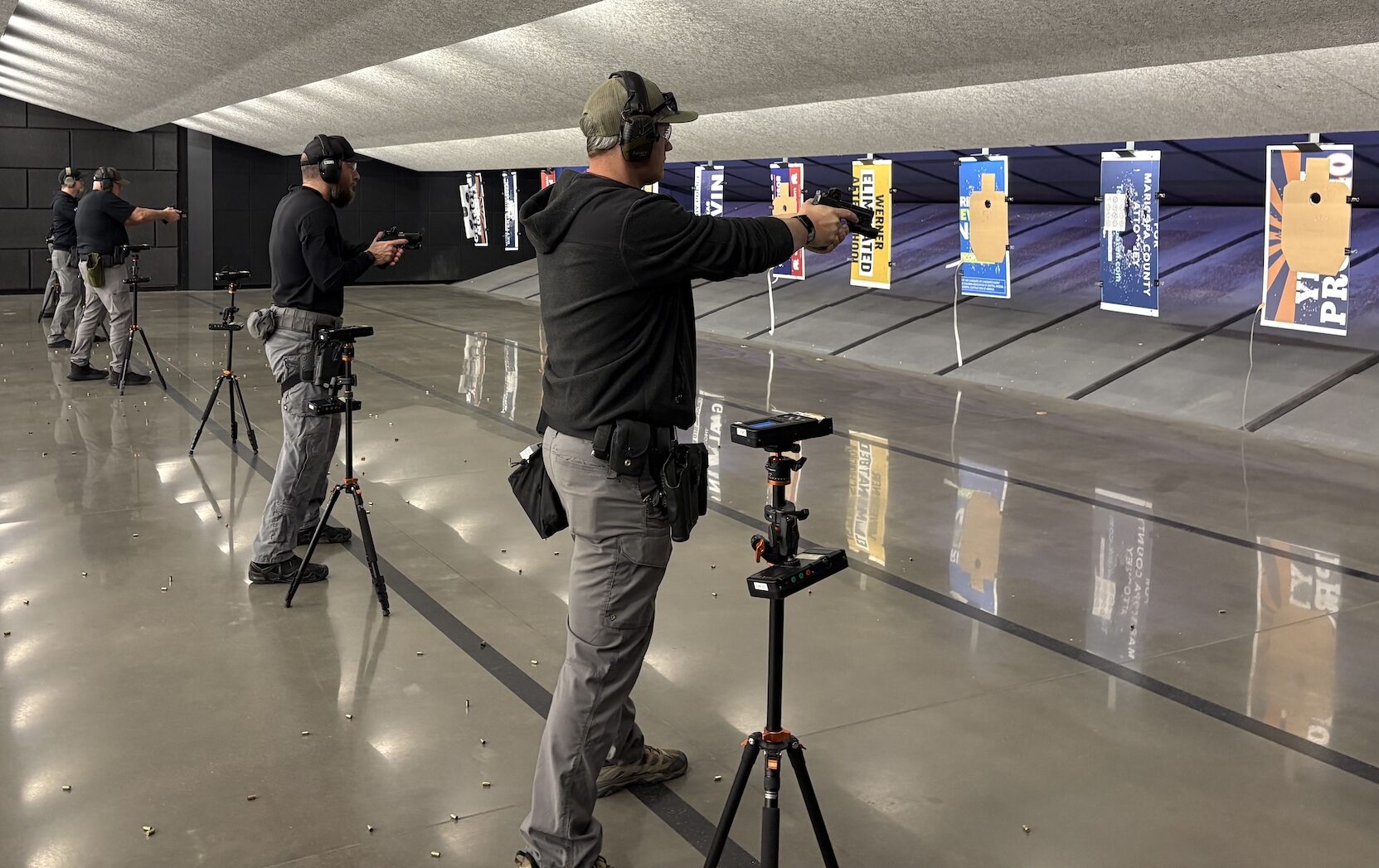
feature_5465
Recently, I had the opportunity to take Understanding the Terrain: An Overview of Brain-Based Tactical Training Design from Dustin Salomon. It is focused on developing training that works better with our brains.
The shooting portion uses the NUROs that Salomon designed. They were mentioned in a previous article HERE.. Essentially, they are a very smart shoot timer and laser projector.
Who Is This Guy?
Salomon is a US Naval Academy graduate who started in the Surface Warfare part of the Navy before finishing in the Expeditionary world – think Brown Water Navy. He shot competitively at the USNA. He was in the fleet when al Qaeda attacked the USS Cole in Yemen. That meant he was around when the Navy started arming watchstanders when ships were in port.
He was tasked to conduct handgun training for the crew. His request for 300,000 rounds of 9mm ball and a range for two weeks straight? Uhm, nope to both. That ultimately started him on the path to how he views teaching now.
He worked in the contracting world and has been involved in the training development space for several years.
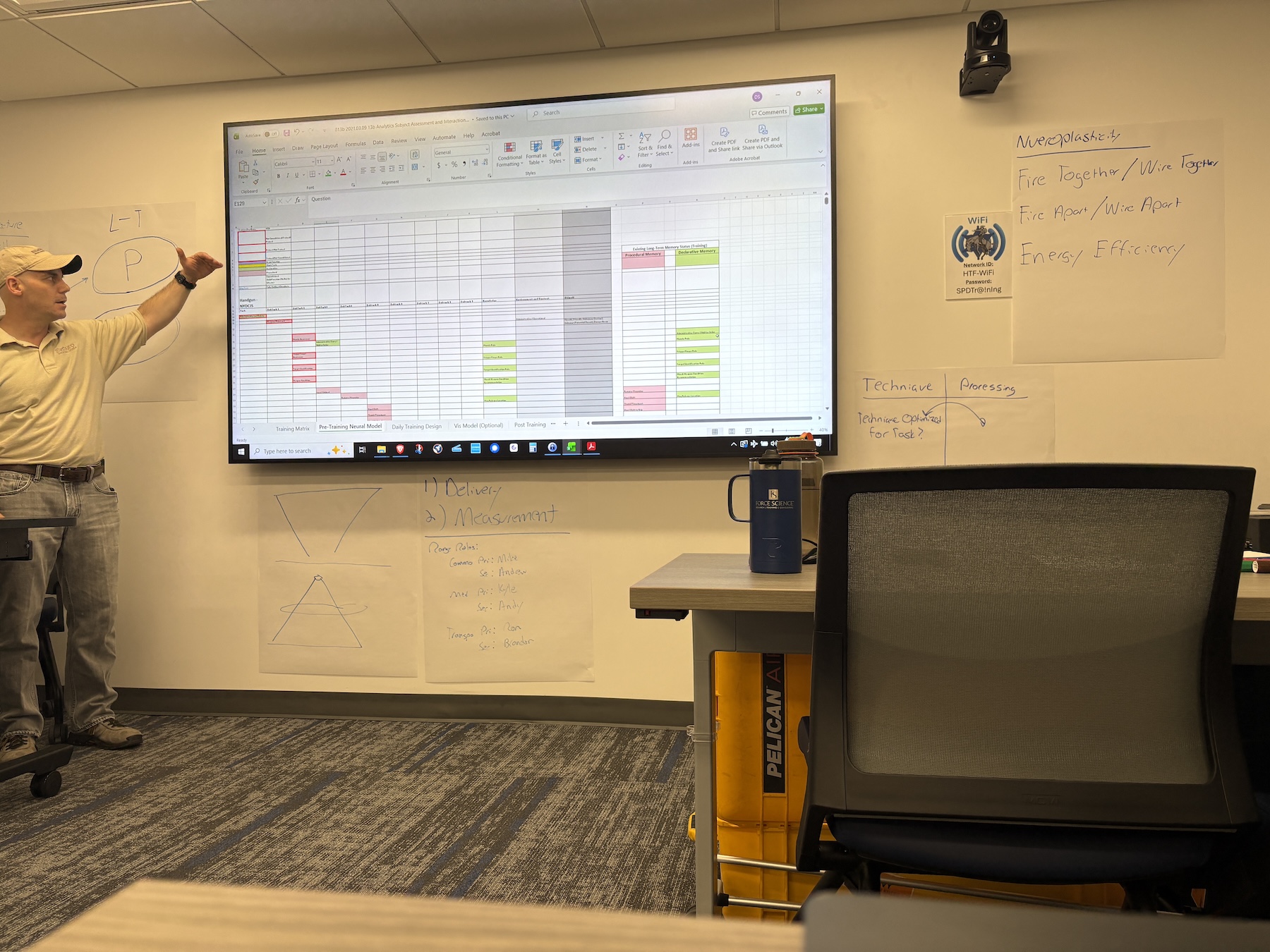
Back in the classroom, Dustin is explaining how to develop a task matrix.
Books?
Salomon has written several books. Building Shooters and Hitting in Combat, as well as On Training. He regularly publishes short-form essays on his website.
The Class
Scottsdale PD hosted several Phoenix area officers involved in training, tactical assignments, or both – along with your retired editor – for the class.
This class surveyed the existing research on brain-based training. Yes, we shot some, but not a lot. Two, maybe three, repetitions of each drill during the morning and afternoon, both days.

A two NURO se-up. This will illuminate the primary target and a secondary one, too.
Visuals
No PowerPoint in this class, just Dustin’s handwriting on flip charts. Some of the takeaways:
Cognitive Architecture
The goal of a training process is to construct a new circuit(s) within the brain. Unfortunately, all the incoming information is being filtered out until the brain determines it is important.
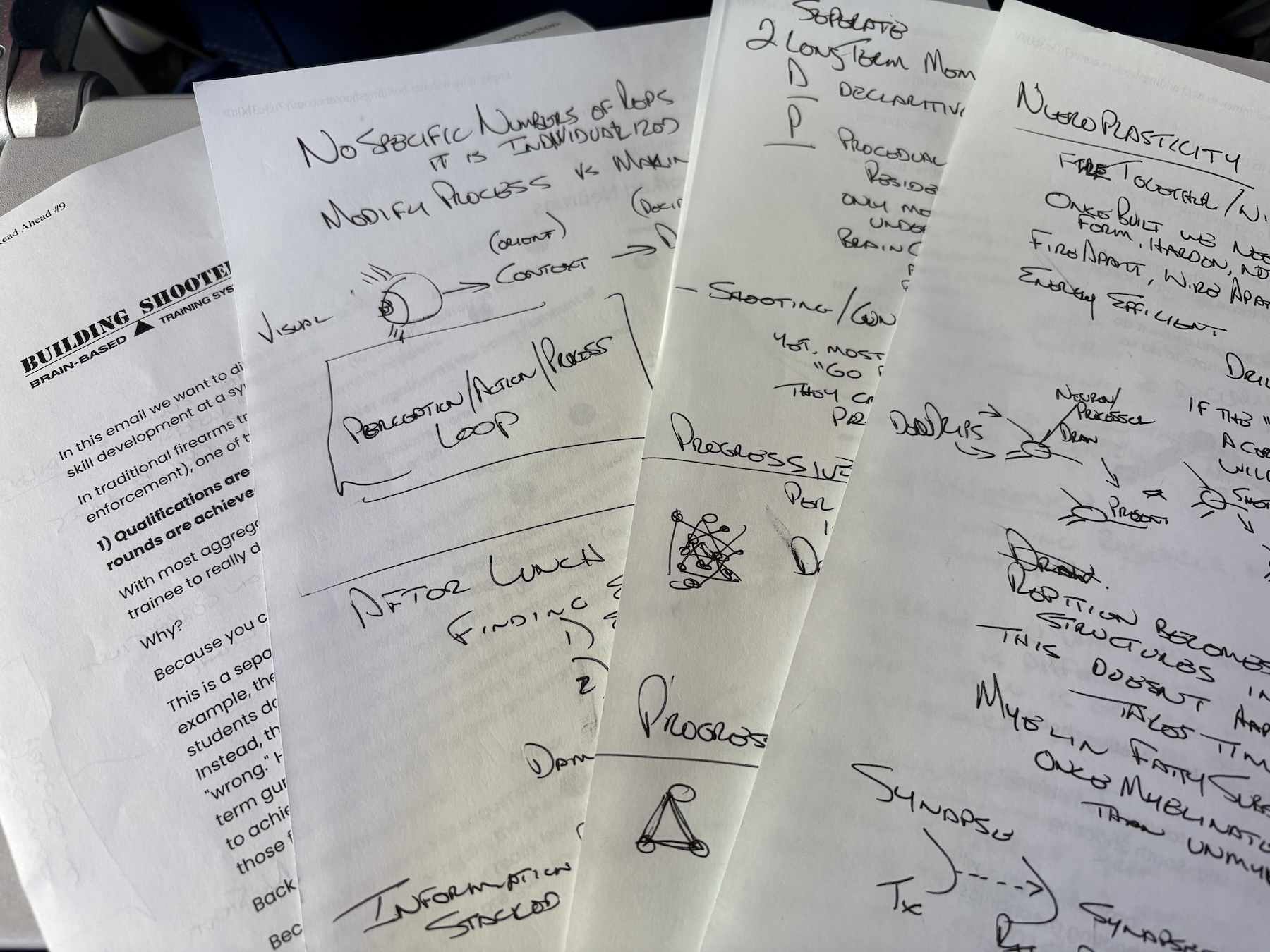
Pre-reading and just a few pages of notes.
Short Term Memory
It is the smallest of the memory systems. If your brain is two complete pages, your short-term memory is a single dot. There is just enough retention to pass a test, then it goes. And it is very compartmentalized. If, say, it can take six pieces of information, only one will sink in.
He added that traumatic events can get stuck here, rather than transferred to long-term memory, where they can be more easily addressed.
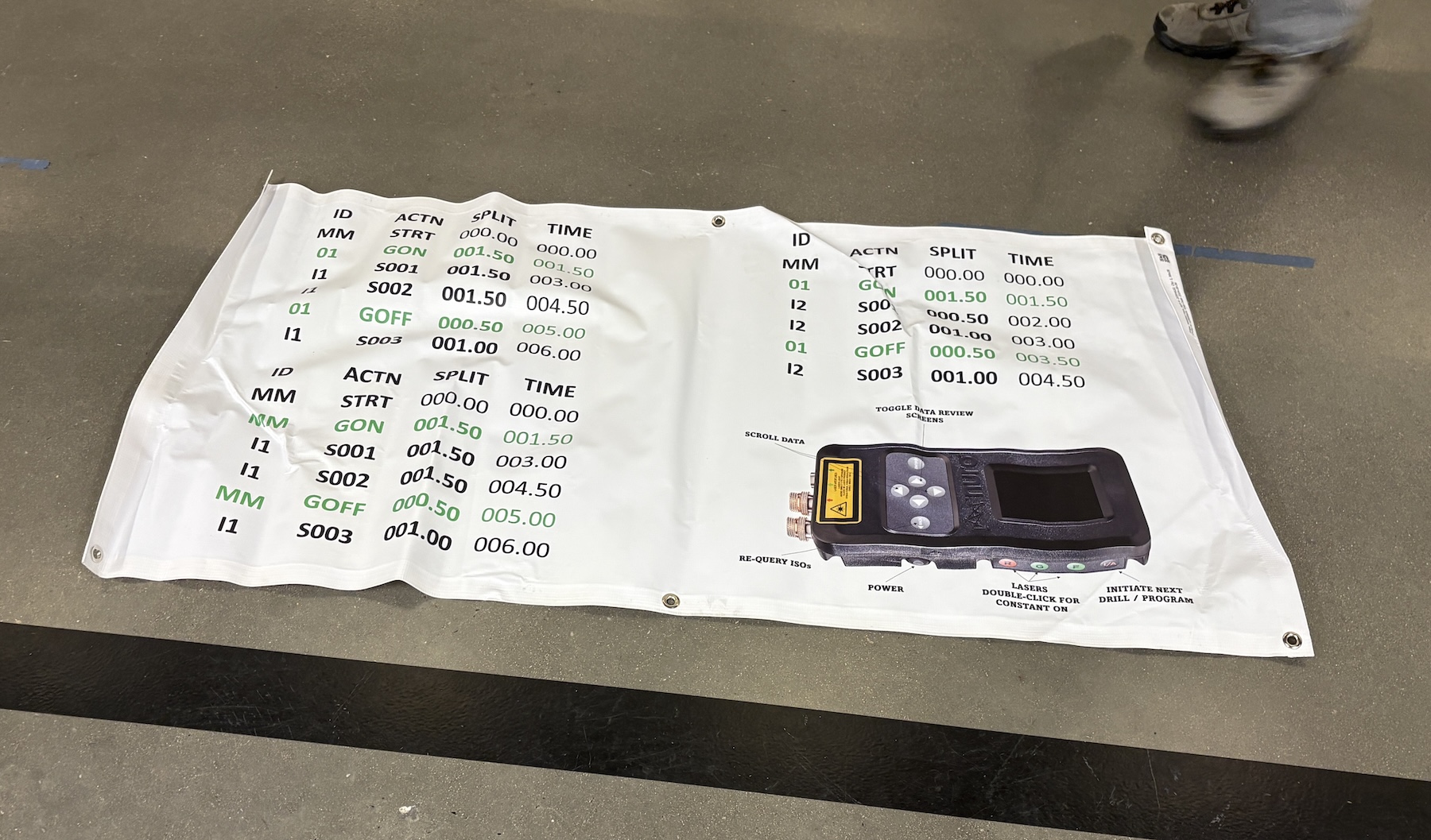
A training aid to help with interpreting data on the NURO’s screen.
Long Term Memory
There are two subsystems here: Declarative and Procedural.
Declarative is conscious in nature. Examples would be reciting a use-of-force policy and shooting a Bill Drill.
Procedural has an unconscious access and sits in a completely different part of the brain. It is the only one of the three we can access under stress. And since our shooting and fighting skills are used almost exclusively under significant stress, we need to train much more in that environment, rather than only telling students what to do on the next drill.
Neuroplasticity was up next. Essentially, this is how the brain can be changed. Once we change the brain, the goal should be to form and harden the new structure. Neurons that fire together will wire together. However, if they are allowed to fire apart, then they will wire apart. Drills should make you use multiple individual skills.
Based on the research, Salomon says there is no set number of repetitions; it is individualized. Those repetitions can be impacted by whether you are modifying an existing process or creating a new one.
While not an exact quote, Salomon noted that when learning a new process (skill), one should emphasize learning the skill, become efficient at performing it with clean lines, and, before pressing the gas pedal.
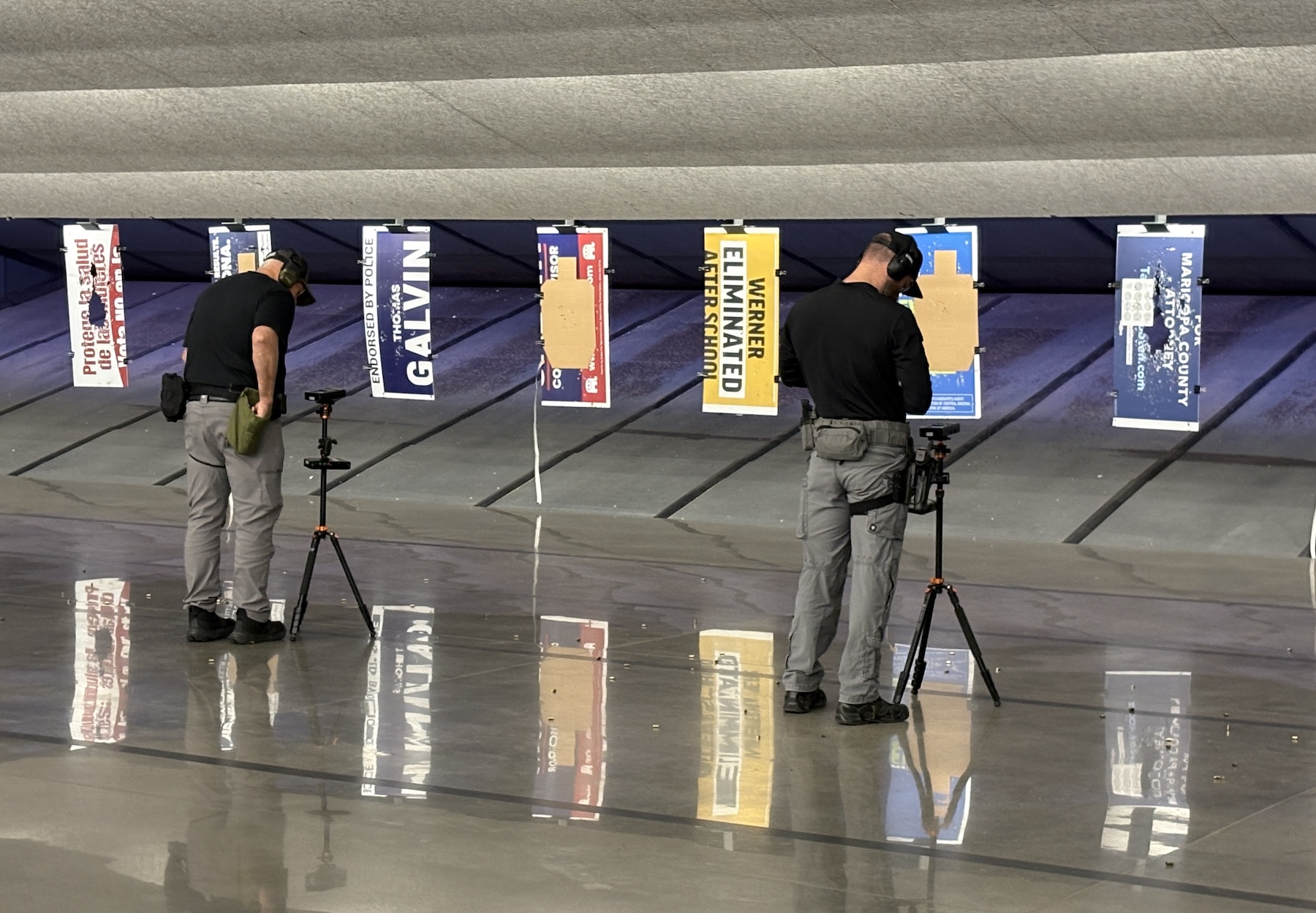
After a string of fire, students are checking their data.
Priming
Since discovering it, I have been a fan of the EDIP principle for teaching. It stands for Explain, Demonstrate, Imitate, Practice. The first two are on the instructor to do successfully; the last two are done by the students. The IP part requires feedback on their success and failure with the material. Salomon uses it as well.
One interesting tidbit came up in this section, and while it was visible in hindsight, Dustin had not specifically mentioned it before – the concept of priming. We retain little, if anything, from our first exposure to something. The first glance is a throwaway. However, it prepares the mind for seeing it again. Each session should include priming on the next block as well as a solid review of what was covered in that one.
Before the class, he sent several emails outlining the material he would cover. Some of those included additional readings.
Gave me some ideas for the future.
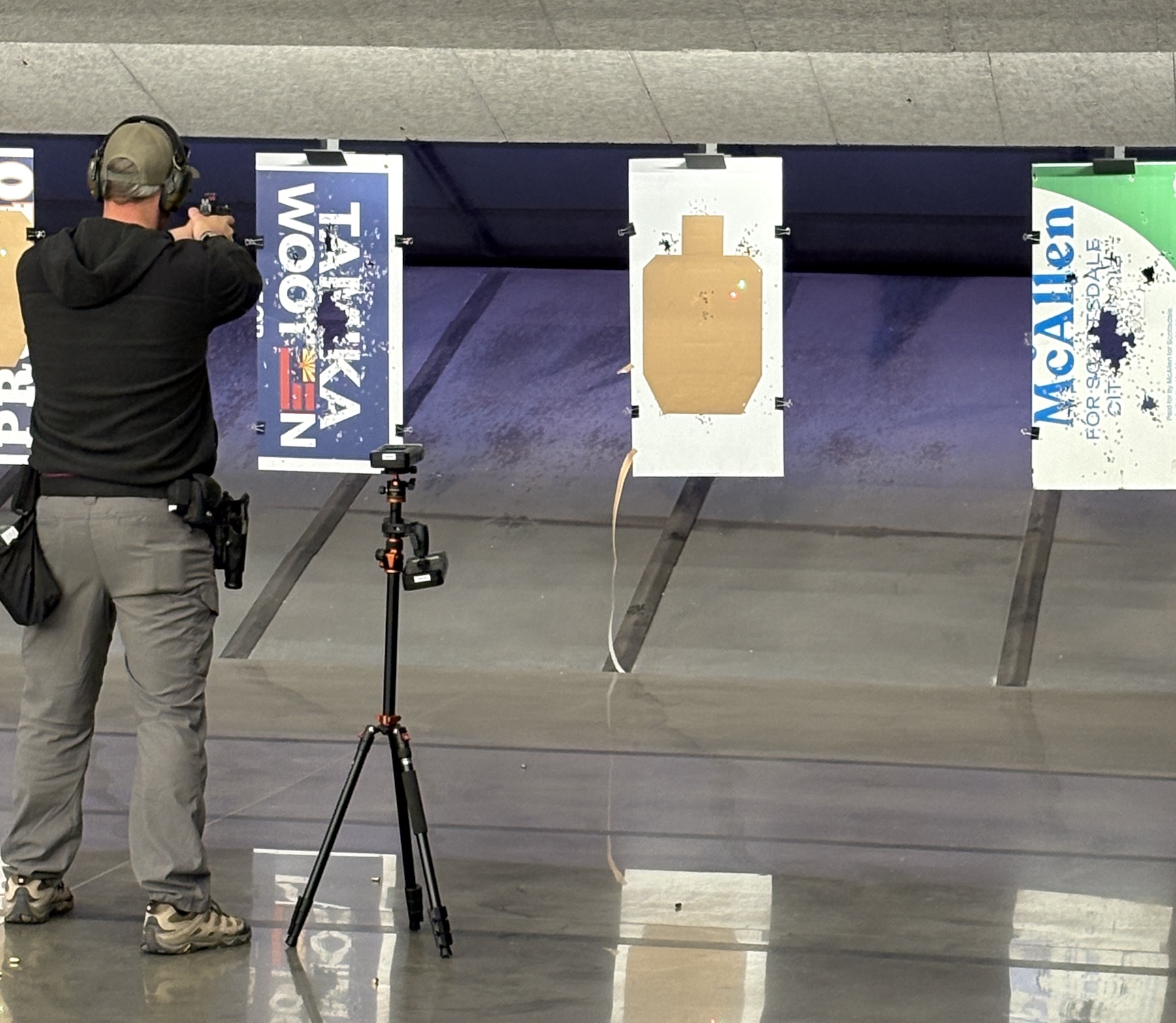
The NURO is illuminating the target, and the student has responded to it.
Ideal World
The final lecture segment covered how Salomon would develop and lay out training in an ideal world. He did this with the acknowledgement that none of us worked in anything close to it. This involved a detailed analysis of tasks and the steps required to accomplish them.
Having taught in three institutional settings so far, a lot more of the community needs to pay attention to work like Salomon’s. Not only can “we” improve our training delivery, but we must. While several instructors out there can point to what they think are better ways, the science is showing us the parameters that define best practices. It is up to the teachers, trainers, and program developers to work that in. That includes finding workarounds when industry norms clash with scientific research.

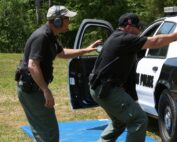
One student moved after responding to a visual stimulus during a drill.
Final Thoughts
I’m not, nor will I ever be, a neuroscientist or even research assistant. However, after decades in the application side and a bit less time teaching, I can absolutely appreciate the importance of what the scientists and researchers are doing. One can only scratch the surface of imagination about what will be discovered as time goes on. If you are involved in teaching and program development, please stay informed about these developments and find ways to incorporate them into your efforts.