“We didn’t know how accurate shotguns were until we put good sights on them.”
I first heard that back in ’95 from Bill Jeans. Who is that, you ask? Bill served in Viet Nam as a Marine rifleman, was a patrol sergeant at the Clovis, CA police department, and then became the operations manager at Gunsite Training Center in Paulden, AZ. After leaving there, Bill started Morrigan Consulting and filmed a few videos with Panteao Productions.
Back then, good sights usually meant some version of a ghost ring or a few other designs.
Fast Forward
Over the last several years, good sights have included a quality one-power (non-magnified) red dot sight. Or one with a green, blue, or amber reticle. Regardless of the reticle’s color, these have been widely adopted.
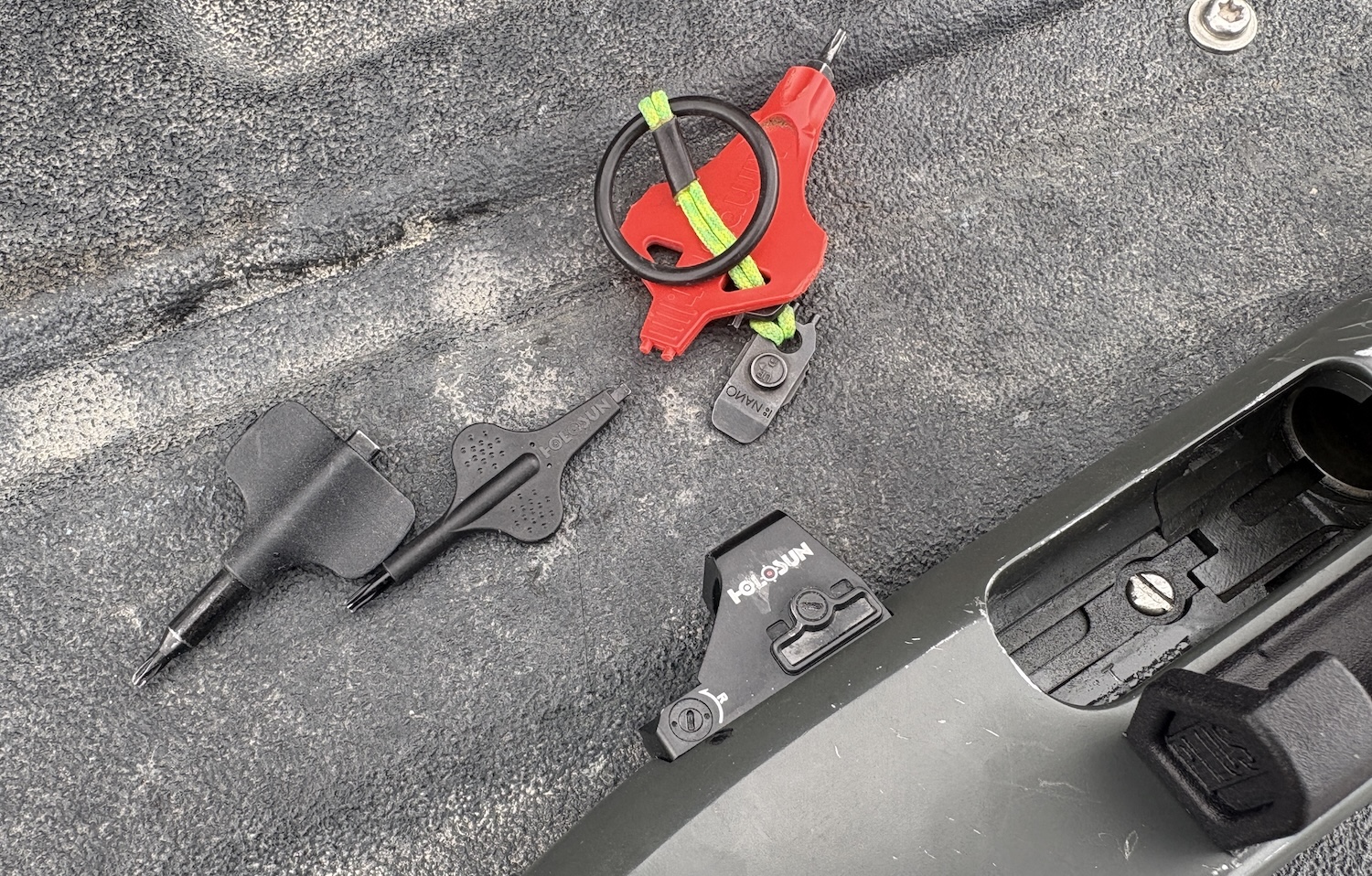
Hold on to the manufacturer’s sight adjustment tool; it comes in handy. As do all of the others that you can get your hands on.
Request
A while back, another instructor asked my thoughts about zeroing optics on defensive shotguns. Then, he asked me to cover them in an article.
So, here we go.
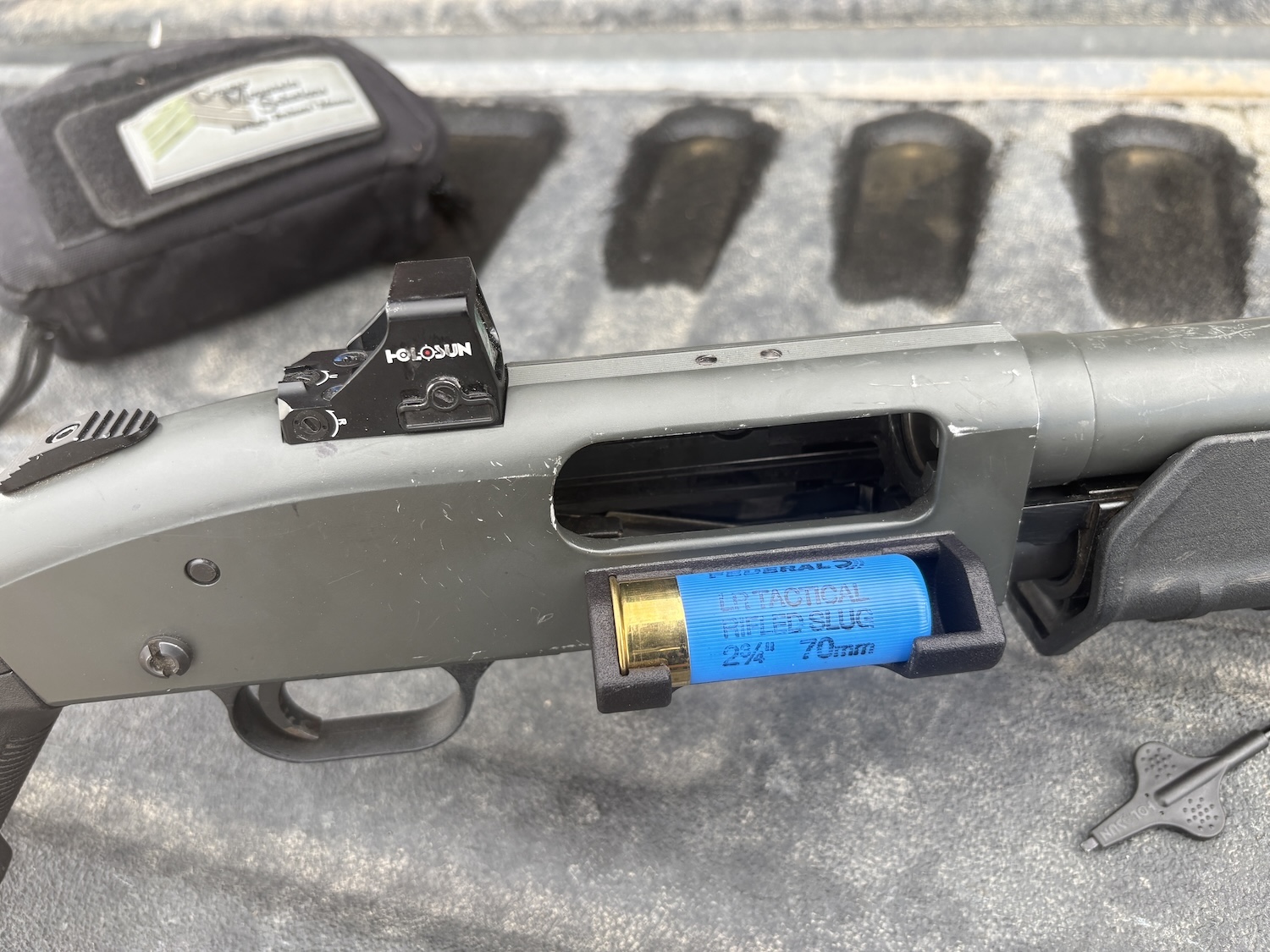
This was the first range session with Emissary Development’s new Plus One shell holder. So far? It appears solid.
Mounting
Before we get into the shooting part, make sure the sight is mounted correctly and securely. Prepare the shotgun’s receiver or rail in the same way you would the slide or plate on your pistol. Clean and degrease those parts that will touch each other. Test fit everything and ensure it all fits. Apply threadlocker, either blue Loctite 248 in the tube or a liquid version of that formula. Then allow the fluid to begin drying. Once everything is installed, use an inch-pound torque wrench and tighten all fasteners to the listed specifications.
Finally, witness mark those screws.
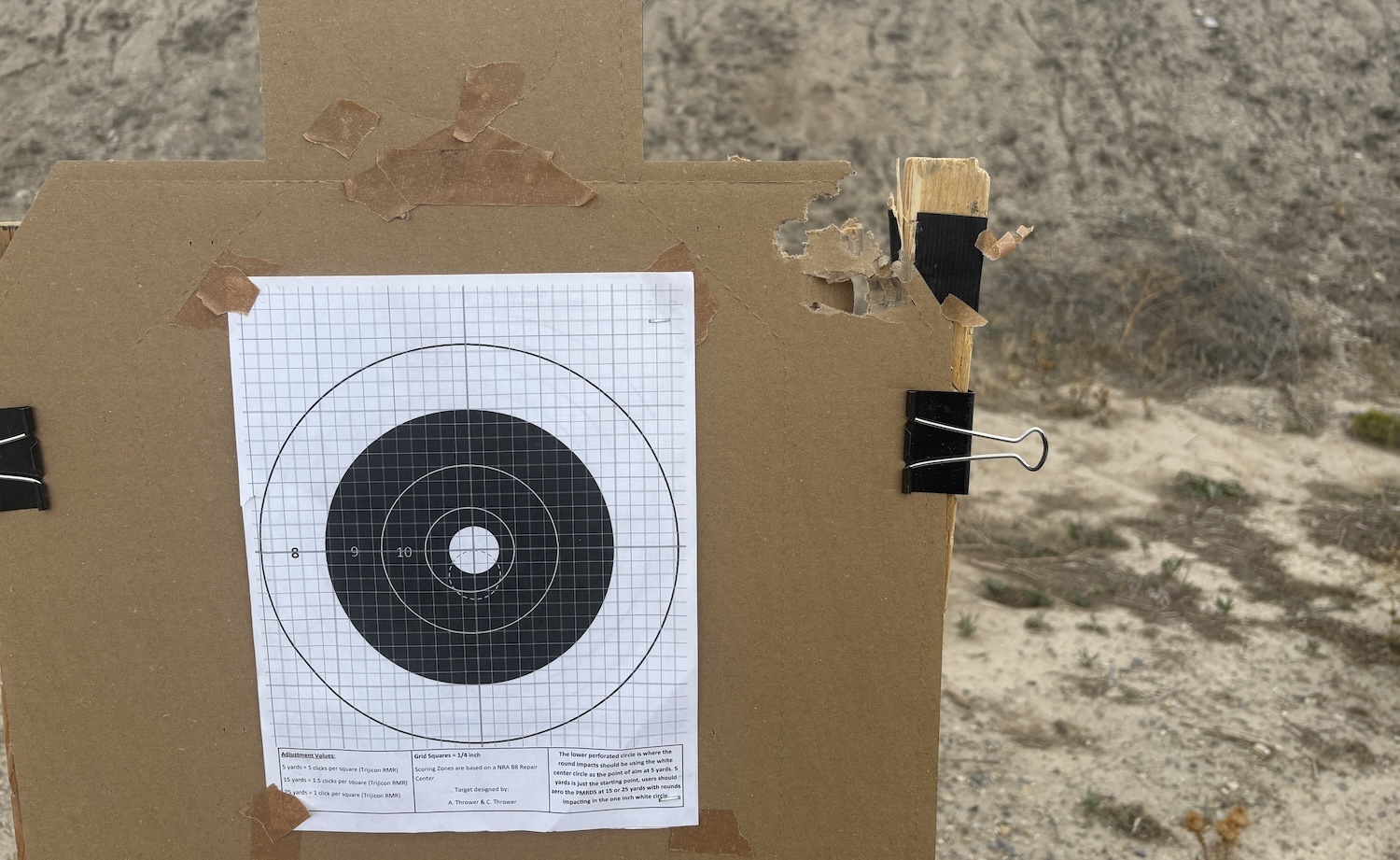
My first three-shot group with TruBall slugs. Point of aim was the white circle.
Ammunition
I use my defensive slugs when zeroing my shotgun (or, if it is a teaching gun, the ones I use in class). Then I verify where the shot pattern hits in relation to the sights. For this article, I’m using Federal Tru-Ball rifled slugs.
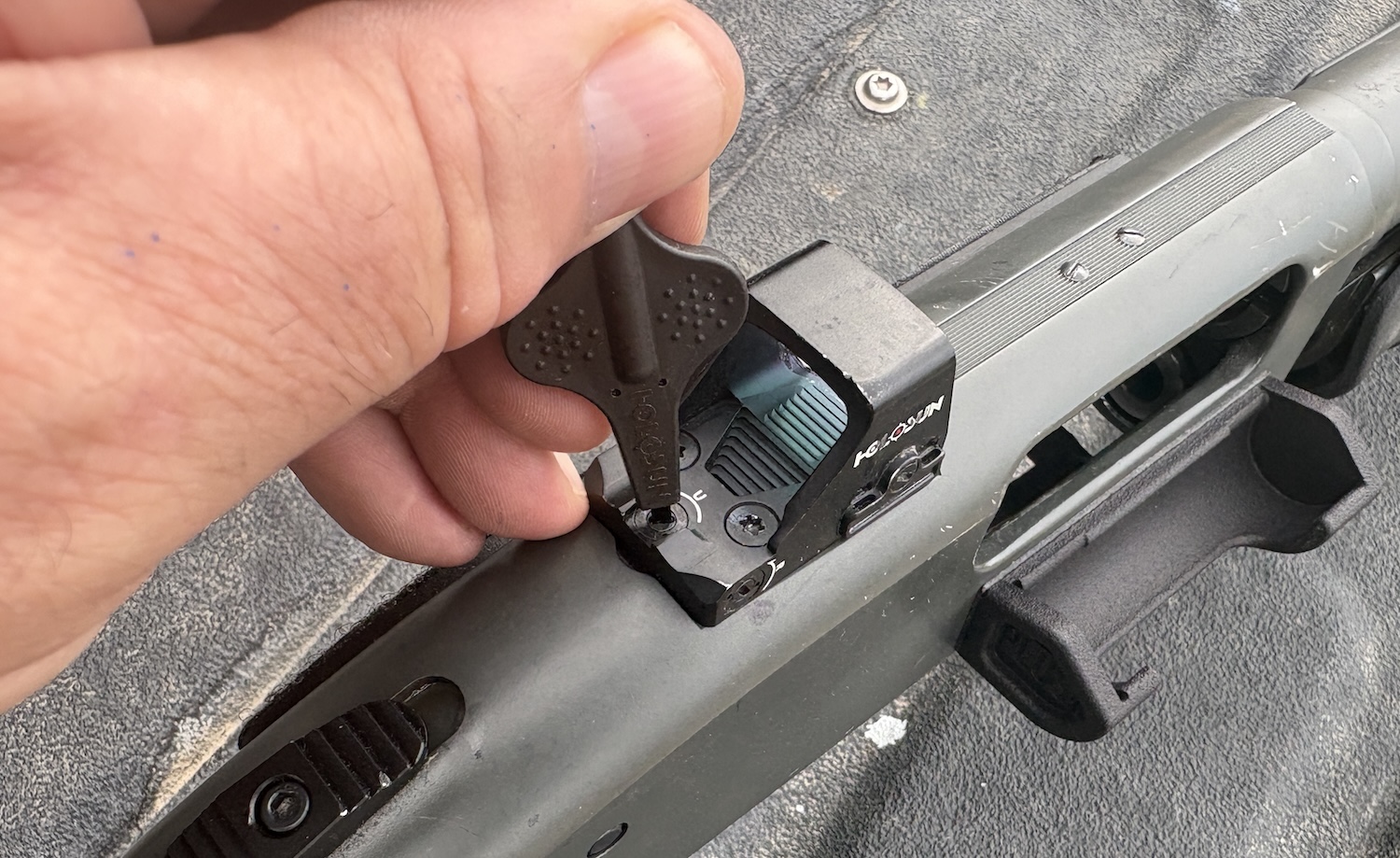
After seeing the target up close, I made the elevation and windage adjustments.
Pre-Process
Since bore sighting is a wee bit difficult with a shotgun, I’ll start in closer to the target if I have any concerns. Fire two aimed shots at 10 yards and make gross adjustments to tie the pattern to the sights.
Target
Since I am zeroing a pistol-mounted optic, I use the same zero target that I use for my PMO-equipped handguns. It came from the Thrower family.
If that is on a silhouette target, I mount it on the upper chest. The location matters less if it’s just on a target backer.
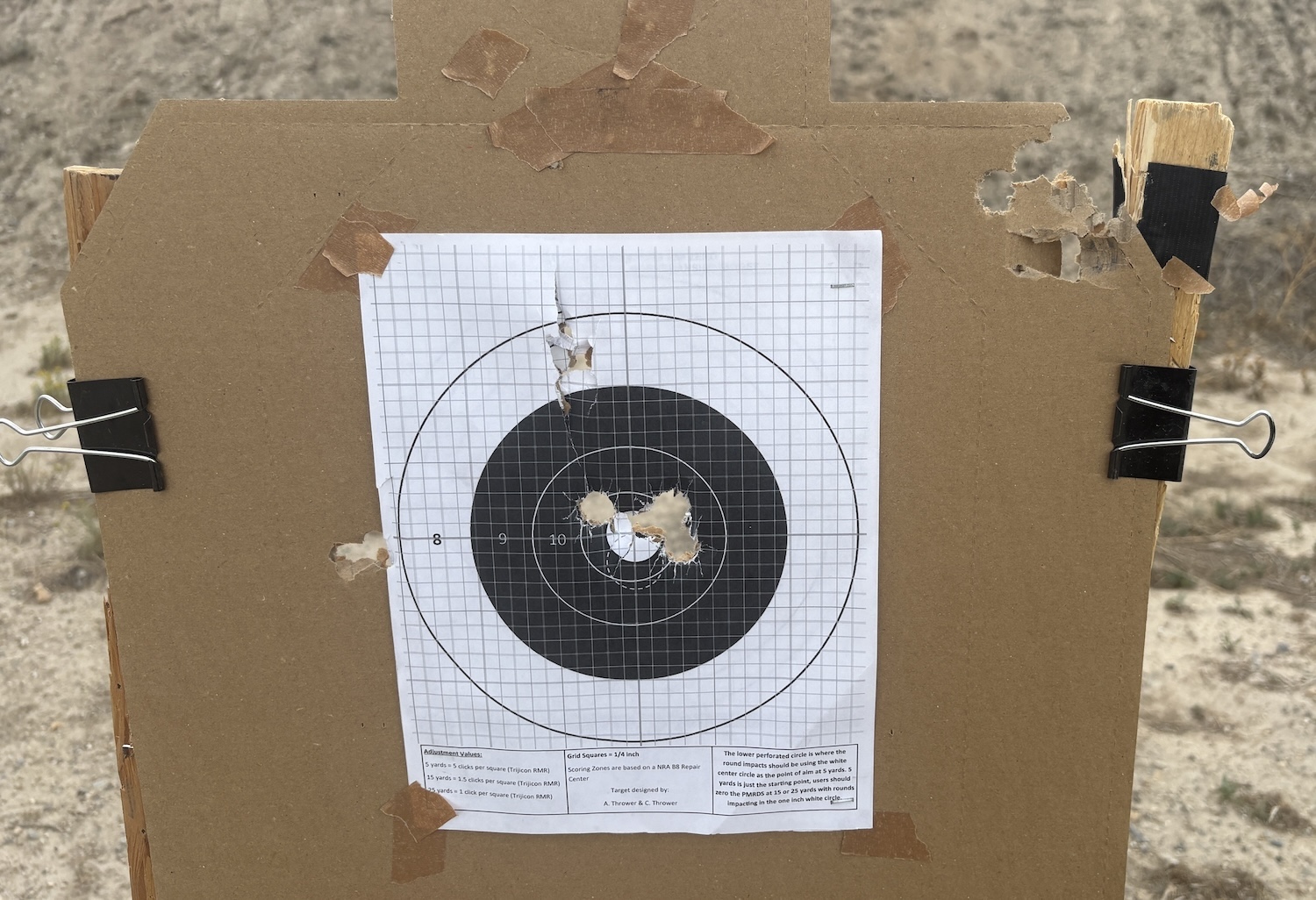
Same point of aim with the next three shot group. Yeah, I’m calling that good and not worried about the disks.
Zeroing
Otherwise, I start 25 yards back with some support. Yes, you can go prone; however, that is not a normal shooting position for most.
With support, I can choose to go kneeling or standing. My preference has become an adjustable tripod with a deck and a sandbag. I can adjust it up to my standing position with the sandbag under the forearm.
Steps
After dimming the reticle as low as I can while still being able to see it on the target, I ensure I have as solid a supported position as possible. Then, I take a sight picture. After taking the shotgun off safe, I will fire a three-slug group using the same point of aim.
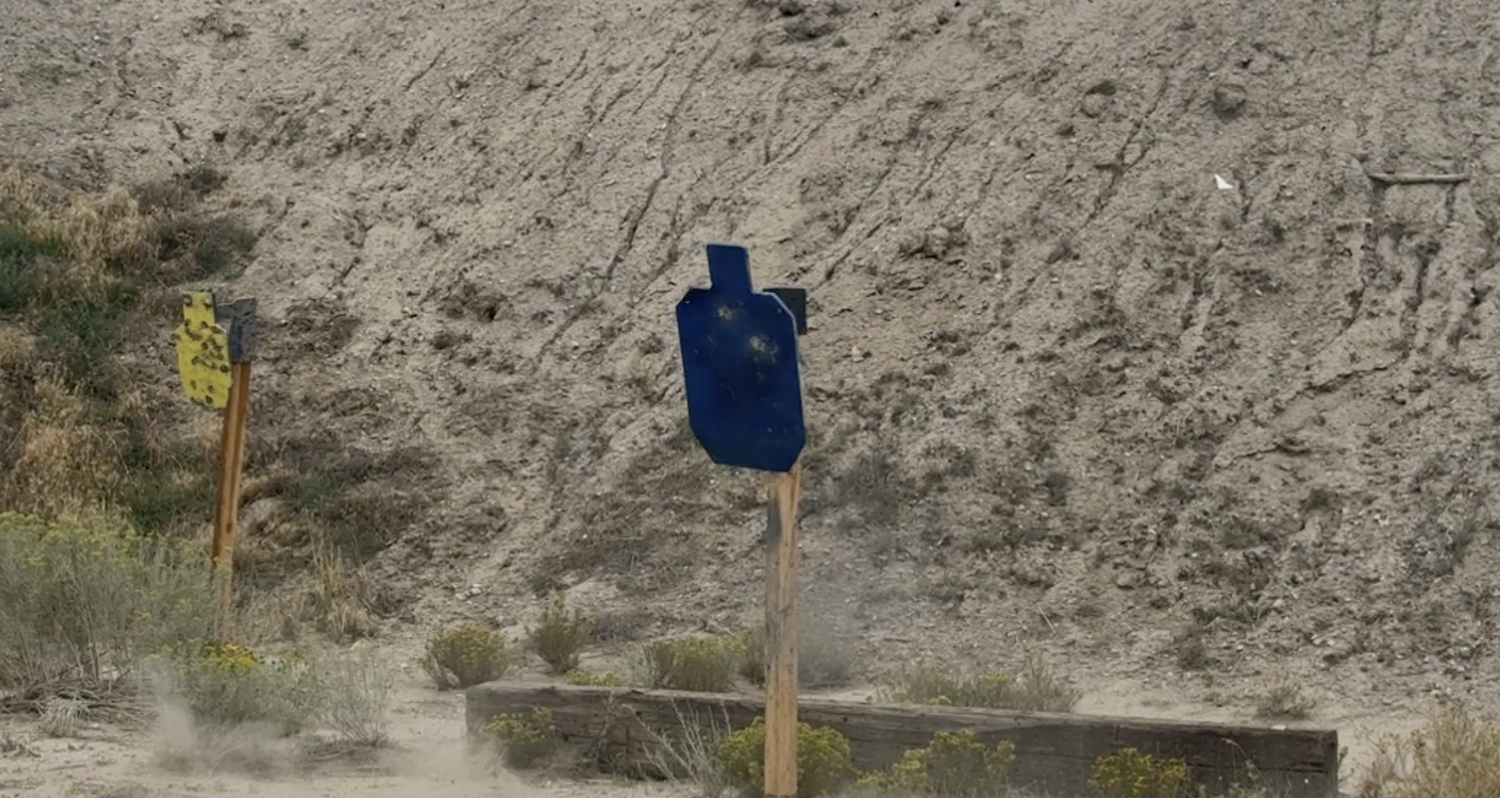
My three-slug hits at 50 yards to confirm the zero.
If I have any questions about the validity of the group – too much spread, an uncalled deviation of hits – then I will shoot a second group of three.
Once that’s been done and the shotgun is empty (or safe and slung), I’ll head down range to check the hits.
When I worked through this for the article, my first group was touching on the target’s upper left shoulder. Using the grid on the zero target and expanding it, I calculated the needed elevation and windage adjustments.
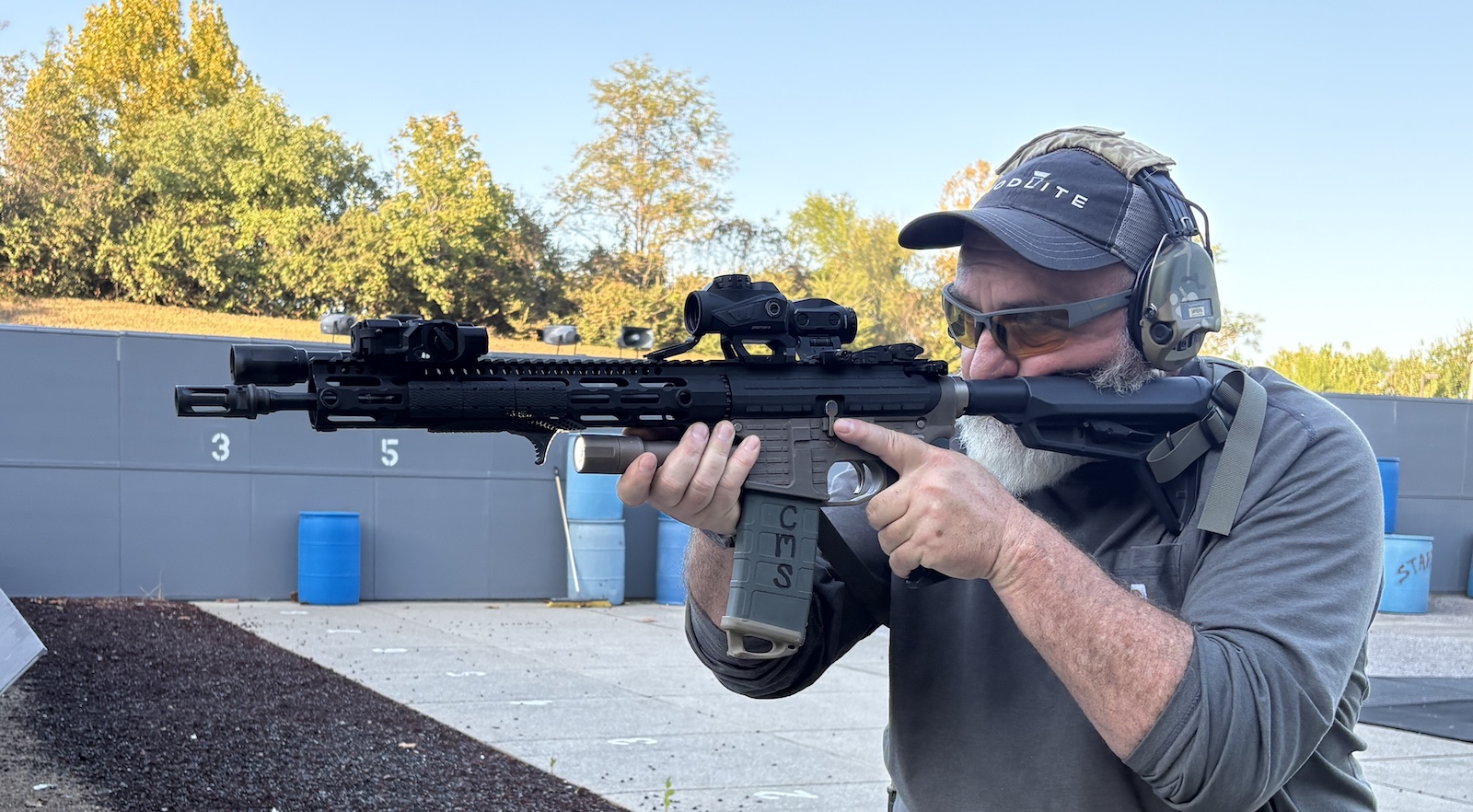
Even though I had all the sight tools with me, I made those adjustments using Holosun’s OEM adjustment tool.
Back on my tripod, I set up a supported shooting position again, then fired another three-slug group.
The second group was touching and impacted right at the top of the aiming point.
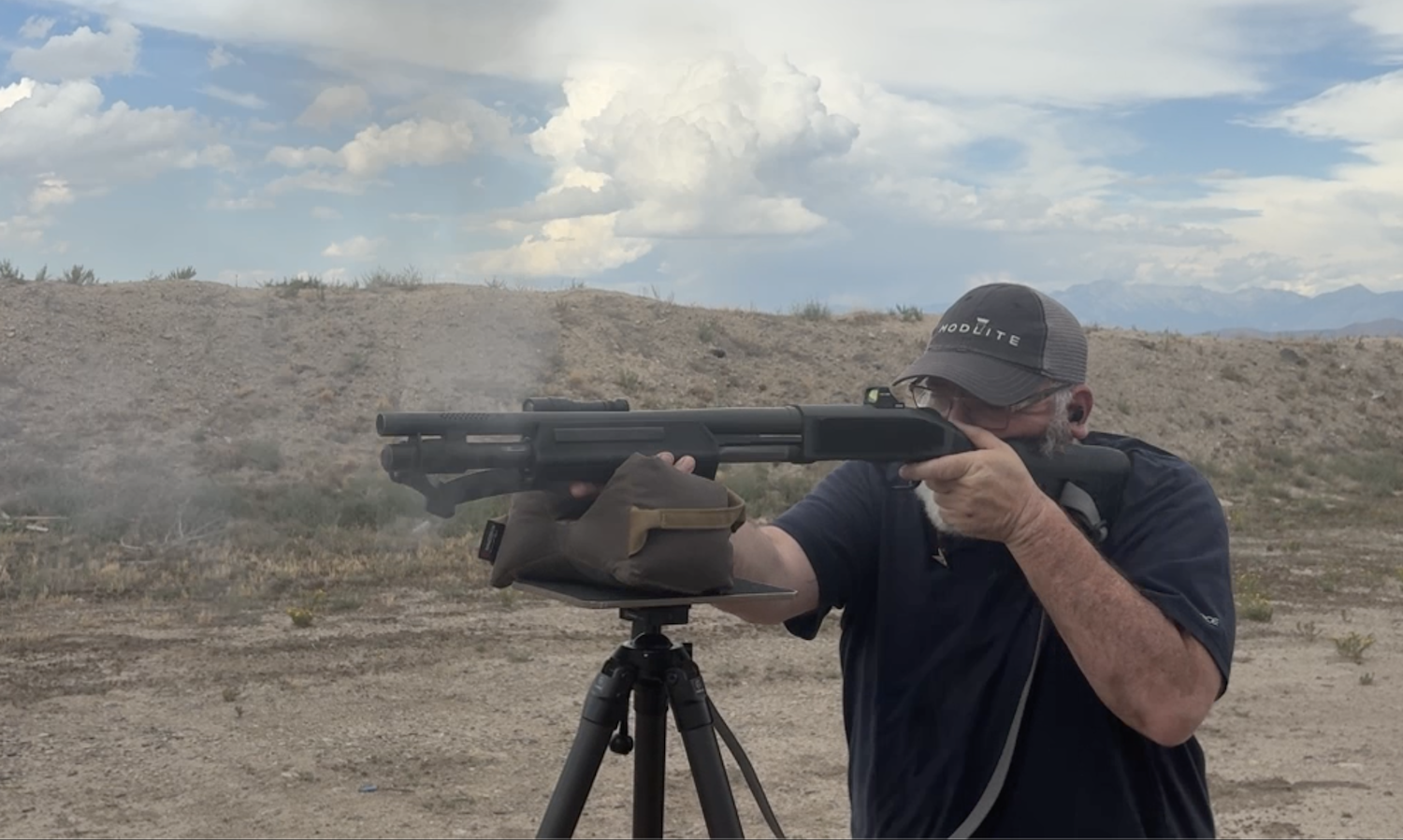
Using a tripod and sandbag for support while zeroing.
Confirmation
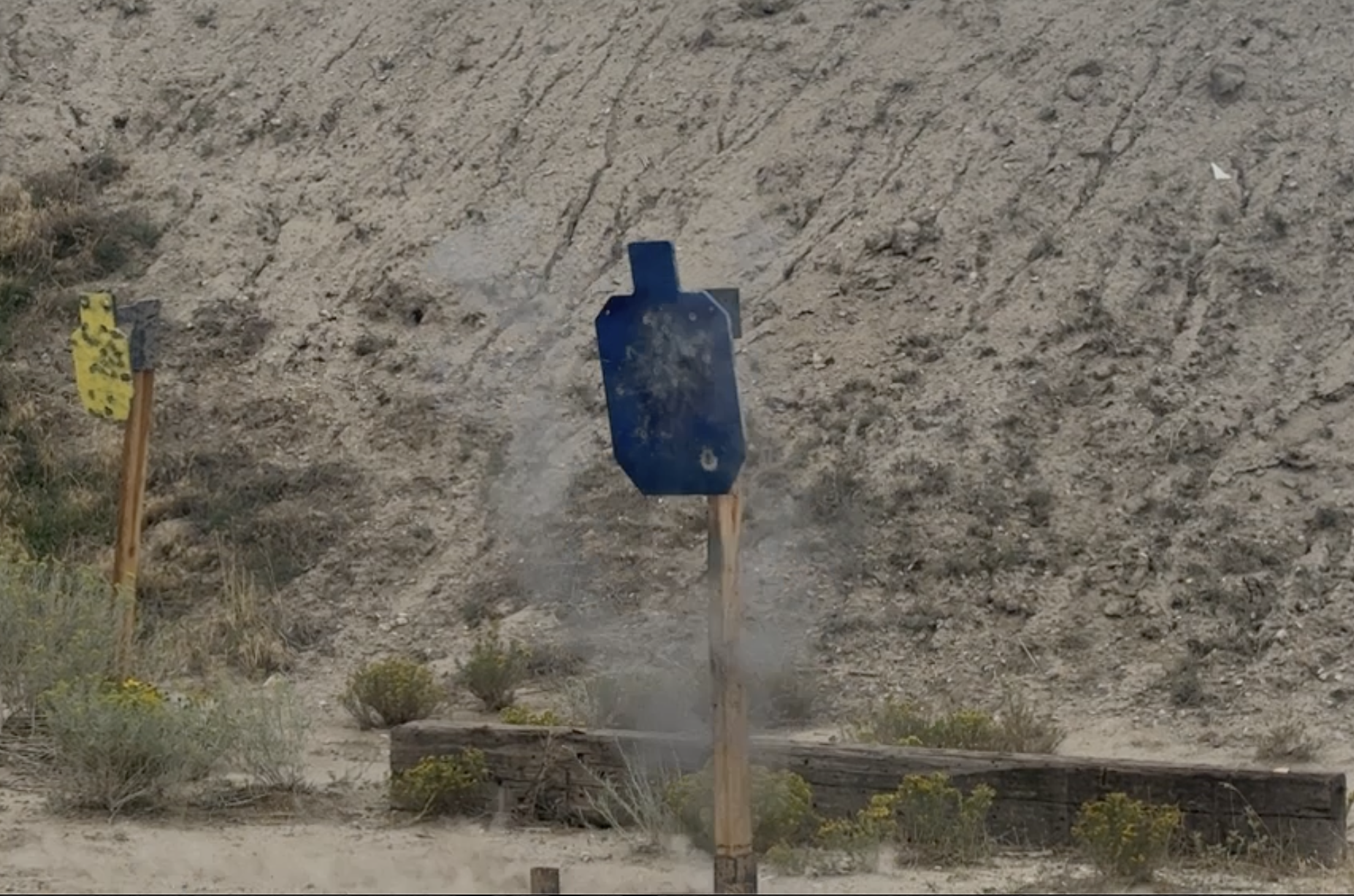
Then, I moved everything back to fifty yards and shot on a reduced A/C zone steel. My first three rounds impacted where I wanted them to, roughly centered on the steel’s upper chest. I gave the fourth round too much input, and it impacted lower than I’d liked.
Validation
But will my 00Buck print well with that zero?
I checked it twice, once on steel and then on paper. The shot loads hit to point of aim (POA) on the steel at 20, 15, and 10 yards. Shifting over to paper, my hits surrounded the slug hits at 7 and 15 yards.
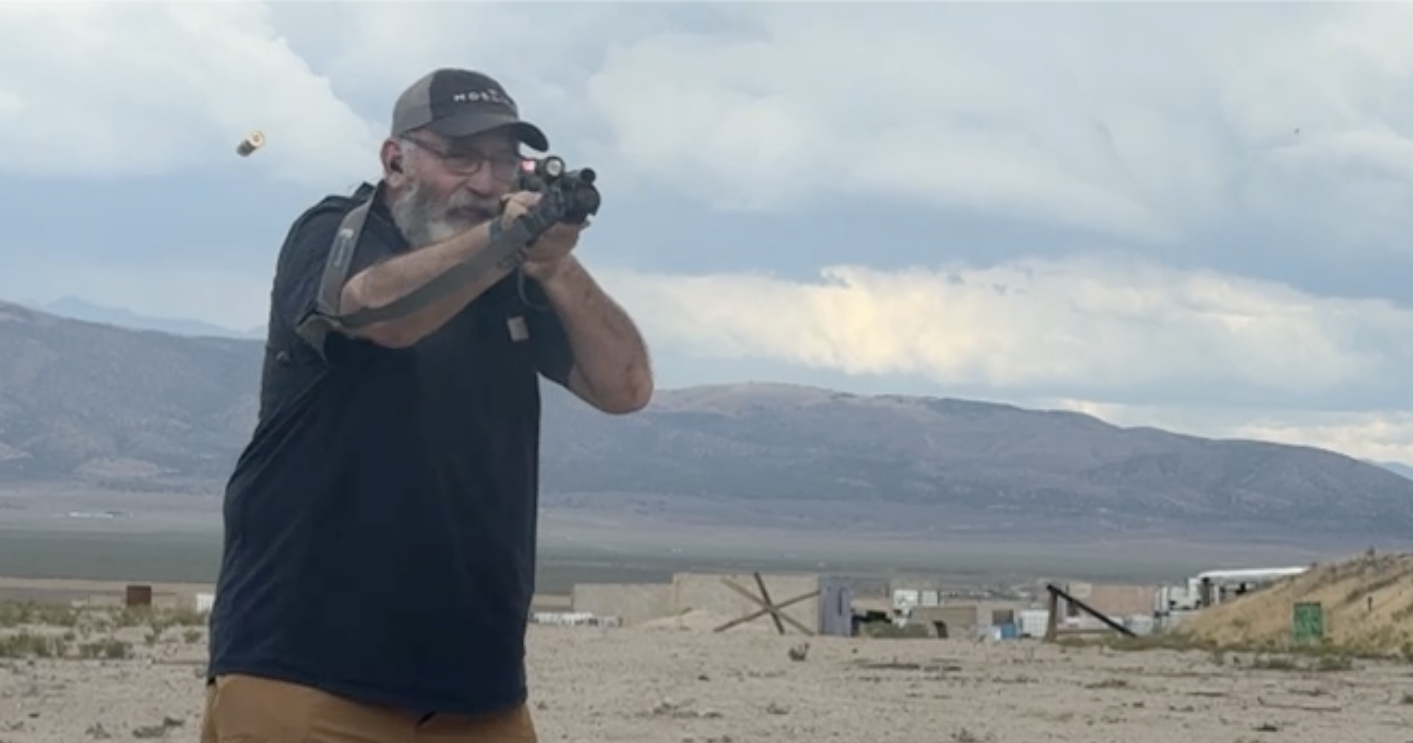
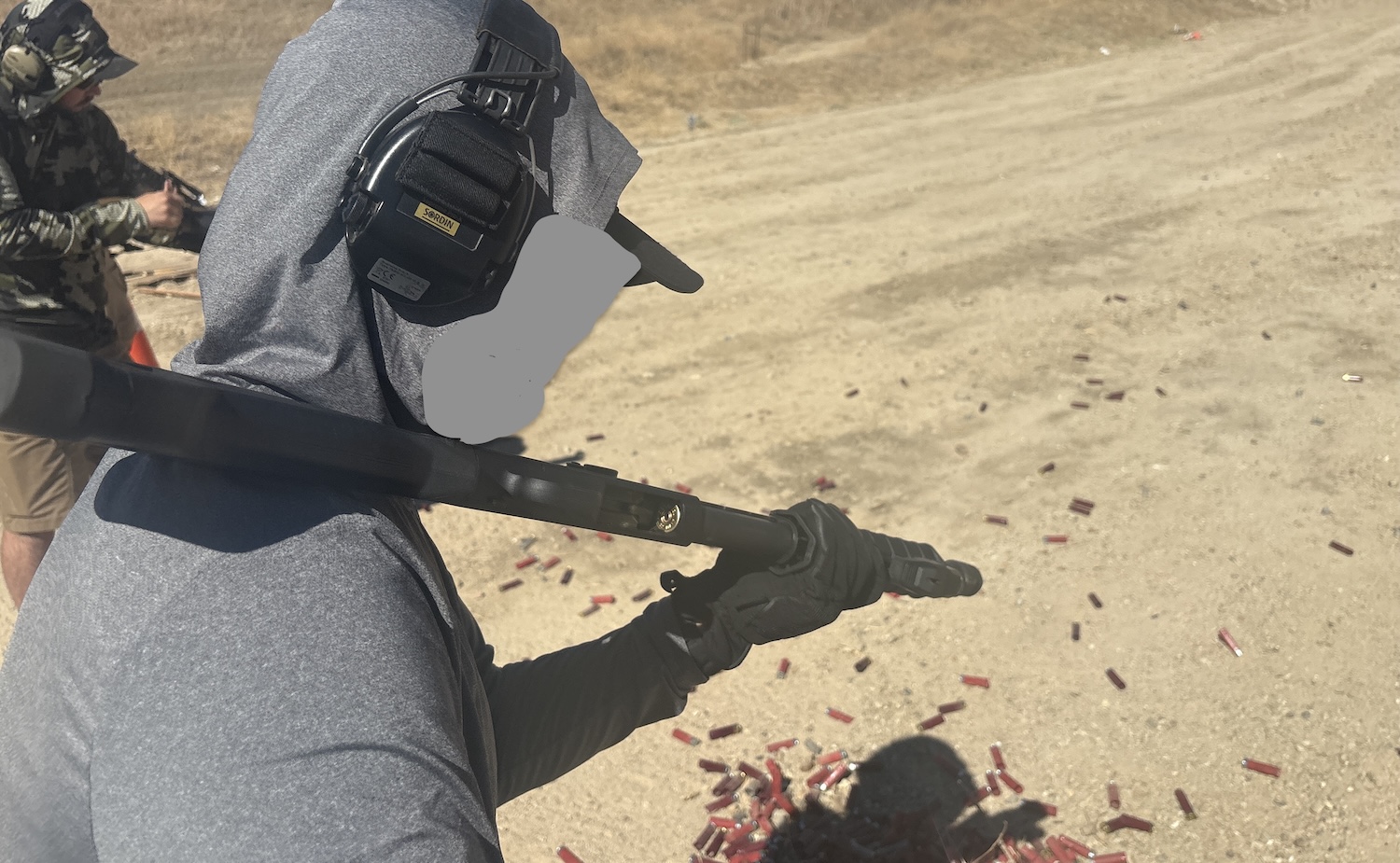
While the ejected hull is still flying, I was shooting to verify the point of aim and point of impact with 00Buck.
Buck Only?
If the gun is only going to be used with shot shells, then I would do this a bit differently. First, I would pattern the gun with a variety of defensive loads (00Buck or others). At 20 yards, personal preference, I would shoot at a defined, specific aiming point. I would adjust the reticle until it was centered on the pattern I printed on the target. At 20 yards, we see non-Flite Control/VersaTite loads start to run out of capability.
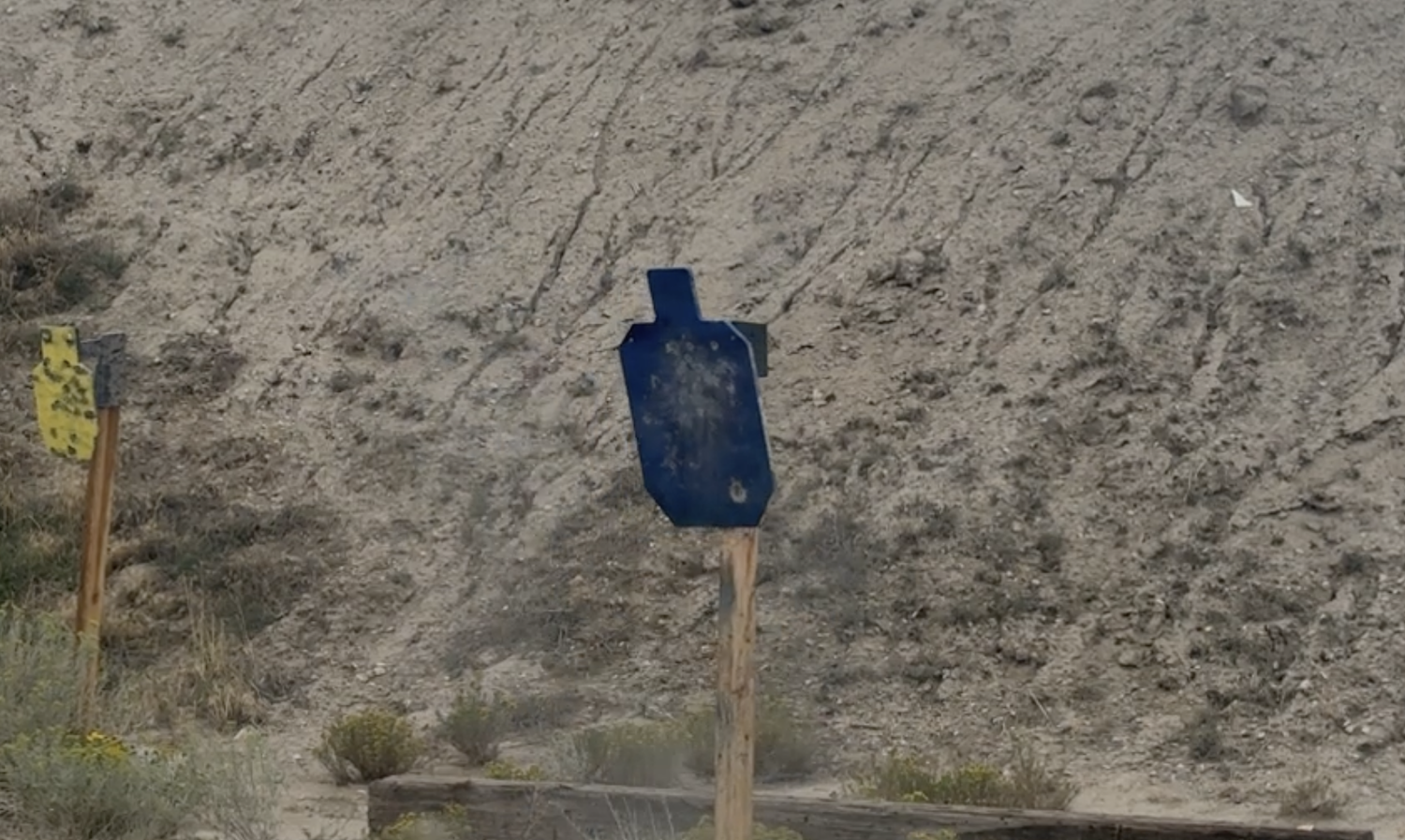
After confirming the slugs at distance, I verified the point of aim with the 00Buck pattern from the Vang Comp barrel.
Reticles
I have a bias towards multi-reticle design optics. Specifically, those with an open-circle design. Holosun’s 500 series and newer optics include that open circle. The open circle takes away the single point that can draw my eye’s attention. Having a pattern that fits within my reticle can make the shooting part easier.
Final Thought
Improvements in electronic sights (coupled with improved ammunition) give shotgunners, regardless of job, greater capabilities. A zeroed optic lets you use them.
RESOURCES:


 (+7 rating, 9 votes)
 Loading...